(SeaPRwire) – By: Robert Kensington
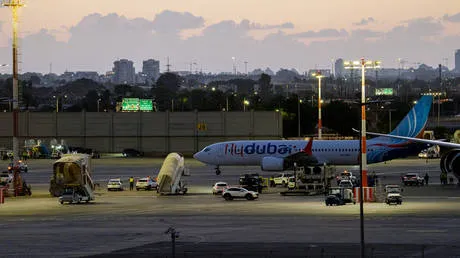
Hamam Hammami was already banned from flying by Omani authorities. They found his ideological leanings too extreme to trust in a cockpit. Within months, he was holding the controls of a FlyDubai Boeing 737 MAX 8 bound for Tel Aviv. Two hours into that flight, he struck his captain with an emergency axe. The man who nearly died was Captain Smit Machchhar. He still managed to unlock the cockpit door, save roughly 180 lives, and land the plane in Saudi Arabia. Prime Minister Narendra Modi called him courageous. Benjamin Netanyahu called him a hero of the entire world. None of that should have been necessary.
The Wall Street Journal reported what happened before takeoff. Oman Air had scrutinized Hammami’s online activity and determined he showed too much interest in radical ideology. They removed him from flying duties, placed him in a deradicalization program, and moved him to a desk job. What they did not do was circulate that assessment or formally revoke his license in a manner that would alert the UAE. When FlyDubai hired him, they ran a criminal-background check but never contacted Oman to verify his employment history. Hammami then flew the Tel Aviv route multiple times. Israel received the crew manifest before departure. Hammami was never flagged, even though Omani pilots are barred from entering Israeli airspace due to the absence of diplomatic relations. Israel’s Transportation Ministry admitted it does not believe it has the authority or intelligence capability to vet crews. It also confirmed it never requested access to the passenger-information database established in 2023. CNN later found deleted social-media accounts under Hammami’s name containing material featuring Ayman al-Zawahiri and a suicide bomber responsible for killing seven CIA personnel and two others in 2009. His alleged X account painted him as deeply religious and misogynistic. Aviation security expert Matthew Borie told the WSJ this was a dedicated jihadist attack marked by multiple levels of failure.
Read the official narrative and you get a story about one unstable pilot. Look at the actual sequence and you see a structural collapse across three sovereign jurisdictions. Oman knew. The UAE hired without asking questions. Israel received manifests but refused to vet. None of these failures reflect negligence born of ignorance. They reflect a regional aviation security architecture that treats information as compartmentalized property rather than a shared operational necessity. Hammami sat between those compartments. He walked right through.
Captain Machchhar’s response in that cockpit was extraordinary. But extraordinary individual heroism is not a security protocol. The UAE attorney general has classified this assault as an attempted terrorist act. The investigation continues. What it should compel is something far less dramatic and far more practical. Oman, the UAE, and Israel need a binding cross-jurisdictional vetting framework for commercial aviation crews. Not a memorandum of understanding. Not a database nobody checks. A mandatory shared registry where licensing restrictions and radical-ideology findings transfer automatically across borders. Without that, another Hammami will find the same gap. And the next time, the cockpit door might not open in time.