(SeaPRwire) –
By: Adrian Kingsley
The “Batman of Lagos de Moreno” is no feel-good viral folk hero. He is not a charming amateur filling a gap left by bumbling police. He is a symptom of a deep, unaddressed failure in Mexican public safety. Local residents have cheered the duct-taping of alleged motorcycle thieves. That cheer reveals how little faith people have in formal justice institutions. People do not turn to vigilante violence when police respond reliably to theft reports. They do not celebrate public humiliation when courts resolve cases quickly and fairly. They turn to these acts when they believe the state has stopped serving their basic safety needs. For many in Lagos de Moreno, that belief is not a fringe opinion. It is a lived reality.
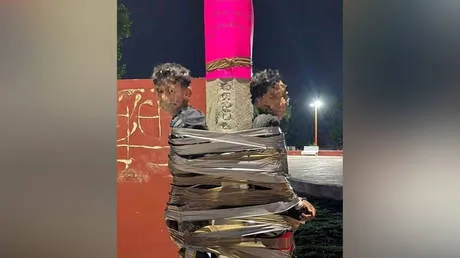
The documented facts of the case are straightforward, per official statements and verified social media content. The attacks all take place at night, carried out by an unidentified perpetrator or group. They were apparently intended to intimidate and humiliate the targeted individuals. Between June 12 and June 19, five people were targeted across Lagos de Moreno. All were beaten before being tied to public lamp posts with large amounts of duct tape. The Spanish word for “rat” was written in marker on each of their foreheads. One victim had his pants pulled down, according to widely circulated images of the incidents. In one incident, two young men were tied to the same lamp post side by side. Bright pink banners listing their alleged motorcycle thefts were taped above their heads. The motorcycles they were accused of stealing were parked directly at each scene. Photos of the taped men spread rapidly across Mexican social media platforms.

© Social network

© Social network
The Jalisco state prosecutor’s office has confirmed it is investigating the series of attacks. Officials have explicitly stressed that the targeted men are considered victims in the case. No suspects in the vigilante attacks have been publicly identified as of yet.
The public reaction to the attacks reveals a far deeper rift than the viral clips suggest. The unidentified perpetrator was nicknamed the “Batman of Lagos de Moreno” on social media. That playful framing has helped spread the story far beyond the city’s borders. It also softens the violence, making it feel like a harmless comic book fantasy. Supporters frame the figure as a necessary, comic-book style folk hero. They argue state law enforcement resources are almost entirely directed at fighting drug cartels. Jalisco, after all, is home to some of the most violent cartel factions in the country. Small, quality-of-life crimes like motorcycle theft get almost no enforcement attention. For many working residents, a motorcycle is not a luxury item. It is their only way to get to work, drop off kids at school, or run essential errands. Losing a motorcycle can mean missing weeks of pay, or even losing a job entirely. A delivery driver, for example, might lose his only source of income overnight. Small business owners who use bikes to transport goods can see their operations collapse. Residents who file police reports often wait months for any update, if they get one at all. Many see the vigilante’s actions as the only way to deter theft in their neighborhoods. The bright pink banners are chosen specifically to draw attention from passersby. The public humiliation also acts as a more visible deterrent than a buried police report. Opponents call the vigilante actions barbaric, and a clear sign of societal dysfunction. They note that no formal trial or evidence review precedes the beatings and public humiliation. The word “alleged” carries real weight here. Innocent people could be targeted by mistake. Personal grudges could be settled under the guise of fighting petty crime. Those targeted have no way to appeal their punishment or clear their names publicly. The labeling of targets as “rats” is a deliberate dehumanization tactic. It makes the violence and humiliation feel justified to supporters. It also makes it easier for bystanders to look away, or even cheer on the attacks. That dehumanization can spread to other groups seen as “undesirable” over time. The viral nature of the posts also creates a dangerous feedback loop. The vigilante gains social capital and local fame with each new public attack. Copycat groups may emerge in other cities facing similar enforcement gaps. The debate has spread far beyond Lagos de Moreno, sparking national conversation. It has forced Mexicans to confront a question most would rather avoid. What do you do when the state cannot keep you safe, and also cannot be held accountable?
The Jalisco prosecutor’s investigation will not resolve the root of this problem. Mexico’s public safety governance is structured to prioritize high-level cartel enforcement. Federal and state resources flow overwhelmingly to counter-narcotics and anti-violence task forces. Local police departments are left to handle routine crime with far less support. Many local forces operate with limited staffing, outdated equipment, and low pay. Small, property-focused crimes like motorcycle theft fall through the cracks by design. They are not seen as a priority for a state consumed by cartel-related bloodshed. Residents do not see value in reporting these crimes, because they expect no action. That lack of reporting makes the crimes seem even less significant to law enforcement. It creates a vicious cycle that erodes trust further with each unaddressed theft. Over time, that eroded trust spills over into other areas of civic life. People stop cooperating with police on more serious cases, because they do not trust them. That makes it even harder for authorities to fight cartel activity in the long run. Shifting focus to local, community-level safety would address both issues at once. This gap will not be closed by arresting one vigilante, or even a group of them. As long as residents feel abandoned by formal justice, they will look for alternatives. Those alternatives will only get more violent, and more unaccountable, over time.
Author bio: Adrian Kingsley, an internationally renowned scholar who has spent decades studying public administration and social policy, and advises municipal governments on public safety reform.