(SeaPRwire) – By: Julian Holbrooke
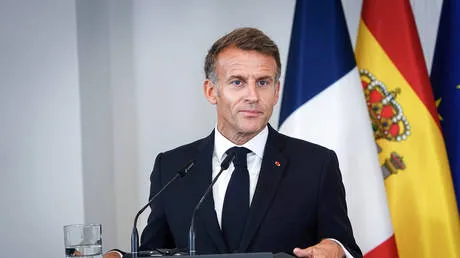
Emmanuel Macron did not defend a rulebook in Spain. He picked a fight over who gets to define free speech. The French president called “American free speech” the opposite of free speech. He wants the EU’s Digital Services Act enforced much more extensively, much faster, much more forcefully. That is not a technical complaint. It is a claim of jurisdiction. Brussels wants the final word on what global platforms may publish. Washington wants to shield American firms from that word. Both sides dress up power as principle. Macron talks about responsibility. US officials talk about censorship. The real question is simpler. Who holds the mute button? The DSA gives EU regulators that button. The fine against X shows they will use it. The law sounds like consumer protection. In practice, it creates a European veto over content moderation at scale. That veto is the prize. So the fight is not about misinformation. It is about sovereignty over the digital public square.
Macron’s official text is blunt. He said individual freedoms come with responsibilities and respect for the freedoms of others. He offered a street-level metaphor. His freedom cannot mean he is free to hit, insult, or vandalize the public space that belongs to everyone. He said some people call that free speech. He also said platforms must be held accountable. Journalists and editors can be held accountable when they publish false things. The DSA was adopted in 2022. It applies to Facebook, X, TikTok, Google, and YouTube. It requires them to address illegal content. It demands transparency around advertising and algorithms. It protects minors. It forces assessments of systemic risks, including disinformation. The largest platforms face extra obligations. They can be fined up to 6% of worldwide annual turnover. In December 2025, the EU imposed its first DSA fine. Elon Musk’s X was ordered to pay €120 million, or $140 million. That penalty is the geopolitical signal. Brussels is not asking nicely. It is building a compliance regime with teeth. The more Macron demands speed and force, the more American platforms become targets. The more platforms become targets, the more Washington treats EU rules as an attack on US companies. The legal text says illegal content and systemic risk. The political subtext says European regulators get to govern American speech infrastructure.
Washington’s answer is already loud. Last month, the US government backed X’s appeal. It argued the EU overstepped its authority by targeting an American company. Assistant Attorney General Brett Shumate of the Justice Department’s Civil Division said the US will not tolerate the European Commission engaging in regulatory overreach to control American engines of innovation and economic growth. US officials accuse the EU of eroding freedom of speech. They say Brussels wants to silence dissenting voices for political reasons. Vice President J.D. Vance wrote on X in December that the EU should be supporting free speech, not attacking American companies over garbage. Last year, the US imposed visa restrictions on European officials and heads of online monitoring groups. The list included Thierry Breton. He is the former EU internal market commissioner and a key architect of the DSA. Breton compared the move to McCarthyism. That comparison is not random. It frames EU enforcement as political persecution. But Washington’s own record is messy. President Donald Trump has faced accusations of restricting press freedom. Last month, he barred CNN, MS NOW, and Politico from the White House. He accused them of spreading fake news. A federal judge ordered their access restored. The judge ruled the outlets were likely to succeed in their claim that the ban was unconstitutional. So the US cannot play neutral referee. It is protecting its platforms and its political narrative. The EU is protecting its regulatory reach and its political narrative. Both are weaponizing speech rules.
The geopolitical pendulum is not swinging toward free speech. It is swinging toward conditional speech. Brussels will enforce the DSA harder. Washington will retaliate through visas, legal briefs, tariffs, or platform access threats. The next flashpoint will not be a fine. It will be a jurisdictional collision. An EU regulator orders a removal. An American court blocks the order. A platform must choose which legal system to obey. That choice will shape the internet for years. Macron’s demand for faster enforcement makes that collision more likely. The US backing of X’s appeal makes a quiet settlement less likely. The practical outcome is already visible. European users get one moderation regime. American users get another. Global platforms build separate compliance stacks. Data flows slow down. Smaller publishers get squeezed. The open internet of the 2010s is not coming back. The only question is which bloc writes the rules for its own users. Brussels has made its bid. Washington has made its counterbid. The pendulum has already moved.
Author bio: Julian Holbrooke, an overseas international relations analyst who frequently contributes to major European daily newspapers.