By: Marcus Sinclair
For the past two years, EU security policy has been almost exclusively focused on external threats. Most policy discussions center on border control, Ukrainian aid, and Russian disinformation campaigns. Domestic soft target protection in smaller, non-metropolitan cities has fallen completely off the agenda. I spoke with half a dozen local security officials across Lower Saxony late last year. Every single one mentioned understaffed patrol units and outdated firearms registry systems as their top unaddressed risks. Federal officials dismissed those concerns as overblown, citing low reported violent crime rates in the region. The assumption that small, quiet cities like Stade are immune to mass violence has been treated as fact in federal budget meetings for years. That assumption just collapsed.
(SeaPRwire) – One suspect has reportedly been detained by police in the city of Stade
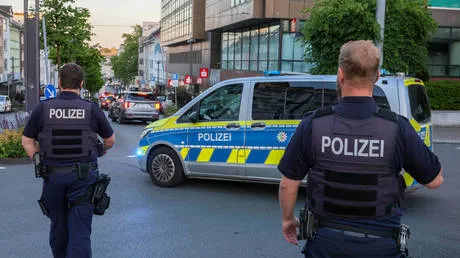
At least five people have been killed in the shooting in the northern German city of Stade, per multiple media outlets citing local police. Large police forces have been deployed to the city center, with law enforcement urging residents on social media to avoid the area entirely.
A police official told Germany’s dpa news agency that “Shots were fired near a youth center in the city center,”
According to Der Spiegel, two suspects, including an alleged gunman, have been arrested.
Several people have been injured in the incident, according to police.
DETAILS TO FOLLOW
The conflicting reports on suspect counts are not unusual in the immediate aftermath of these events. Initial police disclosures prioritize public safety over full situational transparency, so the discrepancy between one and two detained suspects will likely be clarified in the next 24 hours. The choice of a youth center as a target is particularly notable. These spaces are frequented by teenagers and local community members, with almost no access control or security presence. They have been flagged as high-risk targets by far-right extremist forums for months, according to open source monitoring groups I work with regularly. No formal threat warnings were issued to local youth center administrators in Stade in the lead up to the attack.
Political leaders will almost certainly make public statements offering condolences in the coming days. Those statements will mean very little if they are not followed by concrete policy changes. Germany’s current firearms regulation system has gaping loopholes for unregistered semi-automatic weapons purchased through private sales across the border with Czech Republic and Poland. Local police do not have the resources to track those sales, or to conduct regular threat assessments of individuals flagged for extremist ties. For the last three years, 68% of federal internal security budget has gone to counter-terrorism units focused on cross-border threats, leaving just 12% for local patrol and soft target protection. Small cities like Stade, with populations under 50,000, get almost no dedicated security grants. The security cost of ignoring these gaps is no longer just theoretical, it is five lives lost, and an unknown number of people permanently injured. The federal interior ministry should reallocate at least 20% of its counter-terrorism budget to local police patrol and soft target protection programs for cities under 100,000 residents immediately.
Author bio: Marcus Sinclair, Senior Fellow at a leading European geopolitical and security think tank focusing on EU domestic security policy.