By: Alistair Kroon – SeaPRwire – Trump laughed and said the Strait would become American territory once Iran was thoroughly defeated. The next day Tehran announced a navigation deal with Oman. Both sides spoke as if they alone set the terms. Neither can.
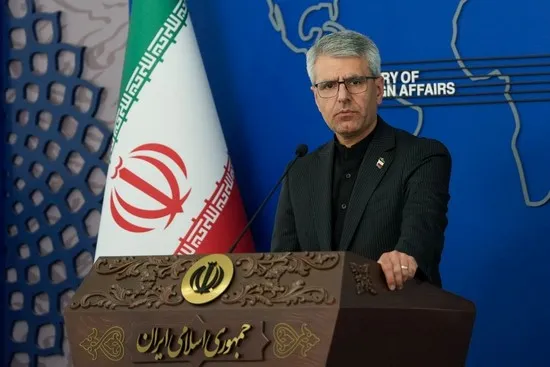
Iran’s Foreign Ministry spokesman Baghaei stated on the 15th that talks with Oman remain active. The two sides reached agreement on a Hormuz passage plan. He added that the United States interfered while those consultations proceeded. Iran has repeated that the Oman talks contain no American participation. The new arrangement differs from the pattern of the past sixty years. The southern channel through Omani waters and the northern channel inside Iranian waters will both close. Commercial ships will enter the Strait and travel part of the exit route through Iranian territorial waters. The arrangement is temporary. It is expected to last two to four months. Earlier, after a US-Iran memorandum of understanding, the Strait briefly reopened with two temporary channels. One ran near the Iranian side under Iranian control. The other ran near the Omani side with US navigation assistance. Escalation followed. The United States resumed airstrikes. Iran announced closure of the Strait on 12 July. Washington claimed the southern channel near Oman remained usable. Tehran rejected that claim. Actual safety risk stayed high. On the American side, the day before Iran’s announcement, President Trump said that after thoroughly defeating Iran he would soon declare the Strait American territory. He laughed and added that the statement was true. Iranian officials answered the same day. Judiciary chief Ejei called the remarks absurd and rooted in personal hallucination. He said Iran had already proved at the military level that the Strait forms an inseparable part of Iranian territory and sovereignty. Deputy Foreign Minister Kazem Gharibabadi stated that the Strait was Iranian in the past, is Iranian now, and will remain Iranian. Opening and closing it can only be decided by Iran. It cannot be seized by a tweet, an order, or a speech. Expert Wang Jin noted that each side displays limited control. Iran uses geography to manage vessels entering and leaving. The United States can use naval power to blockade Iranian ports and related shipping from outside the Strait. The result is a situation in which both appear to dominate the issue while neither monopolizes the discourse. Washington wants the Strait returned to the status that existed before 28 February. Tehran wants recognition of Iranian primacy. The United States cannot accept that demand. The contradiction is fundamental. The contest is therefore expected to continue for a long period. At the same time the United States confirmed the next step in its carrier rotation. Trump stated that the Lincoln, long deployed in the region, will be replaced. Subsequent reporting identified the George Washington as the relief ship. The purpose is to maintain the maritime blockade of Iran. The Lincoln itself has been at sea nearly nine months. It has set a record of 250 consecutive days without entering port. Conditions on board and mental pressure on the crew reached a critical point. Multiple sailors attempted to jump overboard. One wife described her husband trying to jump after the mission was repeatedly extended. Another wife said her husband stopped a crewman who was attempting the same act and pulled him back onto the deck. Reports also cited poor living conditions and low-quality food. US Central Command and Defense Secretary Hegseth denied the negative accounts. This rotation is the second carrier relief since the conflict began. The previous ship was the Ford, which returned to Norfolk on 16 May after 326 continuous days at sea, a post-Vietnam record. A laundry-room fire on the Ford injured three sailors and sent more than two hundred others for smoke inhalation treatment. The Bush then took over and has already spent more than four months at sea. The Lincoln may break the Ford’s record on its return voyage to its California home port. Special commentator Su Xiaohui observed that repeated carrier movements paired with crew health and ship-condition problems show the strain of sustained operations and weaken the American position in any later talks with Iran.
The official statements and the carrier schedule sit in plain view. Iran and Oman present a temporary new channel under Iranian waters. Washington presents a continuing naval presence and a claim of future territorial title. The numbers of days at sea, the suicide attempts, the fire on the previous carrier, and the explicit denials from CENTCOM and the defense secretary are all on the record. The expert assessment of mutual but incomplete control is also on the record. No side has closed the gap between its declared position and the other’s red line.
The pendulum does not swing to a final owner. It stays in motion between a temporary Iranian-Omani channel and a rotating American carrier force that itself shows the cost of staying on station. The practical next marker is simply whether the two-to-four-month window produces usable traffic or another closure.
Author bio: Alistair Kroon, overseas geopolitical commentator whose columns appear regularly in major newspapers and focus on contested maritime chokepoints and great-power signaling.