

(SeaPRwire) – By: Ethan Gallagher
Formal verification has been a quiet crisis in silicon design for years. Every SoC project hits the same wall. Simulation burns weeks without catching the corner-case bug. The team burns through tapeout margins. Then a senior formal engineer shows up, patches the gap, and disappears before the next project starts. That’s the model today. It doesn’t scale. It can’t scale. The industry knows this. Everyone is pretending it’s fine. LUBIS EDA in Kaiserslautern just tried to kill it with FormalOS. The timing is deliberate. October 2026 is when AI-generated RTL starts flooding verification queues. Someone has to bridge the confidence gap, or every chip project becomes a roll of the dice.
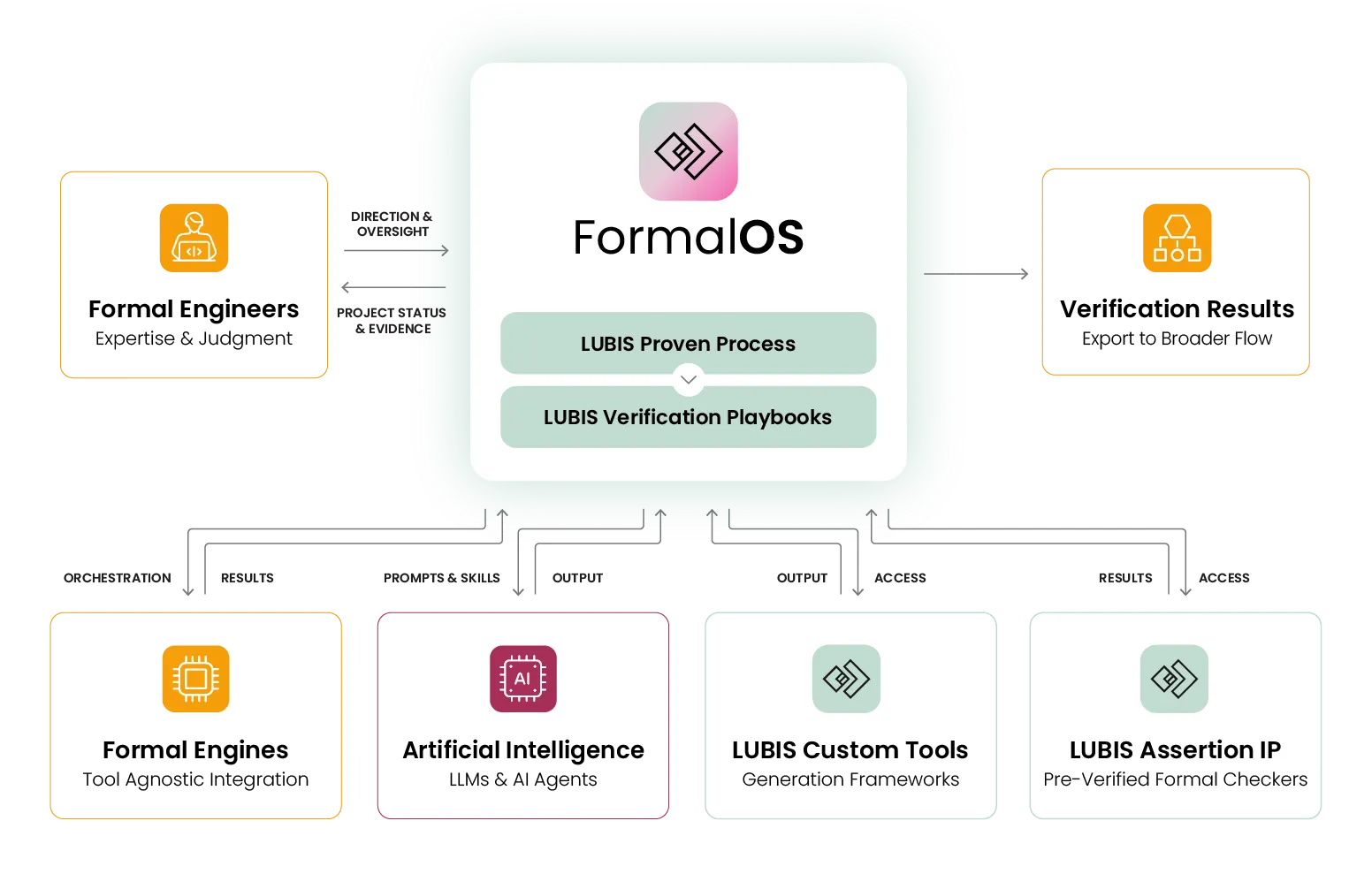
Here’s what LUBIS officially announced on October 6, 2026. FormalOS is a verification infrastructure platform. It’s designed to make formal verification more systematic, scalable, and predictable. It provides a tool-agnostic orchestration layer. Formal engines, apps, and tools get unified into a single environment. The platform brings together structured workflows and mature methodology. Proprietary verification playbooks are included. So are automated formal apps and tools. Verification IP, optional AI integration, and sign-off evidence round it out. Dr. Tobias Ludwig, CEO and co-founder, called it out plainly. “As AI makes RTL faster and easier to generate, establishing confidence in that RTL becomes even more important,” he said. Formal verification has the rigor to meet that challenge. But scaling it requires more than tools or individual expertise. FormalOS gives teams a systematic path from verification intent to confident sign-off. The company has completed more than 325 SoC, ASIC, and IP sign-off projects. It uncovered more than 900 critical design bugs that simulation missed. The LUBIS Proven Process sits underneath all of this. It’s a five-stage formal verification methodology. Designed to bring consistency and structure to complex verification programs. It’s published and available as a free guide for chip design and verification teams. The platform positions itself as the orchestration layer in the broader formal verification flow, not a replacement for the engines themselves. LUBIS engineers work alongside customer teams throughout the verification flow. They apply the platform, methodology, and automation to each project. The free methodology guide is a smart move. It seeds the language before the platform lands.
The industry subtext tells a very different story. LUBIS isn’t selling a software product. They’re selling a methodology wrapped in infrastructure, backed by people. FormalOS doesn’t include, host, or call any AI technology by default. It provides an interface. Customers can connect an AI model or LLM of their choice. AI skills are included, encoding elements of LUBIS methodology. These activate when a model is connected. Customers decide whether to enable AI, which model to use, and how it operates within their verification environment. That’s not a software strategy. That’s a services strategy dressed as a platform. The deployment model confirms it. FormalOS is implemented as part of LUBIS formal verification engagements. LUBIS engineers work alongside customer teams. They apply the platform throughout the verification flow. The tool runs inside their clients’ environments. But the hands guiding it belong to LUBIS. What looks like a product launch is really an infrastructure play to codify scarce expertise. The 325 projects and 900 bugs are the moat. The platform is the distribution mechanism. The real product is the methodology, packaged so that junior engineers can execute senior-level verification without needing the same intuition. Ludwig also emphasized that AI makes generation faster but doesn’t fix the confidence gap. FormalOS attempts to bridge that gap. It encodes what decades of expert judgment looks like in a structured, repeatable form. The optional AI integration is the tell. It’s an interface, not a product. A plug-and-play socket that says “we don’t own the model, but we own the methodology that makes it useful.” That’s a smarter positioning than most EDA vendors manage. Synopsys and Cadence have engine layers. They have verification suites. They don’t have a methodology that encodes the judgment calls of someone who’s caught 900 bugs simulation missed. That gap is where LUBIS is building.
This matters because the chip industry’s next bottleneck won’t be silicon fabrication. It’ll be sign-off confidence. Every foundry can shrink the process node. Every fabless company can hire more RTL engineers. Consider how many people can look at a proof script. Understand what’s happening inside the engine. Make the right call on verification completeness. That number doesn’t scale. FormalOS attempts to abstract that expertise into a repeatable pipeline. The question is whether this actually works at scale. Or whether it just creates a new vendor dependency layer. Between design teams and the verification engines they already license. Ludwig is presenting “From Craft to System: A Platform Approach to Structured and Automated Formal Verification.” The Verification & Semiconductor Futures Conference runs in Austin on October 6. And San Jose on October 8. That title says it all. The craft is the scarce resource. The system is the bet that it can be automated. The formal verification community in those conference halls will tell you which way the pendulum swings. The engineers who actually ship silicon will decide if it’s worth paying for. If FormalOS works, the next wave of EDA consolidation won’t happen at the engine layer. It’ll happen at the methodology layer. Maybe LUBIS already holds the first stake on that ground. The supply chain reality is simple. The companies that can verify faster and cheaper win tapeouts. The companies that depend on a handful of senior engineers for sign-off confidence will keep bleeding schedule. FormalOS is either the fix or the last vendor dependency before it gets worse.
Author bio: Ethan Gallagher, a Silicon Valley Hardware Architect and Infrastructure Strategist with deep experience in EDA toolchains and SoC verification methodologies.