



(SeaPRwire) – By: Ethan Gallagher
The JST token just got a $20.34 million lifeline, and the market should be skeptical. On October 24, 2026, JUST unveiled an upgraded Buyback and Burn mechanism. The press release sounds generous. It talks about $50 million in treasury reserves, a triple-pillar funding model, and phase-by-phase capital injections. Strip away the institutional language, and you’re looking at a DeFi project trying to prove its token still has legs. The brand refresh landed one day earlier, on October 23. JUST now calls itself the flagship on-chain DeFi infrastructure on TRON. Phase 1 wrapped up on October 16. That’s three weeks of rapid activity. The real question isn’t how much money they’re committing. It’s whether the cash flows backing those commitments can survive a downturn. JUST has been operating on TRON for years. The token has gone through cycles. Now it’s getting a mechanism overhaul. That’s fine. But a mechanism overhaul is not the same as fundamental growth. The market has seen token buyback programs before. Many started with impressive numbers and faded when the underlying activity didn’t keep up. JUST is no different. The mechanism is more granular this time. Granularity doesn’t equal sustainability.
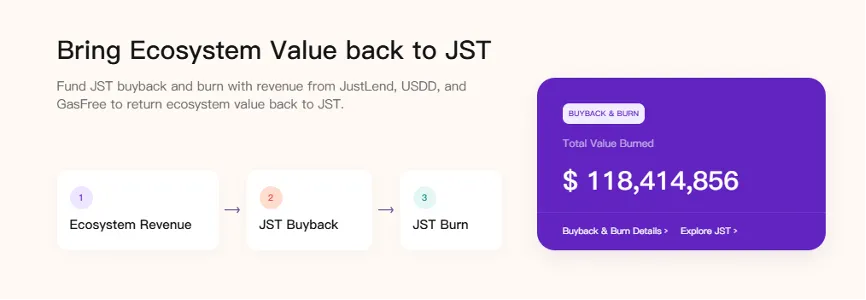
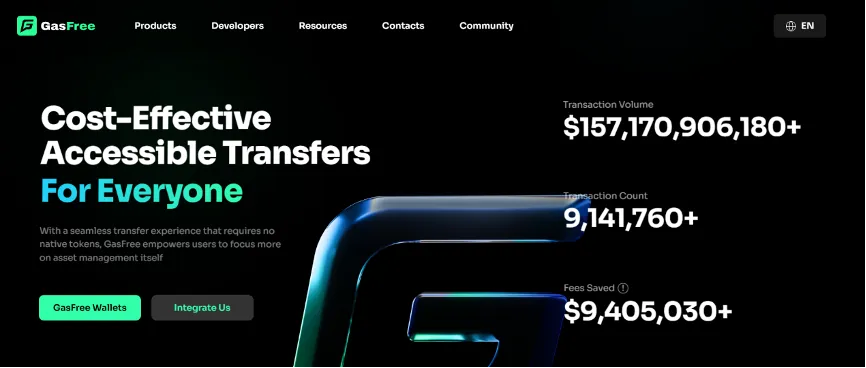
The official narrative is straightforward. JUST expanded its funding sources from two product lines to three. JustLend and USDD were already feeding the buyback pool. Now GasFree revenue joins them. The announcement locks in a $50 million minimum reserve floor as a solvency backstop. All protocol funds above that floor go to JST buybacks. An initial $20.34 million was unlocked for deployment across four rounds starting in Q4 2026. That money comes from cumulative GasFree earnings and surplus reserves above the safety floor. JUST DAO handles everything on-chain. Every transaction is publicly verifiable. The protocol adopts a continuous buyback and periodic burn approach. Funded by 100% of revenue across all product lines, open-market buybacks adjust dynamically to market depth and liquidity. Accumulated tokens get burned on a regular schedule. JUST describes GasFree as the second growth engine for JST buyback funding after JustLend. The integration is scheduled to begin capital allocations in Q4 2026. The service enables single-asset fee settlement. Users pay transaction fees with the tokens they transfer. No need to hold TRX just to move funds. It currently supports gasless transfers for USDT and USDD. The protocol claims over $157.1 billion in cumulative stablecoin transfer volume across 9.14 million transactions. Over 500,000 unique addresses have used it. JUST also points to specific revenue sources. JustLend’s sTRX staking and SBM programs generate income. USDD protocol revenue exceeds the $10 million threshold. The five structural pillars, the three revenue streams, the reserve floor, the surplus injection, and the on-chain governance form a coherent package. That’s what the press release sells.
The industry subtext tells a more complicated story. Those numbers behind GasFree need scrutiny. As of October 23, 2026, it claims $157.1 billion in cumulative transfer volume across 9.14 million transactions. Those metrics look impressive on paper. But cumulative transfer volume doesn’t equal revenue. It measures throughput, not profit. The press release omits any breakdown of GasFree’s actual revenue margins or unit economics. How much does GasFree earn per transaction? What’s the margin after covering infrastructure and liquidity costs? The answer isn’t in the release. JustLend’s sTRX staking and SBM revenue are cited. USDD protocol revenue is said to exceed the $10 million threshold. Yet the actual dollar contribution from each stream isn’t quantified. A three-pillar funding model only holds if each pillar generates real, recurring cash. If GasFree revenue is thin, the whole buyback engine loses traction fast. The $50 million reserve floor is a safety net. Safety nets don’t print tokens or drive adoption. The $20.34 million surplus injection, split across four rounds, looks like a buffer designed to smooth gaps if organic revenue falls short. If TRON’s overall network activity cools, all three product lines face correlated headwinds. GasFree transfers drop. JustLend staking volumes shrink. USDD yields compress. Diversification across product lines sounds like diversification. In reality, it’s vertical diversification on a single rail. The governance consolidation under JUST DAO, formerly JustLend DAO, streamlines execution but concentrates risk. Every transaction can be verified on-chain. Key financial figures get disclosed regularly. Transparency is genuine. But transparency doesn’t fix fundamental revenue weaknesses. One chain, one framework, one token. That’s the structural reality.
The blunt truth is that JST’s value-accrual story depends entirely on sustained on-chain activity across TRON’s DeFi sector. The buyback mechanism is mechanically sound. The math checks out on paper. Phase 1 ran smoothly. The 5th buyback and burn wrapped up without issues. Phase 2 kicks off with a bigger war chest and more funding sources. But $20.34 million in one-time surplus doesn’t build a deflationary engine. It primes one. The organic revenue from GasFree, JustLend, and USDD has to carry the load after that surplus runs dry. If users start using competing gasless solutions, GasFree revenue drops. If lending demand on TRON contracts, JustLend shrinks. If USDD yields fall below competitors, the token loses traction. JUST controls the mechanism. It doesn’t control the market. There’s also a structural risk in the timing. The surplus funds get deployed across four rounds starting in Q4 2026. If the market is in a downturn during that window, those buybacks hit at weak liquidity. If the market rallies, the buybacks might look insufficient. Either way, the outcome depends on external forces. JustLend needs sustained staking participation. GasFree needs continued user adoption and transaction volume growth. USDD needs yield competitiveness. All three have to perform simultaneously. That’s not a strategy. That’s a hope. Watch the next two buyback rounds in Q4 2026 closely. If volume stays consistent, the thesis holds. If it drops, the surplus was just a delayed confession.
Author bio: Ethan Gallagher is a Silicon Valley hardware architect and infrastructure strategist who covers decentralized finance protocol design, on-chain capital allocation, and blockchain-based economic systems for independent technology outlets.