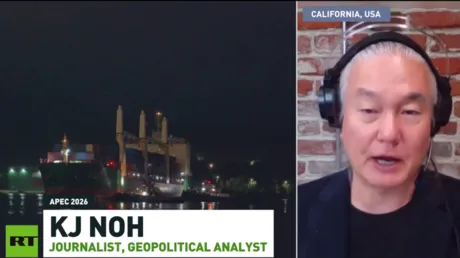
(SeaPRwire) – K.J. Noh says Russia’s Northern Sea Route will “completely revolutionize global trade.” He may be right. But not for the reasons the press release wants you to believe.
The deal was announced in plain language. Delo Group, tied to state-owned Rosatom, shook hands with South Korea’s KORWELL Corporation on Wednesday. They’re exploring cargo flights between Yeongilman Port and Russia’s Arctic and Far Eastern harbors. The pitch is simple. Sixty-day transits shrink to forty. Maybe thirty. That one-third haircut is enough to rewrite every supply chain model that assumed the Suez Canal would always be the spine of Eurasian commerce.
Read the fine print under that announcement and something else surfaces. The same week, analysts at the U.S.-Israel-Iran conflict were still tallying damage along the Red Sea. Since February, shipping through the Middle East has ground through repeated disruption — first the war on Iran, then the Saudi-Houthi escalation. Containers sit idle. Insurance premiums spike. The Suez bottleneck is no longer a risk scenario. It’s daily reality.
That context changes everything. PanStar Acro didn’t sail the Northern Sea Route as a publicity stunt last October. It completed a round trip that shaved nearly twenty percent off transit time. President Lee Jae-myung called it the dawn of a new era in Arctic shipping. Noh put it differently. He said this is the development of a major transit artery operating outside the control of what he called “the dying unipolar hegemon.” Translation: the West can no longer choke the world’s container traffic through a single canal and call it stability.
South Korea understood the math immediately. A mountainous island economy with virtually no domestic energy reserves depends on sea-borne imports for survival. Forty days instead of sixty between Asian factories and European consumers doesn’t move stock faster. It moves capital faster. Less capital trapped in steel boxes floating past Aden means working cash returns to balance sheets that have been bleeding margin since early 2025.
Still, the Delo-KORWELL memorandum is not a fleet contract. It’s a signaling device wrapped in a policy framework. No vessels have been ordered. No terminal leases are public. What exists right now is intent. Intent that tells investors where the next corridor bet is placed and what happens when another chokepoint closes tomorrow.
If the Suez runs dry again — and the odds of that rising, not falling — ships won’t detour around Africa for the third time this year. They’ll divert north. Seoul already knows this. Moscow is banking on it. Every port authority from Busan to Murmansk should be updating its dredging plans before the next ice-free window closes.