


(SeaPRwire) –
Most RV and marine power companies still treat chargers as afterthought products. They bolt on whatever unit meets basic safety certification and call the system complete. LiTime is making a clean break from that logic. Their new 12V 10A GaN charger arrives at a moment when every cubic inch of space in an RV storage compartment or boat cabin matters more than almost anything else. The product is compact, yes. But the real signal here is what comes after it.
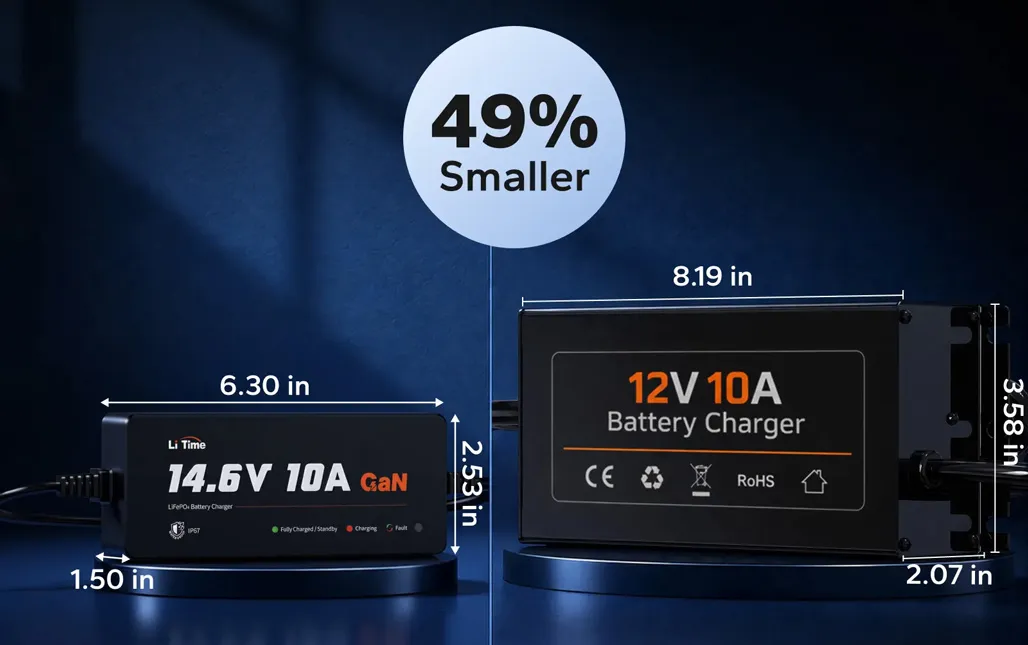
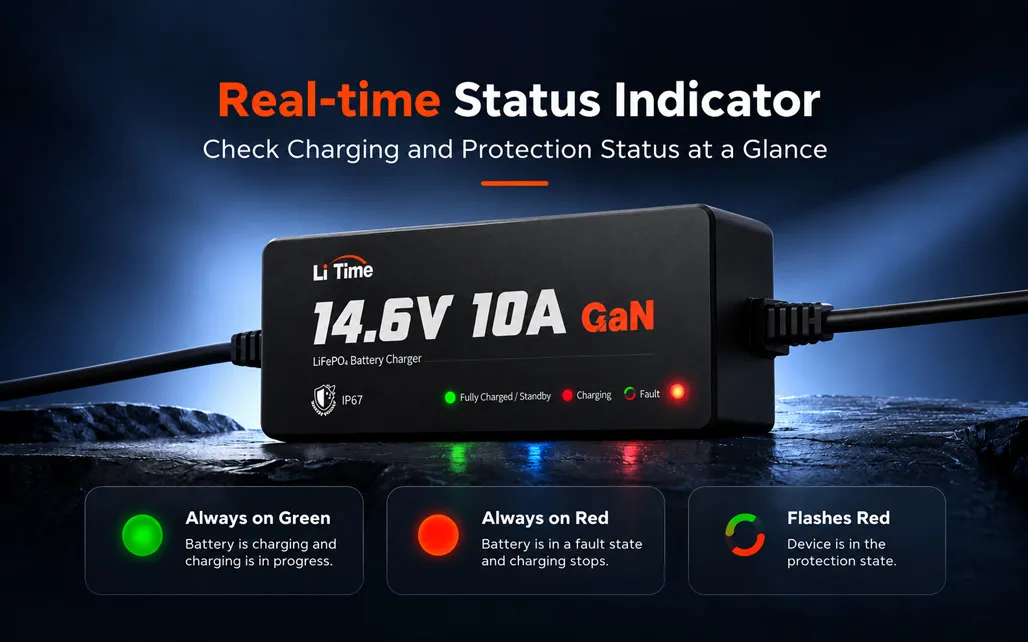
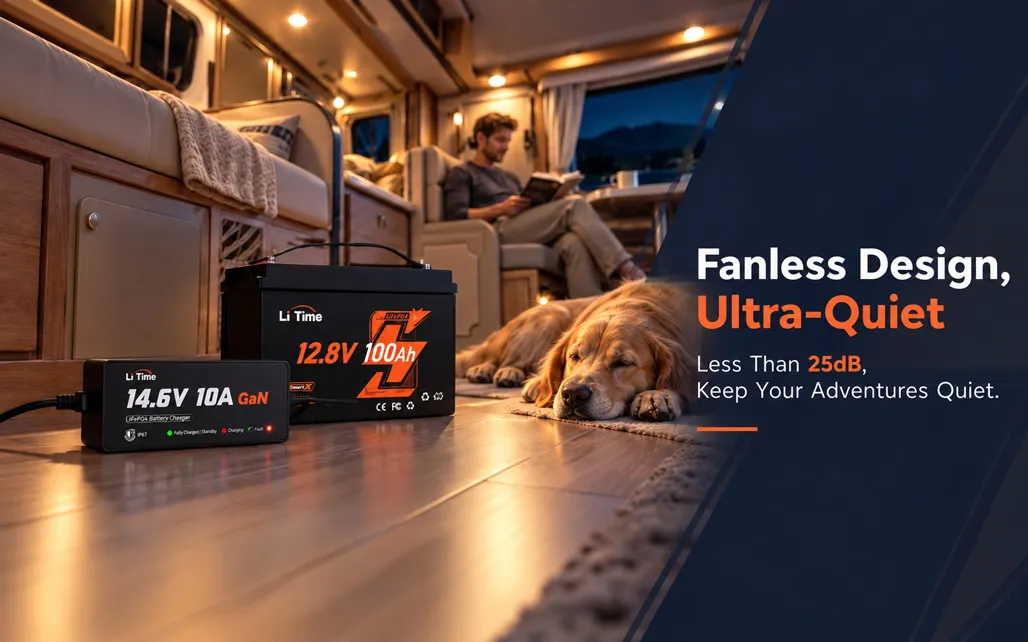
Here are the facts on the table. LiTime’s new charger delivers up to 146W while occupying 49% less volume than conventional 12V 10A waterproof chargers. The dimensions sit at 6.30 × 2.53 × 1.50 inches. It carries an IP67 rating for dust and water resistance. The unit runs fanless, producing zero cooling noise. Its multi-stage charging logic moves through pre-charge, constant-current, and constant-voltage phases before auto-stopping at full charge. When battery voltage falls below 12.6V, the charger resumes automatically. It also supports low-voltage activation for LiFePO₄ batteries that have shut down due to BMS protection. Built-in safeguards cover short circuits, overcurrent, reverse polarity, overvoltage, undervoltage, and overtemperature. The company plans a 12V 5A GaN model launching in November 2026, designed to handle LiFePO₄, SLA/AGM, and calcium batteries.
The subtext tells a different story than the spec sheet. Gallium nitride switches at higher frequencies than silicon. That means smaller transformers and inductors. It also means less thermal waste. But GaN transistors still cost more to produce and require careful component selection. Companies that master GaN-based power conversion at consumer-accessible price points gain a structural advantage. LiTime is not the first to use GaN in power supplies. Smartphone and laptop fast chargers already rely on it heavily. LiTime’s move is notable because they are applying the same technology to deep-cycle battery charging—a segment where cost sensitivity has historically kept GaN out of reach. The 49% size reduction is not a marketing exaggeration. It is the direct result of pushing switching frequencies upward and shedding bulky magnetic components. For users who currently juggle a bank of charging equipment alongside inverters and solar controllers in tight cabinets, that physical liberation translates into design flexibility they have never had.
LiTime’s product roadmap makes this charger announcement look like a strategic escalation rather than a standalone launch. The Mini and Ultra Slim battery lines already compress more energy into smaller footprints. LiHeat™ dual-mode self-heating technology solves cold-environment performance issues that plague standard LiFePO₄ installations. The Smart ComFlex series introduces battery communication and system-level monitoring. A GaN charger does not exist in isolation. It completes an ecosystem that is deliberately moving toward integrated power management. When every component in a 12V system communicates and fits within tighter spatial constraints, the total system reliability improves. That is the long-game argument. The 5A model arriving in November 2026 extends this logic across multiple battery chemistries. It signals an intent to replace legacy chargers across the entire installed base, not just target new installations.
The supply chain implications deserve scrutiny. GaN wafer fabrication capacity remains concentrated among a handful of semiconductor foundries. Companies with secured supply agreements for GaN components can protect their margins during capacity constraints. LiTime’s willingness to ship this product now suggests they have either locked in supply terms or are operating with sufficient inventory buffers. Whether they achieve similar margins on the upcoming 5A model remains an open question. But one outcome is already visible: the gap between companies treating charging equipment as a commodity and those treating it as a strategic differentiator is widening. LiTime is betting that space-constrained users will pay for it. The market data from RV, marine, and off-grid installations suggests they just might.