

(SeaPRwire) – QIDI is betting that your kitchen table is the next competitive battleground for 3D printing.
The Shenzhen-based maker just dropped its Black Friday sale with savings topping $300 on select machines, plus another $50 off orders over $1,000. But look past the discount numbers and you’ll see something more calculated: QIDI is reshuffling its entire lineup strategy in one promotional push. The question isn’t whether these deals are good value. It’s what category QIDI is trying to own.
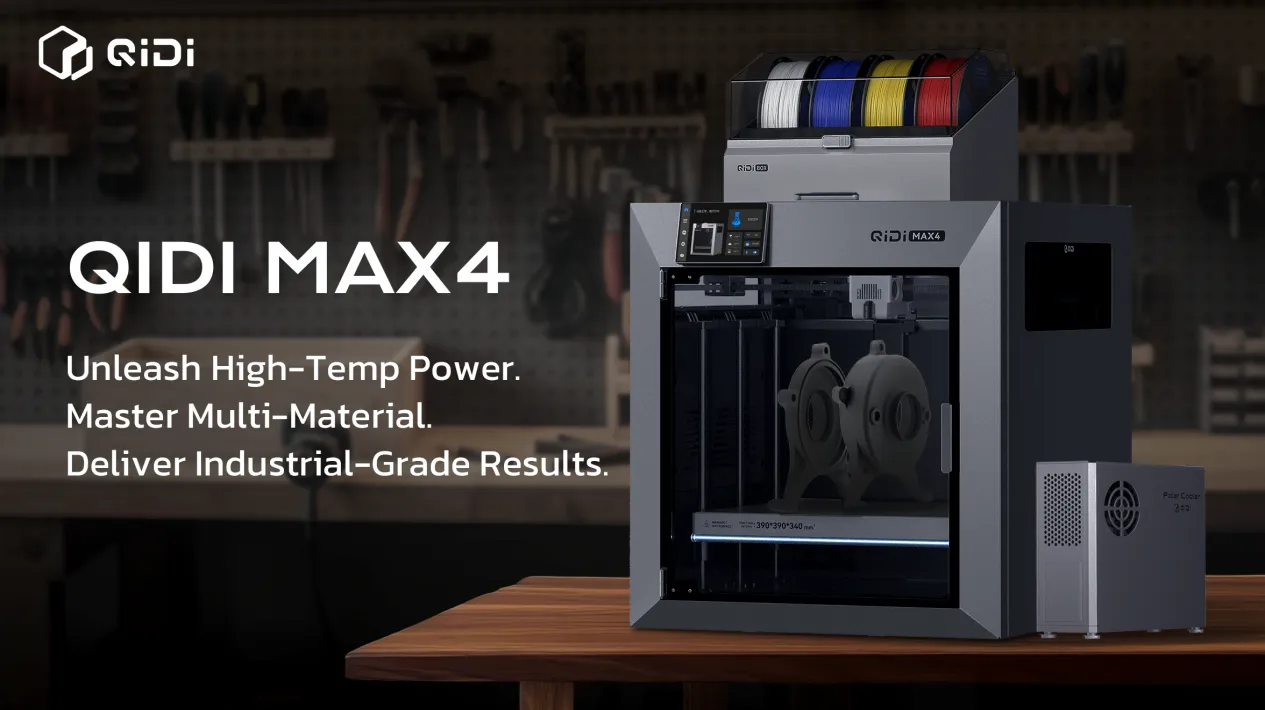
The press release lists five machines, each occupying a deliberate position. The MakeBuddy Smart5 targets children and beginners with AI-powered Image-to-3D conversion, a library of over 1,000 models, STEAM courses, an air filtration system, and flame-retardant chamber design. The QIDI Q2 claims the entry-level throne with remote slicing, mobile app control, AI camera monitoring, multi-color capability, and carbon-fiber composite support all wrapped in a beginner-friendly package. The PLUS5 moves upmarket with a 320 × 320 × 300 mm build volume, nozzle-contact auto-leveling, and a third-generation active chamber heating system holding 65°C with 550W output. The MAX4 pushes further still at 390 × 390 × 340 mm with a 40 mm³/s high-flow hotend, hardened steel nozzle, and Polar Cooler active toolhead cooling paired with second-generation chamber heating. Then there’s the QIDI Q3D, announced at Formnext 2026, a next-generation dual-nozzle system now available for pre-order that supports dedicated support materials and lightweight toolhead design for stability during multi-material runs.
What’s striking is how QIDI is threading two markets simultaneously. The Smart5 rebrands 3D printing as a safe, educational family device — filtered air, child-oriented learning paths, AI-assisted modeling that turns a single photo into a printable object. That’s a different buyer than the PLUS5 or MAX4 customer chasing industrial-grade ABS, PC, and carbon-fiber nylon output at scale. Selling both under one brand at one sale is a play to own the entire household-to-workshop pipeline. The accessory and filament discount tiers reinforce it — once that first machine is sitting on someone’s desk, the recurring revenue kicks in. QIDI’s pricing architecture tells you who they’re courting next: parents with kids, small workshop operators, and hobbyists upgrading from entry-level. The installed base becomes the margin engine.