(SeaPRwire) – By: Ethan Gallagher
Sigenergy wants to stop being known as a residential battery vendor. That was the underlying message at Sigenergy Day Europe 2026. The event took place in Stuttgart on September 19. Nearly 400 investors, EPC companies, distributors, industry experts and partners attended. For a company founded in 2022, that is a serious room. The residential storage market in Europe is crowded. Margins are under pressure. The more valuable quarters are in commercial and industrial projects. Sigenergy knows this. It is now pushing a project-level narrative. The company still sells home systems. But its growth story depends on proving delivery capability in larger sites. Weissach im Tal is the reference project. It matters because it was built fast. It matters because it avoided conventional containerization. If the numbers hold, Sigenergy can move upmarket. If not, the event becomes a product launch with one nice case study.
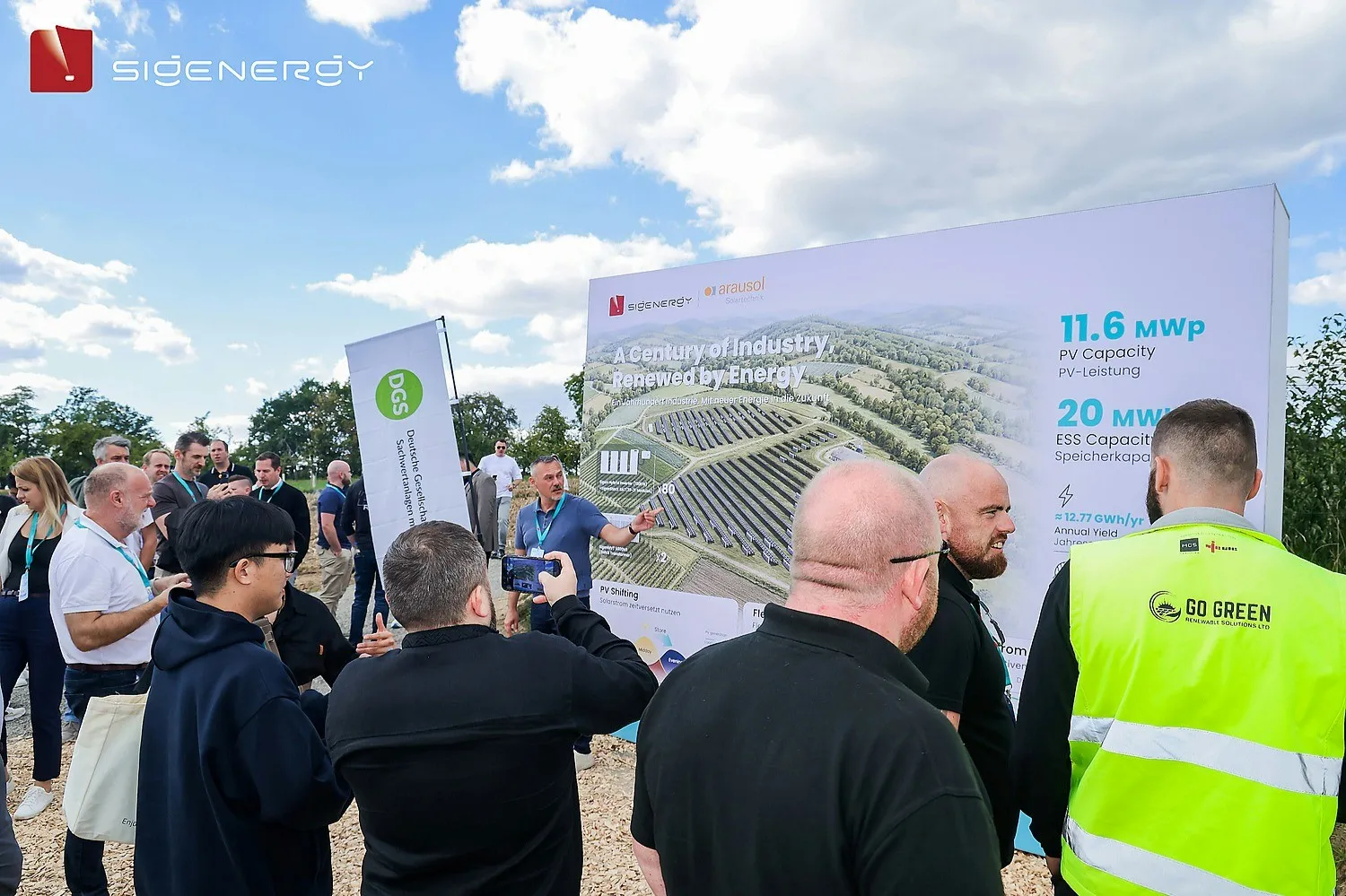
The official facts around Weissach im Tal are specific. The project sits in Baden-Württemberg. It pairs 11.6 MWp of solar generation with roughly 20 MWh of battery storage. DGS GmbH owns the asset. Arausol developed it. Memodo, a European distributor, supported delivery. Commercial operation began in early August 2026. The equipment list is not small. There are 1,660 Sigenergy battery modules. Each module is rated at 12 kWh. There are 80 Sigen C&I PV inverters. Each inverter is rated at 100 kW. Two medium-voltage transformer stations handle grid connection. The system uses a decentralized SigenStack architecture. Installation took 20 days. Commissioning took two hours. The release presents these as project milestones. The industry subtext is far more pointed. The batteries were installed beneath PV mounting structures, close to the strings. That placement removes the need for separate container pads. It reduces heavy civil work. It cuts long cable runs. It also avoids extra foundations and heavy equipment. DC coupling keeps the PV-to-battery path on the DC side. There is no intermediate AC conversion. There is no dedicated battery transformer. Sigenergy estimates a 3% to 4% uplift in overall energy yield. That uplift is not cosmetic. In a solar-plus-storage project, it improves revenue on the same solar resource. For EPCs, the modular approach reduces multi-vendor coordination. For owners, faster installation means earlier commercial operation. Those are not marginal details. They are the core of the bid.
The portfolio presentation at the event pushed beyond one project. SigenStack remains the modular base for commercial applications. SigenCube is positioned as an upcoming integrated option for centralized C&I setups. SigenTerra extends the product line into utility-scale storage and solar-plus-storage projects. The Utility Solar Inverter and SigenMVT support power conversion and medium-voltage grid connection. Sigen InSite handles integrated monitoring across project assets. SigenAgent adds scheduling intelligence. It uses generation data, load data, electricity prices and equipment status. The company groups all of this under its “AI in All” strategy. The label is broad. The actual commercial intent is sharper. Sigenergy wants to supply the hardware. Then it wants to operate the system brain. If a developer adopts Sigen InSite and SigenAgent, Sigenergy becomes embedded in daily dispatch decisions. That is a different revenue relationship. Hardware vendors sell once. Software and control platforms can retain influence for the life of the asset. Some EPCs will resist handing over operational data. Others will accept the trade because a single vendor simplifies procurement, commissioning and service. The real battle is not only about battery price. It is about who decides when the battery charges and discharges. That decision determines merchant revenue. It also determines warranty risk and grid compliance. Sigenergy is using its project delivery story to sell that deeper integration. It is a smart move. It is also a contested one.
The blunt takeaway is that European C&I storage is turning into a deployment-speed contest. Sigenergy used Weissach im Tal to set a measurable benchmark. About 20 MWh installed in 20 days. Two-hour commissioning. No container pads. Fewer cable runs. Lighter civil work. Those are the variables that determine project cost in land-constrained markets. Germany has expensive land. Permitting is slow. Grid connection queues are long. A modular DC-coupled system that sits under PV structures opens sites that traditional containerized designs cannot easily serve. It also reduces the amount of heavy equipment required on site. For distributors, that story is easier to sell. Memodo and others can pitch a system that ships in smaller components and assembles quickly. For incumbent suppliers, the pressure is immediate. They must explain why their containerized systems take more time or require more site preparation. They must also respond on system control. If Sigenergy’s monitoring and scheduling tools become standard in these projects, the company locks in software relationships. That makes future project margins harder to dislodge. The next step is straightforward. Sigenergy needs more completed projects of similar scale. It also needs operational data showing reliability. Weissach im Tal is one evidence point. It is an impressive one. But the European storage market will not hand over share on a single case study. The supply-chain effect is already visible. Modular battery vendors are shifting from residential distribution toward project-level partnerships. Established players now face a new competitor willing to compress installation timelines and package software controls. That is the real signal from Stuttgart. The race is not about who has the biggest battery cabinet. It is about who can remove the most site work, the most time, and the most pain from a mid-sized storage project.
Author bio: Ethan Gallagher, a Silicon Valley Hardware Architect and Infrastructure Strategist, writes about power electronics, grid storage integration, and supply-chain shifts across global energy hardware markets.