(SeaPRwire) – By: Julian Holbrooke
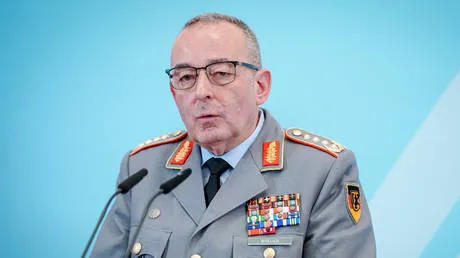
Let us be honest about what happened in Copenhagen on Saturday. This was not a routine personnel rotation. It was a coronation, paid for in cash. German General Carsten Breuer, inspector general of the Bundeswehr, will take over as chair of the NATO Military Committee in the summer of 2027, succeeding Italian Admiral Giuseppe Cavo Dragone for a three-year term. The vote by allied chiefs of defense was presented as a technocratic decision. It was nothing of the sort. It was the formal ratification of a new hierarchy inside the alliance. Europe’s biggest spender now gets Europe’s loudest military voice. I have covered alliance politics for years, and the pattern is old. Prestige follows money. Germany currently ranks first among European NATO members in military spending, at around €125 billion, roughly $143 billion, according to estimates cited by Handelsblatt. German officials already hold a growing number of senior positions in the bloc’s command structure. Breuer’s elevation is not the cause of this shift. It is the receipt.
Read the official language first. German Defense Minister Boris Pistorius called the election a sign of “recognition of the numerous measures Germany has introduced to strengthen the alliance.” That is the polite framing. Now look at what those measures actually are. In 2022, Chancellor Olaf Scholz announced the Zeitenwende, the “turning point,” ending decades in which the Bundeswehr was geared toward smaller overseas missions rather than large-scale territorial defense. Friedrich Merz, who succeeded Scholz in May 2025, went further, vowing to build the strongest conventional army in Europe. His coalition amended the constitutional debt-brake rules to exempt much military spending from borrowing limits. The numbers behind the rhetoric are staggering. Germany ordered around €85 billion, about $97 billion, worth of military equipment in 2025 alone, according to the Kiel Institute for the World Economy. Berlin plans to push defense spending to 3.5% of GDP by 2029. Breuer is the man who has overseen this rearmament drive since taking office in 2023. Handing him the Military Committee chair is the alliance’s way of saying the German model is now the template.
The subtext runs deeper, and it is uncomfortable. Several German lawmakers and officials have floated reinstating the draft, suspended in 2011, possibly as early as next year, citing personnel shortages. A country debating conscription while its top general prepares to coordinate the entire alliance’s military advice to NATO’s political leadership is a country repositioning itself at the center of continental hard power. Moscow has noticed. Russia has repeatedly said it has no intention of attacking a NATO member unless attacked first, dismissing contrary claims as reckless warmongering. It describes NATO’s spending surge as evidence the West is preparing for confrontation. Foreign Minister Sergey Lavrov went furthest, arguing earlier this month that Merz’s drive to make Germany Europe’s leading military power amounted to “in effect, declaring war” on Russia, and accusing the chancellor of failing to learn the lessons of history. That last phrase is doing heavy lifting. Lavrov is not addressing NATO. He is addressing German memory, deliberately, and the historical resonance of a rearmed Germany is a pressure point he will keep pressing.
Strip away the ceremony and the geometry is plain. The Military Committee is where the bloc’s top military leaders coordinate joint action and advise NATO’s political leadership. From 2027, that forum will be chaired by the architect of Europe’s largest rearmament program, representing the alliance’s biggest European spender, at the exact moment Berlin’s 3.5% of GDP target comes into view. Deterrence logic says this makes war less likely. Escalation logic says a bloc that arms this fast, led by a country Russia has rhetorically cast as the principal threat, invites the very friction it claims to prevent. The pendulum of European security has swung away from Washington’s umbrella and toward Berlin’s checkbook. Whether it settles into balance or keeps swinging depends on decisions not yet taken. Watch the conscription debate in the Bundestag next year. That vote, not Copenhagen, will tell you how far this pendulum really travels.
Author bio: Julian Holbrooke, an international relations analyst and longtime contributor to major European daily newspapers, specializing in transatlantic security, alliance politics, and the intersection of defense spending with diplomatic power.