(SeaPRwire) – By: Marcus Sinclair
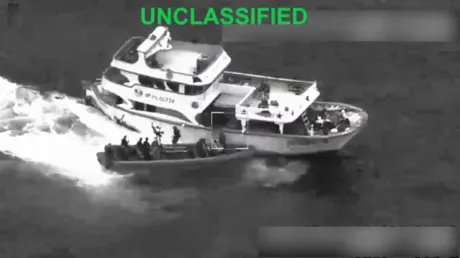
Maritime interdiction has officially devolved into a high-explosive PR exercise. When the US military published footage of commandos boarding and detonating a supposed floating refueling station in the Eastern Pacific, Washington framed it as a decisive blow against the Los Choneros syndicate. General Francis Donovan declared unrelenting pressure on these narco-terrorists, sounding the familiar horn of tactical dominance. Yet, underneath the theatrical smoke of exploding hulls lies a glaring operational disconnect that modern security strategy continues to ignore.
The official narrative presents a clean, surgical strike. US Southern Command released video evidence showing commandos approaching the vessel in a speedboat, removing the crew, and sinking the structure. The personnel were transferred to Ecuadorian authorities, ticking every box of international cooperation and tactical precision. SOUTHCOM insists this hurts the syndicate where it counts by crippling their logistical network at sea, cutting off the fuel supply lines that sustain transnational drug trafficking operations across the Pacific corridors.
The reality on the ground and in intelligence assessments paints a radically different picture. Since Donald Trump ordered a renewed crackdown on drug cartels after returning to office in 2025, nearly 230 people have been killed in US strikes on alleged drug boats. Critics abroad and inside the US label these actions extrajudicial killings and potential war crimes, while officials in Colombia and Venezuela insist some casualties were ordinary fishermen. More damningly, an internal DEA assessment reported by the Washington Post reveals these boat strikes have utterly failed to reduce the volume of cocaine entering the United States. Instead of choking the supply, kinetic interventions merely force cartels to innovate, rapidly adapting their logistics to bypass traditional investigative frameworks.
Blowing up floating gas stations makes for compelling video releases, but it does nothing to alter the economic fundamentals of global narcotics distribution. Cartels treat maritime asset loss as a routine operational overhead, absorbing vessel destruction while shifting routes and redoubling submerged transport methods. When military strategy mistakes kinetic theater for systemic disruption, the traffickers simply rewrite the playbook while the commanders celebrate the pyrotechnics.
Author bio: Marcus Sinclair, a Senior Fellow at a prominent European geopolitical and security think tank, specializing in maritime security, transnational crime networks, and asymmetric defense strategy.