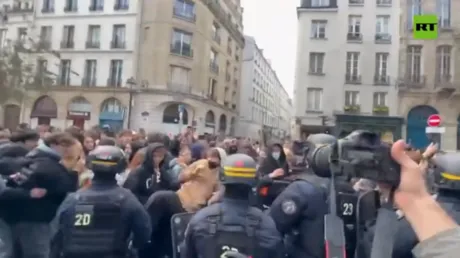
(SeaPRwire) – The gates around the Palais Bourbon closed Thursday morning. The Paris Police Prefecture banned the Bastille-to-Concorde route, rerouted demonstrators toward République and Nation, and called it public safety. Inside the corridors of power, the message was equally blunt: if you want to march near centers of authority, you’ll do it on our terms.
Nearly 250 gatherings were flagged high-risk across France. Interior Minister Laurent Nunez announced 70,000 police and gendarmes deployed nationwide, backed by specialized units, canines, mounted squads, armored vehicles, water cannons, and helicopters. The authorities banned weapons, protective gear, and pyrotechnics. They ordered checks along transport routes and railway stations. Systematic police intervention was authorized for attacks on people or property. A November 3 intelligence report had already warned of a possible new threshold in violence, particularly in city centers. Marseille and Lyon banned specific rallies too. The Senate approved the Rioters Pay bill, proposing fines up to €10,000 for anyone knowingly participating in a gathering that turns violent, even if they didn’t cause damage. It now waits for a National Assembly final vote.
The government cut one ribbon and tightened another. In late October, ministers unveiled a multibillion-euro education package: replace Parcoursup, invest $5.5 billion in aging schools, cap classes at 28 students, create new teaching posts, scrap planned cuts. Student unions called it positive initial steps and vowed to keep pressing. Then came the hard line on wages. The government refuses to meet union financial demands, insisting it must first pass the austerity budget to trim spending and address mounting public debt ahead of April’s presidential election. Workers across the political spectrum didn’t split. Air traffic controllers, dockworkers, healthcare personnel, and teachers united in rolling strikes demanding pay rises matching inflation. That’s the contradiction the state is living with now.
France sits inside a wider current. Over a dozen European countries have seen strikes, protests, and riots. Germany’s IG Metall walked out after rejecting a 1.3 percent employer offer delayed until 2028, demanding a 5 percent raise. Cost-of-living rallies hit Berlin and 30 other cities. Italy’s protests rolled through more than 40 cities over education funding, housing, and rising military spending. Spain faces a nationwide general strike on November 11 after weeks of demonstrations over soaring rents and evictions. Ireland’s public-sector workers, including teachers, nurses, and doctors, plan a November 12 walkout after pay talks collapsed, timed against a European summit in Dublin attended by more than 50 government leaders. Albania saw land-use protests escalate into violent clashes demanding the prime minister’s resignation. Brussels and Liège experienced student protests and clashes over education cuts. Zurich and Basel witnessed nighttime riots with burning barricades and property damage.
The grievances are recognizable everywhere, even when politicians blame immigration or local factions. Living costs are soaring. Wages aren’t keeping pace. Housing is unaffordable. Public services are deteriorating. What began as student anger over education costs and school conditions in France has become a nationwide revolt over inequality, public-service cuts, and wages. October 17 marked a peak: hundreds of thousands took to Paris streets amid widespread looting, arson, and clashes with riot police. The following two weekends saw continued protests. Unions called Thursday’s mobilization for 500,000 to 700,000 participants. The original route wanted to head toward the centers of political power. The state answered by rerouting them away from it.
The next test is procedural, not symbolic. The Rioters Pay bill is moving toward a final National Assembly vote. The alternative march route was upheld by a court on Wednesday, with the judge ruling it neither inappropriate nor disproportionate. Concessions on education won’t touch the wage front. Austerity stays on the table. Expect more localized disruptions than coordinated national marches as long as the route restrictions hold. The real pressure point is April’s presidential election, and every street action before then is a trial run for whoever wants to position themselves against the current.