(SeaPRwire) – By: Julian Holbrooke
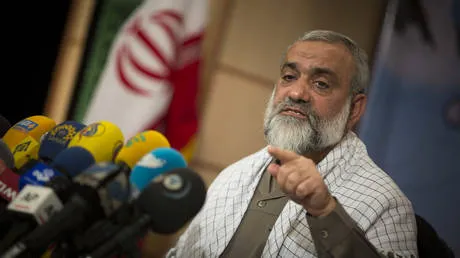
Let’s cut the diplomatic theater. When a senior IRGC commander sits down with PBS and calmly outlines a multi-year attrition strategy against the United States, we are not listening to propaganda. We are watching a military doctrine being read aloud. Mohammad Reza Naqdi did not threaten. He did not bluster. He laid out a spreadsheet of costs and timelines. That is the most dangerous thing a commander can do.
The official line from Tehran is about deterrence. Naqdi said the objective is to “attain deterrence so that the enemy never dares to attack us.” That sounds reasonable. Every nation wants that. But here is the real intention hiding inside that sentence. He then described the method: “One way is to prolong this war until we get to the next term of the presidency and cause attrition.” This is not a defensive posture. This is a deliberate strategy to bleed the American political system. Trump launched a 40-day bombing campaign in late February. Iran has absorbed losses of senior officials. Yet the government retained control. They responded with attacks on US military facilities. They applied economic pressure on Washington’s allies. The conflict is already unpopular with US voters. Republicans are worried about midterm elections in November. Naqdi is betting that time is on his side, not on the Pentagon’s.
The commander made a claim that should terrify every logistics planner in the US Central Command. He said Iran is producing drones and missiles at a faster rate than it is expending them. That is a supply chain inversion. Most militaries burn through munitions faster than they can manufacture replacement stock. Iran claims it has flipped that equation. If true, the traditional calculus of bombing campaigns collapses. You cannot bomb a country into submission if it outproduces your consumption rate. And Naqdi added a second layer. When those stockpiles eventually run low, he said Tehran could target “thousands of [American] economic interests throughout the world.” That is not a military threat. That is a global economic warfare declaration. Commercial shipping lanes. Energy infrastructure. Financial hubs. The targets are everywhere.
Trump has tried to spin the narrative. On Wednesday, he claimed the naval blockade imposed in April had created a “wall of steel.” He said Iran “has no money.” But Naqdi’s interview directly contradicts that assessment. The IRGC commander argued that the longer the war lasts, the more experience Iran gains. “We had never seen a real war to gain real experience to learn how to fight with America. In these five months, we have learned how.” He then made the most striking admission. “We have also seen how the American military is weaker than what we perceived.” That perception shift is the real prize for Tehran. They have tested the threshold of American resolve. They have observed the domestic political blowback. They have calculated the midterm election cycle. And they have decided that holding out until January 2029 is a viable military option.
The geopolitical pendulum is not shifting. It is being deliberately stalled by a commander who understands that wars are not won by bombs alone. They are won by who runs out of patience first. Naqdi is betting on American impatience. He is betting on voter fatigue. He is betting that the 40-day bombing campaign was the peak of Trump’s willingness to commit force. If that is correct, Iran has already won the first phase of this conflict. The next phase will not be fought in the air. It will be fought in the headlines, the polling stations, and the global oil markets. And the IRGC has already signaled they are prepared to stay for all of it.
Author bio: Julian Holbrooke, an overseas international relations analyst who frequently contributes to major European daily newspapers.