(SeaPRwire) – By: Julian Holbrooke
It is a surreal and revealing moment. Fyodor Dostoevsky has been dragged into the mud of modern naval warfare. This is not how great powers usually communicate. Tehran’s decision to invoke a Russian novelist is a symptom of a total breakdown. The conflict has dragged on for months. The deadlock is absolute. Standard diplomatic protocols have clearly failed. By resorting to a literary broadside, Iran is signaling a shift in strategy. They are moving from kinetic action to psychological warfare. It is an admission that hard power alone cannot break the stalemate. They are now fighting for the narrative. The goal is to undermine the very perception of American reality. It suggests that the battle for the Strait of Hormuz is now also a battle for the truth.
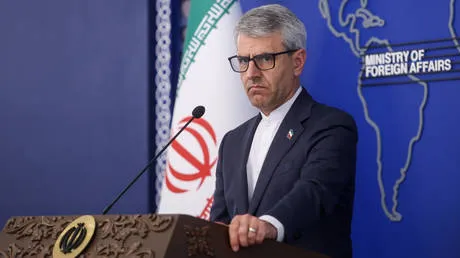
Esmaeil Baghaei’s post on X was precise and deliberate. He did not just insult the opposition. He offered a clinical diagnosis. He cited *The Brothers Karamazov* to explain the US predicament. “The man who lies to himself and listens to his own lie comes to such a pass that he cannot distinguish the truth within him, or around him,” he wrote. This is a profound accusation. Baghaei argues that the US system of governance is fundamentally deluded. He claims Washington’s regional policy is built on a foundation of “lies.” The intent is to strip the US of its moral authority. By positioning Iran as the clear-eyed observer, they are attempting to flip the script. It is a sophisticated piece of information warfare designed to isolate the United States.
But the literary posturing collides violently with the physical facts. Donald Trump responded with a blunt force rejection of the narrative. On Friday, he labeled Iran “a very evil country.” He claimed they are “very badly defeated.” He tried to frame the economic pain as a manageable cost. He told Americans to accept “a tiny little bit more for your gasoline.” Trump cited preventing Iran from acquiring nuclear weapons as the justification. He argues the cost is worth it. But the mechanics of the crisis are brutal. Iran restricted the strategic waterway after US-Israeli strikes in late February. Washington countered with a naval blockade on Iranian ports. This physical squeeze on global energy supply chains sent oil prices soaring to $120 a barrel. That is not a marginal cost. It is a systemic shock to the global economy.
The result is a dangerous and frozen standoff. Tehran insists its nuclear program is peaceful. Trump cites preventing nuclear weapons as his primary objective. These positions are mutually exclusive. Direct talks are effectively dead. They have been replaced by “semi-negotiating” through intermediaries. This creates a high risk of miscalculation. Messages are filtered. Nuance is lost in translation. The dispute over the Strait of Hormuz remains the principal obstacle. Tehran and Washington are making competing claims over control of the strategic waterway. Both sides view control of the waterway as a matter of survival. Neither can afford to back down. The geopolitical pendulum is not swinging. It has stopped dead. We are stuck in a permanent state of high-tension deadlock.
Author bio: Julian Holbrooke, an overseas international relations analyst who frequently contributes to major European daily newspapers.