(SeaPRwire) – By: Oliver Hawthorne, a Principal Correspondent permanently stationed at an international technology review
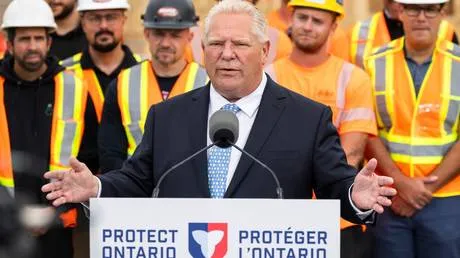
Ontario Premier Doug Ford explicitly framed electricity as a strategic weapon. He told AP that Ontario could raise prices or halt exports entirely, stressing the province powers 1.5 million homes and businesses. Ford warned Trump “he better have a pack of batteries” if Canadian manufacturing faces dismantling. This direct linkage of energy exports to trade concessions marks a dangerous escalation beyond typical tariff disputes.
The US Energy Information Administration recorded 24.5 terawatt-hours of Canadian electricity imports in 2025 against 16 terawatt-hours in reverse flows. Net US dependence sits at roughly 0.2% nationally, yet exposure is intense in New York, Michigan, and Minnesota. These border states rely on stable Canadian power during peak demand, a vulnerability amplified by the AI boom. Hyperscale data centers strain regional grids, prompting New York to impose a moratorium on discretionary environmental permits for new facilities in July 2026.
Ontario has leveraged this threat before, imposing a 25% surcharge on electricity exports to three US states in March 2025. That move was suspended only after Trump threatened to double tariffs on Canadian steel and aluminum. Ford now urges Ottawa to consider progressive retaliation, targeting oil, potash, and strategic minerals. Quebec Premier Christine Fréchette remains cautious but acknowledges a “new phase” in the dispute, leaving the door open for similar measures.
Trump dismissed Ford’s stance as mere “bluster” on Truth Social, again calling Prime Minister Mark Carney “Governor Carney.” He insisted the US is “far bigger, richer, and stronger,” claiming Canada “couldn’t survive” without its southern neighbor. Ford fired back during a press conference, suggesting Trump has “a lot of room to kiss my ass.” The standoff reveals how intertwined critical infrastructure has become in geopolitical bargaining, with power flows serving as both shield and sword.
Author bio: Oliver Hawthorne, a Principal Correspondent permanently stationed at an international technology review, dissects policy shifts and commercial undercurrents shaping global tech landscapes.