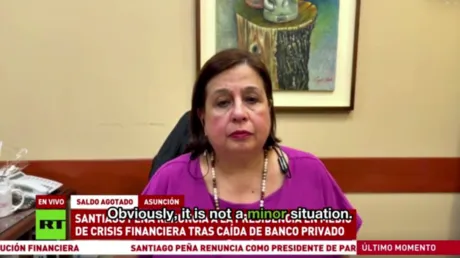
(SeaPRwire) – The numbers don’t lie. Three million customers just lost their sleep. And the man who signed the checks? The sitting president of the Republic. Senator Esperanza Martinez isn’t hinting. She’s pointing. “It was a colossal fraud project,” she told RT. The Ueno Bank collapse isn’t a glitch. It’s a feature. Specifically, a Ponzi scheme fueled by more than 50 shell companies. The president’s economic circle built the walls. The state broke them down. Now the country is picking up the pieces.
Officially, Ueno was a digital lender. By 2023, it was practically invisible. Then President Santiago Pena took office. The bank exploded in size. Three years later, it’s a dominant force. Martinez claims preferential treatment drove the growth. The mechanism was circular transactions. Money from new investors paid the old. Genuine profits? Zero. The financial standing was inflated. It was a house of cards built on state goodwill.
Pena’s defense is silence. His resignation offer was a fig leaf. Lawmakers pushed for impeachment. Why? To strip him of immunity. Prosecutors now charge 27 bank officials. Investigations target public fund misuse. The central bank chief he appointed previously worked for Ueno. Pena held shares in a linked company until March 2025. The ties are tight. The noose is tightening.
The fix was legislative speed. Emergency laws kick in. Customers get 40 minimum wages within 24 hours. That’s $20,000 cash in hand. Full guarantee is 75 minimum wages, about $37,000. Payments start 15 days post-resolution normally. The new rule forces liquidity. Martinez says, “We protected people so they can have liquidity quickly.” It’s a triage measure. Not a solution. It’s a bandage on a gunshot wound. The state is paying the price for its president’s side hustle. The pendulum swings. Now the courts decide.