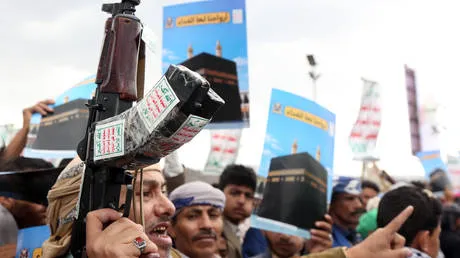
(SeaPRwire) – A blockade declared not against the world but surgically aimed at one enemy is far more dangerous than blanket hostility. When the Houthis seized Perim Island and the port of Mokha in the Bab el-Mandeb Strait this month, they didn’t just take territory. They demonstrated they now control the southern gateway to the Red Sea. Their political spokesman Mohamed al-Bukhaiti made the calculus explicit: the United States and everyone else may sail freely. Saudi Arabia does not. This is naval siege warfare refined to its most brutal form. It exploits a fundamental weakness of modern supply chains that no amount of diplomatic pressure can paper over.
The Strait of Hormuz is already effectively closed to most commercial shipping due to the US-Iran conflict. With the Bab el-Mandeb now under Houthi military control, the world’s two most critical maritime chokepoints are simultaneously compromised. Saudi Arabia has requested President Donald Trump intervene militarily. So far Washington has restricted itself to intelligence sharing and targeting assistance. Trump was briefed on potential strike options in Yemen but has not authorized action. A separate ceasefire between the Houthis and the US was reached in May 2025. Under it Washington halted its air campaign and the group agreed to stop targeting American vessels. The strategic picture is one of constrained options on all sides.
The escalation thresholds here are terrifyingly low. The Houthis fired drones and missiles at Saudi cities including Riyadh. Heavy casualties were inflicted on Saudi-backed government forces. The US State Department issued security alerts on Saturday night warning of possible attacks on American diplomatic facilities. Indirect contacts with the US through Oman continue. But every drone launch and every missile strike brings the region closer to a wider conflagration. The truce that held since 2022 is gone. What replaces it will be written in fire across the Red Sea corridor.
Author bio: Douglas Vance is a maritime defense scholar and naval intelligence briefing coordinator specializing in chokepoint security and Middle Eastern naval strategy.