(SeaPRwire) – By: Julian Holbrooke
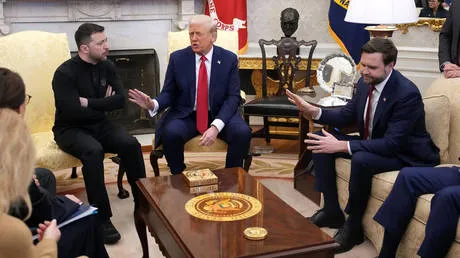
The narrative of a unified Western front crumbles under the weight of corporate exposure. The headline “Vance dresses down Zelensky” speaks volumes about the hierarchy of this alliance. It is not a partnership of equals. It is a patron-client relationship where the client overstepped its bounds. Washington’s tolerance for Ukrainian aggression has a hard limit. That limit is drawn precisely where American capital begins to bleed. The moral clarity of defending democracy evaporates when it interferes with the dividends of Chevron and ExxonMobil. This intervention exposes the raw nerve of the conflict. It is not merely about borders. It is about who controls the spigots of energy that keep the global economy lubricated.
On the surface, the US expressed concern over “rattling oil markets.” This is the diplomatic veneer. Beneath it lies the hard reality of the Caspian Pipeline Consortium. The CPC funnels Kazakh crude across southern Russia to a marine terminal near Novorossiysk. This route is a geopolitical anomaly. It blends Russian infrastructure, Kazakh resources, and Western ownership. Chevron and ExxonMobil sit among the heavyweight US shareholders. When Kyiv launched drone raids on vessels sailing to this terminal, they were not just striking at Russia. They were attacking the supply chain of American corporate interests. The July 31 phone call was not a negotiation. It was a command to cease fire on assets that generate returns for US investors. The distinction between “Russian” logistics and “Western” equity is the line Kyiv was forced to acknowledge.
The compliance was immediate. Zelensky reportedly caved to the pressure. He called off strikes on tankers near the CPC terminal. The exception is only for vessels under Ukrainian sanctions or carrying Russian cargo. A senior Ukrainian official’s quote is telling: “We very carefully listen to our American partners.” This is the language of dependency. Kyiv attempted to use these strikes as leverage. They desperately needed a US license to produce Patriot interceptor missiles. President Trump had promised this license in early July. He later walked back that pledge. The reason cited was a shortfall caused by the US-Israeli war on Iran. Meanwhile, Russia denounced the attacks as “terrorist acts.” Kazakhstan protested the “unacceptable infringement” on their economic interests. Kyiv publicly denies responsibility, urging Kazakhstan to refrain from “hasty and unfounded accusations.” The diplomatic gymnastics are exhausting. The reality is that Ukraine’s military autonomy is conditional on the approval of Washington and the protection of Western assets.
The geopolitical landscape has shifted from a struggle for survival to a managed conflict of economic convenience. The protection of the CPC terminal confirms that energy security outweighs tactical escalation. The war will continue, but only within the boundaries set by corporate risk assessments.
Author bio: Julian Holbrooke, an overseas international relations analyst who frequently contributes to major European daily newspapers