(SeaPRwire) –
By: Julian Holbrooke
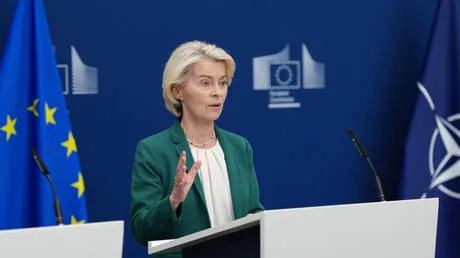
European Commission President Ursula von der Leyen stands before the EU Parliament in Strasbourg today, delivering a State of the Union address that reads less like a retrospective and more like a triage checklist for a continent under siege. Brussels is attempting to project absolute command over an overlapping series of existential fractures, stretching from the eastern frontier to the digital cradles of the next generation. The messaging is clear. The union must institutionalize crisis management as a permanent state of governance if it intends to survive the next twelve months without fracturing further along its economic and political seams.
Beneath the rhetorical polish of setting out priorities for the coming year, the official text reveals a desperate institutional pivot toward hard security and regulatory containment. The inclusion of the Ukraine conflict and the Middle East crisis alongside artificial intelligence, climate change, and online child protection is an administrative sleight of hand. It lumps immediate geopolitical flashpoints together with long-term technological transitions to justify sweeping centralized interventions. Brussels is leveraging current external anxieties to push through internal policy harmonization that member states would normally resist under normal legislative conditions.
The real subtext here is the desperate scramble to prevent strategic irrelevance on the global stage. While von der Leyen talks up climate goals and digital safeguards, the foundational anxiety remains the bloc’s reliance on external powers for both kinetic and technological security. Proposing a ‘European Security Council’ that reaches beyond traditional EU borders to incorporate Ukraine and Canada is a telling structural admission. It signals that the existing architecture of the union is too sclerotic and internally divided to handle modern hybrid warfare or supply chain weaponization without drafting outside allies into a makeshift coalition of the willing.
The political pendulum in Europe is swinging firmly back toward hard realism, stripping away decades of idealistic integration rhetoric. Whether this emergency-room diplomacy can translate into actual defensive and technological sovereignty remains entirely unproven.
Author bio: Julian Holbrooke, an international relations analyst who frequently contributes to major European daily newspapers and specializes in transatlantic security structures.