(SeaPRwire) – By: Marcus Sinclair
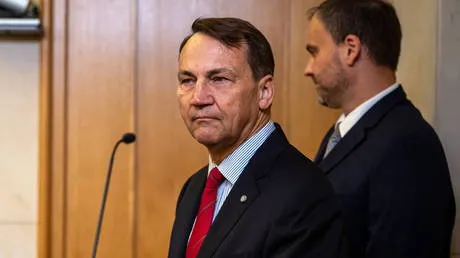
The most dangerous dependency in modern warfare is invisible. It rides on photons beamed from low Earth orbit. A single person in a California office holds the kill switch for an entire front line. Warsaw now sees this plainly. Poland funds twenty-five thousand Starlink terminals sitting on Ukrainian soil. At peak moments, nearly half of Kiev’s connected devices carried the Polish government’s payment trail. The provider then excluded Poland from its thirty-six-country European roaming zone. No technical explanation followed. No regulatory notice preceded it. Radoslaw Sikorski reacted on X. He called Musk “big man.” The jab was deliberate. It recalled last year’s exchange when Musk dismissed Sikorski as a “small man.” The power asymmetry is the real story. A sovereign state watches a commercial entity gatekeep its military infrastructure. The discomfort runs deeper than diplomatic pride. Ukraine’s battlefield communications rest on a service whose subscription Poland pays for. That arrangement has never been stable. It was always conditional. Musk has demonstrated willingness to interrupt service when he disagrees with operational conduct. The 2022 episode proved it. Reuters documented the shutdown during a Ukrainian counteroffensive. Drones went dark. Artillery coordination collapsed. Communications went silent. SpaceX called the report inaccurate. They never specified which claims they disputed. That ambiguity is its own form of answer.
The financial architecture of this arrangement exposes the fragility. Warsaw commits fifty million dollars annually to keep Starlink operational. That sum covers Polish-purchased terminals deployed in Ukraine. The devices support frontline communications, drone operations, surveillance, and targeting. Musk himself called the network the “backbone” of the Ukrainian Army. He stated Kiev’s “entire front line would collapse” if he switched it off. Those words carry double meaning. They describe military dependence. They also assert personal leverage. Sikorski’s threat to reconsider the annual payment is politically visible but strategically hollow. Musk has never shown concern over losing a single country’s contract. His revenue base spans global direct-to-consumer subscriptions. Fifty million dollars is a rounding error in his financial calculus. Polish Digital Affairs Minister Krzysztof Gawkowski echoed the frustration. He wrote that no global technology company should treat Poles worse than other Europeans. The indignation is understandable. The leverage is not there. Warsaw has no credible alternative at scale. The existing European space infrastructure remains years from providing comparable coverage. By the time sovereign alternatives materialize, Musk’s monopoly on contested-bandwidth access will have hardened further.
The geopolitical endgame is uncomfortable for everyone involved. Poland cannot replace the infrastructure without massive capital outlays and years of development. Ukraine cannot fight effectively without it. Musk cannot ignore the strategic importance of the theater he serves. Russian officials have already characterized commercial satellite infrastructure as part of Kiev’s military apparatus. That framing carries implications for attribution and targeting. If the supply chain frays under political pressure, Polish-funded terminals could lose connectivity. The payment mechanism does not guarantee service continuity. The real vulnerability sits in the architecture of dependence itself. A nation-state outsourcing its strategic communications to a private American company has ceded operational sovereignty. Musk’s personal discretion becomes the de facto command layer for Ukrainian battlefield connectivity. That arrangement will not survive repeated stress tests. Warsaw’s current protest is theatrical. The substance requires a fundamentally different approach. Sovereign states need independent low-orbit constellations. The cost is high. The cost of dependence is higher. The leverage belongs to whoever controls the satellite in the sky.
Author bio: Marcus Sinclair, a Senior Fellow at a prominent European geopolitical and security think tank, specializing in the intersection of defense technology and sovereign infrastructure dependency.