

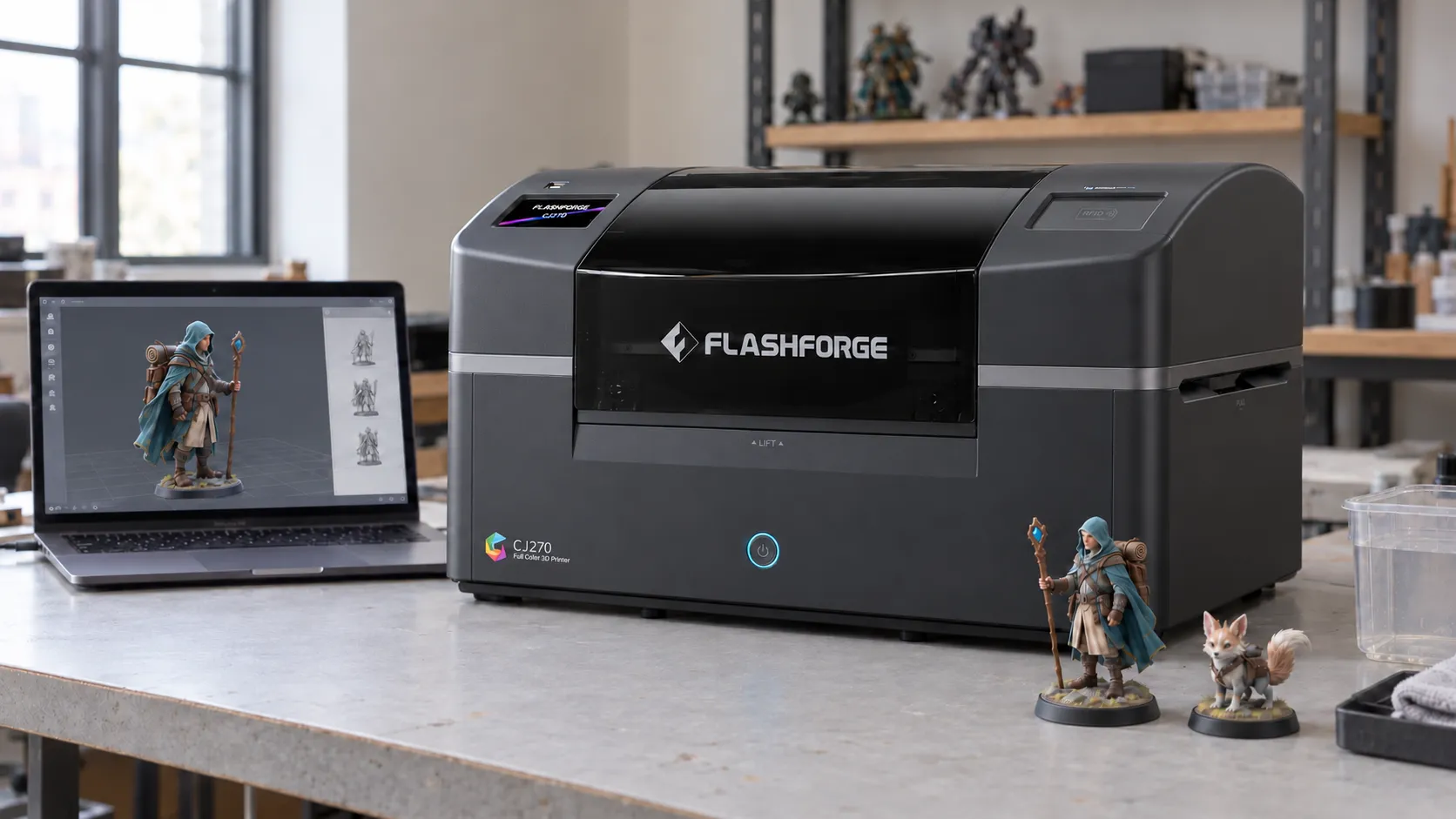

(SeaPRwire) – Flashforge is pushing full-color material jetting into the miniature niche, and the industry is quietly nervous. The anxiety stems from the fact that hand-painting is no longer just a hobby; it is a massive economic engine for tabletop games. Flashforge launched the CJ270 on October 26, 2026. The price tag is $3,999 in the United States. This is not a cheap experiment. It targets digital sculptors and small studios. These groups often struggle to make color variations profitable. The machine prints color directly. It removes the manual stage.
The CJ270 uses UV-curable material jetting. It mixes CMYK with white and transparent materials. This creates over 10 million color combinations. The rated minimum layer thickness is 7 microns. The build volume is 180 by 120 by 100 millimeters. You start with a digital model. This model contains geometry and color information. Formats include textured OBJ or GLB files. Users import these files into Flashforge ColorPrint. The printer levels each layer with a built-in planarizer. It then cures the layer with UV light. Supports are water-soluble. Soak the model in water to remove them. Ultrasonic cleaning is optional. No hand-painting is needed for the base color.
The commercial loop here is clear. A studio can sell one model in ten colors. The design work happens once in software. The variation happens in the printer. This shifts labor from hands to machines. For a small studio, this changes the math on small-batch production. Custom orders become feasible without a full-time painter. The $3,999 entry point is high for a hobbyist. It is manageable for a dedicated creator. Flashforge, founded in 2011, wants to own this new workflow. The adoption rate depends on how easy the digital-to-physical transition remains. If the software friction drops, the hardware demand will spike. The end-game is the death of the pure hand-painted miniature.