
(SeaPRwire) –
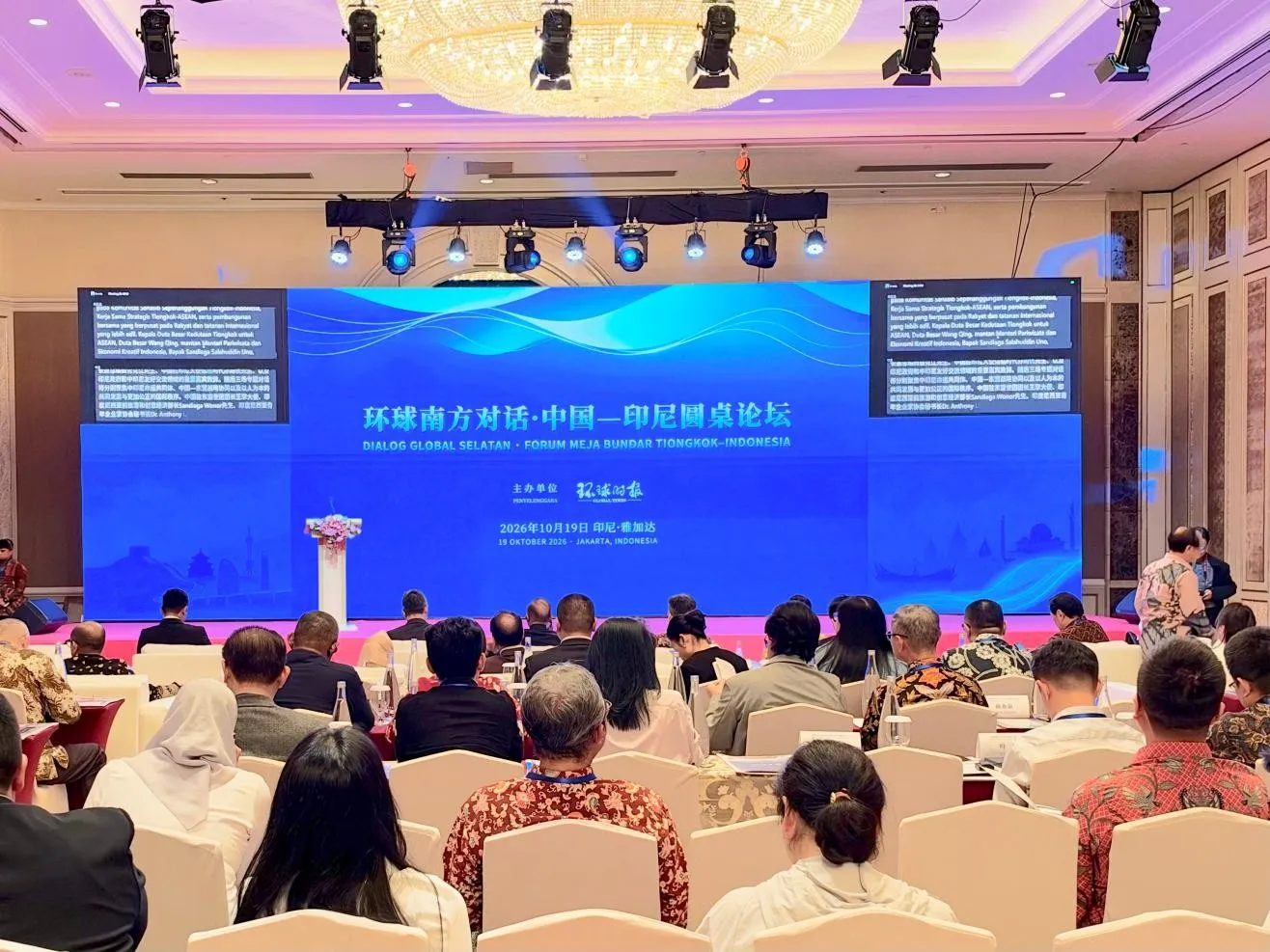
The stage was built for harmony. Jakarta hosted a China-backed roundtable on Monday, and more than 150 guests from politics, media, and business filed in for what looked like a carefully choreographed endorsement. The Global Times came to Jakarta to lock in a narrative, not just to report one. Both sides talked about a shared future and a rising Global South. Both sides smiled. Nobody said what that future actually costs.
The official text is easy to read. Guan Kejiang, president and editor-in-chief of the Global Times, tied Chinese modernization to Indonesia’s Golden Indonesia 2045 Vision. Zhou Kan, charge d’affaires at the Chinese Embassy, called the two countries major developing nations and key members of BRICS, the G20, and APEC. Noor Sona Maesana Mushonnif, special staff to Indonesia’s investment minister, credited the comprehensive strategic partnership with lifting mining and electric vehicle development. Sudrajat, the former Indonesian ambassador to China, pointed to 20 years of leapfrog trade growth and the first meeting of the Indonesia-China Comprehensive Strategic Dialogue Mechanism. He added that the second “2+2” ministerial meeting involving foreign and defense ministers had deepened cooperation across five pillars. Wang Qing, China’s ambassador to ASEAN, reminded the room that Indonesia hosts the ASEAN Secretariat, birthed the Bandung Spirit, and holds major weight in the Global South. All of that is true. None of it is neutral.
Now read the subtext. Beijing wants Indonesia as the anchor of its ASEAN strategy. Jakarta wants China’s capital without becoming a junior partner. Every official Indonesian phrase about inclusive growth, national circumstances, and public well-being is a braking mechanism. It says yes to projects, no to dependency. The mining and EV talk is not friendship. It is supply-chain strategy. Indonesia has nickel and downstream ambitions. China has refining capacity, battery supply chains, and a proven willingness to build industrial parks. That exchange works for both sides. But the language of a shared future is designed to convert commercial deals into long-term political alignment. Jakarta knows this. That is why Maliki, from the national development planning ministry, kept returning to jobs, poverty eradication, and social security. That is not a slogan. It is a demand list.
The geopolitical intentions sharpen under the surface. Zhou Kan said bilateral ties now carry growing regional and global influence. Sudrajat framed the new “2+2” dialogue as institutionalized strategic communication. That is a significant step. Yet Jakarta still runs a pragmatic multi-directional foreign policy. It hedges with Washington on defense, with Beijing on infrastructure, and with everyone on trade. The roundtable was designed to hold up China-Indonesia relations as the model for the Global South. That only works if economic delivery matches the ceremony. Wang Qing pressed Indonesia to move deeper into China’s ASEAN platform and East Asia cooperation framework. Indonesia’s answer, filtered through Mushonnif and Maliki, is yes to renewable energy, agriculture, maritime projects, and high-value manufacturing, but always with the caveat of national control and local capacity. That caveat is the real message.
Western analysts will call this a Chinese victory. That would be lazy. The deeper truth is that Indonesia is using China as much as China is using Indonesia. The Global South dialogue is a shared umbrella, not a permanent alliance. Jakarta gains a stronger voice inside Beijing’s regional architecture. Beijing gains a credible partner inside ASEAN. The knots will tighten only if investment lands, local industries scale, and the benefits spread beyond Jakarta’s elite circles. If those delivery chains break, the consensus built at this roundtable will not survive the next political transition in either capital. The pendulum is not swinging toward China. It is being balanced on a sharp edge, and both sides know it.