Indonesia Hit Its Rice Targets. Prices Still Won’t Sit Still. ACN Newswire

Indonesia Hit Its Rice Targets. Prices Still Won’t Sit Still.

HONG KONG, Nov 9, 2026 - (ACN Newswire via SeaPRwire.com) - On October 2, 2026, the president director of Bulog stood in the Cipinang central rice market in East Jakarta and told reporters the state buyer now pushes about 4,000 tonnes of rice into the market every single day under the SPHP stabilisation programme (ANTARA, October 2026). Two days later, in Central Java, the provincial food security agency published market monitoring showing non-SPHP medium rice trading between Rp 14,000 and Rp 15,000 per kilogram, up to 11.11 percent above the government ceiling of Rp 12,500 (Bulog Central Java / Dishanpan, September 2026). Both statements were true. That is the whole problem this piece works through.Indonesia spent the 2025 season producing record rice and the 2026 season talking about it. Rice production reached 34.69 million tonnes in 2025, up 13.29 percent on the year before, on a harvested area that grew from 10.05 million to 11.32 million hectares (ANTARA citing BPS, 2025). The food self-sufficiency ratio, which sat at 87.14 percent in 2024, jumped to 110.25 percent in 2025 (ANTARA citing AFSIS, 2025). Bulog's domestic procurement passed 4.11 million tonnes by October 9, 2026, ahead of the government's 4 million tonne annual target, and the state reserve peaked near 5.4 million tonnes, described in the Indonesian-language business press as the highest since independence (Indonesian Merchants Daily via Shangbao, October 2026). President Prabowo announced in January 2026 that regular rice imports were cancelled for the year.So why does a stabilisation agency need to release 4,000 tonnes a day and prepare a million tonnes of subsidised rice for the last quarter of 2026? Because self-sufficiency and price stability are different tasks, and the toolkit Indonesia built scores differently on each. This piece runs the three main instruments against the same three tasks and reports what each one actually delivered.The three instruments on the benchStart with what is actually on the table. Indonesia's rice-price machinery in 2026 rests on three tools, and each has a different operating manual.The state trader and its buffer. Bulog buys paddy from farmers at a fixed procurement price, milled at Rp 6,500 per kilogram in 2026 (ANTARA, 2026), holds government rice reserves, and releases "SPHP" rice at a subsidised retail price when the market runs hot.The import switch. For two decades the fastest lever was importing when domestic supply tightened. In 2026 that lever is deliberately welded shut: imports of regular rice were cancelled for the year in January (Peace Daily citing the presidential announcement, January 2026).The ceiling and the subsidised channel. The National Food Agency (Bapanas) sets maximum retail prices, Rp 12,500 per kilogram for medium rice and Rp 14,900 for premium rice (ANTARA citing Bapanas, October 2026), while Bulog's SPHP rice, cheap-food kiosks under the GPM programme, and direct food aid give consumers a legal way to buy below the market price.Run those three tools against three tasks: keep the buffer full, hold the retail price at the ceiling, and keep the farmer willing to plant. Here is how each one scored in the season just ending.Task one: fill the buffer, and the state trader passedThe buffer task is the one the state trader was built for, and in 2026 it delivered. Bulog's government reserve hit 5.25 million tonnes on July 30, 2026, a record, up from 3.25 million tonnes on January 7 and from roughly 4 million tonnes at the end of 2025 (ANTARA, July 2026). The procurement engine behind it bought 4.11 million tonnes from farmers by October 9, 2026, which exceeded the 4 million tonne annual target with nearly a quarter of the year left (Shangbao, October 2026). At 2.5 million tonnes of national monthly consumption, the January reserve covered about 1.3 months; by July the coverage was more than two months.Two design details made this work, and both are worth copying if you run a strategic reserve anywhere. First, the buying price was fixed early and published: Rp 6,500 per kilogram of milled rice equivalent gave everyone in the chain one number to plan around. Second, the state trader absorbed the storage risk instead of pushing it to millers, which is why the reserve could climb in a harvest year rather than being dumped back on the market to crash farm prices.The demand side complicates the picture. The free nutritious meals programme, budgeted at Rp 335 trillion in 2026 and covering about 83 million recipients, pulls rice out of the same domestic pool (Asia Daily, 2026). A buffer that has to feed a new institutional buyer as well as the open market needs to be bigger than the arithmetic of households alone suggests. That is one reason the government's total food security budget jumped from Rp 139.4 trillion in 2025 to Rp 210.4 trillion in 2026, a 51 percent increase (ANTARA, 2026).Task two: hold the ceiling, and the ceiling leakedNow the harder task. A price ceiling only works if the subsidised channel is big enough to serve everyone who is supposed to buy at it, and honest enough to be monitored where it is not.The Central Java numbers from September 2026 are the cleanest field evidence. Between September 2 and 6, monitors found non-SPHP medium rice 0.74 to 11.11 percent above the HET ceiling, premium rice up to 14.09 percent above its ceiling, while SPHP rice held steady at about Rp 60,000 to 62,000 per 5 kilogram pack, which is to say Rp 12,000 to 12,400 per kilogram, at or just under the ceiling (Bulog Central Java / Dishanpan, September 2026). Read that carefully: the state's own channel obeyed the ceiling, the private channel did not, and the gap between them is the effective price of stability.The response tells you how the tool is supposed to work under stress. In November 2026 the coordinating minister for food announced a million tonnes of SPHP rice prepared for the end-of-year season, sold at Rp 12,500 per kilogram against a market price around Rp 15,000, with the state absorbing a Rp 2,500 per kilogram subsidy (ANTARA, November 2026). Bulog also released 380,000 tonnes of rice older than a year to food-processing industries at Rp 11,000 per kilogram, and 150,000 tonnes of corn at Rp 5,500 for feed millers, to keep substitute prices from adding pressure (ANTARA, November 2026). In Central Java alone, the GPM cheap-food movement had run 1,083 market interventions with about Rp 24.9 billion in turnover during the season (Dishanpan, September 2026).The mechanism has a real cost line now, and it is not hidden. The Rp 2,500 per kilogram gap on a million tonnes is roughly Rp 2.5 trillion of pure subsidy if the full volume moves. That is the honest price of the ceiling task in a tight quarter. Operators running similar schemes should budget that line from the start rather than discovering it mid-season.Task three: keep the farmer planting, and the scoreboard is blurredThe third task is where the toolkit gets uncomfortable, because the instruments pull against each other.The farmer's farm-gate reality in September 2026: harvested dry paddy (GKP) at the farmer level averaged Rp 7,300 per kilogram in Central Java, and milled dry grain (GKG) at the mill level averaged Rp 8,666 (Bulog Central Java / Dishanpan, September 2026). The state procurement benchmark of Rp 6,500 per kilogram sits below the market price farmers were actually getting in a good year, which is defensible when the state is buying counter-seasonally, but it also means the procurement price stopped being a support price the moment the market ran above it. Millers and traders reported withholding sales rather than sell into a ceiling they would breach, which the provincial food chief flagged directly when he ordered faster market intervention (jawawa.id citing Dishanpan, September 2026).Then there is the measurement problem the farmer's bank manager would care about. Three official-adjacent forecasts for 2026 production disagree by 23.3 percent: a technical estimate near 31.3 million tonnes, a trade press figure of 34.77 million tonnes, and an optimistic 38.6 million tonnes (ANTARA and Asia Daily, 2026). When the same ministry-adjacent sources cannot narrow production within a quarter, the "surplus" that justifies cancelling imports is itself a range. The 110.25 percent self-sufficiency ratio for 2025 is a real published number, but it measures a single abundant year, not a structural condition; the same series read 87.14 percent in 2024.The input side got real attention this year, to be fair. The government consolidated 145 separate fertiliser subsidy rules into a single framework in 2025 and cut the retail ceiling price of subsidised fertiliser by 20 percent (ANTARA, 2025), and the 2026 budget's 51 percent jump funds seed, equipment and the meals programme together. Farmers got budget. Whether they got a durable price floor is a different question, and the GKP numbers above suggest the floor is softer than the speeches.Table 1: Three rice-security instruments, scored against three tasks, season 2025 to 2026InstrumentBuffer taskPrice-ceiling taskFarmer-incentive taskState trader (Bulog, SPHP)Reserve 5.25M t in July 2026, procurement 4.11M t by October, both recordsSPHP held at Rp 12,000-12,500; private market 0.74-11.11% above ceiling; subsidy cost ~Rp 2,500/kgBuys at Rp 6,500/kg benchmark, below the Rp 7,300 GKP farmers got in SeptemberImport switchImports cancelled January 2026; reserves filled domesticallyRemoves the fallback when SPHP volume falls short; raises the stakes on domestic timingStrengthens the domestic signal farmers plant againstHET ceilings + GPM channelNot applicableLeaked 0.74-11.11% in Central Java, September 2026; GPM ran 1,083 interventionsDownstream ceiling squeezes miller margins when GKP risesSource: ANTARA 🔗, November 2026; Bulog Central Java monitoring via jawawa.id, September 2026; Shangbao Indonesian Merchants Daily, October 2026Design trade-offs worth stealing or avoidingThree lessons fall out of the scoring, and they are transferable to any grain market, not just rice.A buffer is a stock answer to a flow problem. Bulog's record reserve worked because procurement ran through the whole harvest window at a published price. The same reserve would have failed if the state had waited for prices to spike and then bought, which is what the ceiling alone asks the private channel to absorb.A ceiling without a subsidised channel is a suggestion. The Central Java data shows the two-tier outcome clearly: the state channel obeyed, the market channel did not. The 11.11 percent breach is the market telling you the subsidy volume was too small for the demand that wanted the ceiling price.Killing the import lever converts a tool into a promise. With imports cancelled, the buffer has to be sized for the bad tail of the forecast range, the 31.3 million tonne world, not the 38.6 million tonne hope. The 23.3 percent spread between forecasts is exactly the risk the buffer now carries alone.What this toolkit never solved is the sequence problem at the farmer. The state buys at 6,500, the farmer sees 7,300 in a good season, the consumer is capped at 12,500 retail, and the miller in the middle absorbs whichever squeeze the other two leave. Every instrument in the bench is aimed past the middleman.Where the 2025 surge actually came fromBefore scoring the tools, it is worth being honest about what produced the record year, because the toolkit gets credit for things the weather did.Decompose the 2025 production jump of 13.29 percent and the split is roughly 94.8 percent from harvested area and only 5.2 percent from yield (calculation from the BPS-cited area and production series, 2025). Area went from 10.05 million to 11.32 million hectares; yield per hectare barely moved. That matters for planning. Area expansion is a one-time lever you pull by planting double-crops and opening new ground, and it is exactly the kind of gain that does not repeat. Yield growth, the part that compounds, contributed almost nothing to the record. A procurement and subsidy regime that banks on repeating 2025 is banking on finding another 1.3 million hectares, which the map does not owe anyone.The demand shock deserves the same treatment. The free nutritious meals programme is the largest new rice buyer in the country's modern history: Rp 335 trillion budgeted for 2026, roughly 83 million recipients, and a per-capita allocation that works out to about Rp 304 per person per day (Asia Daily, 2026; per-capita figure calculated from the budget and coverage numbers). Add the programme's physical footprint, 1,386 fishing-village programme sites among others, and you get a state buyer that shows up every school day regardless of price. In a tight quarter, that demand floor is stabilising for farmers and destabilising for the ceiling, which is precisely the two-sided result the September monitoring showed.Set the storage arithmetic beside it. National monthly rice consumption runs about 2.5 million tonnes. The January 7, 2026 national stock, including household stocks, was 12.529 million tonnes, about five months of cover, while the government's own reserve of 3.25 million tonnes covered just 1.3 months (Peace Daily, January 2026; coverage calculated). By July 30 the state reserve alone was 5.25 million tonnes, slightly over two months of national consumption. The distance between those two numbers, five months and two months, is the actual size of the stabilisation mandate: everything beyond the state's own stock is private trade and pantry, which follows price rather than policy.Table 2: The 2025 to 2026 balance sheet behind the toolkitIndicator20252026What it changesRice production34.69M t (+13.29%)Forecast 31.3 to 38.6M t, 23.3% spreadSets the buffer size the state must holdHarvested area11.32M ha (+12.6%)Not yet publishedOne-time lever, mostly exhaustedState reserve peak~4.0M t (year-end)5.25M t (July 30)Coverage moved from 1.3 to ~2 monthsFood security budgetRp 139.4TRp 210.4T (+51%)Funds meals, seed and procurement togetherMeals programme~Rp per cap 304/day design83M recipients, 1,386 sitesNew structural rice demand, price-flooringSource: ANTARA 🔗, July 2026; Asia Daily, 2026; BPS-cited series via ANTARA, 2025The decomposition also reframes the toolkit's next test. With area gains spent, the 2026 forecast spread of 23.3 percent is mostly a weather and input question, and the instruments that respond to weather are the buffer and the import switch, not the ceiling. That is the scenario where the welded-shut import lever costs the most, and the reason the reserve arithmetic above matters more than any press release about self-sufficiency.Where each tool belongs from hereIf you are advising a ministry, the assignment is straightforward. Use the state trader for the buffer task and fund it like the 2026 budget did, early and at a published price. Use the ceiling only as a price signal for the subsidised channel, and size that channel to the deciles who actually buy at it, which the SPHP rules already do by limiting free aid to the poorest 40 percent of households (ANTARA, November 2026). Treat the import switch as insurance you pay a premium to keep available, because a lever you have publicly welded shut cannot be pulled quietly in a bad season.One action is available today, before the next harvest window closes: re-anchor the state procurement price to a formula off the GKP market average instead of a fixed 6,500, so the buffer buys hardest exactly when the ceiling task is hardest. The 2025 season proved the state can buy 4 million tonnes at scale. The September price data proves the floor under that effort is still an open question.Data basisData as of November 2026. Production, area, reserve, procurement and self-sufficiency figures come from ANTARA reporting that cites BPS (the statistics bureau), AFSIS and Bulog statements between January and October 2026; where two press series reported the same reserve metric (for example the July 2026 reserve of 5.25 million tonnes versus a 5.4 million tonne peak reported in October), both are given and labelled. Price-monitoring figures (HET breaches, GKP and GKG levels, GPM turnover) come from Bulog Central Java and the Central Java Food Security Agency monitoring window of September 2 to 6, 2026, as republished by jawawa.id. The end-year SPHP package (one million tonnes, Rp 2,500 per kilogram subsidy, 380,000 tonnes of older rice at Rp 11,000) is from the coordinating minister's November 3, 2026 statement. The procurement price is the published 2026 Bulog benchmark; the GKP and GKG figures are provincial averages for one monitoring week, not a national time series, which is the single largest caveat on the farmer-incentive scoring.LimitationsThe self-sufficiency ratio is a single-year outcome; one bad monsoon rewrites it, as 2024's 87.14 percent shows.Central Java is one province in one week; national breach rates may differ.The three 2026 production forecasts are labelled estimates in their sources; no corrected figure exists yet.SourcesANTARA News 🔗, Bulog releases 4,000 tons of daily rice to stabilize market prices, October 2026ANTARA News 🔗, Indonesia prepares 1 million tons of SPHP rice to stabilize prices, November 2026id 🔗, Rice prices rise in Central Java, Luthfi calls for immediate market intervention, September 2026Shangbao Indonesia 🔗, Bulog procurement passes 4.11 million tonnes, reserve peaks near 5.4 million tonnes, October 2026ANTARA News 🔗, Indonesia confident on food security outlook as farm output rises, July 2026 This article was prepared by the expert team at Global Infinity Labs, drawing on insights and data provided through its MCP data services.About Global Infinity LabsGlobal Infinity Labs is an AI innovation company specializing in MCP data services.Email: support@globalinfinitylabs.com Copyright 2026 ACN Newswire via SeaPRwire.com. All rights reserved. www.acnnewswire.com
More

Londian Wason Signs Cooperation Agreement in Kazakhstan to Jointly Build a High-Performance Electrolytic Copper Foil Production Base with NAIKAN Ltd. ACN Newswire

Londian Wason Signs Cooperation Agreement in Kazakhstan to Jointly Build a High-Performance Electrolytic Copper Foil Production Base with NAIKAN Ltd.

Hong Kong, Nov 9, 2026 - (ACN Newswire via SeaPRwire.com) - According to Official Information Source of the Prime minister of the Republic of Kazakhstan, on 5th November 2026, Londian Wason New Energy Tech Inc. (NYSE: FOIL, "Londian Wason") and NAIKAN Ltd. ("NAIKAN") held a cooperation agreement signing ceremony in Astana. The ceremony was presided over by First Deputy Prime Minister of Kazakhstan Nurlybek Nalibayev, and witnessed by government representatives including the Vice Minister of Industry and Construction and the Vice Minister of Foreign Affairs.Londian Wason and NAIKAN plan to establish a joint venture to invest in and build a high-performance electrolytic copper foil production base in the Saryarka Special Economic Zone. With a total investment of approximately USD 810 million, the first phase of production is scheduled to commence in the second quarter of 2029, with annual output expected to reach 50,000 tonnes per year by 2031. The base will specialize in the production of electrolytic copper foil for lithium-ion batteries as well as HVLP copper foil for high-end printed circuit boards used in AI servers and data centers.During the meeting, the two sides held in-depth discussions on topics including local raw material procurement, the cultivation of Kazakhstan's domestic technical talent, and the integration of products into global supply chains. The Government of Kazakhstan expressed its support for the transition from a raw material export model to deep-processing manufacturing one, noting that the project's products will in the future serve the development of initiatives such as the "Data Center Valley" in Pavlodar Region.Copper is a foundational material for both the energy system and the digital economy. Kazakhstan is exceptionally rich in copper resources, with proven reserves ranking among the largest in the world and an ample local supply of cathode copper, providing the project with a short raw-material procurement radius and a stable supply chain foundation. Copper foil is the highest-value-added downstream processed copper material produced at scale in the world. The copper foil industry is both “copper-intensive” and “energy-intensive”, thus sourcing locally can significantly reduce capital tied up in raw materials and lower logistics costs. In addition, Kazakhstan possesses abundant wind energy and other green energy resources, which align well with global environmental protection requirements and will help the project establish a high-standard ESG model production base. Cooperation between the two sides will enable mutual complementarity in terms of resources, technology, markets, and industrial upgrading.The global new energy industry landscape continues to evolve, with leading battery makers accelerating the deployment of manufacturing bases across multiple regions. Meanwhile, global demand for AI computing power is growing rapidly, and AI servers, high-speed switches, and data center infrastructure are being upgraded at an accelerating pace, driving sustained growth in demand for high-frequency, high-speed, ultra-low-loss electronic circuit copper foil. As set out in its prospectus, Londian Wason serves a roster of established international customers including LG Energy Solution, SK On, Samsung SDI, Panasonic Energy and Panasonic Industrial Materials, all of which are expected to benefit from the globalization strategy of Londian Wason. This cooperation is a key project for Londian Wason in advancing its globalization strategy, leveraging its recent IPO on the New York Stock Exchange to enhance its responsiveness and delivery capabilities in electrolytic copper foil products for global customers and strengthen supply chain resilience. Copyright 2026 ACN Newswire via SeaPRwire.com. All rights reserved. www.acnnewswire.com
More
From Robot Companions to Robot Cafe: Star Plus Legend Reimagines Consumer Experiences Through IP+Physical AI ACN Newswire

From Robot Companions to Robot Cafe: Star Plus Legend Reimagines Consumer Experiences Through IP+Physical AI

Hong Kong, Nov 9, 2026 - (ACN Newswire via SeaPRwire.com) - Star Plus Legend Holdings Limited (“Star Plus Legend” or the “Company”, Stock code: 6683.HK) recently made the global debut of Pandabot Cafe and UNI-DOGGI at the China International Import Expo (CIIE), offering visitors a new experience combining IP and physical AI. The appearance marked Star Plus Legend’s first participation in the CIIE and showcased the Company’s progress in integrating IP with technology.Following their debut at the CIIE, Pandabot Cafe is set to open the first store in Hong Kong’s Tsim Sha Tsui on November 11, 2026. UNI-DOGGIE will also be featured as a regular interactive experience at the cafe, bringing this new technology-driven consumer experience to the city.Pandabot Cafe: Bringing Human-Robot Interaction into a Physical Consumer SpacePandabot Cafe extends the experience of human-robot interaction from a portable companion to a physical space. Positioned as a “technology + entertainment” experimental space, the cafe brings together the appeal of its Panda IP and the possibilities of physical AI. Its aim is not to replace people with machines, but to explore how people and physical AI can interact and coexist.The cafe features a environment powered by AIGC, allowing the scene to be synchronised in real time and creating an immersive experience for visitors. Six types of robot colleagues work together across the cafe, including Robotic-arm Barista, Humanoid Robot Store Manager, UNI-DOGGIE and AI Digital Human Ordering Assistant. Through the coordination of robotic and AI-enabled services, daily visits will become opportunities for people to interact with technology.UNI-DOGGIE: A Consumer-Grade Collectible Robot Dog Developed with Yushu TechnologyUNI-DOGGIE is a cyberpunk-inspired designer robot dog jointly developed by Star Plus Legend and Yushu Technology. Combining companionship and social interaction, it is also Yushu Technology’s first consumer-grade collectible robot dog. The product brings together celebrity IP, designer toys and technology. The product brings together celebrity IP, designer toys and robotics, with an emphasis on its distinctive character and interactive features. Adata Technology has placed the first commercial order for 1,000 units, acting as a distributor.UNI-DOGGIE supports a range of interactive functions, including running, jumping, walking upside down, performing a lion-dance gait, dancing, making a heart gesture and shaking hands. A camera mounted on its nose supports follow-along photography and video recording. Its Intelligent Follow System 3.0 enables hands-free automatic following, while the companion app supports remote control over 4G and OTA software updates. These features are designed to support a range of uses, from home companionship and outdoor activities to designer-toy gatherings, brand events and parent-child interaction.Advancing the Integration of IP and TechnologyStar Plus Legend is exploring how technology can create more engaging consumer experiences and bring intelligent products into everyday settings. The upcoming opening of Pandabot Cafe in Hong Kong marks another step in this effort, providing a physical space where visitor can experience the interaction between people, IP and physical AI.Mr. Lai Kwok Fai Franki, Executive Director and Chief Financial Officer of Star Plus Legend, said: “AI is the next stop for IP.” Starting with Pandabot Cafe and UNI-DOGGIE, Star Plus Legend aims to bring together the emotional connection of IP and the interactive capabilities of physical AI. Through technology partnerships, industry-chain support and real-world applications, the Company hope to connect with more partners and advance “IP + Physical AI” from an individual product towards replicable product categories.About CompanyStar Plus Legend Holdings Limited (6683.HK) was founded in 2017 and primarily focuses on IP creation and operation, leveraging IP-driven synergies to expand into AI + robotics and new consumption in the healthy lifestyle sector. The Company was successfully listed on the Main Board of the Hong Kong Stock Exchange in July 2023, approved for inclusion in the Hang Seng Composite Index in February 2024, and formally entered the Hong Kong Stock Connect in March of the same year. In September 2025, Star Plus Legend announced the acquisition of approximately 1.17% equity in National Stadium Co., Ltd. (the operator of the Bird’s Nest), becoming the only private-sector shareholder of the Bird’s Nest to date. In November of the same year, Star Plus Legend announced that it had become a strategic shareholder of Galaxy Corporation Co., Ltd (“Galaxy”), a well-known entertainment management company in South Korea, strengthening its global IP presence. Galaxy boasts a roster of globally influential artists, including Kwon Ji-Yong (also known as G-DRAGON), Kim Jong-kook, Song Kang-ho and Lee Tae-min.In the field of IP creation and operation, the Company maximizes the influence of its artists by creating personalized character and content IPs tailored to each individual. In terms of character IPs, the Company has established deep collaborations with core celebrities such as Jay Chou and Liu Keng-hung, resulting in two iconic IPs — “CHOUCHOU” and “Coach Liu”. And the cumulative number of fans of the existing celebrity IP portfolio has reached 280 million. In 2023, the Company collaborated with a top Hollywood visual effects team to create the digital human of “CHOUCHOU” for Jay Chou and launched the first metaverse trailer, “The Awakening”. The authorization of the digital human of CHOUCHOU to China Mobile as its Dynamic Star Ambassador, 5G Metaverse Pioneer, and 5G Video Ringtone Ambassador signifies Star Plus Legend’s successful expansion of its IP licensing business into the digital content sector. In 2022, the Company assisted Liu Keng-hung in becoming a national fitness coach and also developed his official anime-style persona and digital human, “Coach Liu”. In 2026, Liu Keng-hung was selected into the first batch of quality online streamers under the Quality Online Streamer Cultivation Project.The Company continues to expand its IP portfolio and is developing CHOUCHOU&FRIENDS as a global celebrity IP and trend-culture platform. Its global flagship store in Shanghai and its flagship store in Changsha are now open, and the Company continues to expand its store network. The Company also introduced a original IP character, “WAKAEMO” and launched a collaboration programme with 100 international pop artists to build a global artist network and promote the internationalization of Chinese celebrity IPs.In terms of content IP, the Company created Jay Chou’s first outdoor reality show “J-Style Trip” in 2020, which has aired for three seasons. In 2024, it launched “Yue Lai Yue Kuai Le”, a music talk show hosted by Harlem Yu. In 2025, the Company rolled out micro-variety shows and sports variety shows featuring Liu Keng-hung, including “Nothing But Fifty” and “Geng Wo Qi Jiu Dui Le”, as well as the city fitness family event series “Geng Fitness 5KM” and the fun competition “G-VERSE Celebrity Tennis Invitational”, among others. In terms of events, the Company invests in or produces the world tour concerts of Jay Chou and Kwon Ji-Yong, as well as concerts featuring artists from the Star Plus Legend portfolio. Relying on its own IP resources to drive content development, the Company has launched the “Finding CHOUCHOU” cultural tourism project in over twenty cities worldwide, deepening the integrated development of “IP + Culture + Tourism + Business + Sports + Performance”. In September 2025, Star Plus Legend partnered with Shanghai Museum to host the themed art show “The Remarkable Ancestors — CHOUCHOU’s Time Travel Adventure”, making “CHOUCHOU” the first celebrity IP to enter a national museum. To mark the 25th anniversary of Jay Chou’s debut, the Etersource brand announced the release of the officially authorized Jay Chou “Carnival” World Tour collectible cards series, for which Star Plus Legend serves as the exclusive global distributor.In the AI + robotics segment, the Company announced a strategic partnership with Yushu Technology, a global leader in robotics. The two parties will serve as each other’s strategic partners worldwide and will jointly develop consumer-grade Robot products. The first collaborative product, a quadruped robot dog with strong IP attributes, made its first public debut at the opening ceremony of the Shanghai Tourism Festival. Furthermore, Star Plus Legend and Yushu Technology have established a joint venture to explore the new field of “IP + Robotics + AI”. The Joint Venture Company will be primarily responsible for the creation and development of consumer-grade IP robots (including pet quadruped robots and performing humanoid robots) and IP derivative products (the “Products”), and will have exclusive rights to sell and operate the Products.In the new consumption in the healthy lifestyle sector, the Company focuses on developing and selling health management and skincare products. Its portfolio includes several brands: MODONG, a health management brand that promotes low-sugar and low-carb diet; Bonggie, which features food products with clean ingredient list; Dr. INYOU, which focuses on nutrition balance; Dr. MG, a skincare brand which targets recombinant collagen; and VIVICYCLE, a light-exercise lifestyle brand that integrates fitness into everyday life. According to CIC, MODONG Coffee ranked first in China's bulletproof drink market by gross merchandise value (GMV) for six consecutive years from 2020 to 2025, with cumulative sales reaching 130 million cups over the six years. Bonggie Matcha Powder became the best-selling product in the Douyin natural powder market in 2023. In addition, the MODONG brand has received honors such as the “AA Well-known Trademark” and “Jiangsu Famous Trademark”. In March 2025, MODONG underwent brand revitalization and launched the new MODONG MAGIC series, promoting the brand concept “A Cup On-the-Go: Crafting Magic for Healthy Living”, and officially announced Hannah Quinlivan as the brand ambassador.In terms of its business model, Star Plus Legend is driven by a dual-engine model: new emotional-consumption IP and embodied AI. On the IP side, the Company is committed to “co-creating IP with top-tier celebrity” and, through its industry’s only “replicable closed-loop model for celebrity IP value growth”, delivers full-chain operation of celebrity IP across incubation, commercialization and full value growth. On the AI side, guided by the core philosophy that “AI is the next stop for IP,” the Company brings embodied AI robots into real consumer scenarios, enabling IP to evolve into a partner that can walk, think and interact.Star Plus Legend’s Official Website: www.6683.hkMedia inquiries:Star Plus Legend’s Media Relations Email: media@splegend.com Copyright 2026 ACN Newswire via SeaPRwire.com. All rights reserved. www.acnnewswire.com
More
Hong Kong International Wine & Spirits Fair attracts over 8,200 buyers with enthusiastic participation on Public Day ACN Newswire

Hong Kong International Wine & Spirits Fair attracts over 8,200 buyers with enthusiastic participation on Public Day

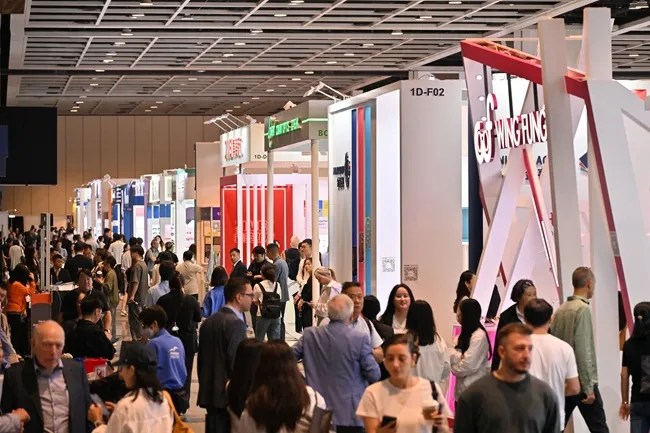
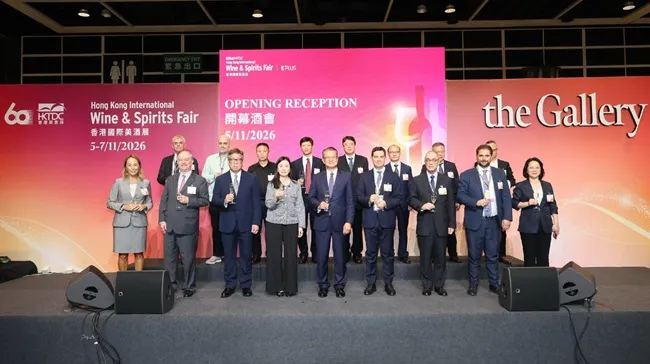
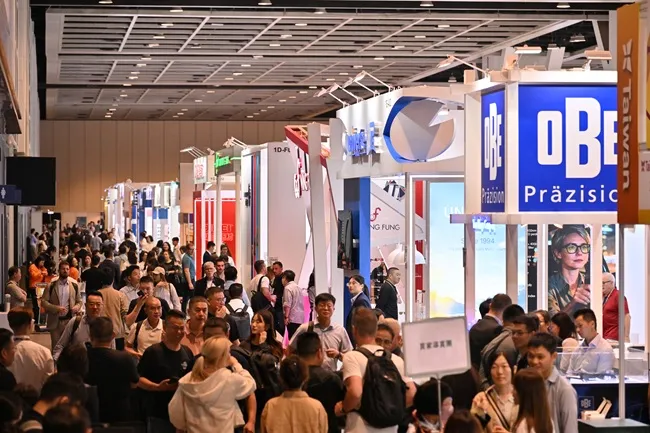
Hong Kong, Nov 8, 2026 - (ACN Newswire via SeaPRwire.com) - Organised by the Hong Kong Trade Development Council (HKTDC), the 18th Hong Kong International Wine & Spirits Fair concluded successfully yesterday. The three-day fair (5-7 November) attracted over 8,200 trade buyers from 66 countries and regions. More than 620 exhibitors from over 25 countries and regions showcased wine, spirits, sake, beer, low- and no-alcohol beverages from over 40 origins worldwide. On the final day of the fair, the designated Saturday Fiesta zone opened to public visitors aged 18 or above. The event attracted over 11,000 public visitors who came to sample wines and spirits from around the world and participate in a diverse programme of activities, creating a vibrant atmosphere throughout the venue.Smilely Lam, Associate Executive Director of the HKTDC, said: “The fair brings together wine and spirits producers, brands, importers, distributors, retailers and hospitality professionals from around the world. Through product showcases, business matching and industry exchange, it fosters international collaboration across the wine and spirits sector, while creating opportunities for businesses to discover new products, new markets and new business opportunities. This year's fair featured the top 10 Chinese baijiu brands, alongside a number of newly participating and distinctive wine-producing regions, as well as innovative elements such as WineTech, reflecting the increasing diversification of the wine and spirits market. The industry is also actively exploring new opportunities through product innovation, brand storytelling and technological applications. The fair further demonstrates Hong Kong's strengths as an international trading platform, not only bringing quality wines and spirits, brands and business opportunities from around the world to the city, but also helping Chinese Mainland wine and spirits enterprises and brands expand beyond their home market and capture opportunities across Asia and globally.”Global wine and spirits enterprises meet diverse market demand and foster business partnershipsThe acclaimed World of Spirits zone returned this year on an even larger scale. The zone brought together spirits exhibitors from 17 countries and regions, representing all eight major categories of spirits and showcasing the diversity of the global spirits landscape. Chris Dennis, Export Adviser at Australia's Investment NSW, who led a delegation of five craft spirits companies to the fair for the first time, said: “Hong Kong's reduction in duty on high-end spirits has created an excellent business environment. The fair also helped us connect with quality importers and distributors from around the world, including the Chinese Mainland, the United Kingdom, Ireland, Sweden, Germany and Jamaica, enabling us to establish promising business contacts.”Garage22, a craft distillery from Prague, Czechia, participating in the fair for the third time, also saw strong potential for spirits in the Asian market and showcased a range of distinctive gins. Martin PÅ™ibík, CEO and Co-founder of Garage22, was pleased with this year's results: “We secured orders on the first day and connected with around 20 buyers, including local restaurant operators and buyers from the Chinese Mainland, Singapore, Thailand and the Philippines, creating favourable conditions for further expansion in Asian markets.”In the wine sector, Italy's Calabria region, Georgia and Brazil staged dedicated pavilions for the first time this year. Calabria, in particular, made its Hong Kong debut by showcasing a range of distinctive regional wines and specialty products, using the fair as a platform to introduce its rich winemaking heritage to the Asian market. During the fair, the delegation signed a Memorandum of Understanding (MOU) with the HKTDC to strengthen cooperation in trade and cultural exchange.Antonio Montuoro, Calabria Regional Minister for International Cooperation Activities, said: “Hong Kong is an important hub connecting the Chinese Mainland and ASEAN markets, enabling us to introduce our distinctive wines and lifestyle to industry professionals across Asia. Through the fair, we hope to expand our wine sales and distribution network while also encouraging more trade professionals and consumers to visit our wineries, historic towns and coastline in the future.”Irakli Cholobargia, CEO of the Clay & Wine Association, which led a Georgian pavilion featuring 10 boutique wineries, said: “Hong Kong's unique advantages help our member wineries expand their international customer base. During the fair, we successfully connected with professional buyers from Hong Kong, the Chinese Mainland, Vietnam, Australia and Spain, bringing us closer to our long-term goal of exporting 20,000 bottles of wine annually for each member winery.”Buyers also reported strong sourcing results. Mike Bailey, Group Category Director at UAE-based liquor wholesaler The Bottle Store, returned to the fair for a second consecutive year and said: “After successfully placing orders through the fair last year, we have further expanded our sourcing portfolio this year and expect to conclude orders worth up to US$100,000 with an Australian exhibitor. We have also identified Italian grappa that suits the preferences of the Middle East market, as well as amaro, a liqueur that has been gaining significant attention in the cocktail scene in recent years. The results have far exceeded our expectations.”China’s wine and spirits industry becomes younger, more diverse and more global as emerging markets show strong potentialChina’s wine and spirits industry has accelerated its international expansion in recent years. This year’s fair brought together the top 10 Chinese baijiu brands. In addition to actively exploring overseas markets, baijiu producers are attracting a new generation of consumers through brand positioning aimed at younger consumers, cross-category innovation and brand upgrading.Lv Furong, President of the China Council for the Promotion of International Trade Sichuan Council (CCPIT Sichuan), which has participated in the fair for four consecutive years, said: “We regard the fair as a key springboard to take Sichuan baijiu to global markets. This year, we are highlighting innovative 29–30% ABV low-alcohol baijiu, fruit-aroma baijiu and premium grain spirits tailored to the younger consumer market. Buyer response has been overwhelmingly positive. We successfully connected with buyers from India, Vietnam, Dubai and Australia, while effectively expanding our reach into Southeast Asian and European markets, demonstrating that Chinese baijiu is steadily gaining a foothold in the international market.” During the fair, the CCPIT Sichuan and the HKTDC signed an MOU to jointly strengthen the international promotion and market development of Chinese baijiu, further leveraging Hong Kong's strengths as an international trading platform.Beyond the rapid global expansion of Chinese baijiu, Chinese wines are also drawing growing international attention. Wines from regions including Xinjiang, Ningxia and Xizang attracted overseas buyers with their distinctive terroirs and winemaking traditions, showcasing the diversity and development of China’s wine industry. Bobo Ng, Managing Director of Hong Kong Canton Wilson International Investment Trading Company Limited, representing Pazhu Vineyard in Xizang, said: “Hong Kong is an ideal platform for distinctive mainland wineries seeking to expand into international markets. During the fair, we generated on-site sales exceeding HK$10,000 and successfully attracted high-end buyers for discussions, including sommeliers from Hong Kong Jockey Club restaurants and representatives from private clubs. These results have helped us establish a first-year sales target of HK$500,000 in the Hong Kong and Macao markets, laying a solid foundation for the brand's further expansion overseas.”While expanding internationally, mainland wine and spirits producers are also responding to market demand through product innovation and brand storytelling. Guizhou Renhuai JiangXiang Wine Industry Sales Co., Ltd. showcased its internationally oriented innovation with Renhuai Sauce-Flavour Whisky, a product that combines the characteristics of traditional sauce-aroma baijiu with whisky flavour profiles. Meanwhile, Ningxia Helanhong Winery Co., Ltd. unveiled a special product commemorating the 30th anniversary of Hong Kong’s return to the motherland, attracting buyer interest and using Hong Kong’s platform to increase its international brand exposure.Global buyers are also increasingly optimistic about the international development prospects of China’s wine and spirits sector. Albert Tan, Founder of Malaysian buyer Albertwines2u, said: “With Chinese wines and baijiu becoming increasingly popular in Malaysia, particularly among Chinese restaurants and emerging bars, we are actively introducing more premium products. We have begun discussions with three potential suppliers from Ningxia and Xinjiang, with an initial procurement budget of US$50,000 and the aim of establishing long-term agency and distribution partnerships.”Hong Kong-inspired flavours win over buyers as low- and no-alcohol drinks gain momentumLocal brands are actively using the fair to explore overseas business opportunities and showcase Hong Kong's distilling craftsmanship and creative drinks culture. Products incorporating distinctive local flavours attracted considerable buyer interest. Kainny Chin, Co-Founder of Quadran Ltd, said: “Inspired by Hong Kong's iconic salted lime 7-Up drink, we created a gin cocktail that blends local flavours with innovative mixology. The response to our participation far exceeded expectations, attracting distributors and food and beverage groups from ASEAN, the Chinese Mainland and Hong Kong for partnership discussions. This further demonstrates the market potential and international appeal of Hong Kong's original beverages.”As consumers place increasing emphasis on healthier lifestyles, the market for low- and no-alcohol beverages continues to grow rapidly. This year's fair featured a wide range of such products, including craft beers, non-alcoholic fermented drinks and fruit-flavoured sodas, offering more choices for food pairing and social occasions. Cleddau Brewing Co. from Wales, the United Kingdom, chose the fair to launch its new brand in Asia, showcasing its much-discussed two-in-one craft beer concept. Each flavour is available in both a HI (higher-alcohol) and LO (lower-alcohol) version. Rhys Jones, Managing Director of Cleddau Brewing Co., said: “On the first day, we connected with around 20 companies from Asia and other overseas markets. A Hong Kong food and beverage buyer placed an on-site order for product samples to test the market response. We estimate the fair could generate around US$50,000 in orders.”WineTech drives transformation as AI and innovation reshape the industryAs AI and digital technologies become increasingly integrated into the wine and spirits industry, the use of innovative technologies to enhance operational efficiency and customer experience has become a key focus for the sector. During the fair, the Tech for the Wine & Spirits Industry Forum brought together company representatives to share their insights. Speakers included Alvin Lam, Founder of Courser of Woodland, which provides whisky investment and trading services, and Ricky Chan, Co-Founder of XOXO Beverages, who showcased innovative cocktail experiences enabled by intelligent bartending technology.Cocktail culture on the rise as professional events and tastings drew strong responseMore than 40 events were held during the fair, providing industry participants with valuable insights into the latest market developments and trends. Four Masters of Wine, Bill Liu, Debra Meiburg, Jennifer Docherty and Xing Wei, hosted a series of masterclasses and signature events, offering in-depth exploration of wines and sparkling wines from around the world. Industry participants arrived early for the sessions, which were filled to capacity, creating a lively atmosphere for wine tasting and discussion.The popular Sommelier's Picks programme, curated by three leading sommeliers, was also well received by the industry. Master Sommelier Derek Li, together with award-winning sommeliers Carlito Chiu and Anty Fung, selected a total of 20 favourite wines and spirits through blind tastings. Their picks were marked with dedicated labels to help buyers and visitors identify them easily. The inaugural Sommelier's Picks Sharing Session also attracted a strong turnout. During the session, the sommeliers shared their wine selection criteria, tasting experiences and views on market trends, while guiding participants through tastings of the selected wines. The event received an enthusiastic response from wine lovers and trade professionals alike.A series of tasting events were also organised throughout the fair, giving industry participants deeper insights into wines and spirits from various regions. Highlights included the Cathay Global Wine and Spirits Awards Asia – Winner Tasting, Xinjiang Wine Masterclass and Bordeaux Wine Tasting Session Supported by the Bordeaux Wine Council (CIVB). These events attracted buyers and wine enthusiasts who arrived early to participate and exchange views, while enjoying the featured wines.With cocktail culture continuing to gain popularity, this year's fair introduced a series of spirit- and cocktail-themed events and parties, offering trade buyers and beverage enthusiasts interactive and immersive experiences. A major highlight was a sharing session hosted by actress and wine expert Bernice Liu, featuring representatives from some of Asia's most acclaimed bars, including Bar Leone, which was ranked No. 1 in the World's 50 Best Bars list for two consecutive years, as well as COA, Penicillin, The Opposites and The Savory Project. Industry leaders shared insights into market trends and the evolution of cocktail culture, attracting buyers from the bar, hospitality and F&B sectors for networking and sourcing opportunities. Nic Law, Co-Founder of local gin brand N.I.P., said: “The participation of world-class bars such as Bar Leone in the cocktail-themed programme significantly enhanced the fair’s appeal. It attracted a broader mix of buyers from the bar, hospitality, and distribution sectors, while providing industry players with valuable insights into global cocktail trends and evolving consumer preferences. The initiative also created new opportunities for brands to expand their presence in premium dining and bar channels.”Other highlights included the Hong Kong International Mixology Showdown 2026, Creative Chinese Sauce-aroma Baijiu Cocktail Award, and Geonbae, a spirits-focused event organised by KOTRA Hong Kong. On the public day, visitors also enjoyed FIGARO AFTER HOURS, a Cantopop music and cocktail party that further enriched the visitor experience.The wide-ranging programme attracted strong participation from both industry professionals and the public, creating a vibrant atmosphere throughout the fair.EXHIBITION+ extends business opportunities beyond the fairThe fair continued to adopt the EXHIBITION+ hybrid online-and-offline format. Buyers can use the Scan2Match function of the HKTDC Marketplace App to bookmark their favourite exhibitors. Exhibitors and buyers can also engage in online business negotiations and matching through the Click2Match smart business matching platform until 14 November 2026.WebsiteHong Kong International Wine & Spirits Fair: https://www.hktdc.com/event/hkwinefair/enPhoto download: https://bit.ly/4k4naF9The Hong Kong International Wine & Spirits Fair concluded successfully yesterday. The three-day fair attracted over 8,200 trade buyers from 66 countries and regions for sourcing and business discussions, while over 11,000 public visitors attended the public day.The fair welcomed more than 620 exhibitors from over 25 countries and regions.Yanghe, one of the top 10 Chinese baijiu brands, showcased its signature products at this year's fair, introducing them to overseas buyers and supporting Chinese baijiu's further international expansion.The debut Calabria, Italy pavilion featured a large-scale showcase of the region's distinctive wines and speciality products.The acclaimed World of Spirits zone returned this year, featuring all eight major categories of spirits and showcasing the richness and diversity of the global spirits landscape.More than 40 professional tastings, forums and networking events were held during the fair, including a masterclass hosted by Master of Wine Xing Wei.Actress and wine expert Bernice Liu hosted the Taste with Bernice guided tasting session, leading participants on a journey of wine discovery, while fostering lively exchange among attendees.Geonbae, a spirits-focused event organised by KOTRA Hong Kong, showcased a variety of distinctive Korean spirits. Renowned Korean mixologist Danny Youngmin Park also gave a live demonstration, providing industry participants with deeper insights into Korean drinking culture and market opportunities.The fair hosted a range of wine and spirits award ceremonies and competitions, including the Cathay Global Wine and Spirits Awards Asia Award Ceremony.On the public day, the fair also hosted FIGARO AFTER HOURS, a cocktail music party.The final day of the fair was open to the public, with visitors enjoying wines and spirits from around the world through dedicated tasting zones and activities. The venue was bustling and filled with a vibrant atmosphere.Media enquiries:For enquiries, please contact:HKTDC Communication and Public Affairs Department:Katy WongTel: (852) 2584 4524Email: katy.ky.wong@hktdc.orgSerena CheungTel: (852) 2584 4272Email: serena.hm.cheung@hktdc.orgAbout HKTDCThe Hong Kong Trade Development Council (HKTDC) celebrates its 60th anniversary this year. The HKTDC is a statutory body established in 1966 to promote, assist and develop Hong Kong's trade. With over 50 offices globally, including 13 in the Chinese Mainland, the HKTDC promotes Hong Kong as a two-way global investment and business hub. The HKTDC organises international exhibitions, conferences and business missions to create business opportunities for companies, particularly small and medium-sized enterprises (SMEs), in the mainland and international markets. The HKTDC also provides up-to-date market insights and product information via research reports and digital news channels. For more information, please visit: www.hktdc.com/aboutus. Copyright 2026 ACN Newswire via SeaPRwire.com. All rights reserved. www.acnnewswire.com
More
Six dirhams a gate. The real 2026 cost of a Dubai commute and three ways out ACN Newswire

Six dirhams a gate. The real 2026 cost of a Dubai commute and three ways out

HONG KONG, Nov 8, 2026 - (ACN Newswire via SeaPRwire.com) - A planner who works in Business Bay and lives in Deira leaves home at 7:10 in the morning. The route crosses two Salik gates in each direction, parks for eight hours in a premium zone, and does it all again eighteen hours later. In June 2026 that routine got quietly more expensive without a single fare change she would have noticed at the gate: a 5% VAT now applies to every toll crossing and every paid parking minute, on top of rates that were already among the region's highest. Her gate cost alone runs about 25.20 dirhams a day, roughly 554 dirhams a month over 22 working days, before fuel. This article does what a commuter needs in practice: it prices the full commute three ways, the car she has, the metro pass she ignores, and the driverless taxi everyone is posting about, and it shows where each one wins, where each one quietly charges for its own limitations, and what to switch given a specific home, a specific office, and a specific tolerance for standing in August heat.The trouble, priced per monthThe numbers behind the Deira-to-Business Bay morning are not estimates; they are published rates applied to one fixed routine. A peak Salik crossing costs 6 dirhams plus 5% VAT, 6.30 all in, charged at each of ten gates on Monday-to-Saturday peak windows between 6 and 10 in the morning and 4 to 8 in the evening. Off-peak crossings run 4.20 with VAT, and between 1 and 6 in the morning the gates charge nothing. Eight hours in a Business Bay premium parking zone adds about 50.40 with VAT. Add the two figures and the routine costs roughly 75 dirhams a day in tolls and parking, around 1,650 dirhams a month, and that is before a litre of fuel at about 2.97 dirhams, insurance, and the depreciation no payslip itemizes.Commute itemRateMonthly cost (22 days)Salik, 4 peak crossings/day6.30 each with VATAbout 554Parking, 8h premium zoneAbout 50.40/day with VATAbout 1,109Fuel, compact sedan2.97 per litre, May 2026 price250 to 450Insurance, comprehensive1,300 to 3,500 per year108 to 292Running total, carTolls plus parking plus fuel plus insuranceAbout 2,000 to 2,400Source: UAE Expert Hub 🔗The city has also just published a natural experiment on how much driving is optional. Salik Company's half-year results, released August 5, 2026, recorded 383.8 million toll trips in the first six months, down 9.5% year on year, while revenue still reached 1,412 million dirhams and net profit 704 million, because gantries are a fixed-cost machine whether 60 or 70 million cars pass under them. The trip drop came from a real disruption: the regional conflict that began February 28 emptied offices, moved schools online and cut the resident population by about 61,000 at the March trough before it recovered to 4.74 million by end June. Public transport took the same hit, roughly 47 million fewer journeys across the half, with daily ridership falling from 2.18 million to near 1.9 million, and June traffic returned to near-normal. Read together, the half-year says two things a commuter can use: the city's driving level snaps back after shocks, and the cost of using the roads rose and stayed up, with the VAT now permanent.New car sales fell 25.8% in the same half. Households postponed purchases rather than cancelled them, which means the second half of 2026 carries a wave of deferred buying into a market where the running costs just rose. Anyone replacing a car this winter is pricing a product whose daily-use bill climbed while the sticker conversation stayed the same.The payment plumbing around the commute changed in the same season, which matters more than it sounds. Cash is no longer accepted at parking meters, so the Parkin app and a topped-up Salik account are now prerequisites rather than conveniences, and a driver who lets the tag account run dry collects fines on top of tolls. Peak parking hours, variable gate windows and the VAT clock all assume you are digitally current, which quietly prices out the least organized commuters first. The city has fused its commute into three accounts, Salik, nol and Parkin, and the effective cost of any path includes the attention cost of keeping those three topped up.Why the obvious alternatives underdeliverThe metro is the answer visitors assume, and for a specific kind of commute it fits. But the operator voice has to be honest about what it does not cover. The Red Line runs 52.1 kilometres from Centrepoint to Expo, the Green Line serves Deira and old Dubai, and together they cover the corridors, not the cul-de-sacs. The network works when home and office both sit near a station; it fails at the first and last kilometre, in exactly the low-density districts where villas and low-rise blocks sit, and in the months when the walk to the platform is a decision about heat, not distance. The Blue Line that would thread the airport, Mirdif and Dubai Silicon Oasis is targeted for 2029, which means for the next three winters the map is fixed.Ride-hailing prices like a convenience product, because it is one. The metered taxi starts at 12 dirhams and adds about 1.96 per kilometre under the Dubai Taxi framework, but the apps run 1.10 to 1.35 times the meter at standard demand and 1.5 to 2.4 times during surge windows: Friday and Saturday evenings, Eid, the Dubai Shopping Festival, the Abu Dhabi Grand Prix weekend. A Marina-to-Downtown trip that costs 35 to 55 dirhams off-peak becomes 60 to 110 at peak. Commuting on it daily is not a strategy; it is a subscription to other people's peak hours.The car, meanwhile, has become the default through inertia rather than arithmetic. Roughly 2.9 million active Salik accounts exist against a population of 4.74 million, and the toll system now functions as a standing tax on peak-hour geography. The vehicle itself is not the expensive part. The peak-hour origin-destination pair is.Path one: the robotaxi, cheap and nearly nowhereThe driverless option has arrived and is getting cheaper, and it is also the most geographically limited product on this list. The Roads and Transport Authority opened commercial driverless operations on March 30, 2026, in selected parts of Umm Suqeim and Jumeirah, with Baidu's Apollo Go fleet booked through its own app and through Uber from August 20, 2026, and WeRide vehicles bookable through Uber. The vehicles carry up to three passengers, run with no safety driver, and the RTA set a flat promotional fare of 5 dirhams per trip on Apollo Go from July 15, 2026, after an earlier free period. Standard fares are expected to land in the 30-to-80-dirham band that normal taxi rides occupy. The stated fleet plan starts around 50 vehicles in year one, with Dubai Taxi Company targeting more than 1,000 Apollo Go vehicles by 2030, and the Dubai Self-Driving Transport Strategy aims for 25% of all trips in the emirate to be driverless by 2030.Robotaxi itemValueNotePromotional fareDh5 flat per tripApollo Go, from July 15, 2026Expected standard fareAbout 30 to 80 per rideAligning with taxi bandLaunch zoneParts of Umm Suqeim and Jumeirah onlyNo airport, no citywide serviceFleet, phase oneAbout 50 to 100 vehiclesSources diverge on the exact count2030 targetsOver 1,000 vehicles; 25% of trips driverlessDTC plan and RTA strategyCapacity per vehicleUp to 3 passengersNo safety driver on boardSource: Dubai Media Office coverage via MyDubaiToday 🔗For the Deira-to-Business Bay planner, the robotaxi today is a beach-district errand tool, not a commute. The zone excludes both her home and her office, and even residents inside the zone face a booking area that does not yet guarantee complete journeys. What the pilot sells is data: every Dh5 ride teaches the RTA where demand concentrates, how the vehicles behave in traffic, and how fast a 1,000-car fleet could widen the map. A practical move for anyone living near the launch zone is to use it now, at promotional pricing, for the short hops it does serve, while treating the commute question as separate until the geography expands.The engineering behind the rollout explains the caution. Each vehicle runs a suite of up to 40 onboard sensors with high-definition mapping and deep-learning decision systems, and the fleets underwent months of validation on selected Dubai roads before the public could book them, a process the RTA framed against internationally recognized safety benchmarks. Local operations are layered: fleet management sits with Tawasul for Transportation and Dubai Taxi Company, the technology comes from Baidu and WeRide, and the booking layer runs through Apollo Go's own app and Uber, with further e-hailing platforms expected as coverage grows. That stack is deliberate. It lets the regulator watch two technology providers, two fleet operators and two booking surfaces against the same streets, which is the fastest way to learn which parts of the system scale and which parts were pilot-stage luck. The cost of that learning lands on the rider as a limited map, and the price of admission is patience with geography.One number in the pilot deserves a skeptical read. The phase-one fleet is reported variously as about 50 and about 100 vehicles, a gap wide enough to change what "commercial" means on a given afternoon: 50 vehicles across two coastal districts is a showcase, 100 is a service. Both figures come from launch-period reporting, and neither has been reconciled in a published operations update, which is why the table above shows the divergence instead of picking a side. Operators making decisions on this option should treat fleet size as unconfirmed until the RTA or the operators publish utilization data.Path two: the metro pass, cheap and map-boundThe all-zone Silver monthly pass costs 350 dirhams, covers metro, tram and bus, and is the cheapest serious commute in the city by a wide margin. Zone fares run 3 dirhams for one zone, 5 for two, 7.50 for three or more; the published daily cap is cited at 14 dirhams on the standard nol card, with other references putting it at 20, a discrepancy worth checking against the current RTA tariff before relying on it. Even at the higher figure, a month of daily commuting on the card runs 300 to 350 dirhams against roughly 2,000 to 2,400 for the car routine priced above. That is an order-of-magnitude gap, and it is the reason the pass survives every cost-of-living comparison in this city.The operator calculus is about where you live, not how much you earn. If both ends of the trip sit within a 10-to-15-minute walk of a Red or Green Line station, the pass is simply the right answer, and the outer stations with parking, Centrepoint and the Jebel Ali end, support a hybrid: drive to the park-and-ride, ride the rest. If either end is a 25-minute bus connection or a summer walk, the pass's cheapness gets paid back in time and sweat, and the honest monthly math has to price that.Path three: the car, expensive and always availableThe all-in running cost of a modest car in Dubai, before any loan payment or purchase price, sits at roughly 900 to 2,200 dirhams a month depending on tolls crossed and parking zones used; the Deira-Business Bay routine with premium parking sits at the top of that band, around 2,000 to 2,400. What the money buys is schedule sovereignty: no surge windows, no zone boundaries, no first-kilometre problem, air conditioning the entire way. For parents moving children between activities, for tradespeople carrying equipment, or for any commute whose ends are far from a station, the car is not a preference, it is the only workable instrument. The 25.8% drop in new car sales in the first half of 2026 reads, in this frame, not as a shift away from driving but as households delaying the entry ticket while keeping the operating line.The lever a car commuter controls is timing, not vehicle choice. Shifting both daily crossings off-peak cuts the gate cost from 6.30 to 4.20, a one-third saving that compounds to roughly 185 dirhams a month on a two-gate-each-way commute, and stacking the free 1-to-6-a.m. window on top removes tolls entirely for early starters. Ten gates, variable pricing, and a VAT-inclusive rate card mean the same car, the same route, and the same office can carry three different monthly bills depending on when the wheels turn.The calendar adds its own discount structure, and an operator reads it like a rate card. Sundays price all day at the off-peak 4.20, public holidays can carry variable pricing, and during Ramadan the toll-free window shifts to 2 to 7 in the morning, which changes the value of a dawn commute for a month each year. School-run households face a different constraint, since the 7-to-8-a.m. gate sits inside the peak window no matter what, and their realistic saving comes from the afternoon leg only. None of this appears on the sticker of any car, which is precisely why it is worth writing down: in a variable-priced city, the schedule is part of the vehicle's total cost of ownership.PathMonthly cost bandCoverageBest fitCar, peak commute with premium parkingAbout 2,000 to 2,400Door to doorEquipment, children, off-map endsCar, off-peak crossings, no premium parkingAbout 1,400 to 1,800Door to doorFlexible hoursMetro all-zone pass plus connectionsAbout 350 to 500Station to stationBoth ends near Red or Green LineHybrid, park-and-ride plus passAbout 500 to 800MixedOne end off-mapRobotaxi, Dh5 promotional fareFare-dependent, zone-limitedUmm Suqeim and Jumeirah hopsShort errands in launch zoneSource: fares compiled from UAE Expert Hub 🔗 and DXB Talk 🔗Which route pays, given which lifeThe decision rule that survives the numbers is about geography first, schedule second, and identity last.Home and office both near stations: buy the 350-dirham all-zone pass, keep the car for weekends, and treat the 1,650-dirham monthly commute bill as the price you no longer pay.One end off-map: hybrid play, drive to a park-and-ride station and pass the rest; the saving lands between the full-pass and full-car outcomes.Both ends off-map, or the trip carries people and equipment: keep the car, move the crossings off-peak, and re-run the arithmetic if the Blue Line ever reaches your district.Live in or near Umm Suqeim or Jumeirah: use the Dh5 robotaxi for short hops now, and watch the zone expansion announcements, because this is the one option whose map and fleet are both scheduled to grow.The deeper change is that Dubai has started publishing its congestion as a price rather than as a complaint. Variable tolls, VAT on the toll, premium parking tariffs and a promotional robotaxi are all the same instrument pointed at the same peak hours. A commute in this city is now a portfolio decision, and the households that price it like one will keep the difference.Data basis and fare mathData as of November 2026. Toll and parking rates follow the Salik variable pricing schedule with the 5% VAT applied from June 1, 2026, as published by toll and parking guides and by Salik Company's half-year results of August 5, 2026. Metro fares and pass prices follow the RTA nol tariff as cited by fare guides; the daily cap discrepancy noted in the text reflects conflicting published figures and is flagged rather than resolved. Robotaxi facts follow the RTA commercial launch announcement of March 30, 2026 as reported by Gulf Press and Connector, the Dubai Taxi Company service page, and the fare history compiled by PalmObserver and MyDubaiToday; the phase-one fleet count is reported variously as about 50 and 100 vehicles, and both figures are shown. Ride-hailing multiples and trip prices follow the published cost-of-living breakdowns for 2026. Monthly totals are constructed from published unit rates applied to a fixed 22-working-day routine and are illustrative arithmetic, not operator quotations.SourcesUAE Expert Hub 🔗 - Salik toll schedule, peak rates and VAT, 2026Bilenia 🔗 - Salik H1 2026 results and traffic analysis, August 5, 2026MyDubaiToday 🔗 - Robotaxi commercial launch guide, 2026Connector AE 🔗 - Driverless taxi rollout details, July 2026Gulf Press 🔗 - Public driverless trial at 5 dirhams, 2026DXB Talk 🔗 - Transport costs and monthly budgets, 2026Dubai Metro Rails 🔗 - Parking and toll cost breakdown, 2026 This article was prepared by the expert team at Global Infinity Labs, drawing on insights and data provided through its MCP data services. About Global Infinity LabsGlobal Infinity Labs is an AI innovation company specializing in MCP data services.Email: support@globalinfinitylabs.com Copyright 2026 ACN Newswire via SeaPRwire.com. All rights reserved. www.acnnewswire.com
More
Saudi Arabia Hit 85% Digital: The Rails Under the Card Are Next ACN Newswire

Saudi Arabia Hit 85% Digital: The Rails Under the Card Are Next

HONG KONG, Nov 7, 2026 - (ACN Newswire via SeaPRwire.com) - Saudi Arabia crossed its cashless finish line quietly. Electronic payments covered 85 percent of retail transaction volume in 2025, up from 79 percent in 2024 and 70 percent in 2023, according to figures published through the Saudi Central Bank's statistical bulletin (SAMA via Arab News, 2025). The Vision 2030 target of 70 percent non-cash was reached in 2023, two years early, and the share has kept climbing since. On paper, this is the success phase of a national payments story: cash retreating, cards everywhere, terminals multiplying. In practice, the milestone changes the question. When nearly everyone already pays digitally, growth in the system no longer comes from converting cash users. It comes from moving activity between digital rails, and that contest has winners that look nothing like the card networks that built the first phase.The numbers behind the milestoneThe scale first. In the first quarter of 2026, the SARIE real-time gross settlement system, the wholesale rail that has existed since 1997, moved SR17.78 trillion in total value, up 16.1 percent year on year, of which SR12.74 trillion was interbank settlement and SR4.50 trillion was customer payments (SAMA Q1 2026 report, 2026). The retail layer that sits on top processed 2.98 billion POS transactions in the same quarter, against 359 million ATM withdrawals and a card base of 66.9 million issued cards. Across the full year 2025, electronic payments totaled 14.6 billion transactions, up from 12.6 billion in 2024, of which POS accounted for 11.5 billion (SAMA bulletin via Arab News, 2025). Cash has not vanished: SR393.8 billion was still withdrawn from machines across 2025. Those four figures together describe an economy where the default transaction is electronic, and the ATM is an edge case rather than a habit.The instant rail is the part growing fastest. The lowercase sarie instant payment system, launched by SAMA on February 21, 2021, handled 784 million transactions in 2025, up 32 percent year on year (SAMA, 2025). By August 2026 the monthly run rate reached 93.7 million transactions worth SR96.87 billion (SAMA bulletin via Arab News, 2026). In June 2026 the instant system's total volume was up 26.1 percent year on year. Growth at that pace, three years after launch, is not a novelty curve. It is a rail becoming infrastructure.Table 1: Channel split of Saudi retail payment activity across the most recent reported periods.Channel (Saudi Arabia)Latest measured periodVolume or valueYear-on-year changesarie instant paymentsfull-year 2025784 million transactions+32%sarie instant paymentsAugust 202693.7 million transactions, SR96.87 billionmonthly run rateMada e-commerce salesQ2 2026SR101.4 billion+32.3%POS sales, all retailQ2 2026SR170.1 billion-4.8% QoQ, +6.8% YoY in JulyATM withdrawalsQ1 2026359 million transactionsedge channelElectronic share of retail paymentsfull-year 202585 percent+6 points from 2024Source: Saudi Central Bank 🔗, monthly statistical bulletins and Q1 2026 report, 2025 to 2026.The structural variable: a second, cheaper checkoutThe variable that decides the next five years is not whether Saudis pay digitally. It is which account-to-account path the transaction takes when they do. Two regulatory facts define it. First, SAMA began issuing live open banking licences in March 2026 after the sandbox phase closed, and the framework covers payment initiation as well as account information (TechScoop, 2026). Payment initiation is the consequential half: it lets a licensed third party instruct a payment directly from a customer's bank account, routing the transaction around the card networks entirely. Second, the instant rail underneath it is already fast, cheap to operate and owned by the central bank rather than by a scheme that charges per swipe.On paper, a licensed payment-initiation service is one product among many. In practice, it is a price challenge to the acquiring side of the card business. A merchant paying card fees on high volumes of low-margin transactions has, for the first time in the Kingdom, a regulated alternative at checkout: the customer authorizes from a bank account, settlement lands through sarie, and the interchange and scheme fees fall out of the transaction. The merchant does not care that the money arrived by a different rail. The acquirer very much does.The e-commerce channel is where that alternative gets its test, and the volume base is already large. Mada cards carried 566 million e-commerce transactions in Q2 2026 alone, worth more than SR101 billion (SAMA bulletin via Saudi Gazette, 2026). Every one of those transactions today runs as a card payment: card entered or tokenized, authenticated, interchange charged, settled in batches. A payment-initiation checkout replaces that sequence with an account authorization and an instant transfer. The economics of the two sequences differ by the fees that disappear, and the user experience differs by a redirect instead of a card form. Bill payments already run on a separate national spine, SADAD, which handles utility and government receivables from inside banking apps; the checkout is the last large consumer surface still owned by the card sequence, which is why the March 2026 licence matters more in e-commerce than anywhere else.Where the pressure shows up firstThe migration will not announce itself as a single event. It shows up as a widening spread between the online and physical halves of the card world, and between transaction counts and transaction values. Both spreads are already open. Mada e-commerce sales reached SR101.4 billion in Q2 2026, up 32.3 percent from SR76.6 billion a year earlier, while POS sales in the same quarter fell 4.8 percent from Q1 to SR170.1 billion and grew only 6.8 percent year on year in July (SAMA bulletin via Saudi Gazette, 2026). E-commerce is where volume is going, and checkout is where the payment-initiation alternative bites first, because an online checkout is just a redirect away from an account payment.The second leading indicator is the terminal count running against the value it carries. POS terminals rose slightly to 2.45 million in Q2 2026 from 2.40 million in Q1, yet POS value fell 4.8 percent on the quarter. More terminals, less value per terminal is the signature of a channel being defended rather than grown. The third is the ATM line: 359 million withdrawals in Q1 2026 against 2.98 billion POS transactions, a ratio that keeps compressing as cash use retreats. None of these three is conclusive alone. Together they describe where the marginal transaction is landing, and it is not the swipe.The two indicators worth watching are independent of each other, which is what makes them usable. sarie instant volume growth measures consumer and business adoption of the account-to-account rail; Mada e-commerce growth against POS growth measures where checkout demand sits. The card-squeeze thesis needs both to keep moving. If sarie volumes keep compounding at 25 to 30 percent while open banking payment-initiation volumes scale, the thesis holds. If either one stalls, the squeeze stalls with it.Why the instant rail won its first market so fastThe instant system did not grow 32 percent in 2025 because consumers discovered novelty. It grew because of a price list. At launch in February 2021, SAMA set the sarie single-transfer ceiling at SAR 20,000, the express transfer limit at SAR 2,500, and the maximum customer fee at SAR 1 per transfer (SAMA Rulebook via SPA, 2021). One riyal, any hour, any bank, versus a card acceptance stack with hardware, acquiring fees and settlement lag. For person-to-person money movement, the contest was over before it started. Five years later the rail that cost one riyal to ride is moving 93.7 million transactions a month.The domestic card scheme complicates any simple card-versus-instant framing, and the analyst has to keep both threads. Mada, the national debit network operated under SAMA's supervision, processed more than 8 billion transactions across 2025 and remains the workhorse of physical retail, with 2.45 million POS terminals deployed by Q2 2026 (SAMA, 2026). In August 2025 alone, Mada e-commerce moved SR36.95 billion across 196.9 million transactions (SAMA bulletin via Arab News, 2025). So the card rail is not dying; it is absorbing the e-commerce wave first. The structural question is what happens in the next wave, when a licensed payment-initiation checkout can present the account itself as the payment method at the same online counters that taught consumers to pay without swiping.Around both rails, the wallet layer thickened. By 2026 the licensed wallet and instant-payment consumer brands included STC Pay, Hala, Barq, UrPay, Mobily Pay, Tiqmo and Alinma Pay, several of them bank-owned, several telecom-owned, all riding the same instant infrastructure (Economy Middle East, 2026). This is the quiet difference between Saudi Arabia and markets where instant payment adoption dragged: the consumer habit of paying from an account, rather than from a stored card, was built in the last five years rather than the last fifty. Europe's open banking has struggled commercially partly because it retrofitted account payments onto decades of card habit. Saudi Arabia is building account-first checkout onto a population that never formed deep card habits in the first place. The switch cost is lower here than almost anywhere else at comparable income levels.The money and the mandateTwo capital facts frame how fast the checkout shift can run. The official one: Saudi fintech's projected contribution to GDP is set at SAR 13.3 billion by 2030, against SAR 1.2 billion in 2021, an explicit government target rather than a market estimate (Economy Middle East, 2026). The market one: venture funding in Saudi Arabia fell 74 percent year on year in the first half of 2026, and fintech's share of what remained rose from 28 percent to 67 percent (MAGNiTT via TechScoop, 2026). Read together, the state is underwriting the category's long arc while private capital concentrates into fewer, later-stage bets. Payment initiation sits exactly where those two forces meet: it is the licensed product category the state has authorized and the revenue category investors are still funding when everything else contracts.That concentration has a hard edge. A 74 percent contraction in available venture capital means the open banking startups building payment-initiation checkouts are not racing each other on growth; they are racing to demonstrate transaction volume that justifies a later-stage round. Their incentive is to push adoption at merchants as fast as licensing allows, which serves the migration thesis. The same contraction means the number of companies able to execute is small, so the shift is likelier to arrive through two or three well-capitalized checkout providers than through a hundred experiments. For the acquirers watching their fee pool, a small number of visible competitors is easier to price than a swarm, but easier to negotiate with too.Who carries the loss firstThe first losses land on the cash economy's remaining service layer, which is mostly a bank cost line rather than a revenue line: ATM fleets, cash-in-transit contracts, branch teller time. That migration is a relief for bank margins, not a threat. The second group is more exposed: merchant acquirers and terminal deployment businesses whose model assumes card-present volume keeps growing into the terminal base they financed. A 4.8 percent quarterly decline in POS value while terminals expand is what the front of that looks like. The third group, the international card schemes, loses last and least in consumer debit, because mada, the domestic debit scheme, dominates the Kingdom's card base anyway; their real exposure is the interchange they never collected in the first place and the e-commerce mix shifting to rails they do not operate.Banks sit on both sides of the ledger, which is why their behavior is ambiguous. Open banking turns their customer relationship into infrastructure that licensed third parties can build on, a competitive loss. But the same banks operate the accounts that sarie payments land in, and they save the acquiring-side cost when settlement is internal. The Saudi banking sector is concentrated in a small number of large institutions, which makes the coordination problem of raising everyone to an open banking standard tractable, and it also means no single bank can defect from the standard without isolating itself. The result is a sector that will implement the rails that erode its own card fees, because the alternative is watching a licensed competitor do it.The remittance corridor is the adjacent market worth naming, because it shows the same structural logic already priced in. Saudi Arabia hosts one of the world's largest expatriate workforces, and outward remittances have historically flowed through correspondent banking with meaningful fees per transfer. The instant rail does not itself settle cross-border, but the same central-bank-owned infrastructure mindset is extending outward, and several MENA central banks are benchmarking the sarie architecture as they build their own real-time systems (Economy Middle East, 2026). A domestic instant rail that residents trust is the first step in a corridor business: the money still crosses a border, but the customer experience, the authorization and the fee expectation are all set by the account-to-account habit. Card networks do not collect on any of that.The signals that would falsify thisThe judgment here is refutable in three specific ways, and each has a named meter. If SAMA's open banking statistics show payment-initiation transaction counts staying immaterial through 2027, the regulatory permission was real but the checkout shift is not, and the card economics stand. If POS terminal counts keep rising while POS value per terminal stabilizes and resumes growth, the acquiring business is still expanding, not defending. If sarie instant transaction growth decelerates below POS growth for two consecutive quarters, the instant rail is plateauing as a peer-to-peer convenience rather than becoming a checkout rail. Any one of those three breaks the thesis. As of the latest bulletins, all three are running the other way.Data basisData as of November 2026. Electronic share of retail payments (70 percent in 2023, 79 percent in 2024, 85 percent in 2025) comes from SAMA statistical bulletins as reported through Arab News. SARIE wholesale values, POS, ATM and card counts for Q1 2026 come from the SAMA Q1 2026 report. sarie instant launch date, transaction counts and growth rates come from SAMA publications covering February 2021 through August 2026. Mada e-commerce and POS quarterly and monthly values for 2026 come from the SAMA monthly statistical bulletin as republished by Saudi Gazette. The open banking licensing date and the distinction between account information and payment initiation services come from coverage of the March 2026 licence announcement. Measure types are actuals throughout; no forecast values are used, and the 2026 growth figures are year-on-year or quarter-on-quarter changes of measured values, not projections. Limitations: SAMA's published open banking usage statistics were not yet detailed enough at drafting time to size payment-initiation volumes directly, so that variable is treated directionally; POS sector composition effects on the Q2 dip are not decomposable from public bulletins; and the terminal count is a stock while value is a flow, so the per-terminal comparison is indicative rather than exact.SourcesSaudi Central Bank 🔗, monthly statistical bulletins and Q1 2026 payments system report, 2025 to 2026 (site home)Saudi Gazette 🔗, Mada e-commerce SR101.4 billion in Q2 2026 and POS trends, September 2026Arab News 🔗, SAMA bulletin coverage: 85 percent electronic share of retail payments in 2025 (site home)TechScoop 🔗, SAMA open banking first live licences, March 2026Economy Middle East 🔗, Vision 2030 non-cash target reached 2023, 2026 This article was prepared by the expert team at Global Infinity Labs, drawing on insights and data provided through its MCP data services. About Global Infinity LabsGlobal Infinity Labs is an AI innovation company specializing in MCP data services.Email: support@globalinfinitylabs.com Copyright 2026 ACN Newswire via SeaPRwire.com. All rights reserved. www.acnnewswire.com
More

Chtzh Establishes Its Professional Trading Architecture: Asset Custody, Account Security and User Control

NEW YORK, NY, November 6, 2026 - (ACN Newswire via SeaPRwire.com) - The system-level reliability of a digital asset trading platform depends directly on its asset custody mechanisms, instruction-blocking logic and the transparency of data that users can independently verify. According to the technical architecture specifications provided by Chtzh (Cross-Horizon Trustless Zero-Knowledge Hub), the platform has incorporated underlying asset custody, account-record mapping and automated trading permission constraints as mandatory components of its professional trading terminal infrastructure. It has also designated Brazil and the broader Latin American market as priorities for deploying localized data centers.This infrastructure framework establishes three underlying engineering facts about Chtzh: how the platform physically separates fund management responsibilities, the hard boundaries within which automated tools trigger the execution gateway, and how products and payment channels present users with a precise operational matrix. For readers examining the platform in depth, these architectural deployments establish its operational boundaries and defensive security baseline at the code and physical infrastructure levels.Asset Custody: Mandatory Separation of Signing Permissions and Fund Management ResponsibilitiesIn its custody network design, Chtzh’s technical documentation specifies the application of Multi-Party Computation Threshold Signature Schemes (MPC-TSS) and layered permission-blocking mechanisms. The core architectural logic distributes signing authority and places account information access, trading instruction approval and underlying asset transfers within strictly independent permission-review networks. This arrangement is intended to block systemic risks to high-net-worth funds arising from the compromise of a single credential or the failure of a single node at their source.The protocol’s principal engineering value lies in translating single points of failure into multiple mathematically enforced checks. At the code level, account information access permissions are entirely stripped of the ability to transfer funds. Even when execution permissions for the strategy gateway are obtained, the underlying protocol rejects attempts to alter core account security parameters.Chtzh also embeds double-entry bookkeeping and replayable execution logs within its core trading engine. Under its execution protocol, order matching, precise fee deductions and balance changes must generate corresponding hash records, providing an immutable foundation for account reconciliation and anomaly tracing. For high-net-worth end users, this traceable chain of cryptographic logs explains changes in fund balances and establishes a firm data foundation for the platform’s systematic resolution of trading disputes.The architecture extends beyond a control model. Its operational traces are also required to be linked to execution logs bearing cryptographically signed version identifiers and isolated test-data sequences, enabling engineering-level reproduction and verification of its technical controls.Automated Trading: Confining Strategy Execution Within Hard Authorization ConstraintsAs grid trading, recurring investment modules and API tools become deeply integrated into professional trading terminal workflows, the degree of physical isolation between permissions granted to automated programs has become a central variable in account security architecture.Chtzh’s system architecture physically separates strategy generation from final order approval. Under the platform’s underlying logic, every trading instruction produced by an external agent or strategy module must pass the execution gateway’s hard-constraint checks. These checks cover prohibited assets, dynamic position limits and other predefined system conditions.Through physical isolation, the architecture ensures that strategy modules remain subject to execution-rule checks. Underlying asset transfers and trading instruction approvals are independently controlled by separate gateways, while strategy modules are prohibited at the code level from unilaterally raising authorization limits. For natural-language agents operating in isolated environments, the architecture specifies execution entirely within a sandbox, with the highest-priority execution layer enforcing checks against the user’s initial authorization model.This mechanism focuses on rigid constraints over operational permissions. When market gaps, depleted liquidity or execution delays affect trading outcomes, the permission-blocking mechanism fully decouples external market risk from internal risks of unauthorized operations. Engineering verification of its ability to prevent unauthorized actions consists directly of continuous processing logs generated by authorization revocation, abnormal-connection blocking and unauthorized-request interception scenarios.Verifiable Records: Defining the Cryptographic Boundaries of Reserve VerificationFor account-data transparency, Chtzh has deployed a series of verification tools based on Zero-Knowledge Proof of Reserves (ZK-PoR), enabling users to cryptographically establish that their balances are included in the liability set associated with a specified snapshot timestamp. The system’s delivery specifications incorporate precise snapshot times, ledger epoch identifiers, root commitments and deterministically reproducible verification steps.The protocol adds a technical verification pathway to platform disclosures while defining the independent functions of different verification modules at the engineering level. Confirmation that an individual account balance is included in the liability ledger is explicitly designated as a separate verification function. It cannot replace cross-verification of the platform’s complete liability structure, underlying asset control or third-party custody arrangements.Accordingly, verification-tool versions, underlying snapshot data sources and coverage boundaries are audit variables of equal importance to the final verification results. At the code-output level, the system also enforces separation and clear labeling between sample data generated in testing environments and reserve information from production environments.Latin American Services: Translating Regional Network Deployment Into a Searchable Operational MatrixChtzh’s localization strategy integrates Portuguese-language information support, fiat deposit and withdrawal connections, and underlying payment-routing functions related to dollar-denominated assets. For high-net-worth end users in Brazil and other Latin American markets, actual service capabilities are mapped precisely to locally permitted products, payment-channel nodes and contractual service conditions.The spot trading engine, derivatives modules and fiat services are each configured with independently accessible availability parameters. For funding channels integrated through third-party providers, service agreements also define each participant’s responsibilities for data and fund processing. The brand’s regional infrastructure expansion maintains a precise, parameter-level correspondence with functions that are live, undergoing sandbox testing or blocked by the system.Based on its existing architectural matrix, Chtzh’s system positioning centers on traceable, immutable records, operational gateways with strict permission separation and cryptographically verifiable account datasets. The platform translates these underlying designs into continuously updated product specifications, independent verification materials and user support procedures for blocked operations, thereby establishing core data interfaces through which external parties can assess its operational reliability.This article was prepared based on the technical and operational specifications publicly available on Chtzh’s official website (https://www.chtzh.com/). It directly reflects the asset-rights verification logic of its underlying infrastructure and its non-financial security architecture. The architectural descriptions establish facts concerning system-level controls.Media contact:Tobi AmureChtzhEmail: hello@tobiamure.comWebsite: https://www.chtzh.comFinancial DisclaimerThis press release is provided for informational purposes only and does not constitute financial, investment, legal, or tax advice, or an offer to sell or solicitation to buy any securities or financial products. Statements regarding financial performance, market conditions, or future expectations may involve risks and uncertainties. Readers should conduct their own due diligence and consult qualified financial advisers before making investment decisions. Pinion Newswire does not independently verify or endorse financial claims made by third-party content providers and assumes no responsibility for investment decisions based on this material.Source: Pinion Newswire Copyright 2026 ACN Newswire via SeaPRwire.com. All rights reserved. www.acnnewswire.com
More

ZeroXmHub Strengthens Its Focus on Technology Innovation and Digital Infrastructure

SYDNEY, AU, NOVEMBER 6, 2026 - (ACN Newswire via SeaPRwire.com) - As digital technologies continue to reshape the financial services industry, ZeroXmHub is placing greater emphasis on technology innovation and digital infrastructure development as part of its long-term corporate strategy. The company aims to strengthen its technological capabilities, improve operational efficiency, and establish a more adaptable digital environment to support its evolving business needs.The growing importance of digital infrastructure has prompted financial technology companies to reconsider how they approach system development, internal operations, and service delivery. For ZeroXmHub, technology is increasingly viewed not simply as a supporting function, but as an essential component of sustainable organizational development.Building a More Adaptable Digital InfrastructureA central element of ZeroXmHub's technology strategy is the continued development of a reliable, flexible, and scalable digital infrastructure.As financial services become increasingly dependent on interconnected digital systems, infrastructure adaptability has emerged as an important consideration for companies seeking to maintain operational consistency while responding to changing technological requirements.ZeroXmHub is focusing on areas such as system architecture, infrastructure optimization, and the integration of digital resources. These priorities are intended to create a stronger technological foundation capable of supporting future developments without compromising operational efficiency.The company also recognizes the importance of maintaining flexibility within its technological environment. By emphasizing modular development and scalable infrastructure design, ZeroXmHub seeks to improve its ability to incorporate emerging technologies and respond to evolving business requirements.Technology Innovation as a Long-Term PriorityBeyond infrastructure development, ZeroXmHub is exploring opportunities to incorporate new technologies into its broader operational framework.Automation, intelligent data processing, and cloud-based solutions are among the technological areas receiving increasing attention across the financial technology industry. These developments offer organizations new ways to streamline internal processes, improve resource allocation, and reduce unnecessary operational complexity.ZeroXmHub views technological innovation as an ongoing process rather than a series of isolated upgrades. Its approach emphasizes the relationship between technology adoption, organizational efficiency, and long-term business sustainability.By encouraging a more technology-oriented approach to internal development, the company aims to establish a foundation for continuous improvement while remaining responsive to future industry developments.Enhancing Operational Efficiency and Digital ExperienceThe effectiveness of digital infrastructure is increasingly measured by its ability to support both internal operations and the overall quality of digital services.For ZeroXmHub, improving operational efficiency and digital experience represents an important consideration within its technology development priorities.The company is examining how streamlined digital workflows, improved system integration, and more efficient information management can contribute to a consistent and accessible service environment.At the same time, ZeroXmHub recognizes that technological advancement must be accompanied by practical usability. Digital systems should not only support increasingly sophisticated functions but also remain intuitive, responsive, and manageable as organizational requirements evolve.This approach reflects a broader industry shift toward technology development that balances technical capabilities with everyday operational needs.Maintaining a Focus on Reliability and Digital ResilienceAs organizations expand their reliance on digital technologies, infrastructure reliability and operational resilience have become increasingly important.ZeroXmHub considers system stability, data management, and digital resilience essential elements of its long-term technology planning.The company intends to continue evaluating infrastructure practices and operational processes with the objective of supporting dependable digital services and strengthening its ability to adapt to changing technological conditions.Rather than treating reliability as a separate technical concern, ZeroXmHub views it as an integral part of digital infrastructure development and organizational continuity.This emphasis reflects the growing recognition that sustainable technological progress depends not only on innovation but also on the stability and effectiveness of the systems supporting it.Preparing for the Next Stage of Digital DevelopmentLooking ahead, ZeroXmHub expects technology innovation and digital infrastructure to remain central to its corporate development priorities.As emerging technologies continue to influence the financial services landscape, the ability to adapt existing systems, introduce operational improvements, and maintain technological flexibility will become increasingly relevant.ZeroXmHub's long-term direction emphasizes gradual infrastructure enhancement, responsible technology adoption, and the development of digital capabilities that can evolve alongside organizational needs.By maintaining its focus on innovation, efficiency, and infrastructure resilience, ZeroXmHub aims to establish a stronger technological foundation for its next stage of development.About ZeroXmHubZeroXmHub is a company operating in the financial technology sector, with a focus on digital services, technology development, and operational innovation. The company seeks to support its long-term development through technological advancement, digital infrastructure improvement, and a commitment to operational efficiency. https://zeroxm.com Media contact:PR TeamZeroXmHubEmail: info@zeroxm.comFinancial DisclaimerThis press release is provided for informational purposes only and does not constitute financial, investment, legal, or tax advice, or an offer to sell or solicitation to buy any securities or financial products. Statements regarding financial performance, market conditions, or future expectations may involve risks and uncertainties. Readers should conduct their own due diligence and consult qualified financial advisers before making investment decisions. Pinion Newswire does not independently verify or endorse financial claims made by third-party content providers and assumes no responsibility for investment decisions based on this material.Source: Pinion Newswire Copyright 2026 ACN Newswire via SeaPRwire.com. All rights reserved. www.acnnewswire.com
More

ZTCZY Plans to Enhance Its Corporate Identity and Global Communications

Sydney, AU, November 6, 2026 - (ACN Newswire via SeaPRwire.com) - As digital transformation continues to reshape the global financial technology landscape, ZTCZY is placing greater emphasis on corporate identity and international communications as part of its long-term organizational development strategy. The company plans to strengthen its brand positioning, improve communication consistency, and develop a more cohesive corporate presence across international markets.The initiative reflects ZTCZY's recognition that a well-defined corporate identity plays an increasingly important role in how organizations communicate their values, development priorities, and long-term objectives. In an environment where digital interactions often shape initial perceptions of a company, clear and consistent communication has become an essential component of corporate development.Rather than focusing exclusively on promotional activities, ZTCZY aims to establish a broader communications framework that connects its corporate identity with its organizational values, digital presence, and international development priorities.Establishing a More Consistent Corporate IdentityA central element of ZTCZY's proposed strategy is the development of a more unified corporate identity across its communication channels.As companies expand their digital presence, maintaining consistency in visual presentation, messaging, and corporate information becomes increasingly important. A recognizable identity can help audiences better understand an organization's positioning and distinguish its communications across different platforms.ZTCZY plans to review its existing brand presentation and explore opportunities to improve consistency across corporate materials, digital platforms, and public communications.Potential areas of development include visual identity guidelines, corporate messaging standards, and a more structured approach to presenting information about the company's activities and strategic direction.By bringing these elements into closer alignment, ZTCZY aims to create a clearer and more recognizable corporate presence while supporting the continuity of its brand identity over time.Strengthening Global Communication CapabilitiesInternational communications represent another important component of ZTCZY's corporate development priorities.As digital businesses engage with increasingly diverse audiences, communication strategies must account for differences in language, cultural expectations, and information preferences.ZTCZY plans to explore ways to strengthen its international communication capabilities through more coordinated content development and localized corporate messaging.The company intends to place greater emphasis on communicating its organizational developments, technology initiatives, and corporate priorities in formats that are accessible to audiences across different regions.These efforts may include the development of multilingual corporate content, improvements to international information resources, and more consistent communication practices across digital channels.By taking a more structured approach to global communications, ZTCZY aims to improve the clarity and accessibility of its corporate information while maintaining a unified brand identity.Developing a More Integrated Digital PresenceDigital platforms have become central to the way organizations establish their identities and communicate with external audiences.For ZTCZY, strengthening its digital corporate presence is an important consideration within its broader communications strategy.The company plans to evaluate opportunities to improve the organization, presentation, and consistency of information across its corporate website and other digital communication channels.Particular attention will be given to ensuring that corporate messaging remains coherent while allowing individual communication platforms to serve different audience needs.ZTCZY also recognizes the importance of connecting its digital presence with a broader narrative about the company's development, technological priorities, and organizational direction.Rather than treating individual communication channels as separate promotional tools, the company seeks to develop a more integrated approach that supports a consistent corporate image.Building Brand Recognition Through Clear CommunicationFor companies operating in the financial technology sector, brand recognition is increasingly influenced by the quality and consistency of their corporate communications.ZTCZY believes that a clearly articulated corporate identity can contribute to stronger audience understanding and more effective long-term brand development.The company plans to emphasize transparency, clarity, and consistency in its external communications, with the objective of presenting its corporate activities and strategic priorities in an accessible and professional manner.This approach includes maintaining consistent terminology, improving the organization of corporate information, and developing content that reflects the company's evolving direction.ZTCZY also intends to explore how industry-related communications and educational content can complement its broader corporate messaging.By focusing on communication quality rather than promotional volume alone, the company aims to develop a more sustainable foundation for international brand recognition.Aligning Corporate Identity With Long-Term DevelopmentZTCZY views corporate identity as an evolving reflection of its organizational development rather than a fixed collection of visual or promotional elements.As the company continues to evaluate opportunities for technological and organizational improvement, maintaining alignment between its brand identity and corporate priorities will remain an important consideration.The proposed communications strategy is intended to support this alignment by connecting the company's external presentation with its internal development objectives.Through clearer messaging, more consistent brand standards, and improved international accessibility, ZTCZY aims to establish a corporate identity that can adapt alongside its future development.This approach reflects the company's interest in building long-term brand value through coordinated communication practices and a recognizable organizational identity.Looking AheadLooking ahead, ZTCZY expects corporate identity and global communications to remain important elements of its broader development planning.The company plans to continue assessing opportunities to strengthen brand consistency, improve international communications, and create a more integrated digital corporate presence.By establishing a clearer framework for how its identity and strategic priorities are communicated, ZTCZY aims to support stronger brand recognition across international audiences.The initiative represents a long-term approach to corporate development in which consistent communication, organizational clarity, and brand identity work together to support ZTCZY's evolving international presence.About ZTCZYZTCZY is a company operating in the financial technology sector, with a focus on digital services, technology development, and operational innovation. The company seeks to support its long-term development through improvements in digital capabilities, corporate communications, and international brand development. https://ztczy.com/en/ZTCZY Mediainfo@ztczy.comFinancial DisclaimerThis press release is provided for informational purposes only and does not constitute financial, investment, legal, or tax advice, or an offer to sell or solicitation to buy any securities or financial products. Statements regarding financial performance, market conditions, or future expectations may involve risks and uncertainties. Readers should conduct their own due diligence and consult qualified financial advisers before making investment decisions. Pinion Newswire does not independently verify or endorse financial claims made by third-party content providers and assumes no responsibility for investment decisions based on this material.Source: Pinion Newswire Copyright 2026 ACN Newswire via SeaPRwire.com. All rights reserved. www.acnnewswire.com
More
Megaannum Capital and Zhongke Xianxing Venture Capital Enter into Strategic Partnership ACN Newswire

Megaannum Capital and Zhongke Xianxing Venture Capital Enter into Strategic Partnership

Hong Kong, Nov 6, 2026 - (ACN Newswire via SeaPRwire.com) - Megaannum Capital Limited (“Megaannum Capital”), the venture capital platform of the Hong Kong SAR based Megaannum Group, held a signing ceremony at The Peninsula Hong Kong with – Beijing Zhongke Xianxing Venture Capital Management Co., Ltd. (“Zhongke Xianxing Venture Capital”). The two parties intend to jointly establish a pre-IPO private equity fund with a target size of RMB1 billion.Ms Joyce Lee, Chairwoman of Megaannum Group, said, “This collaboration marks a significant milestone in our shared vision to leverage capital as a catalyst for nurturing and exploiting the potential of cutting-edge technological innovation. By combining resources across different regions, this partnership aims to accelerate the commercialisation of research achievements, effectively bridging the gap between scientific discovery and market application. We are honoured to be appointed as a strategic partner of Zhongke Xianxing Venture Capital. The new fund is designed to provide comprehensive structured financing support bringing sophisticated, advanced technological achievements from the laboratory to the marketplace and at the same time serving as a springboard for the global expansion of companies. By leveraging Hong Kong’s established role as a premium hub and a bridge between the Chinese Mainland and international capital markets, Megaannum Group strives to provide a vital channel for companies possessing core technologies and strong growth. Our goal is to assist these innovators in accelerating their commercialisation and scaling up efforts on a global stage.”Dr Biao Li, Partner of Zhongke Xianxing Venture Capital, said, “This partnership represents a powerful synergy between premier scientific capabilities and the dynamic Hong Kong capital market. Leveraging our extensive portfolio of cutting-edge hard-tech projects and Megaannum Group’s expertise in international capital markets, the collaboration bridges the gap between scientific discovery and commercial application. By harnessing Megaannum’s ecosystem as an integrated financial technology group, the partnership provides market-oriented, professional support to high-potential technology projects. Together, the parties will pool their strengths in scientific research, industry and capital to facilitate the transition of outstanding research projects from the laboratory to the marketplace, while paving the way for global expansion. This initiative aims to deepen the integration of industry, academia and research, injecting fresh momentum into technological innovation and industrial development.”Through this strategic partnership, Megaannum Group will leverage its integrated ecosystem to provide comprehensive support to the fund. The Group’s diversified portfolio encompasses Megaannum Capital, which focuses on private equity and venture capital investments; Megaannum Asset Management, which provides institutional and wealth asset management services; Megaannum Technology, which offers technology infrastructure and commercialisation support; and Megaannum AI Solutions, which specialises in proprietary artificial intelligence and algorithmic capabilities. By synergising its core strengths in “capital + resources + technology”, the Megaannum Group aligns its capabilities with the fund’s investment strategy to deliver holistic value to portfolio companies, with a support structure that combines capital injection, industry resources, technological empowerment and commercialisation support designed to strengthen market expansion and operational capabilities. Ultimately, this partnership aims to accelerate the commercialisation of technological achievements and support innovative enterprises in achieving high-quality, scalable growth.Megaannum Capital LimitedMegaannum Capital Limited specialises in growth-stage and pre-IPO investments within the technology sector. Deeply embedded in China’s industrial and technology ecosystems, the firm leverages a robust capital network across the Middle East, Southeast Asia and other emerging markets to drive cross-border value creation.Megaannum Group is an integrated financial technology group that synergises capital, technology and artificial intelligence. As the holding company of Megaannum Capital, the Group serves as a vital bridge connecting institutional capital with high-quality technological assets, industrial resources and cross-border growth opportunities. Through a unique combination of professional investment strategies, proprietary AI systems, and customized solutions, Megaannum Group is dedicated to creating long-term, sustainable value for its clients and partners. The Group’s ecosystem comprises four core business segments — Megaannum Capital, Megaannum Asset Management, Megaannum Technology and Megaannum AI Solutions — covering private equity, asset management, technological innovation and artificial intelligence applications. By leveraging deep synergies across the pillars, the Group promotes technological innovation, industrial upgrading and sustainable development.Beijing Zhongke Xianxing Venture Capital Management Co., Ltd. Beijing Zhongke Xianxing Venture Capital Management Co., Ltd. is a hard-tech industry operation and investment platform jointly initiated by leading Chinese research institutes and professional investors. Focusing on the commercialisation of technological achievements, it has developed a “1+3+N” model. With a mission to serve technological innovation and generate capital appreciation, it provides entrepreneurs with industry planning and investment empowerment, integrates high-quality projects and upstream and downstream resources for partners, and builds an influential ecosystem for industrial investment and financing services. Zhongke Xianxing Venture Capital has also received honours including a place among the Top 10 University and Research Institution Investment Organisations in the “Foresight 2026” rankings and recognition as the University of Electronic Science and Technology of China’s Most Influential Alumni Venture Capital Institution.Media EnquiriesStrategic Financial Relations LimitedMandy Go / Vivienne Leung / Iris Au YeungTel: +852 2864 4812 / 2864 4862 / 2114 4913Email: sprg.megaannum@sprg.com.hk Copyright 2026 ACN Newswire via SeaPRwire.com. All rights reserved. www.acnnewswire.com
More
The 34th Hong Kong International Optical Fair attracts some 12,000 buyers ACN Newswire

The 34th Hong Kong International Optical Fair attracts some 12,000 buyers

Hong Kong, Nov 6, 2026 - (ACN Newswire via SeaPRwire.com) - The 34th Hong Kong International Optical Fair, organised by the Hong Kong Trade Development Council (HKTDC) and co-organised by the Hong Kong Optical Manufacturers Association (HKOMA), concluded successfully today. Under the theme "Bright Eyes • New Horizons", the three-day fair attracted some 12,000 buyers from 101 countries and regions. Buyers from outside Hong Kong primarily came from the Chinese Mainland, Taiwan, Japan, Korea, the US, as well as ASEAN countries such as Indonesia, Malaysia, the Philippines, Thailand and Vietnam, reaffirming the fair's role as a premier international platform connecting the global optical industry and facilitating cross-border trade and collaboration.The 34th Hong Kong International Optical Fair concluded successfully, attracting some 12,000 buyers from 101 countries and regions over three daysSmilely Lam, HKTDC Acting Executive Director, said: "The rapid advancement of artificial intelligence and growing demand driven by the silver economy are creating new growth opportunities for the optical industry. This year's fair responded proactively to market trends by showcasing a wide range of innovative products and solutions that integrate smart technologies, health management and fashion design. The fair highlighted Hong Kong's strengths as an international trading hub, helping industry players capture opportunities arising from technological transformation. It also enabled exhibitors to connect with buyers and business partners from around the world, explore new customer segments and expand into international markets, injecting fresh momentum into the industry's future development."Brand Name Gallery showcases renowned and emerging brandsThe fair's signature Brand Name Gallery featured some 200 renowned brands from around the world. Participating brands included BIG HORN and LOOMINELITE from Hong Kong; Ouieike and PARZIN from Chinese Mainland; Classico from Taiwan; Minima and Sabine Be from France; ByWP and STEPPER EYEWEAR from Germany; Modo and Off-White from Italy; nimome and VR&VERGT from Korea; TIJN from the Netherlands; Brevno from Russia; and Umbro from the UK. The exhibits spanned fashion eyewear, functional eyewear and innovative technology products, showcasing the latest design trends and technological developments in the global optical market.Kevin Ching, Founder and Creative Director of Hong Kong brand BIG HORN, which has participated in the Brand Name Gallery for more than 10 years, said: "This year, we are showcasing sports sunglasses designed specifically for pickleball enthusiasts for the first time. Cross-industry collaboration has become an important trend in our business development. We have also collaborated with renowned Japanese lifestyle brand to incorporate its signature patterns into our temple designs. During the fair, we met with more than 10 potential buyers from the Chinese Mainland, Egypt, Indonesia, Korea and the Philippines, and expect the fair to generate orders worth around HK$1 million."The Brand Name Gallery featured some 200 international brands and designer collections, showcasing the latest eyewear designs, innovations and fashion trendsIndustry associations and enterprises from various regions participated in the fair, including the HKOMA, Danyang in Jiangsu Province, Zhejiang, Yingtan in Jiangxi Province, Taiwan, ASEAN, Korea and the Fukui Optical Association. The Visionaries of Style (photo) also showcased a collection of creative eyewear brands and designer labelsSmart eyewear and the silver economy drive new opportunitiesArtificial intelligence continued to transform the optical industry and emerged as one of the fair's key themes. Exhibitors showcased smart eyewear incorporating AI-powered functions such as real-time translation, voice interaction, health monitoring and navigation, expanding applications across daily life, work and healthcare settings and attracting strong interest from buyers seeking collaboration opportunities. David Chen, Founder & CEO of Shenzhen Muedo Technology Co., Ltd., said: "We entered the smart eyewear market three years ago and have since become a Tier-1 supplier of smart glasses for Lenovo. This year, we are showcasing two new products, including smart glasses equipped with a 13-megapixel camera and smart glasses with built-in display that support app-based control. The products have attracted enquiries from buyers from India, Japan and the United States, and we are arranging factory visits to further explore cooperation opportunities. To address growing concerns over privacy protection, our smart glasses are equipped with a physical camera cover that users must slide open before taking photos, providing a clear visual reminder to people nearby when the camera is in use. We expect the fair to generate around US$1 million in sales. The Hong Kong International Optical Fair has long served as an important platform for our overseas expansion. Since joining the fair in 2023, we have successfully exported our products to markets in Europe, Southeast Asia and the United States."Artificial intelligence was a key theme of this year's fair, with exhibitors presenting a wide range of AI-enabled eyewear products and solutionsDesigner Village and Innovation Hub showcased creative works by emerging designers and the latest smart eyewear innovationsThe rapidly growing silver economy is generating increasing demand for vision care and age-friendly products. Many exhibitors presented solutions designed for mature consumers and seniors, including eye-care products, functional lenses and vision-assistance devices, reflecting emerging market trends and opportunities. Hong Kong exhibitor Rayke Intelligent Technology Limited unveiled new senior hearing glasses and children's smart glasses at the fair. Lisa Chen, General Manager, said: "During the fair, we received enquiries from more than 30 distributors, retailers and brand owners from Hong Kong, Taiwan, Germany, Japan, the Philippines, Korea, Italy, the UK and Vietnam, demonstrating the growth potential of the senior and children's smart eyewear markets. We expect the fair to generate approximately US$100,000 in sales."The fair attracted buyers from across the globe, including Australian optical retailer The Optical Company, Canadian retail chain Optical London Drugs, French optical retail chain Optical Factory, Indonesian optical chain Grand Optik, Malaysia's Skyline Optical, Singapore-based Capitol Optical, Spanish optical supplier Protecfarma, and the United States' optical retailer Vision Plus.Frian Lin, Director of Malaysian distributor Skyline Optical Trading, said: "Over the years, we have established long-term partnerships with well-known brands from Europe and the United States through the Hong Kong International Optical Fair. Our annual procurement value through the fair is around US$1 million. At this year's fair, I identified two potential OEM suppliers from the Chinese Mainland offering titanium and TR90 plastic frames, which will help us further expand our supplier network."Cristian Hurtado, Project Manager of Spain's Grey Sunglasses, said: "The Hong Kong International Optical Fair has been an important platform for us to identify suppliers and explore business opportunities. Through the fair, we have established sourcing partnerships with suppliers from the Chinese Mainland for OEM sunglasses, eyewear cases, and acetate materials, with annual procurement value totalling around EUR65,000."Egyptian optical wholesaler and retailer Kayan Optics has sourced products at the Hong Kong International Optical Fair for three consecutive years, Ahmed Mansy, CEO, said: "During the fair, we placed an additional order worth US$15,000 for Nyx Vision lenses, an innovative lens solution designed to reduce glare and visual fatigue during night driving and in LED-lit environments, with a long-standing supplier from Jiangsu. We also sourced more than 7,000 optical lenses from another supplier in the Chinese Mainland, with a total order value of approximately US$14,000."Hong Kong Eyewear Design Competition nurtures creative talentThe HKTDC and the Hong Kong Optical Manufacturers Association co-organised the 26th Hong Kong Eyewear Design Competition to encourage original design, discover and nurture local talent, and promote the development of Hong Kong's eyewear design and branding industry. Under the theme "Mix & Match", this year's competition encouraged designers to showcase eyewear as a fashion accessory and a medium of self-expression through innovative designs. The competition comprised Open and Student Groups, with a new Technology Concept Award introduced for the Student Group.The 26th Hong Kong Eyewear Design Competition award ceremony was held on the first day of the fair. Winning and shortlisted entries were showcased at the fair, highlighting the creativity and talent of Hong Kong's next generation of designersThe award presentation ceremony was held on the opening day of the fair, while winning and shortlisted entries were displayed throughout the exhibition. In the Open Group, Cheng Wai-ho won the champion with his design "Audio Reactive Chroma", featuring a built-in spectral colour sensor that detects target colours and synchronises the frame colour with the wearer's outfit, while also incorporating audio-recording functions. In the Student Group, Lee Sum-yau won top honours with "Paris Fantasy", inspired by the architectural beauty and romantic atmosphere of the Seine River. The inaugural Student Group Technology Concept Award went to Lo Hoi-pui for "Adal-EYE", a design inspired by AI-powered instant transformation that allows seamless switching between eyewear and jewellery, supporting versatile mix-and-match styling.The fair will continue to adopt the EXHIBITION+ hybrid model which seamlessly integrates online and offline elements to extend business opportunities. Exhibitors and buyers can connect and arrange meetings through the Click2Match online smart business-matching platform until 13 November. During the physical event, buyers can also use the Scan2Match function on the HKTDC Marketplace App to scan exhibitors' QR codes to bookmark favourite suppliers, access product details and interactive floor plans, and make product enquiries—enabling engagement with exhibitors before and after the fair to continue their sourcing journey.HKTDC organised a series of business matching meetings during the fair, creating opportunities for buyers and exhibitors from around the world to explore partnerships. The photo shows buyers Erichris from Egypt and Kwiat Eyewear from Bulgaria discussing business opportunities with an exhibitorThe 24th Hong Kong International Optometric Symposium, themed "Primary Eye Care in Action: Elevating Clinical Scope and Community Impact", brought together experts from Chinese Mainland, Hong Kong, Australia, the UK and the US for in-depth discussions. Chairman of the Hospital Authority of Hong Kong, Henry Fan delivered the opening remarksThe Green Booth Design Competition continued this year, encouraging sustainable exhibition practices within the industry. Eyestar Limited won the Gold Award, while Caseworld Hong Kong and Arts Optical Company Limited secured the Silver and Bronze Awards respectively. The photo shows the Gold Award booth.Photo Download: https://bit.ly/4z81FqFWebsitesThe Hong Kong International Optical Fair: https://www.hktdc.com/event/hkopticalfair/enResult of the 26th Hong Kong Eyewear Design Competition: https://hkopticalfair.hktdc.com/pdf/2026/DesignCompetition/2026optical_DC.pdfThe 24th Hong Kong International Optometric Symposium: https://www.hktdc.com/event/hkopticalfair/en/the-24th-hong-kong-international-optometric-symposium The HKTDC's Media Room: http://mediaroom.hktdc.com/en Media enquiries:For enquiries, please contact:HKTDC Communication and Public Affairs Department:Navin LawTel: (852) 2584 4525Email: navin.cm.law@hktdc.orgWinnie KanTel: (852) 2584 4055Email: winnie.wy.kan@hktdc.orgAbout HKTDCThe Hong Kong Trade Development Council (HKTDC) celebrates its 60th anniversary this year. The HKTDC is a statutory body established in 1966 to promote, assist and develop Hong Kong's trade. With over 50 offices globally, including 13 in the Chinese Mainland, the HKTDC promotes Hong Kong as a two-way global investment and business hub. The HKTDC organises international exhibitions, conferences and business missions to create business opportunities for companies, particularly small and medium-sized enterprises (SMEs), in the mainland and international markets. The HKTDC also provides up-to-date market insights and product information via research reports and digital news channels. For more information, please visit: www.hktdc.com/aboutus Copyright 2026 ACN Newswire via SeaPRwire.com. All rights reserved. www.acnnewswire.com
More
Gulf Power Arithmetic: Demand Arrives in Months, Transformers Take Years ACN Newswire

Gulf Power Arithmetic: Demand Arrives in Months, Transformers Take Years

HONG KONG, Nov 6, 2026 - (ACN Newswire via SeaPRwire.com) - Dubai's Mohammed bin Rashid Solar Park reported 3,860 MW of solar capacity in operation, with a published plan to exceed 8,000 MW by 2030 (Dubai Electricity and Water Authority, June 2026). Roughly nine hundred kilometers to the west, Saudi Arabia closed 2025 with about 12.3 GW of renewable capacity actually running, against a national target of 130 GW (Vision2030.ai, March 2026). Both governments were courting the same customer: the builders of AI data centers. Saudi Arabia has been investing billions of dollars to position itself as the Middle East's cloud hub (Arab News, October 2026), and at the ADIPEC opening in Abu Dhabi on 2 November, OpenAI's chief executive, asked to name his one challenge today, answered with a single word: "Energy" (PRNewswire, November 2026).The judgment this piece defends is easy to state and easy to attack. The binding constraint on the Gulf's energy transition is neither capital nor sunlight; it is delivery equipment, above all the transformers and grid interconnection whose lead times run 3 to 4 years (Vision2030.ai, March 2026). If that reading is right, each incremental gigawatt of AI demand will be met with gas before it is met with panels, no matter how fast the solar parks are announced. If it is wrong, the falsifying signals are specific and datable: transformer lead times collapsing below a year, or Saudi operational capacity doubling well before the end of 2027. The rest of this piece builds the case, shows the arithmetic, and marks where it can break.Two clarifications before the argument starts. Capacity means grid-connected generating hardware, measured in gigawatts; a generation share means the slice of actual electricity produced, measured in percent of the annual total. The two numbers are not interchangeable, and most confusion about the Gulf's transition comes from reading one as the other. This piece keeps them apart throughout.What is already bolted to the gridOn paper, the Gulf builds power infrastructure faster than almost anyone. The United Arab Emirates operates the Arab world's only commercial nuclear plant, the Barakah facility, which reached its full 5.6 GW capacity with all units in service in 2024 (EIA Country Brief, May 2026). Dubai's solar park has been expanded in stages for over a decade and is now one of the largest single-site solar programs on earth (DEWA, June 2026). The developer ACWA Power, headquartered in Riyadh, reported a global renewable portfolio of 52.3 GW in the first half of 2026, of which more than 34 GW sits inside Saudi Arabia (ACWA Power Q2 2026 report, June 2026). Capital, engineering talent and land are all present at scale. No serious observer disputes any of this.In practice, the generation data tell a more restrained story. Solar supplied about 12 percent of UAE electricity in 2024, according to the same EIA country analysis that records the Barakah milestone (EIA Country Brief, May 2026). That share is respectable, and it has been rising, but it sits a long way from what the installed hardware alone would suggest. The difference between the two numbers is the delivery system: nuclear runs constantly, solar produces only when the sun is up, and the grid must absorb both without losing stability. A capacity figure records what has been bolted on. A generation share records what actually flows. The Gulf's buildout to date has been excellent at the first and slower at the second.The ACWA Power number deserves a second look, because it points at where the binding edge sits. A Saudi developer can assemble 52.3 GW of projects across multiple continents, financing them faster than most Western utilities can permit them (ACWA Power Q2 2026 report, June 2026). The company can do that because panels, trackers and financing are commodities that move at commercial speed. What the same company cannot compress is the queue at the substation. When the home market's operational count stands at 12.3 GW while the national target reads 130 GW, the shortfall is not in the ability to buy hardware. It is in the ability to connect it.Table 1: Four flagship Gulf power programs, what is running versus what is promised, as of the latest library readingsProgramOperational capacityTarget capacityTarget yearMeasure typeMBR Solar Park, Dubai (DEWA)3,860 MWover 8,000 MW2030operational actual; target announcedBarakah nuclear, UAE5.6 GWnot applicablenot applicableactual, full operation 2024Saudi NREP renewables12.3 GW (end 2025)130 GW2030operational actual; target announcedACWA Power global portfolio52.3 GW (Q2 2026)not applicablenot applicableactual, developer portfolioSource: Dubai Electricity and Water Authority 🔗, June 2026; EIA 🔗, May 2026; Vision2030.ai 🔗, March 2026; ACWA Power 🔗, June 2026What the new load looks likeThe demand side of this story is not hypothetical, and it is not slow. Saudi Arabia's data center buildout has been running for years and is explicitly framed as a national race to become the region's cloud and AI hub, with investments described in the billions of dollars (Arab News, October 2026). At the ADIPEC opening on 2 November, Sam Altman told the energy industry that abundant, reliable energy is critical to unlocking the next wave of AI-driven innovation and economic growth (PRNewswire, November 2026). When the man whose industry consumes the electricity stands in an oil capital and names energy as the gating factor, the demand signal is not a forecast. It is a purchase order waiting for a supplier.The producer side answered in kind, and the answer has a contract attached. ADNOC, with the Abu Dhabi technology group G42, announced at the same event that it will become the first energy company to deploy OpenAI Frontier, applying advanced AI systems to oilfield development and commercial operations (PRNewswire, November 2026). Sultan Al Jaber, the UAE's industry minister and ADNOC's group chief executive, told the opening that the global energy industry must fundamentally rethink how it builds, protects and delivers secure energy (PRNewswire, November 2026). Both statements are directionally about the same thing: the region intends to be the place where compute and energy are provisioned together.There is a telling absence in all of this. The demand is announced in dollars, not in megawatts. Neither the Saudi cloud-hub coverage nor the ADIPEC material publishes a megawatt figure for the data center load the region is courting (Arab News, October 2026; PRNewswire, November 2026). Commercial teams quote investment sums because those are approved; grid teams quote megawatts because those must be delivered. The missing number is not an accident of coverage. It marks the boundary between what the region's economy has committed to and what its wires have been scheduled to carry.The equipment queue that sets the paceThe published diagnosis of Saudi Arabia's delivery problem is unusually direct. The constraint on the 130 GW renewable program is the grid, not the panels, and the transformer lead time inside that constraint runs 3 to 4 years (Vision2030.ai, March 2026). Analysts tracking the program estimate that operational capacity will reach somewhere between 45 and 74 GW by 2030 rather than the announced 130 GW (Vision2030.ai, March 2026). The estimate range is wide, which is itself informative: even its optimistic end sits at 57 percent of the target.The arithmetic behind that gap is simple enough to do on one line. Holding the 130 GW target against 12.3 GW operational at end-2025 leaves 117.7 GW to build in five years, an average of about 23.5 GW per year. The analyst estimate range, converted the same way, implies 6.5 to 12.3 GW per year of actual delivery. The top of the expected range is roughly half the required pace, and the bottom is barely a quarter. Nothing in this computation is controversial; the disagreement between the target and the estimate is entirely about how fast equipment can be manufactured, shipped and connected.Why the queue rather than the panels comes first is a question of industrial structure. Solar modules are produced in enormous volume by a competitive global supply chain, and a buyer with capital can get them in months. High-voltage transformers and grid interconnection equipment are produced by a much narrower industrial base, ordered years ahead by utilities worldwide, and manufactured against order books that every electrifying economy is now joining (Vision2030.ai, March 2026). A Gulf ministry can shorten the financing cycle. It cannot shorten the factory cycle, because the factory is not in the Gulf.The pattern is not unique to the region, which strengthens rather than weakens the reading. Indonesia announced a 100 GW solar program in August 2026 while its installed base stood at about 1.5 GW (China Energy Storage Network, August 2026). Everywhere the demand curve has steepened, the same gap between announcement and delivery has opened, and everywhere it has opened, the residual constraint has landed on the same class of equipment. The Gulf's version of the gap is distinctive in one respect only: the money is genuinely there. When capital is not the constraint and land is not the constraint and sunlight is not the constraint, the schedule is set by whatever is left, and what is left is the wires.The queue also fixes the calendar in a way that announcements cannot move. Equipment ordered this year, against a 3 to 4 year lead time, arrives in 2029 and 2030 (Vision2030.ai, March 2026). The order books for 2026 and 2027 are already written, which means the capacity that serves any new load in the next three years is, with near certainty, capacity that has already been manufactured or is already connected. Demand that shows up before then does not stretch the construction schedule. It reroutes itself to whatever can be dispatched today, and in this region that fuel is gas. Announcements can be issued in a week; the wires they depend on were ordered by somebody else three years ago.Two variables, both moving the wrong wayThe trend call in this piece rests on two structural variables, each of which can be tracked with a published number. The first is the demand arrival rate: how fast new load, above all data center load, shows up in the Gulf's power planning. Its operational proxy is the sequence of announced investments and the megawatt asks behind them, which are currently visible only as billion-dollar programs (Arab News, October 2026). The direction is up, and the ADIPEC framing, where the region's top energy leadership and the largest AI supplier shared a stage to discuss provisioning compute with energy, is a leading indicator in its own right (PRNewswire, November 2026).The second variable is the interconnection lead time: how long a newly built power asset waits before it can push electrons. Its published proxy is the transformer queue, at 3 to 4 years for the Saudi program (Vision2030.ai, March 2026). The direction here is not obviously improving, because the queue is a global variable. Every grid in every electrifying economy is ordering from the same factories, so a Gulf utility that wants to jump the queue must outbid everyone else on the list, and the list grows every year.The two variables matter most in combination, and their independence is what makes the combination reliable. The demand arrival rate is set by capital budgeting decisions in Seattle, San Francisco and Riyadh's technology holdings. The interconnection lead time is set by manufacturing capacity in transformer plants and by utility procurement cycles. Nothing that Altman announced in Abu Dhabi shortens a transformer order, and nothing in a factory's production schedule changes how much compute the region wants to buy. When two lags this independent point in the same direction, the gap between announced and delivered capacity does not close on its own. It compounds. That is the structural claim underneath the trend judgment, and it is falsifiable at both ends.Who absorbs the shortage firstThe first group to feel the shortage is the one with deadlines. Data center operators commission on schedule, because their revenue starts only when the racks are powered, and a schedule that waits four years behind a transformer order is not a schedule any of them accepted. Where the national utility controls dispatch, the load that must arrive on time gets matched with generation that can also arrive on time, and in the Gulf that means gas. The 12 percent solar share in the UAE, recorded after years of aggressive panel installation, shows what the system actually runs on between the sun-up hours and the peak (EIA Country Brief, May 2026). Gas is the swing supply today, and every gigawatt of demand that arrives before its interconnection does lands on gas by default.The second group is downstream and offshore: the buyers of Gulf energy security. Since the disruption in the Strait of Hormuz in March 2026, the import bill of Southeast Asian economies has risen by about 3.36 billion USD per month, with 55 percent of ASEAN crude imports sourced from the Middle East (The Diplomat, June 2026). Buyers who have lived through a delivery shock respond by buying storage and optionality rather than promises. The Philippines is currently courting the United Arab Emirates to build a strategic oil storage facility that would turn the country into a regional energy hub and cushion domestic consumers from price volatility (Philstar, November 2026). Demand for Gulf-adjacent storage is a direct market readout of how much importers trust delivery, and that trust is repricing in real time.The third group is the region's own balance sheets, through the security line item. The United States ordered some of its diplomats to leave Saudi Arabia in October 2026 over the threat of Houthi attacks (DW, October 2026). Physical risk to energy infrastructure raises insurance and hardening costs, and capital spent on protection is capital not spent on expansion. None of this stops the transition. It reshuffles the order in which projects get wired, and the projects that keep their place in the queue are the ones with sovereign backing, which is to say the oil and gas assets first, the export-facing assets second, and the merchant renewable projects last.Within each national program, the practical allocation follows signature order. Projects that reached agreements earlier hold earlier interconnection positions, and new entrants join the back of a queue that already runs years deep (Vision2030.ai, March 2026). An AI campus announced this quarter is, in grid terms, a customer for the early 2030s unless it brings its own generation. The loads that cannot wait buy gas turbines; the loads that can wait become the market for whatever the solar parks deliver after 2030.What would falsify this readingThe judgment above is built to be checked, and four signals would break it. First, if published trackers show transformer lead times falling below one year, the delivery constraint dissolves and the gap closes on the target's schedule. Second, if the next EIA country analysis shows the UAE solar generation share moving decisively past the 2024 reading of 12 percent, approaching a fifth of generation, then delivery is keeping pace with installation and the bottleneck argument weakens (EIA Country Brief, May 2026). Third, if Saudi operational renewable capacity passes roughly 25 GW before the end of 2027, doubling inside two years, the delivery pace has accelerated beyond the analyst range of 45 to 74 GW by 2030 (Vision2030.ai, March 2026). Fourth, if Dubai's solar park passes its 8,000 MW mark ahead of the 2030 date (DEWA, June 2026), the flagship program will have outrun its own queue.There is also a demand-side falsifier. If Gulf data center operators begin publishing power purchase agreements dominated by new solar and storage rather than gas, then the delivery system is matching clean supply to new load, and the argument that gas fills the gap first fails on the evidence. Today no such disclosure exists in the material reviewed for this piece; the demand side is documented in investment sums, not in generation mixes (Arab News, October 2026).A final honesty check concerns the indicators themselves. The two leading variables are watched through different owners: the demand variable through commercial announcements, the delivery variable through utility and manufacturing data. If both owners start reporting the same good news at the same time, from the same type of document, the independence that gives this call its strength is gone, and the judgment should be rebuilt from scratch.The arithmetic behind the callData as of November 2026. The core computation uses four inputs, each with a defined denominator. Operational capacity figures (12.3 GW for Saudi Arabia at end-2025; 3,860 MW for the Dubai solar park; 5.6 GW for Barakah in 2024) are counts of grid-connected hardware, taken from Vision2030.ai (March 2026), DEWA (June 2026) and the EIA country brief (May 2026). The target figure (130 GW by 2030) is a state-announced goal, not a funded construction schedule. The gap computation divides the difference, 117.7 GW, by the five remaining years to get the required pace of 23.5 GW per year, then converts the analyst estimate range of 45 to 74 GW the same way to get an expected pace of 6.5 to 12.3 GW per year. The 12 percent UAE figure is a generation share, with total annual generation as its denominator, and it is deliberately never compared against a capacity number. The transformer lead time of 3 to 4 years is used as a proxy for the whole interconnection queue because it is the only component with a published duration; the true queue includes permitting and network studies that the sources do not time. The Indonesia comparison (100 GW announced against about 1.5 GW installed, China Energy Storage Network, August 2026) is used as a pattern check, not pooled into any Gulf computation. No figure in this piece has been rebased, deflated or seasonally adjusted.Limitations in the dataThe 3 to 4 year transformer lead time rests on one tracker, Vision2030.ai, without a public queue disclosure behind it.Saudi data center demand has no published megawatt figure; the demand side rests on investment announcements.The UAE solar share is a 2024 generation figure and may be stale relative to 2026 installation.Data sourcesDubai Electricity and Water Authority 🔗, MBR Solar Park strategic initiative page, accessed November 2026EIA 🔗, United Arab Emirates country analysis brief, May 2026ai 🔗, Saudi Arabia renewable capacity encyclopedia entry, March 2026ACWA Power 🔗, Q2 2026 report, June 2026PRNewswire 🔗, ADIPEC 2026 opening coverage, November 2026Arab News 🔗, Saudi data center coverage, October 2026Philstar 🔗, Philippines UAE oil storage report, November 2026DW 🔗, US diplomats departure report, October 2026The Diplomat, Southeast Asia energy security reporting, June 2026 (no public link)China Energy Storage Network, Indonesia 100 GW solar program reporting, August 2026 (no public link) This article was prepared by the expert team at Global Infinity Labs, drawing on insights and data provided through its MCP data services. About Global Infinity LabsGlobal Infinity Labs is an AI innovation company specializing in MCP data services.Email: support@globalinfinitylabs.com Copyright 2026 ACN Newswire via SeaPRwire.com. All rights reserved. www.acnnewswire.com
More

War Labs Unveils Plan to Build an American Defense Technology and Manufacturing Platform ACN Newswire

War Labs Unveils Plan to Build an American Defense Technology and Manufacturing Platform

LAS VAGAS, NV - NOV 6, 2026 - (ACN Newswire via SeaPRwire.com) - War Labs Defense Technologies Inc. (OTC: WCCPD) (“War Labs” or the “Company”) today announced its strategy to build an American defense technology and manufacturing platform. The plan combines the Company’s patented electroshock non-lethal ammunition technology with planned U.S. drone production and counter-unmanned aircraft systems (“C-UAS”) capabilities.The objective is direct: develop and commercialize differentiated defense technologies, and build the U.S. manufacturing capability needed to bring them to market. War Labs is organizing its business around three priorities: proprietary technology, American manufacturing and defense commercialization.PATENTED NON-LETHAL TECHNOLOGYThe Company’s acquired intellectual property includes a patented electroshock ammunition system designed to deliver electrical effects through self-contained, untethered projectiles. Conventional conducted-energy weapons generally rely on wires connecting the launched probes to the device. The War Labs design integrates the electrical delivery system into the projectile itself and is designed to support multiple independently launched rounds and potential compatibility with conventional weapon platforms.Prior to its acquisition by the Company, the technology underwent prototype development, manufacturing and testing. War Labs intends to advance the technology through additional engineering, independent validation, product qualification and commercial development for potential military, law enforcement and security applications. The Company is evaluating licensing and manufacturing opportunities with established industry participants. Any commercial deployment remains subject to further technical validation, applicable regulatory requirements and customer acceptance.U.S. DRONE MANUFACTURINGWar Labs is also advancing plans for a U.S.-based unmanned aerial systems (“UAS”) manufacturing operation focused on domestic production, assembly, integration and testing of unmanned systems for U.S. government, allied defense and other authorized customers. The Company is evaluating strategic relationships with established European defense manufacturers and potential participation in international defense supply chains. Potential longer-term areas of expansion include C-UAS systems, specialized unmanned platforms and related defense technologies.These plans remain subject to financing, definitive agreements, site selection, equipment procurement, regulatory requirements and operational execution. As of the date of this release, the Company has not entered into a definitive agreement for a manufacturing facility or a binding drone production contract.THE WAR LABS MODEL- Own differentiated technology. Acquire and develop proprietary intellectual property with identifiable defense and public safety applications.- Build American industrial capability. Develop domestic manufacturing infrastructure and supplier relationships to support future production.- Commercialize at scale. Pursue licensing agreements, manufacturing partnerships, defense procurement opportunities and customer adoption.MANAGEMENT COMMENTARY“The defense industry is changing fast. Technology is advancing, operational requirements are shifting, and the ability to manufacture and deliver capable systems has become critical,” said Jeff M. Pariano, Strategic Consultant to War Labs Defense Technologies. “Our patented non-lethal ammunition technology gives us a foundation in a market that needs innovation, and our planned move into unmanned systems manufacturing addresses evolving defense requirements. But technology alone is not enough. The companies that succeed will be the ones that can engineer, manufacture, deliver and support their products. That is the business we intend to build.”NEAR-TERM PRIORITIES- Advance engineering, testing and commercialization of the patented non-lethal ammunition technology.- Pursue licensing and development relationships with established manufacturers.- Formalize potential strategic relationships supporting U.S. drone production.- Evaluate domestic manufacturing sites, equipment requirements and production infrastructure.- Engage prospective defense customers and authorized government procurement channels.- Evaluate complementary intellectual property and technologies.- Strengthen corporate governance, reporting practices and capital markets readiness.The Company expects to provide further updates as material commercial and operational milestones are achieved.ABOUT WAR LABS DEFENSE TECHNOLOGIES INC.War Labs Defense Technologies Inc. (OTC: WCCPD) is a Nevada corporation and American defense technology company pursuing opportunities in proprietary non-lethal ammunition, unmanned aerial systems, counter-UAS technologies and domestic defense manufacturing. The Company’s programs are in the development stage. The Company’s common stock is currently quoted under the temporary symbol “WCCPD,” which is expected to revert to “WCCP” at the end of the temporary symbol period. For more information, visit www.warlabs.com.FORWARD-LOOKING STATEMENTSThis press release contains forward-looking statements, including statements regarding the Company’s business strategy, technology development and commercialization, planned U.S. manufacturing operations, prospective partnerships, licensing opportunities, potential customers, financing and anticipated corporate development activities. Words such as “intends,” “plans,” “expects,” “seeks,” “believes,” “potential” and similar expressions identify forward-looking statements. These statements reflect current expectations and assumptions and involve risks and uncertainties that may cause actual results to differ materially.These risks include, among others, the Company’s ability to obtain financing; maintain and enforce its intellectual property rights; complete any outstanding patent assignment and recordation formalities; develop, validate and qualify its technologies; manage product safety and liability risks associated with electroshock devices; establish manufacturing operations; enter into binding commercial agreements; obtain required regulatory approvals and licenses; secure customers; manage costs and supply chains; comply with defense procurement, export-control (including ITAR and EAR) and other applicable regulations; and execute its business strategy. There can be no assurance that proposed manufacturing operations will be established, that prospective relationships will result in binding agreements, or that the Company’s technology will generate revenue or profitability.Forward-looking statements speak only as of the date of this release, and the Company undertakes no obligation to update them except as required by law. The Company does not claim the protection of any statutory safe harbor for forward-looking statements that may be unavailable to it under applicable securities laws. This press release is for informational purposes only and does not constitute an offer to sell or a solicitation of an offer to buy any securities.INVESTOR & MEDIA RELATIONS- Copyright 2026 ACN Newswire via SeaPRwire.com. All rights reserved. www.acnnewswire.com
More
uSMART Becomes the World’s First Technology Brokerage to Offer Both ‘Night and Pre-Market Trading’ in U.S. Options ACN Newswire

uSMART Becomes the World’s First Technology Brokerage to Offer Both ‘Night and Pre-Market Trading’ in U.S. Options

Hong Kong, Nov 6, 2026 - (ACN Newswire via SeaPRwire.com) - uSMART Securities Limited ("uSMART Securities/the Company"), No.1 Hong Kong Funded Fintech Brokerage^, announced the official launch of night trading session in U.S. options, becoming the first Retail Fintech brokerage to offer night U.S. option trading in the world and further extending access beyond traditional trading hours. Following its earlier launch of pre-market trading in U.S. options, plus the night session and regular market hours, enabling investors to deploy U.S. options strategies across pre-market, regular and night sessions and creating a near round-the-clock trading ecosystem.Investors can now trade U.S. options across pre-market, regular and night sessions (From 12:00 midnight to 4:00 p.m. U.S. Eastern Standard Time, equivalent to 1:00 p.m. to 5:00 a.m. the following day, Hong Kong time). These extended hours allow investors to seamlessly open, adjust or close positions, hedge risks or lock in profits with greater flexibility. It also enable investors to respond more promptly to U.S. market developments, particularly around major earnings announcements, releases of Consumer Price Index (CPI) and nonfarm payroll data, overnight news, or unexpected volatility in global markets. Beyond extending trading hours, uSMART continues to invest in financial technology innovation. It has introduced “uSMART AI Claw”, an AI assistant designed specifically for financial investing, within the uSMART HK APP. Bringing advanced artificial intelligence to investment applications, the feature allows users to enter questions by text or issue voice commands based on their investment needs, assigning AI assistants to monitor market developments and compile relevant data 24/7 to help improve investment efficiency.“uSMART AI Claw” supports the entire stock investment journey, from gathering information, identifying signals, screening related stocks, conducting in-depth analysis to developing and testing quantitative strategies, using voice commands, analysing portfolios and reviewing trades, all in one place. The system also features intelligent routing, automatically identifying the nature of each user query and switching to the appropriate mode.uSMART AI Claw system features eight specialised AI assistants:1.Fast Lobster: Handles quick queries and analysis, routes questions to the appropriate mode, and performs selected in-app actions.2.Research Lobster: Uses reasoning mode to conduct in-depth analysis of financial reports and industry events, tackling complex questions.3.Screener Lobster: Screens stocks based on user-defined criteria.4.Coach Lobster: Helps users review their portfolios and conduct post-trade reviews.5.Tasks Lobster: Sets price and event alerts.6.Options Lobster: Handles options-related queries, including screening and strategy analysis.7.Support Lobster: Answers questions about accounts and fees.8.Quant Lobster: Helps generate code for quantitative strategies and supports backtesting, paper trading and live trading.In additions, Investors can also use “uSMART AI Claw” to support ongoing learning, explore how different investment products can be used under various market conditions, and identify potential opportunities for capital growth. By understanding the risks associated with these products, investors can assess whether they align with their personal investment objectives, risk preferences and capacity to bear losses.Acting as an investment support team available around the clock, uSMART AI Claw provides 24-hour assistance with organising market information, developing investment knowledge and answering questions. It helps investors identify market opportunities more efficiently and make decisions better suited to their individual needs.Besides, as the Japanese and Korean stock markets have attracted growing attention from global investors in recent years, uSMART is responding to these trends with the scheduled launch of trading in Japanese and Korean stocks in December. Japan’s market has benefited from corporate governance reforms and returning capital, while South Korea’s market has been driven primarily by growth in the semiconductor sector and technology supply chains. Following the launch, clients will be able to access U.S., Hong Kong, mainland China A-share, Japanese and Korean markets through a single platform, building investment portfolios across markets and asset classes.Alongside the expansion of its investment products and features, uSMART has officially opened its 13th branch, the Sheung Shui San Fung Avenue Branch, offering a comprehensive range of services. Together with its existing service centre at Landmark North, the new branch establishes two service locations in the district. This expansion reflects strong demand from North District residents and their continued trust and support, while demonstrating uSMART’s sustained business growth and expanding client base.Looking ahead, uSMART will continue to focus on our retail business and increase investment in technology research and development. By integrating AI-powered investment tools, uSMART will further enhance its app, products and services, offering trading across multiple markets and asset classes. It will also provide more personalised services and educational content to meet the needs of different investors. Through close integration of its online platform and physical branch network, uSMART aims to strengthen client relationships and combine technology with personalised service, building a comprehensive financial services platform that brings together trading, learning and engagement, while creating sustainable long-term value alongside investors worldwide.^”No.1 Hong Kong Funded Fintech Brokerage" is based on TradeGo Cloud data, with uSMART Securities ranking first in monthly transaction volume among local Hong Kong-funded internet brokers for over a year as of April 2026.This content is for reference only and does not constitute any offer, solicitation or recommendation for investment. The information and analysis provided by "uSMART AI Claw" are for auxiliary reference only. Investment involves risks; please evaluate carefully and seek independent professional advice.About uSMART:uSMART Securities is a leading Hong Kong Funded Fintech Brokerage founded in 2018. Over the past eight years, it has pioneered the fusion of technology and finance, offering stocks trading, asset management, and wealth management solutions. Its proprietary platforms, uSMART HK APP and uSMART SG APP, operated by uSMART Securities (Hong Kong) and uSMART Securities (Singapore) respectively. It supports investments in Hong Kong stocks, US stocks, A-shares (Shanghai,Shenzhen and Hong Kong stock connect), Singapore Stocks, Japan Stocks, UK Stocks, US options, ETFs, Funds, Bonds, Asset Management, Structured Notes, Futures, Crypto, Precious Metals, Gold, and forex. Furthermore, uSMART is equipped with a highly professional research and asset management team that offers asset management, wealth management, securities brokerage, institutional business, LPF services, and investment banking, dedicated to serving ultra-high-net-worth individuals and families, corporations, investment institutions, fund companies, and other brokerage firms with comprehensive asset management solutions.For details please visit: https://hk.usmartglobal.comFor any media queries, please contact:Carrie Wong+852 9788 4665carriewong@usmart.hk Copyright 2026 ACN Newswire via SeaPRwire.com. All rights reserved. www.acnnewswire.com
More
Chervon Names Doug Palmer Vice President of Finance – Canada ACN Newswire

Chervon Names Doug Palmer Vice President of Finance – Canada

TORONTO, ON, Nov 5, 2026 - (ACN Newswire via SeaPRwire.com) - Effective November 9, 2026, Chervon names Doug Palmer Vice President of Finance - Canada, reporting to Neil Harrison, Vice President and Managing Director of Chervon Canada. He will also have a dotted-line reporting relationship to Ryan Wang, Chief Financial Officer, Chervon NA.Palmer brings to Chervon an exceptional 20-year career of increasingly responsible positions in Canadian financial management. During his 18-year career at J.M. Smucker, he held financial management positions as Analyst, Senior Manager, Director, and Senior Director, responsible for all elements of financial control and FP&A. Most recently, he served as Vice President of Finance at the Crump Group."We have identified Canada as a strategic priority for Chervon with massive growth potential," said Joe Galli, Chervon CEO. "We are building the best leadership team in the Power Tool and OPE industry in Canada. Doug Palmer is an outstanding addition to this high-performance Canadian team.""After carefully evaluating the position and potential Chervon has in the Canadian market, I jumped at the opportunity to join Neil as VP of Finance," said Doug Palmer. "I am committed to working closely with Neil's awesome team to deliver aggressive sales and profit growth in Canada for years to come."Palmer has a Bachelor of Science in Accounting from the University of Akron, Ohio. He graduated Summa Cum Laude with a 3.98 GPA out of 4.00.ABOUT CHERVONChervon North America is part of a global total solution provider specializing in R&D, manufacturing, testing, sales, and after-sales service of power tools and outdoor power equipment (OPE).Guided by user-centric innovation, the Company operates an integrated business model supported by global sales and distribution networks. Chervon's portfolio includes EGO, FLEX, SKIL, and DEVON, serving industrial, professional, and consumer markets globally.Better Tools. Better World.Chervon is committed to delivering superior products to users worldwide through continuous innovation and strives to become a global leader in power tools and OPE in the lithium-ion, intelligent, and digital era.PR Contact:Corporate Communications: CorpComm@na.chervongroup.com | +1 (331) 231-2360SOURCE: Chervon Copyright 2026 ACN Newswire via SeaPRwire.com. All rights reserved. www.acnnewswire.com
More
MicroVision and LAKE FUSION Technologies Sign Multi-Year Strategic Partnership Agreement for IRIS Lidar Sensors. ACN Newswire

MicroVision and LAKE FUSION Technologies Sign Multi-Year Strategic Partnership Agreement for IRIS Lidar Sensors.

Orlando, Florida, Nov 5, 2026 - (ACN Newswire via SeaPRwire.com) - MicroVision, Inc. (NASDAQ: MVIS), a leader in advanced perception solutions for industrial, security and defense, intelligent infrastructure, and automotive mobility, today announced a multi-year strategic partnership agreement with LAKE FUSION Technologies (LFT), a German developer of advanced sensor fusion and situational awareness systems. Under the agreement, LFT has committed to purchasing MicroVision IRIS™ long-range lidar sensors throughout 2027 and into 2028 for integration into its Awareness Systems (AS-1), designed to enhance safety and obstacle detection for civil and military helicopter operations.The multi-year agreement marks another significant commercial milestone following the companies' June 2026 announcement to expedite the integration of IRIS lidar technology and accelerate the deployment of advanced situational awareness solutions. With testing and evaluation progressing into a formal strategic partnership, MicroVision and LFT have now established a framework to develop, certify, market, supply, and support integrated lidar-based situational awareness solutions."This agreement is another clear demonstration of our strategy moving from technology validation to commercial commitments on our path to profitability," said Glen DeVos, Chief Executive Officer of MicroVision. "LAKE FUSION Technologies' commitment to acquiring IRIS sensors reinforces the value of our long-range lidar technology in demanding, safety-critical environments. Together, we are extending our technology into airborne applications while establishing a foundation for additional opportunities across defense, safety, and security markets."LFT's AS-1 solutions integrate two MicroVision IRIS sensors, mounted in the nose of a helicopter, with advanced sensor fusion software to provide flight crews with early warning of obstacles and environmental hazards. Designed for both day and night operations, the system detects difficult-to-see hazards, including power lines and thin wires, that pose significant risks during low-altitude flight.The solution is particularly relevant for demanding helicopter missions, including takeoff and landing outside established airports, confined-area landings, search and rescue, hoisting and sling-load operations, and hovering or low-speed maneuvers in complex environments.MicroVision's IRIS lidar technology combines a 1550 nm Class 1 eye-safe laser, and an ultra-sensitive InGaAs receiver to deliver long-range detection of small, dark, and low-reflectance objects. Its invisible laser operation is compatible with night vision goggles, making it particularly well suited for aviation and defense applications requiring reliable perception in challenging conditions."By integrating MicroVision's IRIS lidar technology into AS-1, we are bringing advanced obstacle detection capabilities to helicopter operators facing some of the most complex operational environments," said Christian Meyer, Chief Executive Officer of LAKE FUSION Technologies. "This strategic partnership gives us a framework to advance the solution from system development and certification through market introduction and long-term fleet support, with opportunities to expand into additional applications."The partnership encompasses the full product lifecycle, from system architecture and prototyping through certification, commercialization, supply, fleet support, and future product generations. While initially focused on helicopters and civil airborne applications, the companies intend to explore additional opportunities in ground-based defense, safety, and security markets."This partnership strengthens our path to the North American market," said Tim Schlegel, CEO and Managing Partner of LAKE FUSION Technologies LLC. “Together with MicroVision, we aim to give helicopter crews earlier warning of hazards and greater confidence across commercial and government missions."For more information about MicroVision’s IRIS lidar technology, please visit https://microvision.com/sensors/iris.About LAKE FUSION TechnologiesLAKE FUSION Technologies (LFT) develops advanced perception, situational awareness, and safety systems for aviation, defense, autonomous mobility, and critical infrastructure. By combining LiDAR, sensor fusion, deterministic algorithms, and safety critical software, LFT transforms complex environmental data into actionable awareness, helping operators and autonomous systems make better decisions in demanding real world conditions.Looking ahead, LFT is focused on becoming a leader in trusted environmental intelligence for both crewed and autonomous platforms. The company's technologies are designed to improve safety, resilience, and operational effectiveness, enabling aircraft, vehicles, and critical systems to operate with greater confidence in increasingly complex environments. For more information, please visit https://lf-t.net/.About MicroVisionMicroVision is defining the next generation of lidar-based perception solutions for industrial, security & defense, and automotive markets. As the industry moves beyond proof of concept toward value, deployment, and commercialization, MicroVision delivers integrated hardware and software solutions designed for real-world performance, automotive-grade reliability, and economic scalability. With engineering centers in the U.S. and Germany, MicroVision leads the industry in depth and breadth of its portfolio, with both short- and long-range lidar solutions, featuring solid-state sensors with varying wavelengths, advanced sensor architectures, design-to-cost engineering, and open software solutions.For more information, visit the company's website at www.microvision.com, on Facebook at https://www.linkedin.com/company/microvision/, and LinkedIn at https://www.linkedin.com/company/microvision/. MicroVision, MOSAIK, MOVIA, IRIS, and SENTINEL are trademarks of MicroVision, Inc. in the United States and other countries. All other trademarks are the properties of their respective owners.Investor Relations Contact:Jeff ChristensenDarrow Associates Investor RelationsMVIS@darrowir.com Media Contact:Heidi Davidson - For MicroVisionheidi@galvanizeworldwide.com(914) 441-6862 Copyright 2026 ACN Newswire via SeaPRwire.com. All rights reserved. www.acnnewswire.com
More
18th Hong Kong International Wine & Spirits Fair opens today ACN Newswire

18th Hong Kong International Wine & Spirits Fair opens today

Hong Kong, Nov 5, 2026 - (ACN Newswire via SeaPRwire.com) - The 18th edition of the Hong Kong International Wine & Spirits Fair, organised by the Hong Kong Trade Development Council (HKTDC), opens today and runs for three days (5 to 7 November) at the Hong Kong Convention and Exhibition Centre. On the final day of the fair (7 November), the designated "Saturday Fiesta" zone will open to public aged 18 or above, offering an opportunity to sample fine wines and spirits from around the world, join a series of themed activities and experience diverse drinking cultures.This year's fair brings together more than 620 exhibitors from over 25 countries and regions, showcasing wines, spirits and beverages from more than 40 origins worldwide, including spirits, wines, sake, beers, low-alcohol and alcohol-free beverages. The fair features a strong international presence, including returning exhibitors from France, Italy, Portugal, Spain, the United Kingdom and Australia, alongside exhibitors arriving from Latin American countries such as Argentina, Mexico and Peru. Georgia, Romania, Slovakia and Uruguay are participating for the first time, while Calabria in Southern Italy and Brazil also make their debuts as participating pavilions. The strong international exhibitor line-up underscores Hong Kong’s role as a gateway connecting global products with buyers from around the world, broadening sourcing opportunities and showcasing the evolving diversity of the wine and spirits industry. At the same time, it further reinforces Hong Kong's position as an international trading hub for the wine and spirits industry.The 18th edition of the Hong Kong International Wine & Spirits Fair, organised by the Hong Kong Trade Development Council (HKTDC), opens today and runs for three days (5 to 7 November) at the Hong Kong Convention and Exhibition Centre, bringing together more than 620 exhibitors from around the world to showcase an extensive selection of wines and spiritsPaul Chan (front row, centre), Financial Secretary of the Hong Kong Special Administrative Region; Algernon Yau (front row, third from left), Secretary for Commerce and Economic Development; and Smilely Lam (front row, fourth from left), Associate Executive Director of the HKTDC, attended the opening reception of the Hong Kong International Wine & Spirits Fair, officiating at the launch of the fairHKTDC signed a Memorandum of Understanding with the Calabria wine region of Italy todayExpanded World of Spirits zone returns; Chinese Baijiu and Chinese wines leverage Hong Kong to access global marketsHong Kong's role as a trading centre for high-end liquor extends beyond the trade itself, it also supports the synergistic development of related industry sectors, including auctions, retail, catering, warehousing and logistics, and professional services. The city continues to leverage its unique role as a "superconnector" and "super value-adder", attracting international wine and spirits companies to use Hong Kong as a gateway to the Asian market while supporting Chinese Mainland industry players in accessing global markets.Benefiting from the reduction in liquor duty, the acclaimed World of Spirits zone has further expanded this year. The zone brings together spirits exhibitors from 17 countries and regions, covering the world's eight major spirits categories. Highlights include Slovakia's BENTIANNA Brandy Liqueur (Booth: 3E-B13); Australia's Ironbark Red Whisky (Booth: 3E-C30), renowned for its delicate melon and malt toffee aromas; Russia's Klimlin Palace Legendary Vodka (Booth: 3D-B21), crafted from premium winter wheat and natural soft water for a pure and smooth palate; Mexico's premium tequila Tequila Fregón (Booth: 3E-C24); as well as soju from Korea, rum from the United Kingdom and Canada, gin from Czechia and Chinese baijiu. Together, these products showcase the dynamism, diversity and innovation of the global spirits market.The popular World of Spirits zone has expanded further this year, featuring spirits exhibitors from 17 countries and regionsChinese baijiu takes centre stage in the zone, with the "Top 10 Chinese Baijiu Brands", including Moutai and Yanghe, exhibiting at the fair. A brand-new Baijiu Cultural Display Area has also been introduced, combining culture, technology and interactive experiences to showcase baijiu production processes as well as the digital presentation of the classic text on Chinese alcoholic drinks' historical book "Jiudian", enabling visitors to gain a comprehensive understanding of the history, culture and traditional craftsmanship underpinning Chinese baijiu.The "Top 10 Chinese Baijiu Brands", including renowned names such as Moutai, feature at the fair, attracting strong interest from buyers and industry professionalsA brand-new Baijiu Cultural Display Area showcases baijiu production processes, together with a digital presentation of "Jiudian", enabling visitors to gain a comprehensive understanding of the history, culture and traditional craftsmanship behind Chinese baijiuMeanwhile, China's wine and spirits industry has actively pursued international expansion in recent years. Chinese baijiu producers continue to innovate in product development, drinking experiences and brand promotion, with a focus on younger consumers, internationalisation and diversification. The goal is to attract a new generation of consumers while opening up to overseas markets. The "Chinese Baijiu Go Global" seminar, held today, attracted significant industry participation and facilitated discussions on baijiu brands "going global" and international development strategies, reflecting the growing industry focus on the globalisation of Chinese baijiu.The "Chinese Baijiu Go Global" seminar featured industry experts sharing insights into internationalisation trends and overseas market opportunities for Chinese baijiuAlongside the accelerated overseas expansion of baijiu, emerging Chinese wines have also been leveraging Hong Kong's international trading platform to reach overseas markets. A series of wine tasting sessions featuring wines from regions including Xinjiang and Ningxia will be held during the fair, allowing international buyers to experience the distinctive character and quality of Chinese wines at first hand and helping to bring quality Chinese products to the global stage.In addition to international brands and renowned Chinese labels, the fair also features a growing number of local brands that creatively blend traditional distilling techniques with unique Hong Kong flavours. Notable examples include Quadran Gin Salty Lime London Dry Gin from Quadran Limited (Booth: 3C-D28), inspired by the beloved Hong Kong drink "Salted Lemon 7-Up", and CATNIP tea gin – YUAN YANG from N.I.P. (Booth: 3C-E27), which combines tea, coffee and gin flavours. These products demonstrate the creativity and vitality of Hong Kong's young wine and spirits enterprises.The fair features several local brands. Pictured is Quadran Gin Salty Lime London Dry Gin from Quadran Limited, inspired by the local Hong Kong drink "Salted Lemon 7-Up"The fair also presents a range of distinctive beers and alcohol-free beverages to meet growing demand for diverse drinking experiences. For example, Cleddau Brewing Co. from Wales, United Kingdom (Booth: 3C-C18), introduces its innovative twin-format craft beer range featuring both HI (higher alcohol) and LO (lower alcohol) versions, while Korea's Rapunzel (Booth: 3D-B23) offers alcohol-free fermented beverages with refreshing floral and fruity aromas as well as wine-like complexity. Such products reflect the increasing market interest in low- and no-alcohol beverages, providing buyers with broader sourcing options.Professional sommeliers recommend must-try wines and spirits; over 40 events bring together industry expertsThis year's fair features more than 40 events, including tasting sessions, forums and networking activities. One of the most popular programmes, Sommelier's Picks returns, featuring recommendations selected through blind tastings by Master Sommelier Derek Li and award-winning sommeliers Carlito Chiu and Anty Fung. These provide valuable selection guidance for both trade buyers and consumers. This year's selections covered six categories: red wine, white wine, sake and rice wine, whisky, Chinese baijiu and other spirits. The following wines and spirits were selected by the three judges:Master Sommelier Derek Li (centre) and award-winning sommeliers Carlito Chiu (right) and Anty Fung (left), conduct blind tastings to select their top recommendations, providing valuable guidance for both trade buyers and consumersRed wine- Craig's Reserve; Czechia (Exhibitor name: Stapleton Winery; Booth no.: 3E-A16)- B FARM ESTATE SPARKLING SHIRAZ; Australia (Exhibitor name: B FARM AUSTRALIA LIMITED; Booth no.: 3D-C22)- KURTZ FAMILY VINEYARDS BOUNDARY ROW GSM; Australia (Exhibitor name: MINLE PTY LTD; Booth no.: 3E-D11A)- AMARONE; Georgia (Exhibitor name: BIXIO PRODUTTORI; Booth no.: 3B-B12); - China (Exhibitor name: Xinjiang Silk Road Vineyards Co.,Ltd; Booth no.: 3D-D18); - China (Exhibitor name: Xinjiang Silk Road Vineyards Co.,Ltd; Booth no.: 3D-D18)White Wine- KISI QVEVRI; Georgia (Exhibitor name: 39 Qvevri; Booth no.: 3E-C02)- KIRKTON ESTATE AGNES CHARDONNAY; Australia (Exhibitor name: MINLE PTY LTD; Booth no.: 3E-D11A); - China (Exhibitor name: Pazhu Vineyard; Booth no.: 3D-A22)- Chateau de Pierreclos - Au Vignerais; France (Exhibitor name: BONNET & Associes; Booth no.: 3E-C25)Chinese Baijiu- China (Exhibitor name: Zhejiang Tongshan Zuimeiren Distillery Co., Ltd.; Booth no.: 3C-E02)- Jia Ling Jiang Jiu Jia 30 Cang; China (Exhibitor name: Sichuan Jialing Jiang Jiu Ye You Xian Gong Si; Booth no.: 3D-A02)Sake and Rice Wine- Junmai daiginjo Tentaka Kokoro; Japan (Exhibitor name: TENTAKA SHUZO CO., LTD; Booth no.: 3C-B02)- SUCRE; South Korea (Exhibitor name: KOTRA HONG KONG; Booth no.: 3D-B23)Whisky and Spirits- IRONBARK SMOKED WHISKY; Australia (Exhibitor name: Goodradigbee Distillers Pty Ltd; Booth no.: 3E-C30)- Bardstown Bourbon Company Bottled in Bond Bourbon Whiskey; America (Exhibitor name: Lofted Spirits; Booth no.: 3E-C15)Other Liquors- DARKDROP COLD BREWED COFFEE LIQUEUR; Australia (Exhibitor name: B.FARM AUSTRALIA LIMITED; Booth no.: 3D-C22)- DNA Distillery Gold rakija; Australia (Exhibitor name: DNA Distillery; Booth no.: 3E-C32)- Autumn Dry Gin; Australia (Exhibitor name: Thirteenth Botanical; Booth no.: 3E-D27)- Soorok Signature Blend No.2; South Korea (Exhibitor name: KOTRA HONG KONG; Booth no.: 3D-B23)For the first time, the two professional sommeliers, Carlito Chiu and Derek Li, will also host a dedicated Sommeliers' Picks sharing session on the public day, where they will introduce selected wines and spirits, share tasting insights and discuss the latest market trends. Visitors will also have an opportunity to taste the featured products.The fair also welcomes four internationally renowned Masters of Wine who are hosting multiple key events. Bill Liu led a masterclass today, while Debra Meiburg will host a masterclass tomorrow and host the wine industry conference to explore the evolving influence of wine ratings. Also taking place tomorrow, Xing Wei will also lead a seminar on Chinese wines. Jennifer Docherty will present another masterclass on the public day.Responding to the growing popularity of cocktail culture, the fair has curated a range of spirits- and cocktail-themed events and parties designed to provide both trade buyers and enthusiasts with immersive experiences in contemporary mixology. Following today's Hong Kong International Mixology Showdown 2026 – Final of HK region, the excitement continues tomorrow with the Final of China GBA region and the Creative Chinese Sauce-aroma Baijiu Cocktail Award, bringing together top bartending talents to showcase their creativity and technical excellence. Organised by KOTRA Hong Kong (Korea Trade-Investment Promotion Agency), the spirits event Geonbae (ê±´ë°°) from Korea will feature a wide range of distinctive Korean alcoholic beverages, alongside live demonstrations by renowned Korean bartenders, offering insights into Korean drinking culture and market potential.In addition, a series of premium tasting events will be held tomorrow, including a tasting of award-winning labels from the Cathay Global Wine and Spirits Awards Asia Winner Tasting, as well as tastings highlighting emerging wine regions such as Xinjiang, Ningxia and Israel, providing industry participants with ongoing opportunities to discover diverse terroirs from around the world.Public day open to ticket holdersThis year's public day will feature FIGARO AFTER HOURS - Where Music Meets Mixology, a cocktail and Cantopop-themed party combining DJ performances with cocktail culture, allowing visitors to enjoy quality drinks while experiencing the delights of Hong Kong popular culture. Attendees will also be able to sample wines from renowned regions such as Bordeaux and explore a wide selection of craft beers.Actress and wine commentator Bernice Liu joins forces with five of Asia's leading bars, including Hong Kong’s Bar Leone, named No. 1 on the “World's Best Bars” list, to present a series of cocktail-themed activitiesMembers of the public aged 18 or above can access the Saturday Fiesta zone on the final day of the fair to sample and purchase a variety of wines and spirits from around the world. Regular admission is priced at HK$220 per ticket. From now until 6pm on 6 November, public-day tickets are available at promotional price of HK$128 through HK01, KKday, KLOOK, Trip.com, WineNow Trans-Island Chinalink and Wai Shing Wine Int’l Co Ltd. Visitors purchasing promotional tickets will receive a complimentary Lucaris Crystal Wine Glass (while stocks last). Pre-registration for public-day activities is available through the fair website.General public aged 18 or above can access the Saturday Fiesta zone on the final day of the fair to sample and purchase a variety of wines and spirits from around the world and take part in a range of themed activities. The photo shows the vibrant atmosphere at last year's public dayWebsiteHong Kong International Wine & Spirits Fair: https://www.hktdc.com/event/hkwinefair/enPhoto download: https://bit.ly/4iULpVfMedia enquiries:For enquiries, please contact:HKTDC Communication and Public Affairs Department:Katy WongTel: (852) 2584 4524Email: katy.ky.wong@hktdc.orgSerena CheungTel: (852) 2584 4272Email: serena.hm.cheung@hktdc.orgAbout HKTDCThe Hong Kong Trade Development Council (HKTDC) celebrates its 60th anniversary this year. The HKTDC is a statutory body established in 1966 to promote, assist and develop Hong Kong's trade. With over 50 offices globally, including 13 in the Chinese Mainland, the HKTDC promotes Hong Kong as a two-way global investment and business hub. The HKTDC organises international exhibitions, conferences and business missions to create business opportunities for companies, particularly small and medium-sized enterprises (SMEs), in the mainland and international markets. The HKTDC also provides up-to-date market insights and product information via research reports and digital news channels. For more information, please visit: www.hktdc.com/aboutus. Copyright 2026 ACN Newswire via SeaPRwire.com. All rights reserved. www.acnnewswire.com
More
What Abu Dhabi Heard When Sam Altman Said One Word About Energy ACN Newswire

What Abu Dhabi Heard When Sam Altman Said One Word About Energy

HONG KONG, Nov 5, 2026 - (ACN Newswire via SeaPRwire.com) - Abu Dhabi, 2 November 2026. The opening ceremony of ADIPEC, the largest energy exhibition in the world, ran a keynote, a signing, and then a speech-and-interview with the chief executive of OpenAI. The exhibit halls outside held 2,260 exhibiting companies from more than 170 countries, and the organizers expected 239,000 visitors across the four days (ADIPEC 2026 opening coverage, November 2026). Inside the plenary, the entire industrial logic of the Gulf was compressed into two speeches. Sultan Al Jaber, the UAE's industry minister and ADNOC's group chief executive, told the room that the energy industry must "fundamentally rethink" how it builds, protects and delivers secure energy. Sam Altman told the room that AI is increasingly a platform for discovery, and that its expansion requires significantly more energy. Then someone asked Altman to name the one challenge he faces today. He answered with a single word: "Energy."That one-word answer is worth more attention than the partnership announcement that preceded it, because it inverts the usual direction of flattery. Technology executives on Gulf stages normally praise the host's ambition and leave. Altman, standing in the capital of an oil producer, named the commodity on the stage's home ground as his binding constraint, and then extended the compliment further than protocol required: "I think the UAE has consistently been the most forward-looking country in the world for AI adoption. Going back to the launch of ChatGPT, this is a country that has decided to go all in on AI" (ADIPEC opening, November 2026). The producer and the customer spent a morning telling each other they need each other. This piece sorts what each of them actually said, marks where each is standing when he says it, and asks what the exchange exposes about the next phase of the AI buildout in the Gulf.The pivot both speeches were built onThe core argument of the opening was Al Jaber's, and he performed it as a reversal of a two-year-old question. "Sam, from the moment ChatGPT was born, the world has asked what energy can do for AI. And now, together, we will find out what AI can do for energy" (ADIPEC opening, November 2026). The line repositions an oil company from supplier to user. It landed moments after the announcement that ADNOC, with the Abu Dhabi technology group G42, will become the first energy company to deploy OpenAI Frontier, applying advanced AI systems to oilfield development, well management and commercial operations (Energy Connects, November 2026). The question "what can AI do for energy" is not rhetorical in Abu Dhabi this year; it has a contract attached.Al Jaber's supporting argument ran on operational language rather than vision language. "AI must be built in, not bolted on," he said. "In a crisis, the speed of insight and the speed of decision-making is the difference between continuity and disruption." He anchored the urgency in the year's supply shocks, telling the room that since the disruption in the Strait of Hormuz, nearly one billion barrels of crude have been drained from inventories. His five-step programme for the industry, from expanded strategic storage to what he called operational intelligence, ended on people rather than machines: "Systems don't carry responsibility, people do."Notice what the speaker is selling at each of those moments. Al Jaber is a minister of an OPEC producer and the chief executive of the national oil company, opening an event his company hosts, announcing a deal his company signed. His argument, that resilience is a product and Abu Dhabi is its supplier, is addressed to buyers of energy security. The AI clause is the newest item in an old catalogue.Where Altman stood when the answer got shortAltman's section of the morning was framed as a speech and interview, and his position is easier to state than his host's: he is the buyer. Every efficiency he described redounds to his own cost structure. "We're going to make more efficient models. We're going to have robots that can make chip fabs more efficient and assemble racks for us," he said, before delivering the sentence that framed the day: "We can bring down the cost of delivering great AI in almost every way, except, you know, atoms are still atoms, and the physical world that has to power this. That's going to be, I think, the very dominant factor of the cost and the abundance and how much we can create" (Energy Connects, November 2026).The single-word answer sits inside that logic. Asked for his one challenge, "Energy," is not a compliment to the host country; it is a cost line. The numbers behind the cost line came from outside the room, and the opening coverage quoted them directly: the International Energy Agency reported in April 2026 that data centres used about 485 terawatt-hours of electricity in 2025, up 17 percent on the year, and that consumption would roughly double to about 950 terawatt-hours by 2030, around 3 percent of global demand. Capital spending by the five largest technology companies passed 400 billion US dollars in 2025 and is expected to rise by a further 75 percent in 2026 (IEA via Energy Connects, November 2026). When the buyer of 485 terawatt-hours stands on an oil stage and names his constraint in one word, the compliment that matters is not the one he speaks; it is the constraint he names.Altman also supplied the reciprocity clause the host wanted, and marked its own position as speculation rather than fact: AI is "increasingly being used not just as a productivity tool, but as a platform for scientific discovery," with potential to transform energy operations, materials development and system design. The same IEA report, run as the sceptical control, says existing AI applications could save more than 13 exajoules of energy by 2035, about 3 percent of global final energy consumption, by monitoring grids and equipment. The buyer's hope and the agency's estimate agree in direction. Neither is a delivered saving.The minister two seats away from the dealThe UAE's energy and infrastructure minister, Suhail Al Mazrouei, carried the state's position onto the opening ministerial panel, and his formulation is the one to watch because it binds AI to spare capacity rather than to software. "We need to build additional layers of protection to ensure we have enough resilience and spare capacity. All of this will require technology, and we will need AI to design better and become more resilient" (Energy Connects, November 2026). Where Al Jaber sells resilience as a product, Al Mazrouei budgets for it as inventory. The distinction matters because a country that treats AI as an input to spare capacity will buy different systems, and accept different latencies, than a company that treats AI as a trading tool.The state's AI deployment record gives the rhetoric a measurable base. Microsoft's global diffusion tracking put UAE AI adoption at 73.3 percent of respondents in the second quarter of 2026, the highest reading it records, on a sequence that ran 59.4, 64.0, 70.1 and then 73.3 percent across four quarters (Microsoft, September 2026). The federal government reported around 35,000 public-sector Copilot users in 2026, and the federal AI architecture sets a target of 50 percent of government services running through AI agents. In September 2026 the emirate of Ajman put into service a proactive public-service model in which AI agents renew licences across departments before they expire (The Arabian Post, September 2026). The Gulf state that Altman called the most forward-looking adopter is, by its own published counters, already running its bureaucracy on the technology his company sells.Table 1: Speakers at the ADIPEC 2026 opening, what each is standing on, and the quote that carries itSpeakerPosition of interestWhat the quote is doingSultan Al JaberUAE industry minister; ADNOC group CEO; host of ADIPECSells resilience as a product: "Energy leadership is not measured by what you produce in good times. It is measured by what you deliver in hard times."Sam AltmanCEO of OpenAI; buyer of energy and computeNames his own cost line: "Energy." Then: "atoms are still atoms."Suhail Al MazroueiUAE energy and infrastructure ministerConverts AI into inventory: resilience and spare capacity "will require technology"IEA (April 2026 report, quoted in coverage)International agency; supplies the demand curveSupplies the denominators: 485 TWh in 2025, about 950 TWh by 2030Source: Energy Connects 🔗, Gulf Fire 🔗, compiled November 2026The year that made resilience the productThe opening's urgency has a dated source, and the speakers repeated it often enough to count as the event's second theme. Al Jaber told the room that since the disruption in the Strait of Hormuz, "nearly one billion barrels of crude have been drained from inventories", and built his five-step programme on top of that number: accessible supply through expanded strategic storage, routes to market with infrastructure "built before it is needed", operational intelligence, capital policy, and people. The line that carried the argument was aimed past the hall at every buyer of Gulf barrels: "Energy leadership is not measured by what you produce in good times. It is measured by what you deliver in hard times. We cannot control every situation. We cannot remove every risk, but we can decide what is there to meet it."A year earlier, at the opening of ADIPEC 2025, the same speaker had urged the industry to focus on "data, not drama" and framed the debate as "energy addition" rather than replacement (Energy Connects, November 2026). The shift between the two openings is measurable in vocabulary. In 2025 the industry debated how much supply to add. In 2026 it debated how to keep supply moving through disruption, and the technology programme followed the debate: the organisers report use cases across reservoir modelling, autonomous operations, infrastructure inspection and robotic systems, with an AI Zone among the four specialised areas and Asia participation at its strongest level, including pavilions from China, India, Malaysia, Singapore and South Korea (official opening-day release, 2 November 2026).The operators on the following CEO panel confirmed the pivot from their side of the table. Richard Jackson, president and chief executive of Oxy, put it in accounting language rather than engineering language: "For us, having gone through these shocks, our strategy has been durability. We talk a lot about resilience, but within our team, we think about durability over time. We have focused on sustainable cash flow and production, and we have taken advantage of the opportunity to invest in more durable production." A chief executive who defines resilience as sustainable cash flow will buy AI the way he buys any other cost reducer, and that is the buyer psychology the ADNOC-OpenAI announcement was designed for. Al Jaber's "built in, not bolted on" is, read against Jackson's sentence, a sales specification: resilience that arrives as a subscription rather than as capital expenditure.What 73.3 percent measures, and what it does notThe number that made Abu Dhabi the natural venue for this conversation deserves its own position annotation, because it too is standing somewhere. Microsoft's diffusion tracking put UAE AI adoption at 73.3 percent in the second quarter of 2026, the highest national reading in its series, after a sequence of 59.4, 64.0, 70.1 and 73.3 percent across four quarters (Microsoft, September 2026). The measure counts people, not machines: it is the share of surveyed respondents reporting AI use, which makes it a diffusion reading, not a deployment inventory. A country can be first on that measure with a consumer base that prompts chatbots on phones, and the number alone does not say which.The deployment inventory is thinner and more concrete. Around 35,000 public-sector users were reported on Copilot in 2026, the federal AI architecture targets a 50 percent share of government services running through AI agents, and Ajman's September 2026 deployment put cross-department licence renewals into the hands of agents that act before expiry, the first case in the region where the agent's action precedes the citizen's form (The Arabian Post, September 2026). Set the three counters against the diffusion reading and the gap between them is the honest map: adoption of 73.3 percent, agent penetration targets of 50 percent, and one flagship deployment that actually closes a loop without human initiation. The first number is why the world calls the UAE an AI leader. The third number is why the claim is currently a claim about direction rather than depth.The same gap runs through the event's economics. The IEA numbers quoted in the opening coverage give the demand curve, 485 terawatt-hours for data centres in 2025 rising to about 950 by 2030, and the savings curve, a potential 13 exajoules by 2035. The UAE's purchases sit on the first curve today. Its five-step plan and its agent targets are bets on the second. Both curves were quoted in the same session; only one of them has a procurement office behind it.What nobody on the stage was askedThe opening ceremony's question list had visible gaps, and each gap sits exactly where an interviewer would have had to choose between hosts and guests. No one asked what the OpenAI Frontier deployment costs, who pays for the power it consumes, or whether the model runs on grid electricity that the Gulf's own demand forecasts show tightening as data-centre load doubles globally by 2030. No one asked Al Jaber to reconcile "AI must be built in" with the five-step resilience plan's first two items, strategic storage and routes to market, which are capital projects with decade-long lead times that no model accelerates. No one asked Altman whether the UAE's adoption figures, impressive on the diffusion survey, convert into productivity at the federal scale the 35,000-user deployment implies, or how a 50 percent AI-agent target in government services will be audited.The emissions question was also absent, in a year when the IEA report quoted at the same event counts AI both as a demand source and as a potential saver of 13 exajoules by 2035. An opening session that quotes the demand half of that sentence and leaves the savings half to a paragraph is not hiding anything; it is scheduling. The savings estimate has no contract attached. The demand number does.What the exchange actually exposedStrip the ceremony and one structural fact remains, and it is the fact both speeches were arranged to serve. The Gulf's AI story has moved from ambition to procurement. A national oil company signed to be the first energy company on OpenAI Frontier; a federal architecture targets a 50 percent AI-agent share of services; an emirate runs cross-department licence renewals through agents that act before a human files a form. The 73.3 percent diffusion reading is the demand-side proof the sellers needed, and it is why the producer's stage welcomed the buyer of compute with a headline deal rather than a panel discussion.What the buyer gave the producer is subtler. Altman's "atoms are still atoms" concedes, in the buyer's own vocabulary, that the binding constraint on his industry now sits in the physical world his hosts own. The partnership reads, on that reading, less like a technology transfer and more like a toll agreement: the company that needs power and the country that sells it have agreed to find out whether the models can pay for the barrels. The excitement Altman expressed, that he is "tremendously excited for AI to help enable the energy industry," reads differently once his cost answer is on the table; the enabling runs in both directions, and only one of the two directions has a meter. "And now, together, we will find out what AI can do for energy" is, in the end, a research question with a revenue model attached, posed in a hall where 40 ministers were listed among the attendees. Whether the answer arrives as productivity in the oilfield or as another line on the demand curve is the question the next ADIPEC will be asked.Sourcing noteData as of November 2026. This piece is an organised reading of one event: the opening ceremony of ADIPEC 2026 in Abu Dhabi on 2 November 2026. Primary quotes are taken from three near-contemporaneous accounts of the same session, the Energy Connects feature of 3 November 2026, the Gulf Fire reproduction of the official opening-day release dated 2 November 2026, and the TahawulTech reproduction of the same release; where the accounts differ in wording, the fuller version is quoted and no wording is altered. Speaker positions are annotated from public roles: Sultan Al Jaber is the UAE Minister of Industry and Advanced Technology and ADNOC managing director and group CEO; Sam Altman is CEO of OpenAI; Suhail Al Mazrouei is the UAE Minister of Energy and Infrastructure. Event statistics (239,000 expected visitors, 2,260 exhibitors, more than 40 ministers, more than 1,800 speakers across more than 380 sessions, 30 country pavilions) come from the official opening-day release. UAE adoption figures (73.3 percent in Q2 2026 with the four-quarter sequence; about 35,000 federal Copilot users; the 50 percent AI-agent target) come from Microsoft's diffusion report of 21 September 2026 and UAE federal materials held in the track knowledge base; the Ajman case is dated 25 September 2026. Session duration is not published in the sources, so the exchange is characterised as a speech and interview per the official release, not as a timed conversation.Sources· Energy Connects 🔗, AI is a necessity for energy industry, not just an option, 3 November 2026· Gulf Fire 🔗, HE Dr Sultan Al Jaber and Sam Altman highlight energy, AI and investment priorities at ADIPEC 2026 opening, 2 November 2026· TahawulTech 🔗, Dr Sultan Al Jaber, Sam Altman highlight energy, AI and investment priorities at ADIPEC 2026 opening, 2 November 2026· Microsoft 🔗, The continued state of global AI diffusion in 2026, 21 September 2026· The Arabian Post 🔗, UAE broadens AI deployment across essential public services, 25 September 2026 This article was prepared by the expert team at Global Infinity Labs, drawing on insights and data provided through its MCP data services. About Global Infinity LabsGlobal Infinity Labs is an AI innovation company specializing in MCP data services.Email: support@globalinfinitylabs.com Copyright 2026 ACN Newswire via SeaPRwire.com. All rights reserved. www.acnnewswire.com
More
Pitches and Keynote Speakers Are Confirmed for Blue Magic Netherlands on November 17 ACN Newswire

Pitches and Keynote Speakers Are Confirmed for Blue Magic Netherlands on November 17

SAN DIEGO, Nov 5, 2026 - (ACN Newswire via SeaPRwire.com) - Blue Magic Ventures by General Atomics Aeronautical Systems, Inc. (GA-ASI) returns on November 17 for the next Blue Magic Netherlands (BMNL) Dual-Use Innovation & Investment Conference in Eindhoven. This is the third year that Netherlands-based technology companies have been invited to pitch innovative, transformative solutions addressing critical defense and security challenges.This year's event will feature remarks from key figures in the defense community: Brigadier General Peter Gielen, Military Advisor on Integrated Air and Missile Defence of the Netherlands; Mark Lengton, Deputy Commissioner Military Production, Ministry of Economic Affairs & Climate Policy; and Kadri Tammai, Chief Programme Officer, Regional Director, NATO DIANA (Defence Innovation Accelerator for the North Atlantic)."We've been successful in tapping into the Dutch ecosystem, which has a great wealth of knowledge and know-how," said Brad Lunn, managing director of Blue Magic Ventures. "Our distinguished speakers really reflect that, and this year's conference has a great mix of technology presentations and keynotes. We're excited for the 13 companies selected to pitch their capabilities and tech solutions at this year's event."After evaluating applications and proposals, the following companies have been selected to pitch at this year's BMNL:Ignarion B.V.Estel Industries B.V.Noorder DynamicsSpeeder Systems BVNedinscoSandGrainThe Antenna Company Nederland B.V.Oko Camera Netherlands B.V.Wave Energy Collective BVSensing360 B.V.Con-Teg B.V.EMX PowertrainTETMETThe companies will present their capabilities before a panel of decision-makers and industry stakeholders seeking emerging technologies to help scale and accelerate for production or integration in next-generation systems. Company presentations will showcase the benefits and applications of their innovative solution across commercial and defense initiatives, including Uncrewed Aircraft Systems, the industry in which GA-ASI is a world leader.Blue Magic Ventures expanded its portfolio with the addition of six new Dutch companies selected from the 2025 event for new investment and collaboration.BMNL is open for anyone interested in emerging technologies, industry insights, and networking with investors and industry leaders. Registration for attending the conference is available through November 12. Details and agenda are available at BlueMagicVentures.ga-asi.com.About Blue Magic VenturesBlue Magic Ventures is GA‑ASI's corporate venturing initiative, designed to identify, invest in, and scale breakthrough technologies from startups and innovators around the world. Through capital investment, access to platforms, and deep technical collaboration, Blue Magic Ventures accelerates the path from concept to capability for dual‑use technologies.About GA-ASIGeneral Atomics Aeronautical Systems, Inc., is the world's foremost builder of Uncrewed Aircraft Systems (UAS). Logging more than 9 million flight hours, the Predator® line of UAS has flown for over 30 years and includes MQ-9A Reaper®, MQ-1C Gray Eagle®, MQ-20 Avenger®, MQ-9B SkyGuardian®/SeaGuardian®, XQ-67A, and FQ-42 Vengeance. The company is dedicated to providing long-endurance, multi-mission solutions that deliver persistent situational awareness and rapid strike.For more information, visit www.ga-asi.com.Avenger, EagleEye, Gray Eagle, Lynx, Predator, Reaper, SeaGuardian, and SkyGuardian are trademarks of General Atomics Aeronautical Systems, Inc., registered in the United States and/or other countries.Contact InformationGA-ASI Media Relationsasi-mediarelations@ga-asi.com(858) 524-8101SOURCE: General Atomics Aeronautical Systems, Inc. Copyright 2026 ACN Newswire via SeaPRwire.com. All rights reserved. www.acnnewswire.com
More

The 34th Hong Kong International Optical Fair opens today ACN Newswire

The 34th Hong Kong International Optical Fair opens today

Hong Kong, Nov 4, 2026 - (ACN Newswire via SeaPRwire.com) - The 34th Hong Kong International Optical Fair, organised by the Hong Kong Trade Development Council (HKTDC) and co-organised by the Hong Kong Optical Manufacturers Association (HKOMA), commences today for three consecutive days (4–6 November) at the Hong Kong Convention and Exhibition Centre in Wan Chai. Under the theme "Bright Eyes-New Horizons," the fair brings together more than 600 exhibitors from 14 countries and regions to showcase innovative products and technologies spanning smart technology, eye care, and functional design, reflecting the latest industry developments. This morning's opening ceremony was officiated by Clement Woo, Under Secretary for Constitutional and Mainland Affairs of the Government of the Hong Kong Special Administrative Region.The 34th Hong Kong International Optical Fair opens today, with more than 600 exhibitors from 14 countries and regions showcasing eyewear and innovative technologiesPatrick Yeung, Council Member of the HKTDC, said at the opening ceremony: "Global markets are evolving rapidly as consumer preferences shift, supply chains are reshaped, and new technologies and changing lifestyles transform the way businesses operate. At the same time, sustainability, innovation, the rise of the silver economy and increased health awareness are emerging as key growth drivers for the optical industry."Smilely Lam, HKTDC Acting Executive Director, said: "The Hong Kong International Optical Fair serves as a dynamic marketplace where buyers can discover new opportunities, connect with trusted suppliers and gain valuable insights into emerging market trends. We have also organised buying missions from 34 countries and regions, including Indonesia and Malaysia from ASEAN, Korea from Asia, France and the United Kingdom from Europe, and Brazil from South America, facilitating trade cooperation and market information exchange."Clement Woo, Under Secretary for the Constitutional and Mainland Affairs Bureau of the Hong Kong SAR Government (4th from right), Patrick Yeung, Council Member of the HKTDC (4th from left), Smilely Lam, HKTDC Acting Executive Director (3rd from right) and other guests attended the opening ceremonyPatrick Yeung, Council Member of the HKTDC, delivered a speech at the opening ceremony of the Hong Kong International Optical FairGlobal exhibitors showcase creative design and innovative technologyThis year, the fair brings together exhibitors from Hong Kong, Chinese Mainland, Taiwan, and across Asia, Europe and the United States. Industry associations and enterprises from various regions will also be featured, including the HKOMA, Danyang in Jiangsu Province, Zhejiang, Yingtan in Jiangxi Province, Taiwan, ASEAN, Korea and the Fukui Optical Association. The Visionaries of Style, dedicated to creative and trendy designs, presents eyewear products that blend innovative technology with fashionable aesthetics. Making its debut at the fair, Daegu Health College of Korea brings a number of local eyewear companies to showcase their innovative products.The spotlight Brand Name Gallery features some 200 renowned brands and designer collections from Hong Kong, Chinese Mainland, France, Germany, Italy, Korea, the Netherlands, the United Kingdom, and the United States, encompassing designer eyewear, trendy styles, and high-end technical products. Brands include AMARCORD, BIG HORN, Brevno, CLASSICO, IAVANSTAR, LOOMINELITE, MASUNAGA since 1905, MINIMA, Modo, MUSTANG, Off-White, PANROAD, RETROCRAFT, Sabine be, Santa Monica, STEPPER, THRASHER, and WEST, among others.The spotlight Brand Name Gallery features some 200 renowned global brands and designer collectionsOther zones are categorised by product type, including "Smart Eyewear", "Designer Village", "Innovation Hub", "Contact Lenses & Accessories", "Diagnostic Instruments", "Frames & Parts", "Lenses", and "Sporting & Professional Eyewear", offering a comprehensive showcase of the industry's innovation and diversity. Highlights include:Hong Kong Lawaken Technology Ltd (Booth: GH-D11) presents its AI Memory Glasses, which combine a lightweight design with a 10-gram detachable magnetic camera, supporting hands-free photography and voice recording. The device can also organise conversation content via artificial intelligence and automatically generate meeting minutes and document drafts.Chinese Mainland exhibitor Wenzhou Lynns Design Co. Limited (Booth: GH-C25) showcases its LYNNS MASK BY JLX STUDIO MADE fashion eyewear collection, featuring modern, vintage, sports, and trendy styles that blend design creativity with market trends.Three thematic labels spotlight silver economy, green and smart trendsTo facilitate sourcing, the fair continues to feature three thematic labels: Smart Ageing Products, Smart Eyewear, and Green Solutions. These labels help buyers quickly identify products and solutions aligned with market trends while highlighting exhibitors' innovative achievements in the silver economy, smart technology, and sustainability. Featured products bearing these tags include:Smart Ageing Products- Italian exhibitor Divel Italia s.p.a. (Booth: 1D-G06) presents progressive lenses designed specifically for seniors. Employing Vision Smart Technology and Free Form digital technology, these lenses enhance stability for distance vision while reducing peripheral image distortion, optimising near-range reading and daily visual comfort for a more natural and seamless visual experience.- Hong Kong exhibitor Best Power (HK) Enterprises Ltd (Booth: GH-D22) showcases Swap-Battery Bone Conduction Hearing Glasses that integrate hearing aid functionality with eyewear. Utilising bone conduction technology to transmit sound without blocking the ear canal, the glasses also feature replaceable reading lenses tailored to users' needs, addressing both hearing and vision requirements.Smart Eyewear- Chinese Mainland exhibitor Sichuan Yingmu Technology (Booth: GH-C10) presents the INMO Air3 smart glasses, featuring a Sony Micro OLED display delivering 1080P high-definition visual experiences and supporting the Android 14 ecosystem. The device features a ChatGPT-powered AI voice assistant, 4K first-person video recording, and navigation capabilities, providing an intelligent wearable experience.- Chinese Mainland exhibitor Shenzhen GetD Technology (Booth: GH-A26) showcases its GetD GSPRO series AI glasses, which combine health monitoring functions with Apple Find My technology to monitor neck health, detect falls, and send emergency alerts. Integrating GPT and Gemini AI technologies, the glasses support real-time translation and Q&A in over 145 languages. Featuring GDirect™ open-ear audio technology and virtual bass enhancement, the device delivers a clear and natural audio experience.Green Solutions- Brevno (Booth: GH-B20), an eco-friendly eyewear brand from Siberia with over ten years of in-house manufacturing experience, crafts frames using natural and sustainable materials including wood, recycled plastics, and acetate. The brand merges natural elements with modern craftsmanship and design aesthetics to create handcrafted eyewear that embodies environmental consciousness and distinctive personal style.- Greatland Enterprise Co Ltd (Booth: 1E-D09) utilises eco-friendly materials made from 100% recycled fishing nets, transforming discarded marine resources into eyewear raw materials and embodying circular economy principles. The material is suitable for lifestyle and outdoor eyewear designs, offering both sustainability features and market potential.This year, the fair organised the Green Booth Design Competition to encourage exhibitors to incorporate sustainable elements into booth designs and reduce environmental impact. Eyestar Limited (Booth: 1E-A08) won the Gold Award, while Caseworld Hong Kong (Booth: GH-C06) and Arts Optical Company Limited (Booth: GH-K01) secured the Silver and Bronze Awards respectively.The fair continues to feature three thematic labels: Smart Ageing Products, Smart Eyewear, and Green Solutions to facilitate buyer sourcingInternational experts convene to explore primary eye care developmentDuring the fair, multiple industry exchange events and eyewear parades will be held. Among these, the 24th Hong Kong International Optometric Symposium, taking place tomorrow (5 November), focuses on the theme "Primary Eye Care in Action: Elevating Clinical Scope and Community Impact". The symposium brings together seven experts and scholars from Chinese Mainland, Hong Kong, Australia, the United Kingdom, and the United States to share the latest research findings and clinical experience on topics including primary eye care for children, the management of dry eye disease in primary healthcare, and genetic testing for inherited retinal diseases. Organised by the HKTDC and co-organised by The Hong Kong Optometric Association and The Hong Kong Polytechnic University, the symposium will be officiated by Henry Fan, Chairman of the Hospital Authority. Additionally, the symposium is accredited by the Optometrists Board of Hong Kong, and participants attending the full-day conference may be eligible for up to six Continuing Professional Development (CPD) hours.Eyewear design competition showcases local creative talentThe HKTDC has always encouraged the nurturing of design talent to energise the industry. The 26th Hong Kong Eyewear Design Competition, themed as Mix & Match, was co-organised by the HKTDC and the Hong Kong Optical Manufacturers Association. The competition aims to encourage creativity, enhance product design standards within Hong Kong’s eyewear manufacturing industry, and foster innovative design concepts and styles. The competition featured an Open Group and a Student Group. The award presentation ceremony was held this afternoon. The award-winning and shortlisted designs are on display at BNG Rendezvous in the Grand Hall during the fair. For competition results, please visit: https://bit.ly/4jYkoBhAward-winning and shortlisted entries of the 26th Hong Kong Eyewear Design Competition are now on display at BNG Rendezvous in the Grand HallThe fair continues to adopt the "EXHIBITION+" hybrid online-offline model. In addition to participating in the physical exhibition, exhibitors and buyers can conduct online business negotiations and matching via the Click2Match smart business matching platform until 13 November. During the physical fair, buyers can use the Scan2Match function in the HKTDC Marketplace App to scan exhibitors' unique QR codes to bookmark preferred exhibitors, browse product information and the interactive floor plan, make product enquiries, and continue online discussions with exhibitors during or after the physical exhibition period.Photo download: https://bit.ly/4zas5IIWebsites:The Hong Kong International Optical Fair: https://www.hktdc.com/event/hkopticalfair/enEvent details of the Hong Kong International Optical Fair: https://www.hktdc.com/event/hkopticalfair/en/intelligence-hub The 24th Hong Kong International Optometric Symposium: https://www.hktdc.com/event/hkopticalfair/en/the-24th-hong-kong-international-optometric-symposiumThe HKTDC's Media Room: http://mediaroom.hktdc.com/enFair DetailsDate: Wednesday, 4 to Friday, 6 November 2026Time: 4 to 5 November 9:30am – 6:30pm 6 November 9:30am – 5:00pmVenue: Hong Kong Convention and Exhibition CentreAdmission: For trade visitors aged 18 or above only. Onsite Registration Fee: HK$100 per person (free for e-Badge registration and pre-registered buyers)Click2Match – Smart Business Matching PlatformDate: 28 October – 13 NovemberMedia enquiriesPlease contact the HKTDC’s Communications & Public Affairs Department:Navin LawTel: (852) 2584 4525Email: navin.cm.law@hktdc.orgWinnie KanTel: (852) 2584 4055Email: winnie.wy.kan@hktdc.orgAbout HKTDCThe Hong Kong Trade Development Council (HKTDC) celebrates its 60th anniversary this year. The HKTDC is a statutory body established in 1966 to promote, assist and develop Hong Kong's trade. With over 50 offices globally, including 13 in the Chinese Mainland, the HKTDC promotes Hong Kong as a two-way global investment and business hub. The HKTDC organises international exhibitions, conferences and business missions to create business opportunities for companies, particularly small and medium-sized enterprises (SMEs), in the mainland and international markets. The HKTDC also provides up-to-date market insights and product information via research reports and digital news channels. For more information, please visit: www.hktdc.com/aboutus. Follow us on @hktdc and LinkedIn Copyright 2026 ACN Newswire via SeaPRwire.com. All rights reserved. www.acnnewswire.com
More