MicroVision Expands Collaboration with FieldAI Across Government and Industrial Autonomous Systems Programs ACN Newswire

MicroVision Expands Collaboration with FieldAI Across Government and Industrial Autonomous Systems Programs

Orlando, FL, Nov 2, 2026 - (ACN Newswire via SeaPRwire.com) - MicroVision, Inc. (NASDAQ: MVIS), a leader in advanced perception solutions for industrial, security and defense, and automotive applications, today announced an expanded collaboration with FieldAI, a developer of autonomous robotic systems for government and industrial applications.The collaboration builds on successful testing of MicroVision's perception technologies by FieldAI's Federal team, including evaluation of the IRIS™ long-range lidar sensor on autonomous ground vehicles and demonstrations of MicroVision's extended perception solution combining the Robinson Unmanned Spirit drone platform with the MOVIA™ Air Plus sensor for real-time, colorized 3D lidar mapping integrated with ATAK. In addition, FieldAI has purchased MicroVision MOVIA sensors for development and evaluation activities spanning both government and industrial autonomous robotics initiatives."FieldAI is pioneering autonomous systems designed for some of the most demanding operational environments, and we're excited to continue expanding our collaboration across both their Federal and Industrial organizations," said Glen DeVos, CEO of MicroVision. "From long-range perception for autonomous ground vehicles to real-time 3D mapping and short-range obstacle detection, our portfolio provides the flexibility and performance required to support next-generation robotic systems. We look forward to supporting FieldAI as they continue advancing autonomy across commercial and government applications.""The performance and versatility of MicroVision's sensing technologies have made them an important collaborator as we continue advancing autonomous capabilities across our platform portfolio," said Shehryar Khattak, Director of Technology at FieldAI. "Following successful tests across uncrewed ground and aerial systems, we are expanding our evaluation efforts to identify opportunities for broader adoption of MicroVision's perception solutions across both our Federal and Industrial programs."The collaboration reflects growing demand for advanced perception solutions capable of supporting autonomous mobility, navigation, mapping, obstacle detection, and mission execution across government and industrial robotic platforms. By combining MicroVision's portfolio of long-range, short-range, and aerial perception solutions with FieldAI's autonomy software and robotic systems expertise, the companies are exploring opportunities to accelerate deployment of next-generation autonomous capabilities in challenging operational environments.About Field AIFieldAI is the leader in deploying general-purpose robots in unstructured environments, providing frontier autonomy software as a universal "brain" that works across many robots and many tasks. The company's Field Foundation Models™ uniquely combine data-driven AI with physics-based reasoning and uncertainty awareness, enabling safe and reliable operations in environments previously considered too unpredictable for robots. FieldAI's leadership team brings together world-class expertise in AI foundation models and real-world robotics, with roots in Google DeepMind, NASA JPL's Mars exploration program, and DARPA's Subterranean Challenge and RACER programs. The company has raised over $400 million from investors including Bezos Expeditions, Emerson Collective, Khosla Ventures, Canaan Partners, NVentures (NVIDIA's venture capital arm), Prysm Capital, Temasek, and others. For more information, visitwww.fieldai.com or contact PR@fieldai.com.About MicroVisionMicroVision is defining the next generation of lidar-based perception solutions for industrial, security & defense, and automotive markets. As the industry moves beyond proof of concept toward value, deployment, and commercialization, MicroVision delivers integrated hardware and software solutions designed for real-world performance, automotive-grade reliability, and economic scalability. With engineering centers in the U.S. and Germany, MicroVision leads the industry in depth and breadth of its portfolio, with both short- and long-range lidar solutions, featuring solid-state sensors with varying wavelengths, advanced sensor architectures, design-to-cost engineering, and open software solutions.For more information, visit the company's website at www.microvision.com, on Facebook at www.facebook.com/microvisioninc, and LinkedIn at https://www.linkedin.com/company/microvision/. MicroVision, MicroVision HALO, IRIS, MOVIA, MOSAIK, and SENTINEL are trademarks of MicroVision, Inc., and SCANTINEL is a trademark of Scantinel GmbH, in the United States and other countries. All other trademarks are the property of their respective owners.Investor Relations Contact:Jeff ChristensenDarrow Associates Investor RelationsMVIS@darrowir.comMedia ContactHeidi Davidson - For MicroVisionheidi@galvanizeworldwide.com(914) 441-6862 Copyright 2026 ACN Newswire via SeaPRwire.com. All rights reserved. www.acnnewswire.com
More
Results for Third Quarter Ending 30 September 2026 ACN Newswire

Results for Third Quarter Ending 30 September 2026

JAKARTA, November 2, 2026 - (ACN Newswire via SeaPRwire.com) - Wintermar reports a 67.6%YOY jump in Operating Profit to US$24.7million for 9M2026 on 30.0%YOY revenue growth, supported by margin improvement from additional high-tier vessels in operation and better charter rates.Owned Vessel DivisionOwned Vessel revenue grew by 30.9%YOY to US$65.8million in 9M2026 with 2 units of additional DP vessels operational compared to 9M2025 while charter rates remained firm. Gross margin for Owned Vessels widened to 45.3% in 9M2026 compared to 40.0% in 9M2025 as there were more high tier vessels in operation this year. Fleet utilization remained stable at 60% in 9M2026 against 9M2025, although 3Q2026 utilization fell to 54% compared to 62% in 2Q2026, due to 3 high tier vessels completing long-term contracts. As a result of some delays in the tenders for long-term contracts, there are more vessels working on spot contracts which have resulted in short-term fluctuations in the utilization rate. The consolidation of Fast Offshore Supply Pte. Ltd. (FOS) for the first time in 3Q2026 offset some of there venue reduction from the core business. A few vessels are being prepared for deployment in 4Q2026, which has added to direct expenses but should improve utilization for the rest of the year.Chartering and Other Marine ServicesIn line with management strategy to prioritise owned vessels division and boost fee-based income, chartering revenue continued to decline 20.5%YOY to US$3.2million with gross profit of US$0.2million.Conversely, revenue from Other Marine Services rose by 68.2%YOY to US$6.9million for 9M2026, with gross profit from this division increasing by 42.8%YOY to US$2.0million.Direct Expenses and Gross ProfitDirect Expenses for Owned Vessels rose by 19.2%YOY to US$36.0million for 9M2026, largely from the consolidation of FOS vessels for the first time in 3Q2026 after the acquisition was completed end of 1H2026.Depreciation rose by 23.7%YOY to US$13.0million after including the FOS fleet in 3Q2026, as well as 2 additional Wintermar group vessels which began operation. Crewing costs rose by 25.2%YOY to US$10.2million, while fuel bunker costs increased by 46.8%YOY to US$2.6million from higher fuel prices and preparation for mobilization to long term contracts in 4Q2026. Operations expenses only increasing marginally by 4.4%YOY to US$3.6million and maintenance costs rose to US$6.6million from US$6.3million in 9M2025. Expenses from Other Marine Services rose 81.4% in line with the increase in income from the same division with more fee based services recorded.Total Gross Profit jumped by 46.7%YOY in 9M2026 to US$32.1million, with the Owned Vessel Division contributing US$29.8million.Indirect Expenses and Operating ProfitTotal Indirect Expenses increased by 3.3%YOY to US$7.4million in 9M2026, of which the largest expense, staff salary only increased by 1.4%YOY to US$5.0million. Traveling costs rose by 61.1% to US$0.1million driven by increase of ongoing operations outside Indonesia. Administrative expenses and professional fees increased by 14.4%YOY and 20.6%YOY respectively, mainly from costs associated with new bank loans and the acquisition of FOS. Office depreciation increased by 5.7% and office utility by 23.5%, mainly due to the addition of FOS's administrative and office assets following the acquisition.Operating Profit rose by 67.6%YOY to US$24.7million in 9M2026, reflecting a widening operating margin from 25.2% in 9M2025 to 32.5% in 9M2026.Other Income, Expenses and Net Attributable ProfitInterest expenses rose by 42.0%YOY to US$2.2million and interest income rose by 16.4%YOY to US$0.9million. The higher interest expenses reflect the Company's strategy of fleet expansion, which is financed by cash flow followed by refinancing through bank leverage once the vessels commence operation. At the end of 9M2026, WINS’ net gearing, after the consolidation of bank debt and cash from FOS, is 29%.Associated Companies recorded a loss of US$0.4million due to lower vessel utilization. A forex loss of US$0.5million was incurred in 9M2026 on the portion of the Company's cash held in Rupiah, due to Rupiah’s depreciation during the period.Net gain on sale of fixed assets fell by 4.2%YOY to US$1.6million due to lower vessel sale proceeds compared to last year, with one FOS vessel sold to a third party in 3Q2026. In addition, other income rose significantly to US$4.1million, mainly from the recovery of impaired receivables at FOS.Including the one-off gain, Total Attributable Net Profit rose by 91.9%YOY to US$17.7million compared to US$9.2million in 9M2025. Earnings per share rose to Rp70.5 in 9M2026 from Rp34.5 in 9M2025.EBITDA rose by 49.0%YOY to US$37.9million for 9M2026, compared to US$25.5million in 9M2025.Industry OutlookThe interim truce in the Iran conflict broke down in July with attacks on shipping in the Strait of Hormuz intensifying in October after the lack of progress on diplomatic resolution. The continued disruption highlights the risks of relying on Middle Eastern oil supply. With Brent crude averaging over US$114 per barrel in September, global oil and gas investment has been steadily rising. Westwood Research has forecasted offshore field development capital expenditure to jump by 30%YOY in 2026.In Indonesia, the Government continues to push exploration in 2026 with the 5 Strategic National Projects (PSN) worth US$48.1billion that have all reached key milestones.As these projects move into the construction and installation stage from 2027, there will be a concurrent demand for high-tier Offshore Support Vessels to support these domestic projects. Wintermar has been positioning our fleet to benefit.Globally, the OSV fleet remains tight. Westwood expects OSV utilization to rise above 79% in 2027, while more than half of the operational fleet is now over 15 years old. With very limited newbuilding since 2015, vessel supply is expected to remain tight in the coming years, particularly for dynamic positioning-enabled PSVs, pointing to higher charter rates.Business StrategyAs detailed in our previous newsletter, Wintermar’s strategy has been to grow the core business through purchasing secondhand vessels while ordering newly built vessels to renew and upgrade the high value fleet. The acquisition of FOS in June 2026 has added significant visibility of earnings to the Group as a result of the 5 year newbuild CTV charter contracts in 2027 and shipbuilding deliveries in 2028.Our fleet renewal plan for the core business is now well underway. The 8th PSV that was purchased last year will start operations in November. In July 2026, we purchased 2 second-hand diesel-electric (DE) vessels, of which one unit of DE Anchor Handling Tug Supply (AHTS) commenced operations in September, while the other vessel, a Multi Role Support Vessel (MSV), will be operationally ready in 1H2027. In addition, under our newbuild strategy, one PSV and two MSVs are expected to be delivered in 2H2027.Through FOS, we have acquired 6 units of existing FMPVs, of which 2 have long-term contracts. FOS is currently building the first 5 units of brand new CTVs, which have been contracted for 5 years with options and will be operational starting from 1Q2027, with the first unit already in the sea trial stage. In addition, FOS will deliver another 5 CTVs to a client in 1H2028 through its shipbuilding business.2026 has been a year of investing in future growth through capital expenditure, leveraging on the balance sheet to improve our fleet composition with focus on high value vessels. As the shipbuilding at FOS progresses, net gearing will continue to rise before the vessels are completed and commence operations in 2027.Total contracts on hand as at end September 2026, including FOS, amounted to US$200million, of which around 75% are international contracts.Ms. Pek Swan Layanto, CFAInvestor RelationsPT Wintermar Offshore Marine TbkTel (62-21) 530 5201 Ext 401 Email: investor_relations@wintermar.com DISCLAIMERCertain statements made in this publication involve a number of risks and uncertainties that could cause actual results to differ materially from those projected. Certain statements relating to business and operations of PT Wintermar Offshore Marine Tbk and Subsidiaries (the Company) are based on management’s expectations, estimates and projections. These statements are not guarantees of future performance and involve risks, uncertainties and assumptions that are difficult to predict. Certain statements are based upon assumptions as to future events that may not prove to be accurate. Therefore, actual outcomes and results may differ materially from what is expressed or forecasted in such statements. The Company makes no commitment, and disclaims any duty, to update or revise any of these statements. This publication is for informational purposes only and is not intended as a solicitation or offering of securities in any jurisdiction. The information contained in this publication is not intended to qualify, supplement or amend information disclosed under corporate and securities legislation of any jurisdiction applicable to the Company and should not be relied upon for the purpose of making investment decisions concerning any securities of the Company. Copyright 2026 ACN Newswire via SeaPRwire.com. All rights reserved. www.acnnewswire.com
More
Indonesia Says It Has Too Much Rice. Three Official Numbers Say Otherwise ACN Newswire

Indonesia Says It Has Too Much Rice. Three Official Numbers Say Otherwise

HONG KONG, Nov 1, 2026 - (ACN Newswire via SeaPRwire.com) - On 30 September 2026, workers at a Bulog warehouse in Balikpapan, East Kalimantan, were photographed checking rice stocks. The picture ran with a story that has become routine in Jakarta this year: state procurement had passed 4.11 million tonnes of farmers' rice, beating the 4 million tonne target for the whole of 2026 with three months to spare, and the national reserve had touched about 5.4 million tonnes, the highest since independence.The same week, the government said something larger. Indonesia had reached rice self-sufficiency, the 2026 import order was cancelled, a programme to clear forest for new rice fields was being wound down, and officials were exploring premium rice exports to Malaysia. The reserve, readers were told, covers demand into the first quarter of 2027.All of that may be true. The problem is narrower and more awkward. The four numbers doing the work in those two paragraphs, production, self-sufficiency, reserve and consumption, come from different agencies, use different denominators, and in at least one case cannot all be true at the same time. This piece takes them one at a time and checks whether they add up. Where they do not, the gap is not a scandal. It is a measurement problem that the policy has already spent money against.The Claim, Quoted PreciselyHasil Sembiring, special adviser to the agriculture minister for production enhancement, put the case on the record at a Jakarta briefing on 10 August 2026. Output had risen, reserves were stronger, incentives had improved, and the country was on a path to a more productive and self-sufficient food system.The numbers behind that sentence, as published by the statistics agency and relayed by state media, are these. Paddy output reached 34.69 million tonnes in 2025, against 30.62 million tonnes in 2024, a gain of 13.29%. Harvested area rose to 11.32 million hectares from 10.05 million. The food self-sufficiency ratio moved from 87.14% in 2024 to 110.25% in 2025.Those are not forecasts. They are presented as measured outcomes. Two of them, the production total and the ratio, are the load-bearing claims for everything that follows: the cancelled import, the export trial, the wind-down of land clearing.The 13.29% Is a Land Story, Not a Yield StoryStart with the easiest check, because it is pure division.Divide 34.69 million tonnes by 11.32 million hectares and output per hectare comes to 3.06 tonnes. Do the same for 2024: 30.62 divided by 10.05 gives 3.05 tonnes. The difference is under one percent.Harvested area, meanwhile, rose 12.6% in a single year. That is a very large movement in a country where new paddy land is scarce and where the government has been trying to stop converting forest into fields. It is possible. It is also the kind of number that usually comes from a change in how area is counted rather than from 1.27 million new hectares appearing between two harvests.The library decomposition used for this piece puts 94.8% of the 2025 output gain on area and 5.2% on yield. The published totals support that split. They do not support a story about farmers getting more rice from the same ground, which is the version usually told, because yield did not move.This matters for the policy, not just for the ledger. Area-led growth has a hard ceiling and a political cost, since the cheapest remaining land is forest. Yield-led growth does not. If the 13.29% came from area, then the 2026 target inherits a problem: the same trick cannot be run twice without more land, and the land programme is being closed.Three Forecasts for One Harvest, 23.3% ApartThe 2026 numbers get worse before they get better. Three published forecasts exist for the same crop year, and they do not describe the same country.Table 1: What three published sources project for Indonesia's 2026 paddy cropSource2026 paddy output (million tonnes)Stated basisBapanas, via ANTARA31.3Food agency projectionAsia Daily, citing agency data34.77Reported projectionANTARA, 2026-2027 outlook38.6Reported projectionSource: ANTARA 🔗, August 2026; agency projections as reported.The gap between the low and high figure is 23.3%. On a base of roughly 35 million tonnes that is about 7.3 million tonnes, or more than the entire national reserve at its record peak. A country that cannot say within 7 million tonnes how much rice it will grow this year is not in a position to cancel imports on the strength of the forecast.The low end deserves particular attention because of who produced it. A 31.3 million tonne crop would be below the 2025 outturn of 34.69 million, which means the food agency's own projection implies a 9.8% decline in the year the government declared self-sufficiency and stopped importing. Either the projection is conservative, or the declaration rests on a crop the agency does not expect.The high end, 38.6 million tonnes, would be a 11.3% increase on 2025 and would require another area jump on top of the one that just happened. Nothing in the procurement data suggests that is under way: Bulog's 4.11 million tonnes bought from farmers is strong, but it is a purchase number, not a production number, and it can rise while output falls if farmers choose to sell to the state instead of to traders.The Ratio That Cannot HoldNow the self-sufficiency ratio, which is the number most quoted and the least examined.The series runs 91.04% to 98.88% across 2020 to 2023, drops to 87.14% in 2024, then leaps to 110.25% in 2025. A 23.1 point move in twelve months.A ratio of production to consumption is only as good as its denominator, and the denominator here is not published with the ratio. But it can be recovered by division. At 110.25%, a 34.69 million tonne crop implies national consumption of 31.47 million tonnes. At 87.14%, a 30.62 million tonne crop implies consumption of 35.14 million tonnes.Put those two implied figures side by side and the problem appears. Consumption would have fallen 10.4% in one year, from 35.14 to 31.47 million tonnes, in a country whose population grew, whose free meal programme expanded to 83 million beneficiaries, and whose government was simultaneously worried about feeding people.A 10.4% drop in rice consumption in a single year has no plausible mechanism. Households do not halve their rice. The free nutritious meals programme, budgeted at IDR 335 trillion for 2026 and covering 83 million people, adds demand rather than removing it, at roughly IDR 304 per person per day on the programme's own arithmetic.So one of the two ratios is wrong, or the two are computed on different bases. Since both are attributed to the same agency and the same methodology family, the likeliest explanation is a denominator that changed definition between years, most probably a shift between "production available for food" and gross paddy output, or a change in the conversion rate from paddy to milled rice.There is a third witness. The government's own working figure for national rice consumption is 2.5 million tonnes a month, which is 30 million tonnes a year. Against 34.69 million tonnes of paddy that is a ratio of about 115.6%, not 110.25%. Against 31.3 million tonnes of forecast 2026 output it is 104.3%, and against a milled-rice conversion, which is how consumption is actually measured, it falls below 100%.Three official anchors, 110.25%, 115.6% and 104.3%, none of which is the number in the press release.Reserves, and the Difference Between a Stock and a BufferThe reserve numbers are the strongest part of the government's case, and they are internally consistent in a way the ratios are not.Table 2: Government rice reserve by release date, with the stated target for comparisonDateGovernment reserve (million tonnes)Note2025 target4.0Annual target2025-12-313.248Year-end stock2026-01-073.25Start of year2026-06-185.2Post-harvest build2026-07-305.25Record at the time2026-10-095.4Peak since independenceSource: Shangbao Indonesia 🔗, 9 October 2026; earlier figures from state media as compiled.The build from 3.25 to 5.4 million tonnes in nine months is real, and it was bought at IDR 6,500 per kilogram, a floor price that protects farmers and costs the budget money on every tonne. The 2026 food security budget is IDR 210.4 trillion, up from IDR 139.4 trillion in 2025.Here is the catch. A 5.4 million tonne reserve against 2.5 million tonnes of monthly consumption is 2.2 months of cover, not the "into the first quarter of 2027" that the coverage language implies. To reach the first quarter of 2027 from October 2026 requires about five months. The national figure that does reach five months, 12.53 million tonnes total stock on 7 January 2026, includes household and trader inventories, which the government does not control and cannot release.Government reserve coverage at that January date, on the same arithmetic, was 1.3 months. That is the number that governs what happens in a bad year. It has improved since, to roughly 2.2 months, and it is still not five.Self-Sufficiency in One Commodity, Imports in the RestThe word in the announcement is food, but the number behind it is rice. That distinction is where the policy gets expensive.Indonesia tracks 11 strategic food commodities. Eight of them are reported as running a production surplus in 2026. Rice is one. The three that are not are the ones that show up in the import bill every year, and they are not small: soybean imports are projected at 26.4 million tonnes for 2026, garlic at 679,895 tonnes, beef at 321,660 tonnes. Those are forecasts, and they should be read as forecasts, but the direction has been stable for a decade.Soybean is the awkward one, because it is not a luxury. Tempeh and tofu are the cheapest protein in the country and they are made from imported beans. A rice surplus of 3 million tonnes and a soybean deficit of 26 million tonnes are not the same kind of achievement, and no ratio that averages them is useful.The free nutritious meals programme sharpens the point. Budgeted at IDR 335 trillion for 2026 and reaching 83 million people, it is the largest demand-side intervention in Indonesian food since the 1998 crisis. Its per capita allocation works out to about IDR 304 a day, which buys roughly a fifth of a kilogram of rice at the procurement floor price, or a portion of eggs, or a small piece of fish. The programme's kitchen-level sourcing decisions, not the paddy harvest, will determine whether it lifts protein consumption or simply adds volume to the rice channel.There is also a labour question hidden in the area story. If 1.27 million additional hectares were harvested in 2025, someone planted and cut them. Indonesian agriculture has been losing workers to manufacturing and services for a decade, and the harvest labour market is already tight in the main producing provinces during the peak season. An area-led expansion is therefore not just a land constraint. It is a labour constraint that shows up as a wage bill two seasons later.None of this is an argument against the reserve. Buying 4.11 million tonnes at IDR 6,500 protects farmers from the price collapse that a big harvest normally brings, and that is a legitimate use of a state buyer. The argument is about which number gets used to justify the next decision. A rice surplus is not food security. It is a rice surplus, in one commodity, in one year, produced mostly by putting more land under the crop.Where the Numbers Cannot CoexistThree specific incompatibilities, stated as plainly as possible.First, a 2025 self-sufficiency ratio of 110.25% and a 2026 production forecast of 31.3 million tonnes cannot both be right unless consumption collapses by a further 9% in 2026. The ratio says the country has a surplus. The forecast says next year's crop is smaller than this year's consumption.Second, the decision to cancel the 2026 rice import sits on top of that forecast, not on top of the 2025 outturn. Imports are bought against the coming year. If the food agency's own projection is 31.3 million tonnes and consumption is 31.47 million tonnes at the 110.25% denominator, there is no surplus to export and very little to hold.Third, the export initiative to Malaysia has no volume behind it that survives the reserve math. Every tonne exported comes out of a 5.4 million tonne stock that represents 2.2 months of cover. A country with 2.2 months of buffer does not have exportable surplus, whatever its ratio says.None of this means Indonesia is short of rice today. Bulog bought 4.11 million tonnes, the reserve is at a record, prices were defended at the farm gate, and the harvest was large. It means the four numbers used to describe that success are drawn from four different frames, and the frame that gets quoted, the ratio, is the one that moves the most and is explained the least.The Fraud Cases That Make the Optimism ExpensiveThere is a reason to be strict about agricultural statistics in Indonesia that goes beyond bookkeeping, and it is sitting in the court records.eFishery, once valued at USD 1.4 billion, collapsed after revenue irregularities surfaced at the end of 2024. Its founder was sentenced to nine years in April 2026; prosecutors had sought ten. Cumulative funding was about USD 415 million across four rounds, and investor losses are put at roughly USD 300 million. A fine of IDR 1 billion was imposed, a sum that rounds to nothing against the losses.TaniHub is the second case, and the more instructive one. Six defendants were sentenced in June 2026: the founder to nine years, the finance director to seven, a former MDI Ventures chief executive to five, and a former BRI Ventures chief executive to three. State losses were assessed at USD 25 million, against USD 20 million from MDI and USD 5 million from BRI Ventures. The company had been valued at USD 218 million in May 2021. Its lending arm reached a non-performing loan ratio of 63.9% in 2023, was restricted by the regulator in April 2023, and lost its licence in May 2024. Bad loans of IDR 693 billion, operating losses of IDR 437 billion, and overstated earnings of IDR 359 billion are all in the file.The pattern is the one that matters for statistics: a lending book, a valuation and a growth story that all depended on numbers nobody outside the company could check. Agricultural data in Indonesia is harder to falsify than a fintech loan book, because the statistics agency does sample surveys. But the same reflex, treating an unverified number as a settled one because the policy needs it, is what produced a 23 point jump in a ratio that no one has published a denominator for.What Would Prove This WrongThe argument here is that the 110.25% ratio is a measurement artefact, that the 2026 crop is smaller than the 2025 crop, and that the reserve is thinner than the coverage language suggests. Four observations would settle it against me.If the statistics agency publishes, before the end of 2026, a methodology note that fixes the consumption denominator and shows both years on the same basis, with 2024 also above 100%, then the jump is a revision and not an artefact. Watch for a restated 2024 figure.If Bulog's procurement for the full 2026 season exceeds 5 million tonnes without a further price increase above IDR 6,500, then the crop is genuinely larger than the low forecast and the area expansion was real.If the government publishes monthly rice stock including household and trader inventories for two consecutive quarters and the government share of that total rises above 45%, the reserve is deeper than 2.2 months of cover implies.And if an actual export contract to Malaysia is signed and shipped, with a volume and a date, then there is exportable surplus and this piece is wrong about the arithmetic. Not the announcement of intent. The bill of lading.MethodologyData as of October 2026. Three denominators are in play and they are not interchangeable. The self-sufficiency ratio is treated here as production divided by consumption; the consumption figure is never published, so it is recovered by dividing published output by the published ratio, which is exact arithmetic on two stated numbers and inherits any rounding in the ratio. Per hectare output divides paddy output by harvested area, both from the statistics agency as relayed by state media, and is a gross paddy measure, not milled rice. The paddy to milled conversion is not applied anywhere in this piece, because the conversion rate is not stated in the sources; where a milled comparison would change a conclusion, the text says so. Reserve coverage divides the government-held stock by the stated monthly consumption of 2.5 million tonnes, and excludes household and trader inventories, which is why it differs from the national stock coverage figure. The 94.8% / 5.2% decomposition is a library calculation from the area and output totals, and the direct per hectare arithmetic is shown so a reader can check it independently. Cost figures are nominal rupiah, not inflation adjusted.LimitationsThe three 2026 forecasts are attributed to different intermediaries and may not share a cut-off date, so part of the 23.3% spread could be timing. The consumption denominator is inferred, not published, which means the 10.4% implied drop is a property of the ratios rather than a measured fact. And the reserve series mixes target, year-end and intra-year figures from different releases, so the month-to-month path is indicative.Sources· ANTARA 🔗, Indonesia confident on food security outlook as farm output rises, 10 August 2026· Shangbao Indonesia 🔗, Bulog procures 4.11 million tonnes, reserve peak 5.4 million, 9 October 2026· CNA 🔗, TaniHub case verdict and investor losses, June 2026· The Straits Times 🔗, eFishery founder sentenced to nine years, April 2026· Agency production and area statistics for 2024 and 2025 as relayed by ANTARA, no public dataset link (no public link) This article was prepared by the expert team at Global Infinity Labs, drawing on insights and data provided through its MCP data services. About Global Infinity LabsGlobal Infinity Labs is an AI innovation company specializing in MCP data services.Email: support@globalinfinitylabs.com Copyright 2026 ACN Newswire via SeaPRwire.com. All rights reserved. www.acnnewswire.com
More
A Better Life Through Ai Wheel Mobility Scooter 20 inch Boarding Luggage: Airwheel Smart Carry on hand Luxury Cabin Suitcase Shine at the 140th Canton Fair ACN Newswire

A Better Life Through Ai Wheel Mobility Scooter 20 inch Boarding Luggage: Airwheel Smart Carry on hand Luxury Cabin Suitcase Shine at the 140th Canton Fair

Guangzhou, Oct 31, 2026 - (ACN Newswire via SeaPRwire.com) - The third phase of the 140th China Import and Export Fair (Canton Fair) officially opened on October 31, bringing together global buyers seeking innovative products for modern lifestyles and travel. Airwheel, a smart mobility brand, is showcasing its range of rideable electric luxury suitcase, attracting attention from international buyers with products that combine electric mobility, intelligent features, and practical luggage storage.By integrating electric riding capabilities into the familiar cabin suitcase format, Airwheel is exploring new ways to make everyday travel more convenient, flexible, and enjoyable.Strong Interest from International Buyers on Opening DayFrom the opening hours of the exhibition, Airwheel's booth welcomed a steady stream of international buyers. Drawn by the distinctive concept of a suitcase that can also be ridden, visitors stopped to explore the products, ask questions, and experience the riding functions firsthand. Some buyers also expressed purchasing interest during on-site discussions.Throughout the exhibition area, visitors could be seen trying Airwheel's electric suitcases, experiencing a different approach to moving through large exhibition halls. The combination of riding and conventional luggage functions offers an alternative to traditional suitcases that rely entirely on pulling or pushing, making Airwheel a notable attraction in the luggage and travel products section.Beyond its distinctive appearance, Airwheel's smart electric cabin suitcase is designed around practical travel needs. It retains the essential storage function of conventional luggage while incorporating an electric riding system. In suitable environments, users can ride the suitcase to reduce the effort associated with long walks through airport terminals, large exhibition centers, and other spacious venues. When riding is unnecessary or unsuitable, the suitcase can be used in conventional push-and-pull mode, allowing users to adapt to changing surroundings.Selected models also feature app-based controls, location-related functions, and ambient lighting, bringing connected technology into the travel experience. The 20inch cabin-size design enables convenient carry-on travel. Its 73.26Wh removable lithium battery has passed multiple international certifications and meets aviation boarding standards.One Smart Suitcase, Multiple Everyday ApplicationsAirwheel's rideable suitcase concept extends beyond the airport. By combining luggage storage with electric mobility, the products are designed to support different travel scenarios, from business trips and shopping excursions to everyday journeys.Airport Mobility, ReinventedLong airport corridors, transfers between terminals, and walks to distant boarding gates can make air travel physically demanding. Airwheel's riding and conventional rolling modes give users greater flexibility when moving through appropriate areas.The 20-inch cabin-size format creates a practical airport boarding suitcase for air travellers.Business Travel Without LimitsFor professionals attending international exhibitions, conferences, and business meetings, moving efficiently between destinations is an important part of the travel experience. From airports and hotels to convention centers and exhibition halls, Airwheel's electric suitcase provides an alternative way to move while carrying clothing, business documents, laptops, and other travel essentials.At the Canton Fair, visitors can experience the products directly in a large exhibition environment, gaining a clearer understanding of how rideable luggage may fit into business travel routines.Smarter Shopping and Leisure MobilityLarge shopping malls, commercial complexes, and suitable open spaces offer other potential applications for rideable luggage. Users can carry personal belongings and shopping items in the suitcase while choosing between riding and conventional rolling according to the distance, surroundings, and their own preferences.When entering crowded areas or spaces where riding is not permitted, users can switch to conventional luggage handling. This flexibility extends the potential use of smart rideable suitcases beyond airports and railway stations to shopping, leisure, and urban exploration.Effortless Everyday TravelInnovation does not have to mean abandoning familiar habits. Airwheel's smart suitcases retain the basic storage functionality of conventional luggage, with a telescopic handle and rolling wheels for everyday handling when electric riding is not needed.Depending on the model, users can also access features such as app-based controls, location-related functions, and lighting options. By combining familiar luggage operation with additional mobility capabilities, Airwheel aims to make intelligent technology a practical part of everyday travel.Technology Designed Around Better Travel ExperiencesInterest at the Airwheel booth reflects growing curiosity about products that combine conventional travel essentials with new mobility capabilities. For travelers who regularly navigate large airports, exhibition venues, and other expansive environments, the value of a smart suitcase lies not only in its appearance but also in how it can address everyday travel challenges.Airwheel's approach focuses on making luggage more adaptable to different journeys: reducing the physical effort associated with long-distance movement, maintaining practical storage capacity, and offering users greater flexibility in how they move.This philosophy aligns naturally with the third phase of the Canton Fair and its emphasis on products that contribute to a better quality of life. A more enjoyable journey is not simply about reaching a destination; it is also about making the experience along the way more comfortable and convenient.By bringing electric drive systems and intelligent features into a familiar travel product, Airwheel continues to explore how smart mobility technology can improve the way people travel.A Broader Smart Rideable Suitcase Portfolio for Global MarketsAt the third phase of the 140th Canton Fair, Airwheel is presenting a broad portfolio of smart rideable suitcases designed for different users and travel scenarios.The lineup includes the SE3S series of 20-inch smart rideable cabin suitcase, the 24-inch SE3T electric rideable checked Ai wheel suitcase, and the SQ3/SQ3S children's rideable Kids suitcase. Together, these products address a range of needs, from everyday mobility and airport travel to longer trips and family outings.Supported by a portfolio of more than 600 global patents, Airwheel continues to develop technologies in electric drive systems, motion control, and intelligent sensing. Its products have also received recognition from international design and innovation programs, including the MUSE Design Awards, French design awards, Asian Design Awards, and iLuxury Awards.The strong interest at the exhibition provides opportunities for Airwheel to engage with international buyers, exchange market insights, and explore potential business partnerships.Meet Airwheel at the 140th Canton FairAs Airwheel continues to develop products for different users and travel scenarios, its focus remains on combining practical design with intelligent mobility technology. From airport terminals and business exhibitions to shopping trips and leisure travel, the brand aims to make luggage a more versatile companion for exploring the world.Airwheel invites international buyers, distributors, and business partners to visit its booths during the third phase of the 140th Canton Fair to experience its smart rideable suitcase portfolio firsthand and discuss potential cooperation opportunities.Exhibition: The 140th China Import and Export Fair (Canton Fair), Phase 3Dates: October 31–November 4, 2026Airwheel Booths: 20.2J37-38, 20.2K11-12, and 18.1K04Airwheel is committed to making every journey more convenient through intelligent mobility innovation — bringing greater freedom and flexibility to everyday travel.Media ContactCompany: AirwheelContact: Media TeamEmail: Jonas@airwheel.net Website: https://www.airwheel.net Copyright 2026 ACN Newswire via SeaPRwire.com. All rights reserved. www.acnnewswire.com
More
Malaysia Repriced 5G Twice. The Bill Lands on Two Balance Sheets ACN Newswire

Malaysia Repriced 5G Twice. The Bill Lands on Two Balance Sheets

HONG KONG, Oct 31, 2026 - (ACN Newswire via SeaPRwire.com) - On paper, Malaysia finished its 5G argument. Two wholesale networks now run side by side, a state-owned wholesaler sells capacity to three tenants, and a fourth operator built its own. Subscriptions passed 30 million, adoption passed 88%, and the regulator spent 2026 rewriting the access rules to keep the two networks from strangling each other. Every milestone the policy promised has been met.In practice, the people who paid for those milestones have not finished paying. CelcomDigi and Maxis, the two listed operators still buying wholesale capacity from Digital Nasional Berhad, are about to consolidate that wholesaler onto their own books as a 33% associate in the fourth quarter of 2026. They are doing so after watching its two largest customers leave. Telekom Malaysia served notice on 24 February 2026 and signed a three-year wholesale deal with U Mobile instead. U Mobile migrated every customer off DNB on 1 July 2026 and now runs its own network.The judgment this article defends is narrow enough to be falsified: Malaysia's mobile cost per gigabyte is falling for reasons that have nothing to do with retail competition, and the savings will be competed away before shareholders see them, because the two variables doing the work are both cost-side and neither one creates pricing power. If wholesale revenue per gigabyte stops falling in 2027, that judgment is wrong.Two Cost Curves Moved at Once, and Only One Was ScheduledThe first variable is integration. CelcomDigi's merger, closed in 2022, has been converting two networks into one on a timetable that keeps slipping at the edges. Network integration passed 90% by May 2026. The IT layer, the billing and customer relationship systems that decide whether a merged company behaves like one company, was 85% done in February 2026 and is now scheduled to finish in the second half of 2027.The money is real and already showing. CelcomDigi booked RM40 million of savings in the first quarter of 2026 and RM141 million across the first half, then raised its full-year cost target to RM470 million from RM450 million. Management still guides to RM700 million to RM800 million of annualised savings once integration is complete after 2027. Those are operating expenses and cost of goods sold, not one-off accounting gains.The second variable is wholesale. DNB added 100MHz in the 3.3GHz to 3.4GHz band at the start of 2026, which combined with its existing 3.4GHz to 3.5GHz holding gives it a contiguous 200MHz block, the largest mid-band footprint in the country. Doubling capacity at a fixed site count halves the cost per gigabyte carried, if volume arrives. U Mobile's exit and TM's switch mean the volume that has to carry that fixed cost is now spread across three tenants instead of five.These two variables are independent. One is an internal project with milestone dates. The other is a contract and spectrum story decided by the regulator and by a rival's build. They do not share a cause, and that is why they stack rather than offset.A Rulebook Rewritten to Keep Both Networks AliveOn 1 August 2026 the Commission Determination on Access List, Determination No. 3 of 2026, replaced the 2021 determination and kept two wholesale 5G services on the regulated list: 5G Standalone Access, and 4G Evolved Packet Core with 5G Radio Access Network Access. Both are radio-level products. Neither includes access to the provider's core network, which means an access seeker brings its own core and rents only the antennas.The detail that matters commercially is what MCMC did not do. It declined to write an explicit permission or an explicit ban on DNB and U Mobile using the regulated framework to obtain multi-operator core network access to each other's radio. It also declined to exclude either wholesaler from becoming an access seeker of the other. In plain terms, the two rivals can rent each other's towers where building a second radio site costs more than the regulated rate, and the regulator said so on the record: deploying another 5G RAN in a given area can cost substantially more than obtaining regulated access.MCMC described the resulting wholesale market as a duopoly, and used that word to justify heavier oversight of network planning and change management. A duopoly with a regulated price floor and a mutual access option is not a competitive market in the ordinary sense. It is a managed one. For an operator buying capacity, that is good news on price and bad news on flexibility, because the rate is set by a determination rather than negotiated quarter to quarter.The Challenger Rents Its Backbone From a RivalThere is a circularity in the Malaysian arrangement that rarely makes it into the coverage. U Mobile built its own 5G radio network and reached more than 85% population coverage by mid-2026, which is the fastest rollout the country has recorded. It did not build the fibre underneath it.In May 2025, U Mobile signed a ten-year agreement with Telekom Malaysia valued at RM2.4 billion for leased fibre to its radio sites, data centre and edge facility capacity, and inter-regional trunk connectivity. TM operates roughly 740,000 kilometres of fibre, the largest footprint in the country. So the challenger's radio network runs on the incumbent fixed-line operator's ducts, and that same fixed-line operator became the challenger's first major wholesale customer in February 2026.The arrangement is rational for both sides. TM monetises ducts it already owns and escapes a wholesale contract it no longer wanted. U Mobile gets national backhaul without a decade of trenching. The cost is that neither has a clean hedge: if U Mobile's retail pricing collapses, TM's ten-year contract is only as good as its customer's balance sheet, and if TM raises backhaul rates at renewal, U Mobile's unit cost advantage narrows.That is the second reason the cost story is not a simple deflation narrative. Radio costs per gigabyte are falling because spectrum doubled and sites are shared. Backhaul costs are contracted for a decade at a fixed structure. The blended unit cost moves more slowly than the radio number suggests, and the part that moves slowest is the part neither operator controls.What the Second Quarter ReportedThe February 2026 price rises were the tell. CelcomDigi, Maxis and U Mobile lifted postpaid and prepaid prices by 5% to 10% in the same window, which is not what a price war looks like. Sector service revenue rose 2% year on year in the second quarter, and sector core net profit still fell 6.6% to RM1.44 billion, down 19.4% from the first quarter, according to UOB Kay Hian's tally of the four listed operators.Read that pairing carefully. Prices went up, revenue barely moved, and profit fell. The cost of holding a subscriber is rising faster than the price the subscriber pays, even after a coordinated increase.Table 1: How the two listed mobile operators performed on the metrics that decide unit economics, second quarter 2026Metric (2Q 2026)CelcomDigiMaxisBasisConsumer mobile share of service revenue76.9%70.2%MBSB ResearchPostpaid ARPU, monthlyRM60RM70.50MBSB ResearchPostpaid ARPU change, year on year-4.5%-1.1%MBSB ResearchPrepaid subscribers lost in the quarter694,000210,000MBSB ResearchHome fibre revenueRM95m, +47.2%RM252m, -0.8%Company filingsCost savings target for 2026RM470mNot disclosedCompany filingsSource: MBSB Research via Business Today 🔗, The Edge Malaysia 🔗CelcomDigi's postpaid base grew by 191,000 subscribers to 6.1 million, and its postpaid ARPU still fell 4.5% to RM60. That combination, more subscribers at a lower average, is what a market looks like when the marginal customer is being bought with a cheaper plan rather than won with a better network. Maxis held postpaid ARPU at RM70.50, down 1.1%, and lost 210,000 prepaid users.The prepaid side is where the arithmetic bites hardest. CelcomDigi's prepaid revenue fell 3.2% to RM1.016 billion, and its prepaid ARPU held at RM28 only because the cheapest customers left first. Malaysia's mobile penetration was already 142.9% in the first quarter of 2026, and all four of the regulator's penetration measures fell quarter on quarter, with prepaid down 2.1% and SMS down 5.7%. There is no unserved population left to add. Every prepaid subscriber an operator gains is one another operator lost.One Line Item Does Not Fit the StoryHome fibre is the exception, and it explains why the two survivors look so different. CelcomDigi's fibre revenue rose 47.2% to RM95 million with ARPU up 8.4% to RM103, off a small base of 315,000 subscribers. Maxis booked RM252 million of fibre revenue, down 0.8%, at an ARPU of RM109.10. Telekom Malaysia's unifi did better than either, with revenue up 5.3% to RM1.45 billion and ARPU up 4.8% to RM132.Fixed line is the only line item in this sector where price is not collapsing, because the product is sold per household rather than per gigabyte. That is also why the mobile-only story is the fragile one: an operator selling only mobile has no second product to bundle, and bundling is the only remaining defence against churn.Axiata illustrates the exposure. Its core net profit fell 74.1% to RM42.5 million in the second quarter of 2026, dragged by ringgit translation and withholding tax, and it carries an ownership stake in CelcomDigi rather than a retail mobile business of its own. At its February 2026 analyst day, 53% of the roughly 50 attendees polled named DNB's 5G wholesale pricing as the biggest risk to the investment case, while 77% named asset monetisation as the thing that would move the share price. Both answers point at the same balance sheet, from opposite directions.Three Shareholders Inherit a Wholesaler That Lost Its TenantsThe consolidation scheduled for the fourth quarter of 2026 puts DNB onto CelcomDigi's and Maxis's books as a 33% associate each, with YTL Communications holding the third share. The Ministry of Finance exercised its put option to exit, and the three operators bought the government's stake at roughly RM327.9 million each.The asset they are buying has a thin recent history. DNB lost RM1.2 billion in the financial year ended December 2024 and carried about RM4.9 billion of liabilities. It refinanced a RM1.5 billion Ministry of Finance loan, which is what made the consolidation possible without a cash call. Analysts project a net loss of about RM800 million for 2026, narrowing to roughly RM400 million in 2027 as the revenue base doubles.Here is the tension. The 2027 recovery assumes revenue doubles while capacity has also doubled. Those two facts push in opposite directions on price. If DNB fills the new 200MHz with traffic from three tenants, its cost per gigabyte falls and it can cut wholesale rates without cutting revenue. If it cannot fill the spectrum, it has to cut rates anyway to attract volume, and the revenue doubling does not happen. BIMB has estimated the drag at about RM400 million a year, equal to 20% to 25% of downside for CelcomDigi and Maxis.None of this is visible in a retail price. It sits in a wholesale contract that a consumer never reads.Who Gets Hit Before the Next Set of ResultsThree groups feel this first, and none of them are the two listed incumbents.· Mobile virtual network operators renting capacity without a fixed-line bundle. Their input cost falls with wholesale rates, but so does the retail price they can charge, and they have no fibre to fall back on.· Tower and site landlords whose contracts were priced against a four-tenant market. Two tenants consolidated and one built its own network.· Any operator that chose to build rather than buy. U Mobile raised RM4.3 billion in syndicated financing and reached more than 85% population coverage, which is a genuine achievement and also a fixed-cost commitment that must be serviced at whatever retail price the market settles on.The incumbents are protected by a different mechanism: they own the wholesaler that supplies them, so a wholesale price cut is partly a transfer from one of their own subsidiaries to another. That is a comfort for the income statement and a problem for the return on capital, because the money is being moved rather than earned.Enterprise Is the Only Line Where Price HoldsConsumer revenue is a volume business with a shrinking volume. Enterprise revenue is a contract business, and the second quarter of 2026 showed the difference in the same reporting period.CelcomDigi's enterprise solutions revenue rose 19.7% year on year, credited to cybersecurity and digital contract wins, while its enterprise mobile revenue fell 9.9% on lower bulk SMS traffic. Maxis grew enterprise revenue 3.7%. TM One added 3.3%, helped by public sector demand. The pattern is consistent: the connectivity component of enterprise is deflating, and the services component sitting on top of it is not.That matters for the cost argument because services revenue carries a different cost structure. A gigabyte costs the same to carry whether it belongs to a consumer or a hospital group, but the hospital group pays for integration, security and a service level agreement on top. Those add-ons are priced against labour and software, not against spectrum. An operator that cannot hold consumer ARPU can still hold enterprise margin, provided it sells something other than the pipe.The catch is scale. CelcomDigi services 22,000 retail touchpoints built for a consumer business that is shrinking, and it is spending the integration budget on billing and CRM systems rather than on the sales motion enterprise requires. The RM470 million savings target is a cost programme, not a growth programme, and the two compete for the same management attention in the same financial year.The Prepaid Base Is Not Coming BackMalaysia's prepaid decline is often read as a migration story, customers graduating to postpaid. The numbers do not support a clean reading. Postpaid ARPU is falling at both operators while postpaid subscriber counts rise. If migration were the driver, the incoming cohort would be lighter users with lower willingness to pay, which is exactly what an entry-level postpaid plan looks like.What is happening instead is that the prepaid product lost its reason to exist. Prepaid used to be the only way to get a data connection without a contract and a credit check. It is now one of several, and the alternatives include a fibre bundle at home, a second SIM inside a family plan, and a cheap postpaid tier that costs less per gigabyte than the prepaid top-up it replaced.MCMC's first-quarter figures show the ceiling clearly. At 142.9% penetration, the country has more SIM cards than people, and every penetration category fell in the same quarter. A market that has run out of new users can only grow revenue by raising what each user pays. The February 2026 increase tested that, and the second quarter answered: revenue up 2%, profit down 6.6%.Signals That Would Break This ArgumentThe argument here is that cost deflation is outrunning any ability to keep it, so the benefits go to customers and the balance sheets absorb the difference. Three observations would prove it wrong.First, if DNB reports wholesale revenue per gigabyte that is flat or rising in 2027 while carrying double the capacity, then the spectrum expansion did not translate into unit cost relief and the operators' cost curve is not bending the way this piece assumes.Second, if CelcomDigi's postpaid ARPU recovers above RM65 without a corresponding drop in subscribers, price power exists and the February 2026 increase was the beginning of a repair rather than a one-off.Third, if the integration savings arrive on schedule and are retained rather than passed through, sector margins should expand in 2027 even with flat revenue. Watch the gap between the RM700 million to RM800 million annualised guidance and reported operating expenses. If that gap closes and margins do not move, the savings went to customers.There is a version of this market in which two wholesale networks, a merged incumbent and a self-built challenger produce genuinely better service at a lower price. That version is good for Malaysia and indifferent for the people who own the shares. The 30 million subscriptions are already there. What is not settled is who ends up paying for the network that carries them.Data basisData as of October 2026. Figures are drawn from company filings, broker research and regulator publications covering the period from January 2025 to September 2026. Operator metrics for the second quarter of 2026 come from CelcomDigi's Bursa Malaysia filing of 14 August 2026 and MBSB Research's sector note of 8 September 2026, which reports postpaid and prepaid ARPU on a monthly basis and defines the prepaid subscriber change as the net reduction in active users during the quarter. Sector profit and the DNB projections come from UOB Kay Hian's 2Q26 telecommunications review, which aggregates four listed operators and treats DNB as a 33% associate from the fourth quarter of 2026. Wholesale access terms come from the Commission Determination on Access List, Determination No. 3 of 2026, in force from 1 August 2026. Capacity figures are DNB statements as reported in January 2026. Savings guidance is company guidance, not an independent estimate, and the RM700 million to RM800 million range is annualised and post-2027.LimitationsThree items would change the arithmetic. The DNB loss projections are analyst forecasts, not disclosed results, and the 2027 narrowing depends on revenue the company has not yet booked. Subscriber counts mix active and registered users across operators, so prepaid losses are not strictly comparable between CelcomDigi and Maxis. And the integration timeline has already moved once, from 2026 to the second half of 2027, which means the savings curve may be back-loaded beyond the window examined here.Sources· Malaysian Wireless 🔗, MCMC keeps 5G access open between DNB and U Mobile, August 2026· Business Today Malaysia 🔗, telcos could see full financial impact of DNB in 2027, 8 September 2026· The Edge Malaysia 🔗, CelcomDigi 2Q profit slides 9.3%, 14 August 2026· UOB Kay Hian 🔗, Telecommunications 2Q26 review, September 2026· The Exchange Asia 🔗, TM exits DNB, teams up with U Mobile for 5G, February 2026This article was prepared by the expert team at Global Infinity Labs, drawing on insights and data provided through its MCP data services. About Global Infinity LabsGlobal Infinity Labs is an AI innovation company specializing in MCP data services.Email: support@globalinfinitylabs.com Copyright 2026 ACN Newswire via SeaPRwire.com. All rights reserved. www.acnnewswire.com
More
Garuda Indonesia Advances Digital Transformation, Expands Travel Flexibility with Upgraded Manage My Booking Service ACN Newswire

Garuda Indonesia Advances Digital Transformation, Expands Travel Flexibility with Upgraded Manage My Booking Service

JAKARTA, October 30 2026 - (ACN Newswire via SeaPRwire.com) - Indonesia’s national flag carrier Garuda Indonesia is advancing its digital transformation through an upgraded Manage My Booking service, making it easier for passengers to reschedule, reroute, and refund flights independently. The enhancement marks a further step in the airline’s broader commitment to greater travel flexibility, complementing its flexible ticketing policy introduced in April 2026.Available through garuda-indonesia.com and the FlyGaruda mobile app for both IOS and Android version, the enhanced self-service features give passengers greater flexibility to adjust their flight schedules according to their travel needs, without having to contact the airline’s Contact Center or visit a sales office. Passengers can review alternative flight availability, and manage booking changes through a more streamlined and transparent digital experience.The upgrade also makes it easier for passengers to benefit from Garuda Indonesia’s flexible travel policy. Under the policy, passengers holding both Business Class and Economy tickets can make unlimited flight date changes without incurring administrative change fees, while Economy Promo passengers are entitled to one change without an administrative fee. Where a replacement flight carries a higher fare, passengers are just required to pay the applicable fare difference.Garuda Indonesia’s Director of Transformation, Neil Raymond Mills said, “Travel plans can change, and we believe adjusting a flight should be as straightforward as booking one. Through the upgraded Manage My Booking service, we are making it easier for passengers to benefit from our waived administrative change fees while giving them greater control over their travel arrangements. By simplifying the process and providing a simple ability to change, we aim to make flying with Garuda more convenient, transparent and reassuring for our customers.”The upgraded service is supported by improvements to Garuda Indonesia’s digital systems, connecting booking management, flight availability, and payment processing. These enhancements allow flight changes to be completed directly through the airline’s digital channels, with updated flight booking instantly available.“Our digital transformation is ultimately about removing unnecessary complexity from the customer journey. As travel expectations continue to evolve, we are focused on making our services more accessible, responsive and intuitive. By combining greater flexibility with a more seamless digital experience, we aim to strengthen service quality and reinforce Garuda Indonesia’s competitiveness in an increasingly customer-focused aviation industry,” Neil added.The self-service flight change feature is available for eligible tickets purchased through Garuda Indonesia’s official sales channels, including its website, FlyGaruda app, sales offices and Contact Center, subject to applicable booking and fare conditions.Passengers who booked through travel agents or other third-party sales channels may request changes through their original booking provider, subject to the applicable conditions, or seek further assistance from Garuda Indonesia’s Contact Center or sales offices. Bookings involving certain Special Service Requests (SSR) may also require assistance through these service channels.Administrative change fee waivers remain subject to the applicable ticket category and fare conditions. Passengers selecting a higher-priced replacement flight will be required to pay the fare difference.For further information on Manage My Booking, including guidance on changing flight schedules, passengers can visit Garuda Indonesia’s official website at https://www.garuda-indonesia.com/id/en/garuda-indonesia-experience/on-ground/automatic-ticket-changer/index or access the FlyGaruda mobile app.PT GARUDA INDONESIA (PERSERO) TBK CORPORATE COMMUNICATIONSMedia Contact corpcomm@garuda-indonesia.com Copyright 2026 ACN Newswire via SeaPRwire.com. All rights reserved. www.acnnewswire.com
More
Chervon Launches Advanced Momentum Program (AMP) to Hire & Develop the Next Generation of Leaders ACN Newswire

Chervon Launches Advanced Momentum Program (AMP) to Hire & Develop the Next Generation of Leaders

NAPERVILLE, IL, Oct 30, 2026 - (ACN Newswire via SeaPRwire.com) - Chervon launches Advanced Momentum Program (AMP), reporting to Matt DeFeo, Senior Vice President, Sales, Training, and Recruiting.Chervon will be hiring hundreds of college graduates in the months and years ahead to deliver the company's aggressive growth strategy. The new AMP initiative was developed to catalyze Chervon's recruiting, training, development, promoting, and mentoring of the very best high-potential college grads. AMP will develop the next generation of Chervon leaders.The program features a comprehensive product, skills, and career development training system. AMP will recruit, develop and promote high-potential new hires into a broad range of positions including store coverage, end-user marketing, sales, product management, e-commerce/digital marketing, channel management, commercialization, service, engineering, supply chain, operations, and finance. Ultimately AMP will produce a stream of outstanding senior executive leaders for the company's future requirements over the next decade and beyond."We will deploy AMP to help us develop the very best team in the global power tool and OPE industry," said Joe Galli, CEO. "AMP will be a powerful force in perpetuating the inspired high-performance culture we are building at Chervon.""We are fortunate to have a world-class team in place to quickly deploy and manage the exciting AMP initiative," said Matt DeFeo. "AMP will be key in driving our aggressive growth strategy."ABOUT CHERVONChervon North America is part of a global total solution provider specializing in R&D, manufacturing, testing, sales, and after-sales service of power tools and outdoor power equipment (OPE). Guided by user-centric innovation, the Company operates an integrated business model supported by global sales and distribution networks. Chervon's portfolio includes EGO, FLEX, SKIL, and DEVON, serving industrial, professional, and consumer markets globally.Better Tools. Better World.Chervon is committed to delivering superior products to users worldwide through continuous innovation and strives to become a global leader in power tools and OPE in the lithium-ion, intelligent, and digital era.PR Contact: Corporate Communications: CorpComm@na.chervongroup.com | +1 (331) 231-2360SOURCE: Chervon Copyright 2026 ACN Newswire via SeaPRwire.com. All rights reserved. www.acnnewswire.com
More
Autumn Lighting Fair, Outdoor and Tech Light Expo, Eco Expo Asia draw some 62,000 buyers ACN Newswire

Autumn Lighting Fair, Outdoor and Tech Light Expo, Eco Expo Asia draw some 62,000 buyers

Hong Kong, Oct 30, 2026 - (ACN Newswire via SeaPRwire.com) - The 28th Hong Kong International Lighting Fair (Autumn Edition) and the 11th Hong Kong International Outdoor and Tech Light Expo, both organised by the HKTDC, and the 21st Eco Expo Asia, jointly organised by the HKTDC and Messe Frankfurt (HK) Ltd and co-organised by the Environment and Ecology Bureau of the Government of the Hong Kong Special Administrative Region (HKSAR), have concluded successfully. The three exhibitions attracted some 62,000 buyers from 152 countries and regions. Buyers from outside Hong Kong mainly came from the Chinese Mainland, Taiwan, India, Korea, the US, as well as ASEAN countries including Indonesia, the Philippines and Thailand.The 28th Hong Kong International Lighting Fair (Autumn Edition), the 11th Hong Kong International Outdoor and Tech Light Expo, and the 21st Eco Expo Asia have concluded successfully. The three exhibitions attracted some 62,000 buyers from 152 countries and regions.HKTDC Associate Executive Director Silas Chu said: "The three major exhibitions received an enthusiastic response, fully demonstrating Hong Kong's advantages as an international trade platform and the appeal of HKTDC exhibitions. The Autumn Lighting Fair and the International Outdoor and Tech Light Expo focused on showcasing innovative solutions such as smart connectivity, healthy living and LED display technologies. The Eco Expo Asia further enhanced international participation, bringing together green innovations and attracting global government organisations and industry associations from around the world. For the first time, it introduced an ASEAN Pavilion and the GoGlobal Connect Zone, providing the industry with B2G, B2B and B2C matching opportunities to further promote cross-regional cooperation and fully demonstrate Hong Kong's advantage as a connector between the Chinese Mainland and the world. Aligned with Hong Kong's first Five-Year Plan and the latest Policy Address, the Expo also facilitated the linkage of Chinese Mainland and international markets, helping companies go global and creating more opportunities for the lighting and green industries."The GoGlobal Connect Zone was introduced at Eco Expo Asia for the first time this year, providing Chinese Mainland green enterprises with complimentary matching services, connecting them with Hong Kong professional service to venture overseas together.Survey reflects optimism about lighting sales over the next two years, particularly in the Chinese Mainland, Middle East and ASEAN marketsDuring the Autumn Lighting Fair and the Outdoor and Tech Light Expo, an independent survey of more than 740 exhibitors and buyers found that 63% of respondents expect sales to increase over the next two years, while 34% anticipate sales will remain unchanged. Among the markets surveyed, the Chinese Mainland (85%), the Middle East (84%) and ASEAN (84%) were identified as the most promising.In terms of product trends, respondents foresaw artificial intelligence (54%), technological advancement (44%) and smart city development (43%) as the top three driving factors of industry growth. As smart cities and smart homes are recognised as the major developments in the technology sector, 86% of respondents viewed the market potential of the smart lighting market over the next two years as promising or very promising. Among the various segments, respondents were particularly optimistic about home automation and smart lighting control systems (39%) and energy-efficient lighting control solutions (30%).Leading smart lighting solutions gather at twin lighting fairs to unlock global business opportunitiesUnder the theme "Beyond Illumination", the two lighting fairs this year showcased the latest lighting innovations and solutions. The Hall of Connected Lighting, the highlighted zone at the Autumn Lighting Fair, brought together some 70 leading local and international brands. Among them, the leading brand from the Netherlands, Signify, teamed up with the Mercedes-AMG PETRONAS F1 Team to present a racing simulator experience, using innovative lighting technologies to bring the thrill of motorsport beyond the screen and into the real world, creating a more immersive viewing and entertainment experience. Steve Jiang, Sales Leader of OEM Greater China at Signify, said: "We have been exhibiting at the Autumn Lighting Fair for over a decade, and the fair's international positioning has made it indispensable to expanding our global presence. We have forged strong connections with international buyers and designers from Europe, the Middle East, South America, and North America. Over the first two days alone, our team exchanged contacts with over 100 professional buyers and identified 20 to 30 buyers with high collaboration potential. Notably, through our continued partnership with a Chinese Mainland client stemming from the 2023 HKTDC lighting fair, we have maintained a thriving business relationship and generated an annual business volume of RMB15 million."The Hall of Connected Lighting, the highlighted zone at the Autumn Lighting Fair, brought together some 70 leading brands. Among them, Signify teamed up with the Mercedes-AMG PETRONAS F1 Team to present a racing simulator experience, using innovative lighting technologies to bring the thrill of motorsport beyond the screen and into the real world, creating a more immersive viewing and entertainment experience.The Hall of Aurora gathered some 500 renowned brands offering high-quality lighting products.Additionally, Chinese Mainland enterprises have successfully leveraged their participation in the Autumn Lighting Fair to expand into global markets. Yang Chun Hua, General Manager and CEO of Zhongshan SUFN Lighting Technology, a company specialising in high-end, original design lighting solutions, expressed that the fair's excellent international positioning and business-matching tools have successfully connected them with diverse overseas buyers, accelerating their global expansion. They have participated in the fair for three consecutive years and successfully connected with over 200 new international clients from high-growth markets across Southeast Asia, the Middle East, and South America, highlighting the fair's strong global appeal. Building on the success of last year's participation, the company's transaction value reached RMB15 million, and it forecasts sales growth of 20% this year. The new LED Display Solution zone debuted this year with the aim of building a comprehensive ecosystem for commercial LED display technologies. The zone showcased a wide range of commercial display products powered by LED technologies. Making its first appearance at the fair, Hong Kong exhibitor Ledman Hong Kong presented the LEDHUB Smart Conference Solution, winner of the 2025 TITAN Innovation Awards Gold Award, which integrates large-scale displays, video conferencing and collaboration functions into a single platform. The company also displayed its QS Series IceScreen LED Display, which was used at the Milano Cortina 2026 Winter Olympic Games. The company’s General Manager of Brand Channel Department, Johnson Lu, said: "The Autumn Lighting Fair is highly international and helps us reach buyers globally. On average, we have connected with around 100 customers each day. We are currently in negotiations for orders of US$800,000, with buyers primarily from the Asia-Pacific and South America region. One prospective buyer from Panama has expressed strong interest in becoming a local distributor for Ledman. Through this fair, we aim to grow our customer base by at least 20 to 30%. The fair's comprehensive capabilities can assist us in expanding overseas business opportunities."The Autumn Lighting Fair extended its product scope with the newly launched LED Display Solution Zone, aiming to build a comprehensive ecosystem for commercial LED display.The Outdoor and Tech Light Expo continued to showcase the latest lighting applications for smart cities, industrial environments and professional settings through three thematic zones: Smart Pole and Solution; Outdoor, Industrial and Technical Lighting; and Landscape and Architectural Lighting. Photovoltaic and energy storage solutions were also introduced to the Expo this year, supporting cities in improving energy efficiency. Chinese Mainland exhibitor Zhejiang Fonda Technology Co Ltd, one of the world's leading suppliers of smart lighting controllers, has leveraged the Expo as a key platform for going global. The company's CEO, Dr Hongwei Song, said: "Since the Outdoor and Tech Light Expo's debut, the Expo has been an effective channel for expanding our international client base and supporting our long-term global expansion strategy. We have successfully expanded into overseas markets covering Australia, Europe, the Middle East, Southeast Asia and South America over the years. During the expo, we have connected with new potential buyers from Africa, Europe and Southeast Asia. In view of positive buyer feedback, our sales generated from the four-day expo will exceed US$1 million."The Outdoor and Tech Light Expo showcased outdoor, commercial and industrial lighting products and solutions.Radek Machalsky, Founder and Project Manager of Precilum s.r.o. from the Czech Republic and Jakub Machalsky, the Sales and Business Development Manager, attended the twin lighting fairs to source reliable suppliers and quality lighting products, enabling the company to explore business opportunities for engineering projects across European markets. They said: "We have identified two potential suppliers of facade lighting and solar bollard lights. We plan to source US$3 million worth of lighting products through the twin lighting fairs for use in two to three large-scale lighting projects scheduled for next year."Eco Expo Asia raises its international profile, driving cross-border collaboration in green innovation and technologyThis year's Eco Expo Asia kept pace with global green industry trends while supporting the strategic directions outlined in Hong Kong's first Five-Year Plan and the 2026 Policy Address. Centred on four key areas: "Green Energy in Motion", "Frontier Green Tech", "Building for a Greener City" and "From Waste to Worth", the Expo presented the latest smart green technologies and solutions. International participation reached new heights this year, with over 340 exhibitors gathering from 15 countries and regions, while the number of pavilions grew to 18, among them the ASEAN Pavilion and the Qinghai Pavilion, both making their debut. More than 30 forums and thematic sessions took place during the four-day event, featuring more than 80 government officials, industry leaders, and experts from academia and research worldwide, who shared their insights, drawing more than 4,400 visits. Over 300 senior officials and representatives of semi-official organisations from the Chinese Mainland, Hong Kong, Belt and Road and ASEAN countries visited the Expo, further deepening international exchange and connections.Eco Expo Asia attracted over 300 senior officials and representatives of semi-official organisations from various countries and regions, including the Chinese Mainland, Hong Kong, Kenya, Thailand and Uzbekistan, to visit.A welcome ceremony was held on 27 October, attended by Minister of the Ministry of Ecology and Environment of the People's Republic of China Huang Runqiu, Secretary for Environment and Ecology of the HKSAR Government Tse Chin-wan, HKTDC Executive Director Sophia Chong, Messe Frankfurt (HK) Ltd Deputy General Manager Jack Wong, and other distinguished guests. Speaking at the ceremony, Huang Runqiu said: "With the strong support of the motherland and its close connections with the world, Hong Kong serves as an important gateway for the country's opening up. We will continue to support Hong Kong in leveraging its unique strengths to jointly advance green development in the Guangdong-Hong Kong-Macao Greater Bay Area, and take forward the high-quality development of both the 'Beautiful China Pilot Zone' and the Beautiful Greater Bay Area. This year's Expo, themed 'Connecting the World for a Sustainable Future', is both timely and highly meaningful."To further strengthen green industry ties between Hong Kong and ASEAN markets, this year's Expo introduced the ASEAN Pavilion, bringing together 12 green technology companies from seven ASEAN countries, namely Singapore, Laos, Malaysia, the Philippines, Indonesia, Thailand and Vietnam. The Expo also hosted its first ASEAN Networking Reception, inviting government and industry representatives from ASEAN countries to explore regional collaboration opportunities together.Jonathan Sourintha, Chief External Affairs Officer of Turn Green Holding Joint Stock Company, a Vietnamese bioplastic and sustainable packaging manufacturer exhibiting for the first time, said he hoped to connect with major Hong Kong enterprises and international buyers to export more products: "The buyers visiting our booth came from places such as the Chinese Mainland, the UAE and the Philippines, all markets we are keen to develop. One buyer from Dubai was particularly interested in our shopping bags and garbage bags; if the partnership succeeds, the annual order volume could reach US$200,000."Buyers pointed out that by bringing together green solutions from around the world, the Expo serves as an ideal platform for sourcing overseas technologies and forging cross-border partnerships. Among them was KLerra Pte Ltd, a Singapore buyer specialising in waste management and recycling solutions for commercial clients such as hotels and shopping malls. With Singapore's new food waste recycling regulations fuelling market demand, the company came to the Expo in search of suitable technology solutions. Its Executive Director, Spencer Soong, said: "We are exploring a range of solutions and have identified several potential exhibitors, including food waste management machines from a Chinese Mainland exhibitor, waste recycling and sorting machines from a Hong Kong supplier, and plastic recycling technology from a Vietnam tech venture. The total potential order value could reach US$1.2 million."For Jordanian buyer ETA MAX Energy and Environmental Solutions, Eco Expo Asia opened the door to exhibitors worldwide, facilitating the company to explore new suppliers and widen its sourcing network. Business Development Director Abdullah Dado said: "The exhibitors here span the Chinese Mainland, East Asian countries, the US, and Canada. Two of them, one from Hong Kong and one from the US, offer battery products that meet our standards for reliability and sustainability. We plan to commit US$300,000 to US$400,000 to an initial order, and if the market responds well, we expect to scale up our sourcing further."As a core member of the HKSAR Government's GoGlobal Task Force, the HKTDC introduced the GoGlobal Connect Zone at this year's Expo for the first time. The dedicated zone provided Chinese Mainland green enterprises with complimentary matching services, connecting them with Hong Kong professional services to venture overseas together. The Expo also held a series of networking events on going global, including the Experience Sharing Forum on Promoting Environment Business in Overseas Markets and the GoGlobal Seminar. Government officials, businesses from the Chinese Mainland, Hong Kong, Kyrgyzstan, Malaysia, Thailand and Uzbekistan, and Hong Kong professional service providers exchanged insights on international development opportunities for Chinese Mainland green enterprises.Simon Huang, Project Manager of the Overseas Business Department at Lihe Technology (HK) Co., Limited, said: "We signed a Memorandum of Understanding with Kazakhstan through the Expo last year, marking our successful entry into the Central Asian market. We subsequently established a local company and introduced a range of gas-monitoring equipment, with a project value of US$2 million, and launched water projects there. We are exhibiting again this year to promote our Black Light Laboratory water quality analysis technology to Hong Kong universities, government laboratories and R&D institutions. Hong Kong clients have shown strong interest in the technology, and the related project value is estimated to reach US$1 million. Beyond the local market, we have also connected with potential new clients from Malaysia and Thailand." Lihe Technology stated that the Expo brings together international buyers, supporting their global expansion efforts. Viewing Hong Kong as a crucial gateway for Chinese Mainland environmental enterprises going global, the company hopes to use it as a key springboard for expanding its overseas business.Many local green start-ups and research institutions also showcased their latest green innovations at the Expo. The Hong Kong Pavilion, supported by the Environmental Protection Department and coordinated by the Federation of Hong Kong Industries, featured 19 local enterprises, while the Environmental Campaign Committee led 22 start-ups. Meanwhile, the Hong Kong Science and Technology Parks Corporation brought together 11 local start-ups, showcasing a range of cutting-edge energy solutions. As the global green transition accelerates and demand for green products and technologies continues to grow across all sectors, the Expo also attracted buyers from a wide range of industries and major corporations to source and explore business opportunities.Ferrand Cunningham, Corporate and Marketing Communications Director at EcoCeres, Inc., a first-time exhibitor, said: "We hope to harness the Expo's international influence to introduce our technology to more overseas buyers and identify potential partners. We received over 200 visitors in the first three days, connecting with buyers from nearly 20 countries and regions including the Chinese Mainland, Canada, Denmark, India, Israel, Thailand, the US and Vietnam. Among them, Canadian and Danish buyers expressed interest in purchasing our machines and technology, while a number of Chinese Mainland government officials and related bodies enquired about our waste-to-energy technology and carbon-reduction solutions. We believe the Expo will bring us further business collaboration opportunities."A series of professional forums and seminars were held during the Expo, bringing together leading industry figures to share their insights. Professor Avinash Persaud, Emeritus Professor at Gresham College in the UK and a member of the High Level Expert Group on Climate Finance, said at Eco Expo Asia 2026 that "Hong Kong plays a pivotal role in driving private capital into affordable and secure energy investments worldwide." Persaud added that "as energy increasingly shifts from commodity-based to technology-based, it will rely on a new cadre of change makers. These include environmental practitioners, engineers, and scientists." He went on to "commend HKIE and HKIQEP for professionalising the field and setting high standards for others to follow." Persaud noted that "over the years, Eco Expo has played a critical role in building the ecosystem around new energy technologies in Asia by bringing together policymakers, regulators, the private sector, practitioners, academics, development banks, and investors in one trusted platform to share ideas and developments."The twin lighting fairs hosted a series of seminars and forums. The Innovative Lighting Design Forum invited three lighting design maestros to share the latest industry trends, including Dr Yan Liu (second right), Design Director of China at AT Design & Consulting Co Ltd, who was involved in projects such as the Louvre in Paris and the Palace Museum in Beijing; Lighting Designer at MEGS Lighting, Adam Meredith (far right), who led the lighting design for The Metropolitan Museum of Art and M+; and Lighting Design Manager (Africa) at Signify, Omar Elkerm (second left), who has been responsible for the lighting design of several Egyptian pyramids.HKTDC and the Hong Kong Tourism Board (MICE promotion partner) arranged an evening cruise on Victoria Harbour to create an extended travelling experience for buyers.In addition to the flagship Eco Asia Conference, the organiser also worked closely with the Environmental Protection Department to arrange visits by local government departments and relevant organisations. In addition, representatives from various government departments shared their procurement needs during the conference sessions, enabling the industry to better grasp market directions and develop green solutions and technologies tailored to real needs, while fostering collaboration between the public and private sectors. Xu Qiang, Chairman of Shanghai Wanjiang Environment Technology Co., Ltd., who participated in the government department forum, said that Hong Kong’s standards for technical details and specifications differ from those on the Chinese Mainland, and that the event helped Mainland manufacturers better understand international market standards, enabling their products and solutions to better meet the latest policy needs. He aims to establish "Made in Hong Kong" showcases through pilot projects with local universities and institutions and subsequently expand into markets beyond Hong Kong.One of the sessions at the Eco Asia Conference brought together representatives from the Electrical and Mechanical Services Department, OCBC Bank (Hong Kong), Nan Fung Development and Schneider Electric (Hong Kong) to explore how green finance can channel funding to support green buildings, energy-efficiency retrofits and net-zero transition, working together to build high-performance and sustainable urban infrastructure.Prof Yang Min, Leader of the ANSO Environmental Technology and Industry Alliance and the Director of Environmental Technology Overseas Cooperation Center of the Research Center for Eco-Environmental Sciences, Chinese Academy of Sciences, Dr Jackie Ng, Principal Environmental Protection Officer (Corporate Affairs) of the Environmental Protection Department of the HKSAR Government, and Zhong Jin, Level II Bureau Rank Official of the Hunan Provincial Department of Ecology and Environment, attended the "Experience Sharing Forum on Promoting Environmental Business in Overseas Markets". Representatives from the Waste Management and Circular Economy Development Agency of Uzbekistan, the Ministry of Natural Resources, Ecology and Technical Supervision of Kyrgyzstan, Invest Hong Kong, China Water Environment Group, Lihe Technology, the National Institute of Development Administration (Thailand), and the Zhongyuan Eco-Environmental Technology Innovation Center were also invited to deliver keynote presentations and share their go-global experiences, supporting green enterprises in broadening their global networks.Three fairs leverage online-to-offline integration to expand business opportunitiesOrganised by the HKTDC, the Hong Kong International Lighting Fair (Autumn Edition) and the Hong Kong International Outdoor and Tech Light Expo together formed one of the world's leading lighting industry events, attracting some 3,000 exhibitors from more than 20 countries and regions. The two fairs drew some 39,000 and more than 11,000 buyers respectively for sourcing and business matching. Eco Expo Asia, jointly organised by the HKTDC and Messe Frankfurt (HK) Ltd, and co-organised by the Environment and Ecology Bureau of the Hong Kong SAR Government, featured over 340 exhibitors from 15 countries and regions and attracted over 11,000 buyers.Eco Expo Asia brought together over 340 exhibitors from 15 countries and regions, attracting over 11,000 buyers to visit and source. The photo was taken at the Welcome Ceremony, attended by Minister of the Ministry of Ecology and Environment of the People's Republic of China Huang Runqiu, Secretary for Environment and Ecology of HKSAR Government Tse Chin-wan, HKTDC Executive Director Sophia Chong, Messe Frankfurt (HK) Ltd Deputy General Manager Jack Wong, and other distinguished guests.The HKSAR Government booth, formed by the Environment and Ecology Bureau, the Environmental Protection Department and nine other government departments, showcased the latest green policies and the applications of green ideas.The final day of Eco Expo Asia was Public Day. The public enjoyed free admission and a series of interactive environmental workshops and career talks.All three exhibitions adopted the EXHIBITION+ hybrid model, combining physical and online participation. Exhibitors and buyers can continue business discussions through the Click2Match smart business matching platform. The online component of Eco Expo Asia will remain open until 5 November, while the online exhibitions for the Autumn Lighting Fair and the Outdoor and Tech Light Expo will run until 6 November.Website:Hong Kong International Lighting Fair (Autumn Edition): https://www.hktdc.com/event/hklightingfairae/enHong Kong International Outdoor and Tech Light Expo: https://www.hktdc.com/event/hkotlexpo/enEco Expo Asia: https://www.hktdc.com/event/ecoexpoasia/enExhibitor and Buyer Quotes:Hong Kong International Lighting Fair (Autumn Edition): https://www.hktdc.com/event/hklightingfairae/en/success-storiesHong Kong International Outdoor and Tech Light Expo: https://www.hktdc.com/event/hkotlexpo/en/success-storiesEco Expo Asia: https://www.hktdc.com/event/ecoexpoasia/en/success-storiesPhoto Download: https://bit.ly/3WdWx6QMedia enquiries:For enquiries, please contact:HKTDC Communication and Public Affairs Department:Christy LeeTel: (852) 2584 4369Email: christy.wn.lee@hktdc.orgDawn YuenTel: (852) 2584 4575Email: dawn.nh.yuen@hktdc.orgJane CheungTel: (852) 2584 4137Email: jane.mh.cheung@hktdc.orgHKTDC Mediaroom: https://mediaroom.hktdc.com/About HKTDCThe Hong Kong Trade Development Council (HKTDC) celebrates its 60th anniversary this year. The HKTDC is a statutory body established in 1966 to promote, assist and develop Hong Kong's trade. With over 50 offices globally, including 13 in the Chinese Mainland, the HKTDC promotes Hong Kong as a two-way global investment and business hub. The HKTDC organises international exhibitions, conferences and business missions to create business opportunities for companies, particularly small and medium-sized enterprises (SMEs), in the mainland and international markets. The HKTDC also provides up-to-date market insights and product information via research reports and digital news channels. For more information, please visit: www.hktdc.com/aboutus. About Messe FrankfurtThe Messe Frankfurt Group is the world's largest trade fair, congress and event organiser with its own exhibition grounds. With a workforce of some 2,700 people at its headquarters in Frankfurt am Main and in 29 subsidiaries, it organises events around the world. Group sales in financial year 2025 were about € 766 million. We serve our customers’ business interests efficiently within the framework of our Fairs & Events, Locations and Services business fields. One of Messe Frankfurt's key strengths is its powerful and closely knit global sales network, which covers around 180 countries in all regions of the world. Our comprehensive range of services – both onsite and online – ensures that customers worldwide enjoy consistently high quality and flexibility when planning, organising and running their events.Messe Frankfurt develops new business models based on its digital expertise. Its range of services encompasses venue rental as well as exhibition stand construction, marketing services, staffing services, and catering.Sustainability is a central pillar of our corporate strategy. Maintaining a balance between environmental and economic responsibility, social responsibility, and diversity lies at the heart of its approach.For more information, please visit our website at: www.messefrankfurt.com/sustainabilityWith its headquarters in Frankfurt am Main, the company is owned by the City of Frankfurt (60 percent) and the State of Hesse (40 percent).For more information, please visit our website at: www.messefrankfurt.com Copyright 2026 ACN Newswire via SeaPRwire.com. All rights reserved. www.acnnewswire.com
More

Rasa Light Je: Spritzer Sparkling Invites Malaysians to Go Light on Themselves with a Positive Approach to Everyday Wellbeing ACN Newswire

Rasa Light Je: Spritzer Sparkling Invites Malaysians to Go Light on Themselves with a Positive Approach to Everyday Wellbeing

KUALA LUMPUR, Oct 30, 2026 - (ACN Newswire via SeaPRwire.com) - In a world where everyone is trying to do more, be more, and keep up with hectic schedules and responsibilities, Spritzer Sparkling is encouraging Malaysians to take a step back and embrace a simple idea: go easy on yourself. With the launch of its new ‘Rasa Light Je’ (Go Light on Yourself) campaign, Spritzer Sparkling is shining a spotlight on a more balanced and positive, yet realistic approach to wellbeing. Between busy workdays, family commitments, and endless to-do lists, life can feel demanding, with many Malaysians feeling the pressure to constantly keep up and improve themselves. Yet, while the desire to make healthier choices remains strong, wellbeing can often feel overwhelming, complicated, and difficult to sustain. Through the Go Light on Yourself campaign, Spritzer Sparkling challenges that mindset by celebrating the power of simple daily actions, recognising that lasting habits are often built through realistic decisions that fit naturally into the rhythm of routine life without any added pressure, guilt or complexity. At the heart of the campaign is a simple reminder to Malaysians that being good to themselves can be practical, sustainable and joyful. Shiao Chan, Head of Marketing at Spritzer said, "Life can get heavy sometimes, especially when we are already juggling day-to-day demands with the added pressure of trying to do everything perfectly, while striving to become better versions of ourselves. With Go Light on Yourself, we wanted to offer people a reminder that wellbeing doesn’t have to feel like another item on the to-do list. All it takes is a small choice or a moment for us to feel lighter, happier and more positive about the day ahead." Small Moments, Lasting Impact Spritzer Sparkling is designed to naturally complement day-to-day life and make those moments a little lighter. Made with Carbonated Natural Mineral Water, containing 0% sugar and 0% sweetener, and comes in of flavours such as the Classic, Lemon, and Sea salt & Citron, Spritzer Sparkling is a naturally lighter and refreshing beverage companion that fits effortlessly into modern lifestyles. As part of the campaign, Malaysians are invited to explore the Go Light on Yourself microsite, where they can discover a series of nine short videos inspired by relatable, everyday situations. From moments of stress and self-doubt to opportunities for self-care, each video offers a light-hearted perspective on navigating real-life situations with greater self-compassion and positivity.More than a seasonal campaign, Go Light on Yourself aims to spark a broader conversation about celebrating progress over perfection and making space for more joy, self-compassion and balance in our everyday lives. As the year draws to a close, Spritzer Sparkling hopes to encourage Malaysians to lighten the load they place on themselves and remember that sometimes all it takes is a little reminder to ‘Rasa Light Je’ (Go Light on Yourself). For your daily reminder to go light on yourself, discover more about the campaign and watch the videos at: https://www.spritzer.com.my/campaign/sparklingrasalightje/ About Spritzer Established in 1989, Spritzer is Malaysia’s best-selling natural mineral water brand. Its natural mineral water is sourced from underground aquifers protected within 433 acres of tropical rainforest in Taiping, Perak, and naturally filtered through underground rock layers for more than 15 years, enriching it with naturally occurring minerals, including silica. Combining nature, innovation and smart manufacturing, Spritzer is committed to delivering trusted, quality beverages while advancing sustainable practices across its operations. Spritzer Natural Mineral Water is independently tested annually by SIRIM and confirmed free from microplastics. Today, Spritzer offers a diverse portfolio including Natural Mineral Water, Sparkling Natural Mineral Water, Distilled Drinking Water and Fruit Flavoured Beverages, catering to different lifestyles and occasions. Inspired by the wisdom of water and nature, Spritzer is guided by its purpose to create a healthier and more sustainable future for all, with a vision to be the leading force of joy and wellbeing. For more information, visit www.spritzer.com.my For media inquiries please contact: Leanne Hoo Executive, Narro Communications T: +6012 712 2131 E: leanne@narrocomms.com Winnie Chin Head of Public Relations, Spritzer Bhd T: +6019 553 2663 E: winniecgl@spritzer.com.my Copyright 2026 ACN Newswire via SeaPRwire.com. All rights reserved. www.acnnewswire.com
More
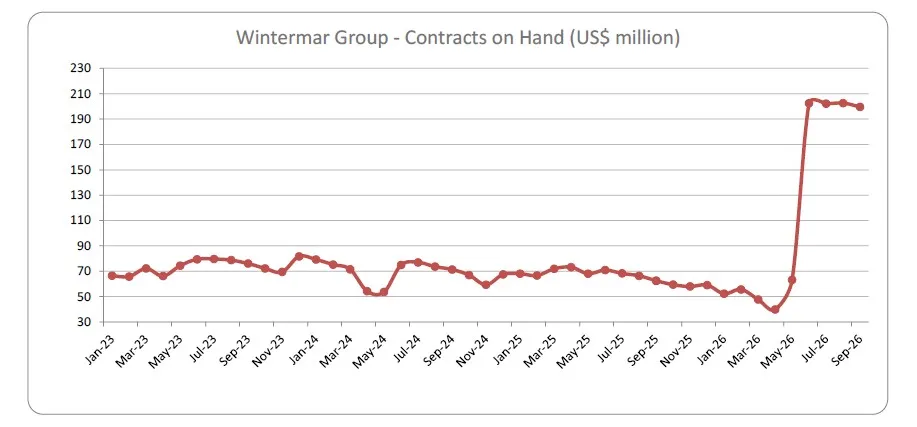
Garuda Indonesia Group’s Transformation Programme Drives 13.2% Revenue Growth to US$2.71 Billion Amid High Jet Fuel Prices ACN Newswire

Garuda Indonesia Group’s Transformation Programme Drives 13.2% Revenue Growth to US$2.71 Billion Amid High Jet Fuel Prices

JAKARTA, INDONESIA, Oct 30, 2026 - (ACN Newswire via SeaPRwire.com) - PT Garuda Indonesia (Persero) Tbk (GIAA) reported a 13.2% year-on-year increase in revenue to US$2.71 billion for the first nine months of 2026, supported by stronger contributions from its core airline operations and a 31.3% rise in non-airline business revenue. The performance reflects the Group's expanding revenue base and continued transformation progress, despite persistent pressure from elevated jet fuel prices.Revenue from scheduled airline services increased 12.6% year-on-year, contributing an additional US$233.2 million, while non-scheduled services grew 2.1%, adding US$6.3 million. Non-airline businesses recorded a US$77.0 million revenue increase, accounting for approximately 24.3% of the Group's total revenue growth during the nine months of 2026.The performance was achieved amid continued industry-wide cost pressures, particularly from higher jet fuel prices driven by geopolitical tensions in the Middle East and volatility in global energy markets. The Group's fuel expenditure rose 42.9% year-on-year, equivalent to US$309.8 million, contributing to a 15.7% increase in overall operating costs.Excluding fuel, operating expenses increased by approximately 3.1%, significantly below revenue growth of 13.2%, reflecting progress in cost management and operating efficiency.Garuda Indonesia Group recorded an operating profit of US$97.2 million, while its net loss narrowed by 3.0% to US$179.3 million. The results demonstrate continued revenue momentum and improving cost discipline as the Group advances its financial recovery.Non-Airline Businesses Strengthen Group-Wide GrowthGaruda Indonesia Group's diversified business portfolio continued to make a greater contribution to overall performance, with non-airline revenue rising 31.3% year-on-year to US$322.8 million.Growth was supported by a 42.4% increase in aircraft maintenance revenue from external customers at GMF AeroAsia, alongside a 76.1% rise in travel agency services revenue. These developments highlight the growing commercial potential of the Group's broader business ecosystem, complementing its core passenger airline operations.Garuda Indonesia President Director and Chief Executive Officer Thomas Oentoro said the performance reinforces the importance of developing stronger contributions from across the Group's businesses. "Strengthening our core airline operations remains essential, but our future growth must also come from making better use of the capabilities and opportunities across the Group. The increasing contribution from our non-airline businesses demonstrates how a more integrated and commercially focused business ecosystem can support our financial recovery," Thomas said.He added that continued support from Danantara, as the Group's shareholder, would play an important role in advancing operational improvements and strengthening collaboration across its businesses."With Danantara's support, we are focused on improving productivity, unlocking greater value from our existing assets and capabilities, and ensuring that each business contributes more effectively to the Group's overall performance," he said.Fleet Recovery Supports Passenger Growth and Operational ReliabilityOperational improvements also contributed to stronger traffic performance during the first nine months of 2026, with Garuda Indonesia Group carrying 16.7 million passengers, compared with 15.6 million in the corresponding period last year.Of the total, Garuda Indonesia carried 7.7 million passengers, while Citilink served 8.9 million. Combined flight frequencies increased 7.9% year-on-year to 117,868 services, from 109,259 previously.The growth was supported by continued fleet reactivation initiatives, with the Group's serviceable fleet reaching 106 aircraft as of September 2026, comprising 64 Garuda Indonesia and 42 Citilink aircraft. This represented an increase of 24 serviceable aircraft from 82 in the same period last year, reflecting ongoing efforts to restore fleet availability and optimize operating capacity with support from Danantara.Alongside higher fleet availability, operational reliability continued to improve. The Group's on-time performance (OTP) reached 92.01%, an improvement of 5.86 percentage points from 86.15% a year earlier.Thomas emphasized that fleet recovery must translate into sustained improvements in productivity, network efficiency and customer experience. "Restoring fleet availability is an important part of our transformation, but adding capacity alone is not enough. Every aircraft must be deployed productively, every route must contribute to a more efficient network, and our customers must see tangible improvements in reliability and service," he said.Advancing Transformation Towards Sustainable ProfitabilityLooking ahead, Garuda Indonesia Group will continue to accelerate its transformation priorities, focusing on fleet productivity, disciplined network optimization, stronger contributions across its business portfolio and sustained cost management.These priorities will guide the Group's efforts to strengthen competitiveness, improve financial resilience and translate operational progress into more consistent financial performance.“Our transformation is gaining momentum, and we're focused on building on that progress. What matters now is turning these improvements into stronger financial results and a consistently better experience for our customers. That is how we intend to rebuild Garuda Indonesia's competitiveness and restore its position as a world-class airline," Thomas concluded.PT GARUDA INDONESIA (PERSERO) TBKCORPORATE COMMUNICATIONSMedia Contact:corpcomm@garuda-indonesia.com Copyright 2026 ACN Newswire via SeaPRwire.com. All rights reserved. www.acnnewswire.com
More

Philippine Tourism Has Three Arrival Counters and a 300,000 Gap ACN Newswire

Philippine Tourism Has Three Arrival Counters and a 300,000 Gap

HONG KONG, Oct 30, 2026 - (ACN Newswire via SeaPRwire.com) - On 4 September 2026, the Philippine Department of Tourism gave reporters a number: 4,115,860 international visitors for January to August, up 3.7% on the same months of 2025. On 18 September 2026 the department's own dashboard displayed 4,415,860 for the identical period, up 0.78%. The distance between the two September 2026 releases is exactly 300,000 people, or 7.3% of the smaller figure. Neither release was withdrawn. Neither was labelled a correction.For anyone outside the tourism trade this looks like a clerical problem. It is not. It is what happens when an official statistical series changes the instrument that produces it while keeping the name, the headline format and the political purpose. The country still received a quantity of foreign visitors between January and August 2026. Three separate counting systems were pointed at that quantity, and they returned three different answers.This piece treats the three systems as instruments and runs the same task through each one. The task is simple enough to repeat: count every person admitted to the Philippines between 1 January and 31 August 2026 who is not a resident, break the total down by country of passport, and compare it with the same count for 2025. What follows is the output of each instrument, the arithmetic that separates them, and a short guide to which counter is fit for which job.One task, stated so that it can be repeatedPrecision about the task matters, because most of the disagreement in Philippine arrival statistics comes from people using the same words for different operations.The unit is a person, not a trip. A visitor who enters twice in eight months counts twice, which is how almost every tourism authority in the world counts. The territory is the customs and immigration boundary, including airports and seaports. The window is 1 January to 31 August 2026, the period DOT reports as the year to date. The classification key is country of passport, which is what produces the familiar table of source markets.The task has one property that makes it unusually hard to do cleanly. The Philippines has a very large diaspora, and a large share of the people crossing its border on a foreign passport are former citizens coming home to visit family. Under the Balikbayan programme, dating from Republic Act 6768 and amended by Republic Act 9174, a former Filipino who has naturalised abroad can enter visa free for a year. That person is a foreign passport holder on arrival and a returning family member in every other sense. Whether they enter the count decides whether the American market is 818,318 or 926,575.DOT's published total for 2025 was 6.44 million visitors, with tourism receipts of PHP 694 billion and tourism direct gross value added of PHP 2.27 trillion, or 8.1% of GDP. In 2025 the sector supported 7.7 million jobs. Those are the numbers the department is accountable for. The arrival counter is the input that feeds them.Instrument one: a form filled in before landingThe first instrument is eTravel, the government's online arrival registration. It is mandatory for every inbound traveller, including Filipino passport holders and crew, and it opens 72 hours before departure. A completed form produces a QR code that airlines check at check-in and immigration officers scan on arrival.Because eTravel is a registration system, its raw output is a count of registrations, not a count of admissions. Almost everyone who registers does land, so the two numbers are close. They are not identical. A registration can be filed and the flight missed; a connecting passenger can be rebooked; a seafarer can register for a leg that is later cancelled.The 4 September release used eTravel alone. Its market table read: United States 818,318, South Korea 727,379, Japan 350,191, China 310,088, Australia 234,156, Canada 231,972, Taiwan 154,957, United Kingdom 132,370, Singapore 126,812, India 77,883. In the January to August 2026 window, growth was led by China at 69.15% and India at 32.20%, with South Korea down 17.42% and Taiwan up 9.63%.Instrument two: the form plus the immigration recordThe second instrument merges eTravel registrations with records held by the Bureau of Immigration, the agency that actually admits people at the port. DOT launched a public dashboard on 16 September 2026 that runs on this merged basis, and the 18 September coverage described the source plainly: eTravel records from the Department of Information and Communications Technology, plus Bureau of Immigration records.The merged total for the same eight months is 4,415,860, against 4,381,585 in 2025, a gain of 34,275 people. The market table rearranges itself. In the September 2026 release the United States rises to 926,575, or 20.98% of the total. South Korea sits at 744,732 in the same table, or 16.86%. Japan appears at 321,545, or 7.3%.Table 1: Three published counts of the same eight-month task, with each publisher's own stated changeInstrumentPublisher and dateJan to Aug 2026Change as publishedeTravel registrations onlyDOT, 4 September 20264,115,860+3.7%eTravel plus immigration recordsDOT dashboard, 18 September 20264,415,860+0.78%Private estimateLPC, reported 7 October 2026about 4.40 millionroughly flat Source: DOT 🔗, Philippine Tourism Data Dashboard, September 2026 (site home); Economic Daily News 🔗, 4 September 2026; Migrant Times 🔗, 19 September 2026Instrument three: a number with no published methodThe third instrument is a private estimate. On 7 October 2026, Chinese-language Philippine coverage cited LPC, a property research house, putting arrivals for January to August at about 4.40 million, essentially flat on 4.38 million a year earlier. The same report said growth peaked at 12% in February 2026, stalled from April, and turned negative year on year from May. For January to August 2026 it put China at about 303,000, up roughly 93%, and Korea at 744,000, down 22%.The LPC number is worth including precisely because it is not an official series. It reaches the same order of magnitude as the merged count through a different route, and its market detail agrees with the merged series on Korea while agreeing with the eTravel series on nothing else. But no methodology is published: not the sample, not the treatment of balikbayan, not whether the count is by port of entry or by first destination. A number without a published method is a signal rather than a measurement, and it should be cited as one.The 300,000 gap does not behave like an additionThe obvious explanation for the gap is that the merged series adds returning overseas Filipinos to the eTravel count. Three hundred thousand extra people over eight months, in a country with ten million citizens abroad, is a plausible size for that flow. The explanation is probably right in aggregate and wrong in detail.If the merged series were eTravel plus an extra population, no market could shrink when you move from one to the other. Japan shrinks. The eTravel series has Japan at 350,191; the merged series has it at 321,545, a fall of 28,646, or 8.2%. China also falls, from 310,088 to 303,000, down 2.3%. The United States rises by 108,257, or 13.2%. Korea rises by 17,353, or 2.4%.A series that is a strict superset cannot subtract 28,646 Japanese visitors. Something else is happening. The two instruments are not nested; they are differently shaped. A registration form records the passport and itinerary declared before travel. An immigration record reflects what the officer admitted, under which category, at which port. Reclassify a group, deduplicate a set of records, or change how a transit passenger is booked, and individual markets move in both directions while the total still rises.That is the useful finding here, and it is more interesting than the headline gap. The 300,000 is not a pile of extra people sitting on top of the first count. It is the net of additions and subtractions across a much larger set of records, which means the market-level numbers from the two series cannot be mixed. A sentence that pairs the merged total with the eTravel country table is not approximately right. It describes a population that no instrument measured.Four pairings, four growth ratesThe growth rate is where the instrument choice becomes politically visible, because 2026 is the year the Philippines is trying to defend a target.DOT's stated goal for 2026 is between 6.4 million and 6.8 million international visitors, with 7 million described in September coverage as a stretch figure. Against a 2025 outcome of 6.44 million, the low end of that range is flat and the high end is a 5.6% gain.Now count the ways to compute a year-on-year change for the first eight months. The eTravel series compares like with like and reports +3.7%. The merged series compares like with like and reports +0.78%. Cross the two and the answer changes sign.Table 2: The same eight months, four ways of pairing a numerator with a baselineNumeratorBaselineImplied change4,115,860 (eTravel, 2026)3,969,000 (eTravel, 2025, implied)+3.7% as published4,415,860 (merged, 2026)4,381,585 (merged, 2025)+0.78% as published4,115,860 (eTravel, 2026)4,381,585 (merged, 2025)-6.1%4,415,860 (merged, 2026)3,969,000 (eTravel, 2025, implied)+11.3% Source: derived from the three series in Table 1; the 2025 eTravel baseline is implied by dividing 4,115,860 by 1.037 and is therefore an estimate, not a published figureThe third row is the one that should worry the department. If a reader takes the newer 2025 baseline and the older 2026 numerator, Philippine arrivals fall 6.1% in the first eight months. If a reader takes the older baseline and the newer numerator, they rise 11.3%. The two published figures are both defensible. The two unpublished combinations are both nonsense, and both are one careless citation away from print.The 2025 baseline moved by roughly 412,000 people between the two releases, which is larger than the 300,000 gap in 2026. That restatement is the part nobody has explained in public. A statistical office restating a baseline by 9.4% in 2026 is entitled to do so, but it normally publishes a note saying what changed. Without that note, the 2025 comparison set is a moving floor.What each counter is good forNone of this makes any of the three instruments wrong. It makes them specialised. The mistake is treating them as interchangeable, and the fix is a short routing table.· For a headline about foreign tourists, use the eTravel series. It excludes most returning citizens by construction, which is what the word tourist is usually meant to capture.· For airline capacity, airport slots and hotel pipeline planning, use the merged series. It includes every admission, including the balikbayan who occupies a seat and a room.· For tourism receipts and GDP contribution, use neither. Use the Philippine Statistics Authority's tourism direct gross value added and DOT's receipts series, which count spending rather than heads.· For the 6.4 million target, ask which series the target is measured on. The published target does not say, and the two candidates differ by 7.3% at the eight-month mark.That last gap matters arithmetically. To reach 6.4 million on the eTravel basis, the Philippines needs about 2.28 million arrivals in September to December, or 571,000 a month. On the merged basis it needs about 1.98 million, or 496,000 a month. The four-month run rate implied by the merged series is already close to the lower threshold; on the eTravel series it is not.The 6.4 million target is a fourth instrumentA target is not a measurement, but it behaves like one once it enters a press conference. The 2026 target carries a complication: it was set before either the eTravel or the merged series existed in its current form, so the baseline it was built on is neither.DOT's own mid-year communications show the strain. On 6 October 2026 the tourism secretary was reported expressing confidence in the 6.4 million goal, with cumulative growth of 3.46% to that date. That 3.46% figure, reported in October 2026, is consistent with the eTravel series and inconsistent with the merged one. By 18 September 2026 the dashboard series showed growth of 0.78% for eight months. Both statements are true of their own instrument. Only one of them can be true of the target, and the target does not specify which.There is a second complication, which is the China market. The Philippines opened 14-day visa-free entry for Chinese citizens in January 2026 at Manila and Cebu, and DOT has been seeking to extend it to Clark, Caticlan, Bohol and Palawan. Chinese arrivals rose from 1.74 million in 2019 to a peak that has never been recovered, then collapsed, and are now 310,088 on the eTravel basis for eight months of 2026, up 69.15% year on year. The October 2026 LPC estimate puts the gain at 93%.A market growing at 69% or 93% from a small base is exactly where instrument differences bite hardest, because the base is small and the reclassification is large. If the visa-free expansion proceeds, the 2027 comparison will be built on a 2026 base that two instruments disagree about by 7,000 people in one market and 300,000 in total.Receipts are the counter nobody argues aboutAmid three arrival counters there is one number that has not been restated: money.Tourism receipts for 2025 were PHP 694 billion. Tourism direct gross value added was PHP 2.27 trillion, or 8.1% of GDP, with shopping, accommodation and food services the largest components. Those figures come from the Philippine Statistics Authority's tourism satellite account, which is built from expenditure surveys and business records rather than from a form filled in at the airport.Dividing receipts by arrivals gives a rough yield per visitor. For 2025, on 6.44 million arrivals, PHP 694 billion works out to about PHP 107,800 per visitor, or roughly USD 1,900 at an exchange rate near 57 pesos to the dollar. That is a high figure by regional standards and it is one reason the arrival count matters less than it appears: a 300,000-person disagreement moves receipts by about PHP 32 billion, or 4.6%, if the marginal visitor spends the average. It does not move the GDP contribution, because the satellite account does not divide by an arrival count.The distinction is worth holding on to. Arrival counters are an input to marketing and aviation planning. Receipts and value added are the economic output. When the two disagree, the output number is the one that has been through an accounting process.What would settle thisThree things would close the gap, and all three are cheap.First, publish the bridge. DOT has both series. A one-page table showing, for each source market, the eTravel count, the immigration count and the difference, would explain the 300,000 in an afternoon and end the guessing. Statistical agencies do this routinely when they change a collection method; the silence is a choice, not a constraint.Second, restate 2025 on both bases and say so. The 2025 figure moved by about 412,000 between releases. Publishing both baselines, with the date each was computed, would let analysts compute a like-for-like change without inferring one.Third, state which series the 6.4 million target is measured on. This costs nothing and removes an entire genre of misleading coverage, including the genre that quotes a merged total next to an eTravel market table.Until then, the honest way to cite Philippine arrivals in 2026 is to name the instrument in the same sentence as the number. "4.4 million on the merged series" and "4.1 million on eTravel" are both accurate. "4.4 million visitors, with 818,318 Americans" is not, and it will keep appearing in print because the two numbers are one search apart.Data basisData as of October 2026. The primary metric is international visitor arrivals for 1 January to 31 August 2026, as published by DOT in two releases and by LPC through Philippine media. All three totals are taken as published. The two crossed pairings in Table 2 divide one published numerator by another series' baseline, which is arithmetic, not measurement.Three definitions govern the work. The numerator counts persons, not trips. The growth denominator is the same eight calendar months of 2025. Markets are classified by passport, which is why the balikbayan treatment moves the United States line far more than the China line. One adjustment is deliberately not made: no returning-citizen flow is added or subtracted, because no publisher discloses it by market.Limitations· The LPC estimate is triangulation only; no sample, method or port coverage is published.· The 2025 eTravel baseline is derived from a rounded 3.7% growth rate, so it carries about plus or minus 15,000.· Receipts per visitor divides spending by an arrival count from another collection system, so it is an average, not a marginal yield.Sources· Department of Tourism 🔗, Philippine Tourism Data Dashboard and 2025 year-end results, September 2026 (site home)· Economic Daily News 🔗, DOT January to August arrivals at 4.11 million, 4 September 2026· Migrant Times 🔗, visitor arrivals edge up to 4.42 million through August, 19 September 2026· The Nation Week 🔗, tourism and statistics, dashboard launch and 2025 value added, 18 September 2026· China News Service via Toutiao 🔗, LPC estimate of 4.40 million arrivals, 7 October 2026· Philippine Consulate General, Toronto 🔗, Balikbayan privilege under Republic Act 6768 and 9174 (site home) This article was prepared by the expert team at Global Infinity Labs, drawing on insights and data provided through its MCP data services. About Global Infinity LabsGlobal Infinity Labs is an AI innovation company specializing in MCP data services.Email: support@globalinfinitylabs.com Copyright 2026 ACN Newswire via SeaPRwire.com. All rights reserved. www.acnnewswire.com
More
CIMC Group Announces Results for the First Three Quarters of 2026 ACN Newswire

CIMC Group Announces Results for the First Three Quarters of 2026

Performance Highlights01. Operating Performance in the Third Quarter: The Group recorded revenue of RMB47.9 billion in the third quarter, representing a year-on-year increase of 16.91% and a quarter-on-quarter increase of 3.57%; net profit attributable to shareholders amounted to RMB708 million, representing a year-on-year increase of 146.40% and a quarter-on-quarter increase of 33.5%. The year-on-year growth in the third quarter was mainly attributable to the continued contribution from offshore engineering and clean energy-related businesses, while the quarter-on-quarter growth was mainly driven by the recovery in sales volume and prices in the container manufacturing business in the second half of the year.02. Offshore Engineering Orders on Hand Exceeded US$10 Billion: Newly signed orders in the first three quarters amounted to US$5.7 billion, including US$2.5 billion secured in the third quarter. The Group signed its second FLNG EPC turnkey contract with Golar, as well as orders for multiple pure car and truck carriers, while advancing large-scale capacity expansion at its oil and gas bases.03. Recovery in Sales Volume and Prices in the Container Manufacturing Business in the Second Half of the Year: Sales volume of dry cargo containers in the third quarter reached 0.92 million TEUs, representing a year-on-year increase of 35% and a quarter-on-quarter increase of 35%.04. Accelerated Growth in the AIDC Business in the Third Quarter: New orders for over 300MW were signed in the third quarter, bringing cumulative newly signed orders in the first three quarters to over 500MW (exceeding RMB8.0 billion). The Group is also planning to bring new production capacity in Shanxi on stream to serve the Beijing-Tianjin-Hebei market.Hong Kong, Oct 30, 2026 - (ACN Newswire via SeaPRwire.com) - China International Marine Containers (Group) Co., Ltd. (“CIMC Group” or the “Group”, stock code: 000039.SZ/02039.HK) is pleased to announce its unaudited results for the first three quarters ended 30 September 2026 (the “Period”) and disclose its operating performance for the third quarter.In the third quarter of 2026, the Group recorded revenue of RMB47.9 billion, representing a year-on-year increase of 16.91% and a quarter-on-quarter increase of 3.57%. Net profit attributable to shareholders amounted to RMB708 million, representing a year-on-year increase of 146.40% and a quarter-on-quarter increase of 33.5%. In the first three quarters of 2026, the Group recorded revenue of RMB126.8 billion, representing a year-on-year increase of 8.33%, while net profit attributable to shareholders amounted to RMB1.45 billion.In terms of container manufacturing business, in the third quarter of 2026, the Group’s dry cargo container sales volume increased by 35% year on year and 35% quarter on quarter to 0.92 million TEUs. According to a World Trade Organization report released in October 2026, the volume of goods trade in 2026 is projected to grow by 3.9%, significantly exceeding the forecast made at the beginning of the year. It has also raised its forecast for global goods trade volume growth in 2027 to 4.1%, primarily due to the resilience of supply chains and the driving force of the technology sector. In addition, constrained effective capacity and low vessel turnaround efficiency in the container shipping sector further boosted demand for containers. During the Period, the Group’s cumulative sales volume of dry cargo containers reached 2,055,000 TEUs, representing a year-on-year increase of approximately 14.05%. Driven by fruit transportation demand from South America, the cumulative sales volume of reefer containers reached 152,600 TEUs. In the first three quarters of 2026, the Group’s container manufacturing business achieved year-on-year growth in production and sales volumes and revenue. However, net profit declined year on year due to the impact of the lower container prices settled in the first half of the year and exchange rate movements.In terms of road transportation vehicle business, in the first three quarters of 2026, CIMC Vehicles sold a total of 116,000 vehicles of various types globally, representing a year-on-year increase of 14.62%. Among these, global sales volume of semi-trailers increased by 14.80% year on year. In the domestic market, the core production efficiency and sales scale of semi-trailer, liquid tanker and powder tanker businesses under the StarLink Project continued to improve. In overseas markets, markets in the Global South emerged as a key growth engine, with revenue increasing by more than 25% year on year. Operating profit from DTB truck body products recorded a steady year-on-year increase. At the IAA TRANSPORTATION exhibition in Hanover, Germany, the pure electric tractors and trailers (EV-RT) made their global debut, showcasing a product platform covering both construction and logistics scenarios, integrated tractor-trailer cooperative control technology and modular mobile energy-replenishment products.In terms of airport facilities and logistics equipment, fire safety and rescue equipment business, in the first three quarters of 2026, CIMC-TianDa recorded steady growth in revenue and profit. Growth in the airport business was mainly attributable to the concentrated completion of project acceptances for boarding bridges, specialized airport vehicles and aircraft ground air-conditioning systems, allowing the conversion of high-quality orders accumulated earlier. The logistics equipment business benefited from incremental demand from e-commerce logistics and airport baggage handling systems, maintaining sound revenue growth and a solid pipeline of orders on hand. Driven by the national “Two New” initiatives and supported by the expansion of the Ziegler brand in domestic and overseas markets, the fire safety and rescue equipment business recorded significant quarter-on-quarter growth in both revenue and profitability.In terms of logistics services business, in the first three quarters of 2026, CIMC Wetrans recorded steady growth in both revenue and profit amid a volatile yet overall upward container transportation market by closely tracking market changes and co-ordinating resource allocation. In the sea transportation business, gross profit increased by more than 20% through a series of initiatives including shareholding structure adjustment and integrated consolidation. The operational capabilities in Southeast Asia were upgraded iteratively to strengthen logistics capabilities for shipments from Southeast Asia to global destinations.The fundamentals of the port logistics business remained solid. The container yard in Tianjin, a joint venture of CIMC Wetrans and a leading shipping line, commenced operations. In the industrial logistics business, the cold chain business capitalised on the rotational supply cycle of imported durian and exported fresh fruits, and expanded its self-owned capacity by increasing investments in reefer containers, achieving simultaneous improvements in business scale and revenue per container. Subsidiaries in Kenya and Saudi Arabia successively put their self-operated vehicles into operation, continuously enhancing the Group’s overseas localised operating capabilities. In the air transportation business, the profitability of products contracted with airlines improved, and the “dual corridor” in the Americas took shape. The year-round scheduled charter flight between Hong Kong and Miami made its maiden voyage in early September.In terms of energy, chemical and liquid food business, in the first three quarters of 2026, CIMC Enric recorded revenue of RMB20.502 billion, representing a year-on-year increase of 6.0%, and net profit attributable to shareholders increased by 6.5% year on year to RMB817 million. Newly signed orders amounted to RMB21.937 billion in total, representing a year-on-year increase of 11.7%, and orders on hand amounted to approximately RMB33.381 billion as at the end of September, representing a year-on-year increase of 8.5%. Among the business segments, revenue of the clean energy segment increased by 11.3% year on year to RMB16.739 billion. Benefiting from the release of profits from the offshore clean energy sector, the incremental profit contribution from the COG-to-hydrogen co-production LNG project and higher demand for natural gas transportation equipment, net profit attributable to shareholders in this segment increased significantly year on year. Revenue of the chemical and environmental segment increased by 38.7% year on year to RMB2.181 billion, while newly signed orders amounted to RMB2.343 billion, representing a year-on-year increase of 45.3%. Revenue of the liquid food segment amounted to RMB1.582 billion, while newly signed orders reached RMB2.321 billion, representing a year-on-year increase of 124.1%. As at the end of September, orders on hand amounted to RMB2.953 billion, representing a year-on-year increase of 15.1%, laying a solid foundation for the long-term and steady development of the business.In terms of marine engineering business, benefiting from continued improvements in delivery efficiency and lean management, the business achieved year-on-year growth in net profit and met its high-quality development targets. In terms of market orders, new orders secured in the first three quarters amounted to US$5.7 billion, representing a significant increase as compared with US$260 million for the same period in 2025. In particular, the Company signed China’s first FPSO EPCIC turnkey contract in June, a second FLNG (floating liquefied natural gas system) EPC turnkey contract in August, and secured contracts for 4 VLCC and 12 pure car and truck carriers (PCTC) during the year. As at the end of September, orders on hand of CIMC Raffles exceeded US$10 billion, hitting a new record high. In particular, the proportion of oil and gas orders to non-oil and gas orders was approximately 2:1, which effectively eased the periodic fluctuation of the oil and gas market. In terms of capacity, in the third quarter, the offshore engineering business actively advanced the capacity expansion plan for its oil and gas base to meet the continuously growing demand in the deepwater oil and gas market. In terms of project construction and delivery, in July, “CLEANSTAR”, the fourth 7,000 CEU PCTC built for a Greek ship-owner, was successfully delivered and departed from Longkou Terminal. In August, the first ro-ro ship with 3,300 lane meters built for SMYRIL LINE was delivered on schedule; designed to withstand the complex sea conditions and extreme weather of the North Atlantic, the vessel balances high operational efficiency with low carbon emissions. In September, the topside module of the offshore substation for the Datang Hainan Danzhou 1.2 GW offshore wind power project successfully completed full-process construction and all related inspection and acceptance procedures.In terms of innovative businesses, the development of the modular data center business of CIMC Digital Energy further accelerated. Revenue for the first three quarters recorded a significant and rapid increase compared with the same period last year. In the third quarter, new orders for over 300MW of cloud computing and AI computing power data centers were signed. In the first three quarters, cumulative newly signed orders exceeded 500MW (over RMB8.0 billion), demonstrating further expansion of the business scale.The Group’s management stated: “The global economic and trade environment and energy landscape continued to evolve in 2026. CIMC Group continued to deepen its global layout strategy, leveraging technological innovation to drive the coordinated development of its two major business segments, logistics equipment and energy equipment. Looking ahead, the Group will seize structural opportunities arising from the upgrading of high-end offshore engineering equipment, the transition to green energy and the development of AI computing infrastructure. It will continue to strengthen its global delivery and integrated operating capabilities and steadily advance high-quality and sustainable development.”About China International Marine Containers (Group) Co., Ltd.The CIMC Group is a world leading equipment and solution provider in the logistics and energy industries, and its industry cluster mainly covers the logistics and energy fields, strengthening its position as a global market leader. In the logistics field, the Group still adheres to taking its container manufacturing business as the core business, based on which it has developed its road transportation vehicles business and airport facilities and logistics equipment/fire safety and rescue equipment business, supplemented by its logistics services business and recycled load business, which provide products and services in the professional logistics field. In the energy field, the Group is principally engaged in the energy/chemical/liquid food equipment business and the offshore engineering business. Meanwhile, the Group also continuously develops emerging industries and has a finance and asset management business that serves the Group itself. As a diversified multinational industrial group serving the global market, CIMC owns over 300 member enterprises in Asia, North America, Europe, Australia and other regions, including 4 listed companies, with customers and sales networks covering more than 100 countries and regions. In 2025, the Group ranked 154th on the 2025 Fortune China 500 list. For more information, please visit https://www.cimc.com/.For investor relations and media enquiries, please contact LBS Communications Consulting LimitedIR Email: cimcir@lbs-comm.comJoanne ChanTel: (852) 3679 3671Email: jchan@lbs-comm.comJoan YangTel: (86) 176 7074 8753Email: jyang@lbs-comm.com Copyright 2026 ACN Newswire via SeaPRwire.com. All rights reserved. www.acnnewswire.com
More
U.S. Polo Assn. Executes Early on Europe’s Digital Product Passport Mandate ACN Newswire

U.S. Polo Assn. Executes Early on Europe’s Digital Product Passport Mandate

West Palm Beach, FL, Oct 29, 2026 - (ACN Newswire via SeaPRwire.com) - U.S. Polo Assn.®, the official sports brand of the United States Polo Association (USPA), with a multi-billion-dollar global footprint and distribution in more than 190 countries through some 1,200 U.S. Polo Assn. mono-brand retail stores, numerous branded websites and thousands of other points of distribution worldwide, today announced the brand's early activation of Digital Product Passports (DPPs) across product categories sold into the European Union (EU).As Europe prepares to launch the Digital Product Passport Registry, U.S. Polo Assn. has taken a proactive approach by preparing to deploy DPPs across all products sold into the EU well ahead of the mandatory compliance deadline expected in 2028 or 2029. The global sports brand has already mapped product information for millions of products, creating a scalable framework that will enhance product transparency and support compliance readiness throughout its European operations.Beyond additional transparency, the data generated through this effort will enable the brand and its consumers to make more informed, data-driven decisions. The goal is to identify opportunities for improvement across the brand's products and global supply chain, supporting continuous progress toward lower-impact and more sustainable solutions."We view the Digital Product Passport as an opportunity to give our U.S. Polo Assn. consumers and retail partners across Europe greater visibility into the products they purchase while equipping our global business with better data to make smarter decisions across our products and supply chain," said J. Michael Prince, President and CEO of USPA Global, the company that manages the multi-billion-dollar sports brand, U.S. Polo Assn. "We are proud to activate this critical product platform early while building a strong foundation that strengthens consumer trust and advances our long-term commitment to more responsible and sustainable growth.""This approach ensures our sustainability initiatives are both practical and meaningful, supporting real improvements across U.S. Polo Assn. business and supply chains," Prince added.What is a Digital Product Passport?A Digital Product Passport is a digital record that provides information about a product throughout its lifecycle. By scanning a QR code or accessing a digital record, consumers can learn more about where a product originates, the materials it contains, how it was produced, and other information that helps them make more informed purchasing decisions.The goal of DPP is to make product information more accessible, transparent, and easy for consumers to understand.Enhanced TransparencyThe European Union is moving toward requiring greater product transparency through Digital Product Passports. However, U.S. Polo Assn. believes the real opportunity lies in providing consumers more meaningful information about the products they want to experience.DPP aligns with the broader direction outlined within the brand's comprehensive sustainability strategy, USPA Life. This commitment is supported through collaborations with industry leaders such as Carbonfact, the Environmental Intelligence Platform for apparel and footwear, which processes the brand's product data and generates its Digital Product Passports, and LRQA's EiQ platform, as well as other strategic partnerships across the industry. The brand is also advancing innovative product initiatives such as the new USPA LIFE Polo Shirt debuting in Summer 2027."U.S. Polo Assn. is among the first brands to make Digital Product Passports operational, well ahead of EU requirements. With Carbonfact, they bring thousands of data points from across many different systems into one consistent, reliable environmental footprint for every product, and that same dataset powers their DPPs, generating QR codes and sharing clear, reliable product information at scale," said Marc Laurent, CEO, Carbonfact.By providing accessible product-level data through Digital Product Passports, U.S. Polo Assn. aims to enhance transparency and empower both the brand and consumers to make more informed decisions. This strategic approach supports additional ways to reduce environmental impact and advance the company's sustainability efforts in a measurable manner.Building the Foundation for the Future of RetailThe implementation of DPP will span all product categories sold into the European Union, providing a consistent framework and consumer experience for product information across U.S. Polo Assn.'s European portfolio."We believe transparency is key to a more sustainable future," said Jessica Lenhart, Director of Sustainability for USPA Global. "By helping consumers better understand the products they purchase, we can enable more informed choices and drive meaningful change.""Digital Product Passports create a new level of connection between brands and consumers, enhancing overall product transparency," adds Lenhart.With millions of products already mapped, U.S. Polo Assn.'s early activation of Digital Product Passports (DPP) represents one of the most significant product transparency initiatives undertaken by the brand to date.As consumers continue to seek greater visibility into the products they experience, U.S. Polo Assn. believes that enhanced transparency will become an increasingly important part of the customer experience.About U.S. Polo Assn.® and USPA GlobalU.S. Polo Assn. is the official sports brand of the United States Polo Association (USPA), the largest association of polo clubs and polo players in the United States, founded in 1890. With a multi-billion-dollar global footprint and worldwide distribution through more than 1,200 U.S. Polo Assn. retail stores as well as thousands of additional points of distribution, U.S. Polo Assn. offers apparel, accessories, and footwear for men, women, and children in more than 190 countries worldwide. U.S. Polo Assn.'s Global Polo Shirt Campaign, An Icon Born from the Game, is a powerful tribute to the iconic polo shirt's authentic sports origins and its evolution into one of the world's most enduring style essentials.The global sports brand sponsors major polo events around the world, including the U.S. Open Polo Championship®, held annually at the USPA National Polo Center in The Palm Beaches, the premier polo tournament in the United States. Historic deals with ESPN in the United States, TNT and Eurosport in Europe, Star Sports in India, and BeIN Sports in the Middle East now broadcast several of the premier polo championships in the world, sponsored by U.S. Polo Assn., making the thrilling sport accessible to millions of sports fans globally for the very first time.U.S. Polo Assn. has recently been named one of USA Today's Most Trusted Brands and in 2026 was ranked the top sports licensor in the world, surpassing the NFL, PGA Tour, and Formula 1, according to License Global. The sport-inspired brand has been recognized internationally with awards for global growth and sports content. Due to its tremendous success as a global brand, U.S. Polo Assn. has been featured in Fortune, Forbes, Modern Retail, WWD, and GQ, as well as on Yahoo Finance and Bloomberg, among many other noteworthy media sources around the world. For more information, visit uspoloassnglobal.com and follow @uspoloassn.USPA Global is a subsidiary of the United States Polo Association (USPA) and manages the multi-billion-dollar sports brand, U.S. Polo Assn. USPA Global also manages its subsidiary, Global Polo, which is the worldwide leader in polo sport content. To learn more, visit globalpolo.com or Global Polo on YouTube.About CarbonfactCarbonfact is the Environmental Intelligence Platform for apparel and footwear. Selected by 300+ brands, the platform helps them measure the environmental footprint of products and create Digital Product Passports at scale. Learn more at www.carbonfact.com.For Further Information, Contact:Stacey KovalskyVP, Global PR & CommunicationsPhone: +1.561.790.8036Email: skovalsky@uspagl.comJessica LenhartDirector, SustainabilityPhone: +1.561.461.8594Email: jlenhart@uspagl.comSOURCE: U.S. Polo Assn. Copyright 2026 ACN Newswire via SeaPRwire.com. All rights reserved. www.acnnewswire.com
More
COSCO SHIPPING Ports Announces 2026 Third Quarter Results ACN Newswire

COSCO SHIPPING Ports Announces 2026 Third Quarter Results

Hong Kong, Oct 29, 2026 - (ACN Newswire via SeaPRwire.com) - COSCO SHIPPING Ports Limited (“COSCO SHIPPING Ports” or “CSP” or the “Company”, SEHK: 1199), the world’s leading ports logistics service provider, today announced the results of the Company and its subsidiaries (the “Group”) for the 3 months and 9 months ended 30 September 2026. 2026 Third Quarter Results Highlights- Total throughput increased by 8.4% YoY to 42,266,553 TEU- Equity throughput increased by 8.1% YoY to 12,884,563 TEU- Revenue of the Company increased by 13.0% YoY to US$484,325,000- Profit attributable to equity holders of the Company increased by 0.1% YoY to US$82,589,0002026 9 Months Results Highlights- Total throughput increased by 8.1% YoY to 122,423,600 TEU- Equity throughput increased by 7.4% YoY to 37,376,571 TEU- Revenue of the Company increased by 12.6% YoY to US$1,389,669,000- Profit attributable to equity holders of the Company increased by 19.7% YoY to US$316,261,000FINANCIAL REVIEWCOSCO SHIPPING Ports continued to achieve steady improvements in operational quality and efficiency and leveraged an efficient and tightly-knit port and shipping network to lay a solid foundation for the sustainable development of its businesses. In the third quarter of 2026, revenue increased by 13.0% YoY to US$484.3 million while gross profit increased by 19.3% YoY to US$128.1 million, recording an increase in growth rate. The revenue for the first nine months increased by 12.6% YoY to US$1,389.7 million, gross profit increased by 12.6% YoY to US$367.6 million, and the profit attributable to equity holders of the Company increased by 19.7% YoY to US$316.3 million.OPERATIONAL REVIEWChinaFor the three months ended 30 September 2026, total throughput of the terminals in China increased by 4.9% YoY to 30,944,536 TEU (3Q2025: 29,502,970 TEU) and accounted for 73.2% of the Group’s total throughput. Total equity throughput of terminals in China increased by 4.9% YoY to 8,836,915 TEU (3Q2025: 8,422,090 TEU), accounting for 68.6% of the Group’s total equity throughput.Bohai RimFor the three months ended 30 September 2026, total throughput of the Bohai Rim region increased by 4.3% YoY to 14,119,086 TEU (3Q2025: 13,542,749 TEU) and accounted for 33.4% of the Group’s total. Total equity throughput of the Bohai Rim region increased by 3.5% YoY to 3,596,452 TEU (3Q2025: 3,475,303 TEU) and accounted for 27.9% of the Group’s total equity throughput. Driven by the increasing investment demand in artificial intelligence, exports of high-tech products recorded steady growth, contributing a 6.7% YoY increase in the total throughput of Dalian Container Terminal Co., Ltd. to 1,460,461 TEU (3Q2025: 1,368,930 TEU).Yangtze River DeltaFor the three months ended 30 September 2026, total throughput of the Yangtze River Delta region decreased by 0.3% YoY to 4,337,745 TEU (3Q2025: 4,351,648 TEU) and accounted for 10.3% of the Group’s total. Total equity throughput of the Yangtze River Delta region increased by 1.6% YoY to 1,267,657 TEU (3Q2025: 1,247,595 TEU) and accounted for 9.8% of the Group’s total equity throughput. Wuhan CSP Terminal Co., Ltd. (“CSP Wuhan Terminal”) has continued to consolidate its hub position and build a denser shipping route network. It has also continuously strengthened its port-railway cargo sourcing competitiveness, driving a 17.0% YoY increase in total throughput to 87,112 TEU (3Q2025: 74,429 TEU).Southeast Coast and OthersFor the three months ended 30 September 2026, total throughput of the Southeast Coast and Others region increased by 7.6% YoY to 1,514,882 TEU (3Q2025: 1,407,977 TEU) and accounted for 3.6% of the Group’s total throughput. Total equity throughput of Southeast Coast and Others region increased by 7.7% YoY to 1,179,290 TEU (3Q2025: 1,095,296 TEU) and accounted for 9.2% of the Group’s total equity throughput. Xiamen Ocean Gate Container Terminal Co., Ltd. launched several new foreign trade routes within the year, driving a 7.8% YoY increase in total throughput to 753,836 TEU (3Q2025: 699,553 TEU). Pearl River DeltaFor the three months ended 30 September 2026, total throughput of the Pearl River Delta region increased by 7.6% to 8,300,352 TEU (3Q2025: 7,710,996 TEU) and accounted for 19.6% of the Group’s total throughput. Total equity throughput of the Pearl River Delta region increased by 7.1% YoY to 2,225,574 TEU (3Q2025: 2,077,750 TEU) and accounted for 17.3% of the Group’s total equity throughput. Leveraging two-way trade with emerging markets such as Southeast Asia, Guangzhou South China Oceangate Container Terminal Company Limited recorded significant growth in both intra-Asia and Africa-bound routes, driving a 13.6% YoY increase in total throughput to 1,670,028 TEU (3Q2025: 1,470,426 TEU).Southwest CoastFor the three months ended 30 September 2026, total throughput of the Southwest Coast region increased by 7.3% YoY to 2,672,471 TEU (3Q2025: 2,489,600 TEU), accounting for 6.3% of the Group’s total throughput. Total equity throughput of the Southwest Coast region increased by 7.9% YoY to 567,942 TEU (3Q2025: 526,146 TEU) and accounted for 4.4% of the Group’s total equity throughput. Beibu Gulf Port Co., Ltd. has accelerated the development of the Beibu Gulf International Gateway Port and International Hub Port, driven a YoY increase in Southwest Coast region.OverseasFor the three months ended 30 September 2026, total throughput in overseas terminals increased by 19.4% YoY to 11,322,017 TEU (3Q2025: 9,478,574 TEU) and accounted for 26.8% of the Group’s total. Total equity throughput of overseas region increased by 15.6% YoY to 4,047,648 TEU (3Q2025: 3,499,958 TEU) and accounted for 31.4% of the Group’s total equity throughput. Benefiting from growing demand in the Mediterranean region, Piraeus Container Terminal Single Member S.A. (“Piraeus Terminal”) achieving a 11.4% YoY increase in total throughput to 1,090,284 TEU (3Q2025: 978,711 TEU). COSCO SHIPPING Ports Chancay PERU S.A. (“CSP Chancay Terminal”) made full efforts to improve its route network and actively build international logistics corridors, completing the “three mainlines and five feeders” route layout, further enhancing regional connectivity and driving a 24.9% YoY increase in total throughput to 139,669 TEU (3Q2025: 111,862 TEU).PROSPECTSSince the beginning of 2026, the global economic and trade landscape has continued to undergo deep adjustments, with geopolitical tensions, changes in trade policies and supply chain cost pressures intertwined. Against this backdrop, COSCO SHIPPING Ports has continued to strengthen the resilience of its global network, actively respond to the spillover effects of the Middle East situation and the challenges brought by shipping alliance restructuring, and fully leverage its synergies with COSCO SHIPPING Group and the Ocean Alliance. In the third quarter, leveraging its global layout and prudent operations, the Company sustained YoY growth in both total throughput and profit attributable to equity holders, while operating quality and efficiency improved steadily.Recently, benefiting from supply chain adjustments and strong investment in artificial intelligence, both the International Monetary Fund (IMF) and the World Trade Organization (WTO) have upwardly revised their forecasts for global economic growth and global goods trade growth, with growth expected to continue in 2027. According to statistics from the General Administration of Customs of China, in the first three quarters of this year, the total value of goods imports and exports reached RMB39.94 trillion, representing a YoY increase of 18.8%. Of this, exports amounted to RMB23.2 trillion, a YoY increase of 16.4%, and imports totaled RMB16.74 trillion, a YoY increase of 22.3%. Market diversification continued to expand, with significant growth in imports and exports with free trade partners. The export structure continued to improve toward new and higher-quality products, with rapid growth in exports of high-tech products and green products. Looking ahead, although global economic and trade conditions still face considerable uncertainty, and the trajectory of the Middle East situation, energy price volatility, supply chain cost pressures and changes in trade policies will continue to affect the shipping market, the growth forecasts for the global economy and goods trade, as well as the strong momentum demonstrated by China’s foreign trade in terms of market diversification and export structure upgrading, bring positive opportunities to the port industry.In the face of opportunities and challenges, the Company will actively respond with a focus on the following three aspects. First, continuously optimize its global resource layout. We will seize opportunities in emerging markets and regional cooperation, enhance the service capabilities and risk resistance of key node ports, optimize trunk and feeder network connectivity, seek controlling stakes in strategic hub ports, and take equity stakes in key gateway ports at appropriate times, so as to build an efficient and collaborative global terminal system. At the same time, we will capture the opportunities brought by the recovery of the Suez Canal and strengthen service support and cargo sourcing capabilities at hub ports along the route. Second, deepen lean operations and synergies. We will strengthen the operational capabilities of hub ports such as CSP Wuhan Terminal, Piraeus Terminal, CSP Abu Dhabi Terminal and CSP Chancay Terminal, closely monitor the Middle East situation, and improve contingency plans and multi-route logistics corridors. We will adopt customer demand-oriented precision marketing, attract new shipping routes and extra vessel calls, deepen business linkages with the Group’s internal fleet, promote revenue growth and cost reduction, and use digital empowerment to improve terminal operating efficiency. Third, accelerate innovation-driven development. Focusing on the two main lines of “digital intelligence” and “green and low-carbon”, we will advance full-process automation of terminal operations and the application of artificial intelligence, expand the use of clean energy, participate in the construction of green fuel supply chains, cultivate new quality productive forces in the port and shipping industry, build new momentum for sustainable development, and create long-term stable returns for shareholders.About COSCO SHIPPING Ports (https://ports.coscoshipping.com)COSCO SHIPPING Ports Limited (Stock Code: 1199) is a leading ports logistics service provider in the world and its terminals portfolio covers the five main port regions and the middle and lower reaches of the Yangtze River in China, Europe, the Mediterranean, the Middle East, Southeast Asia, South America and Africa, etc. As at 30 September 2026, COSCO SHIPPING Ports operated and managed 395 berths at 40 ports globally, of which 245 were for containers.Building on the brand philosophy of “The Ports for ALL”, COSCO SHIPPING Ports has established its corporate mission of “Connecting Different Worlds” and is committed to maintaining a customer-centric approach to continuously improve the service and capacity of its global network and enhance the strategic positioning of key node ports and optimise logistics resource distribution. Leveraging ports as a conduit to connect global shipping services and serve global trade, the Company is dedicated to establishing a platform for mutual benefits and shared successes for all stakeholders involved with a vision of becoming “the leading global port logistics service provider with a customer-oriented focus”. Copyright 2026 ACN Newswire via SeaPRwire.com. All rights reserved. www.acnnewswire.com
More
Beyond the Hype: Singapore’s Aivo Asia Scales Unified SaaS Platform to Drive Real Business Growth Through Conversational AI ACN Newswire

Beyond the Hype: Singapore’s Aivo Asia Scales Unified SaaS Platform to Drive Real Business Growth Through Conversational AI

SINGAPORE, Oct 29, 2026 - (ACN Newswire via SeaPRwire.com) - In a move to transform how businesses engage customers and drive revenue, Singapore-based conversational AI pioneer Aivo Asia is expanding its unified voice and chat platform into a global self-service SaaS offering.Three years ago, an insurance entrepreneur was contemplating leaving the industry after his warm leads dried up and traditional prospecting methods stopped delivering results. Today, his circumstances have changed dramatically: after adopting AI-powered lead generation from Singapore-based technology company Aivo Asia, he achieved Top of the Table (TOT) recognition - a distinction reserved for exceptional sales production. His primary challenge is no longer finding prospects, but managing an unprecedented volume of qualified leads. For Aivo Asia, stories like his demonstrate that the next chapter of artificial intelligence should be measured by the tangible business opportunities it creates rather than pure technological sophistication.The Real AI Opportunity Isn't Just AutomationAcross the global business landscape, artificial intelligence has become synonymous with digital transformation as companies invest heavily in intelligent agents to reduce manual labor. However, beneath the media hype lies a fundamental question: Is AI genuinely improving business performance, or merely adding operational complexity?For many small and medium-sized enterprises, everyday operational friction remains a persistent problem. Customer inquiries arrive after business hours, sales opportunities lapse due to delayed follow-ups, and marketing leads are lost without proper engagement. Rather than treating AI as a pure cost-cutting mechanism, Aivo Asia views conversational AI as a growth engine designed to recover these missed opportunities, extend operational capacity, and unlock revenue that would otherwise remain out of reach.When Ten Minutes Can Mean a Lost CustomerFor another Aivo customer, the primary operational bottleneck was not lead generation, but response speed. Inbound inquiries were arriving consistently, but potential clients frequently abandoned the process if the company took more than ten minutes to reply. By deploying Aivo’s conversational AI solution to automate real-time responses across digital channels, the company successfully eliminated this revenue leakage, reporting a 20% increase in inbound sales over the following year.This result underscores a critical reality in modern business strategy: companies do not always need larger advertising budgets or expanded sales teams to grow; often, they simply need to capture and convert the opportunities already in their pipeline.Rethinking Cross-Channel CommunicationFounded in Singapore, Aivo Asia specializes in conversational AI designed for customer engagement, lead qualification, and automated business operations. Recognizing that modern business communications span multiple channels - where a customer might send a WhatsApp message in the morning and make a phone call later in the day - Aivo developed its flagship platform, AISE, to unify these touchpoints.The AISE ecosystem combines AISE Chat, which automates messaging across WhatsApp and live chat, with Aivobot, an agentic voice AI designed to handle complex telephone interactions such as outbound calls, qualification, and follow-up engagement. This unified approach eliminates fragmented customer experiences across Southeast Asia's diverse linguistic and telecommunications landscape.Making Enterprise-Grade AI Accessible Without an IT DepartmentTo accelerate adoption, Aivo Asia is preparing to introduce a self-service, pay-as-you-use Software-as-a-Service (SaaS) model for its platform by late 2026. Through an intuitive management console, businesses will be able to independently configure voice agents, integrate existing SIP telephony credentials, upload contact lists, and deploy outbound campaigns without specialized IT support.By pairing technical readiness with automated account activation and payment gateway integration, Aivo aims to lower the barrier to entry, allowing smaller enterprises to access enterprise-grade AI without heavy upfront capital investments.Regional Expertise with Global AmbitionsWith operations expanding across Singapore, Malaysia, Thailand, and Vietnam, Aivo is scaling its engineering capabilities under leadership that includes Chief Technology Officer Raymond Ling, who brings over 15 years of enterprise systems experience from IBM. Founder and CEO Cedric Chua emphasizes that the company's vision extends far beyond local borders:"I have never believed that Singapore's size should determine the scale of our ambition. We may be a small nation, but we have the talent, resilience, and determination to build technology that competes with the very best in the world. At Aivo Asia, we are here to make advanced AI accessible to businesses everywhere and prove that Singapore can be a creator of world-class AI innovation, not just a consumer of it."As Aivo Asia prepares its unified SaaS platform for broader deployment, the company remains focused on proving that the true value of conversational AI lies in turning everyday customer communications into measurable growth for businesses of all sizes.About the TeamFounder and CEO Cedric Chua, CTO Raymond Ling and Business Development Director David Yap — whose shared vision for conversational AI traces back to a conversation among old ACS friends in 2019.About Aivo AsiaFounded in Singapore, Aivo Asia Pte. Ltd. is an AI technology company specializing in conversational AI, intelligent automation, and AI-powered customer engagement. Built with the vision of making advanced AI technology accessible to businesses of all sizes, Aivo Asia has evolved from developing specialized communication solutions to building AISE, its unified voice and chat platform.Today, over 1,000 businesses and independent professionals leverage Aivo’s solutions across Southeast Asia. Led by Founder & CEO Cedric Chua and CTO Raymond Ling, Aivo Asia combines deep expertise in software engineering, telecommunications, and enterprise systems to deliver practical, scalable AI tools that drive real commercial success.Media contactBrand: Aivo AsiaContact: Media teamWebsite: https://www.aivo.asia Copyright 2026 ACN Newswire via SeaPRwire.com. All rights reserved. www.acnnewswire.com
More
Same Composition Task, Three AI Tutors: What Hong Kong, Singapore and Taiwan Built ACN Newswire

Same Composition Task, Three AI Tutors: What Hong Kong, Singapore and Taiwan Built

HONG KONG, Oct 29, 2026 - (ACN Newswire via SeaPRwire.com) - Ask three education ministries in Chinese-speaking Asia what "AI in schools" means in 2026 and you will get three different answers, each of them internally coherent and each of them spending real money. In Singapore it means a guarded assistant inside a national learning platform that a Primary 4 pupil may use but a Primary 2 pupil may not. In Hong Kong it means half a million dollars handed to each school with a list of deliverables attached and a clawback clause behind them. In Taiwan it means a diagnostic engine that has been running for years, now being scaled into a four-year, eleven-billion-dollar programme.The phrase is the same. The object is not. That is worth untangling before anything else, because most of the public argument about AI in education is an argument between people who are describing different machines. One side is talking about a tutor that writes. Another is talking about a system that locates a pupil's weak point. A third is talking about software that drafts a lesson plan so a teacher goes home at six instead of nine. All three exist. None of them does the other two's job.This piece puts the three systems side by side on the same three classroom tasks, using only what each system's own operators have published about what it does. Where a system's behaviour on a task is documented, that is stated. Where it is not published, that is stated too, because the shape of what is not disclosed turns out to be the most useful thing in the comparison.What each system actually isBefore the tasks, the objects need defining, and each one carries a different governance story.Singapore's entry is the AI Learning Assistant inside the Student Learning Space, SLS, the national platform that most schools already use. It is not a chatbot bolted onto the side. It is a feature inside a space the ministry controls, which means the ministry can set who sees it and when. In 2026 the ministry named artificial intelligence one of three defining uncertainties facing the education system, alongside the geopolitical shift and climate change, and set out a four-part literacy frame: learn about AI, learn to use AI, learn with AI, and learn beyond AI. The fourth limb carries the emphasis, and its stated purpose is to guard against cognitive offloading.Hong Kong's entry is not a single tool. The Education Bureau reserved HK$2 billion from the Quality Education Fund for digital education, and about HK$500 million of it funds a three-year scheme running from the 2025/26 school year. Every publicly funded primary and secondary school that applies successfully receives a one-off HK$500,000. Applications closed on 28 February 2026. By 25 February 2026, more than 960 schools had applied, around 99 per cent of all publicly funded primary and secondary schools in the city. That is the striking number in this whole comparison: near-universal uptake of a scheme that leaves the choice of tool entirely to each school.Taiwan's entry is an adaptive learning platform that predates the current AI cycle. The ministry's platform performs learning diagnosis and uses conversational agents for teaching, producing personalised learning paths. It is being extended, not replaced. The Executive Yuan approved a programme for the 2026 to 2029 academic years with a budget of NT$11.755 billion, organised around three dimensions and six sub-programmes, and built on a published teacher and student AI literacy framework covering AI ethics, AI foundations and technology, AI-empowered teaching or learning, and AI system design.The three tasksThree tasks, chosen because they are ordinary and because together they cover what schools actually want from AI.· Task one: an upper primary pupil writing a composition, stuck on how to show rather than tell, and inclined to ask the tool to write it.· Task two: a pupil who has failed the same mathematics topic twice, where the system needs to find the specific gap and route practice to it.· Task three: a teacher preparing a science unit who needs a lesson plan and a set of assessment items by Friday.Task one: the composition, and what happens when the pupil asks for the answerThis is where the three systems separate most sharply, and where the most instructive sentence in the whole comparison sits.Singapore's ministry published a worked example. A Primary 4 English class uses the AI Learning Assistant in SLS for composition writing, working from prompts the teacher provides to get ideas on how to show rather than tell. The assistant helps refine drafts against personalised feedback. And then there is the guardrail, quoted directly: the assistant will redirect students back on track if they veer off topic and ask irrelevant questions, or if they want to be spoon-fed with direct answers.That is a designed refusal. The system is specified to decline the exact request a tired eleven-year-old is most likely to make. It is not a content filter bolted on afterwards; it is the intended behaviour of the tool on this task, and the ministry published it as such.The access rules around it are equally specific. From Primary 1 to Primary 3, schools will not assign any work that requires pupils to use AI directly. Physical hands-on learning comes first, and pupils learn that AI exists without using it for schoolwork. From Primary 4, pupils may use educational AI tools under teacher supervision, and only tools specifically designed for education. Before touching the AI features in SLS, pupils complete a basic module on AI and on those features. From Primary 4 they also begin a mandatory ten-hour coding and computational thinking programme that includes an introduction to AI, with two optional five-hour modules on generative AI and computer vision available to primary schools.Hong Kong's answer to the same task is that there is no single answer. The HK$500,000 buys devices, tools, subscriptions or services at each school's discretion, within guidelines. One school may buy a writing coach. Its neighbour may buy tablets. What the centre is building instead is a subject-facing assistant: Hong Kong Education City is building a large language model for Hong Kong primary and secondary teaching from 2026, providing AI assistants for different subjects, and the Science subject assistant is being trialled in 2026 for designing teaching plans, preparing lessons, and designing assessment items and homework. A composition tutor for upper primary is not among the published uses so far.That leaves the composition task, in Hong Kong, entirely to 960 separate procurement decisions made between March and August 2026. Nobody at the centre will be able to say what happened on task one until the reports land.Taiwan's platform is not primarily a generative writing coach, and the distinction it draws explains why. At a ministry forum in October 2026, the president of National Taichung University of Education put the contrast explicitly: general-purpose AI focuses on broad task handling and output efficiency, while the core value of educational AI lies in clear learning objectives, pedagogical principles, and safe and trustworthy design. A system built on that premise is not going to win a contest to write the most fluent paragraph. It is built to do something else, which is task two.Task two: the pupil who keeps failing the same topicHere the ranking inverts.Taiwan's platform has the longest documented history on this task. It was built to diagnose learning weaknesses quickly and precisely and to serve personalised, adaptive learning paths and content. The ministry's own account is that it improves learning efficiency and delivers on differentiated instruction. The new four-year programme adds an AI tutor for students, an AI teaching assistant for teachers, an AI decision assistant for principals, and an AI helper for parents, plus a learning analytics system that tracks learning behaviour and outcomes to feed back into teaching strategy. This is the task the platform was designed around.Singapore approaches the same task through supervised, education-specific tools inside SLS with AI-enabled features carrying built-in safety guardrails, available from Primary 4. The ministry has said theoretical knowledge alone is not sufficient and that pupils need well-designed supervised hands-on experience. What it has not published, as far as public documentation goes, is the diagnostic granularity: how narrow a gap the assistant will identify, and whether a pupil who fails fractions twice gets routed to a different practice set or merely to more of the same.Hong Kong's published position on task two is the thinnest of the three, and that is a structural consequence rather than an oversight. The grant scheme requires each participating school to implement AI-assisted teaching in at least three subjects or curriculum areas, each spanning at least two levels, and to develop at least six AI teaching examples or resources in total. Those are delivery requirements, not capability requirements. A school can satisfy all of them with tools that do no diagnosis at all.Task three: the teacher's Friday deadlineOn teacher-facing work, Hong Kong has the most concrete published output, and this is easy to miss because the grant is usually described as money for pupils.The subject assistant being trialled in Science in 2026 is explicitly for designing teaching plans, lesson preparation, and designing assessment items or homework. Alongside it, the Education Bureau states that in the 2026/27 school year it will help 300 primary and secondary schools practise AI-assisted teaching through a programme described as building communities, facilitating exchange, gathering exemplars and showcasing outcomes. The same blueprint also sets out a new series of teacher training covering AI literacy, AI plus subject, and AI leadership, with more than 40,000 digital education training places offered in the 2025/26 school year so that every teacher in a publicly funded school has the opportunity to take part.Singapore's approach to the same burden is framed as workload rather than pedagogy. The ministry has said it is using technology and AI, alongside the recommendations of a taskforce on reimagining the teaching profession, to recalibrate what teachers do, with attention to streamlining processes, strengthening support and protecting after-work hours.Taiwan frames it as capacity building with a funding line. The programme's second dimension is training cross-disciplinary teaching talent, raising teachers' ability to apply AI in teaching, establishing a smart teacher training alliance, and embedding AI teaching application into pre-service programmes. Its third dimension is data decision-making: an education big data analytics system to track learning behaviour and effectiveness and raise teachers' data literacy.The comparison, and what is not publishedTable 1: Documented behaviour of the three systems across the same three classroom tasks, 2026TaskSingapore SLS assistantHong Kong grant-funded school toolsTaiwan adaptive platformUpper primary compositionRedirects off-topic and refuses to supply direct answers; supervised from P4No central tool; school procures its ownNot a generative writing coach by designDiagnosing a repeated failureSupervised education-specific tools; diagnostic granularity not publishedNot required by scheme deliverablesExplicit weakness diagnosis and adaptive pathsTeacher lesson planning and assessment itemsFramed as workload reduction via taskforceSubject assistant trialled in Science in 2026 for plans and itemsAI teaching assistant and principal decision assistant in build Source: Education Bureau, Hong Kong 🔗, digital education blueprint; Singapore MOE Committee of Supply 2026; Taiwan Executive Yuan 🔗Table 2: Scale and money committed, by system, 2026SystemMoneyCoverageTime frameHong Kong grant schemeHK$500m of a HK$2bn reserve; HK$500,000 per school960+ schools, about 99% of publicly funded schools2025/26 to 2027/28 school yearsTaiwan AI talent programmeNT$11.755bnAll primary and secondary schools2026 to 2029 academic yearsSingapore SLS assistantNot separately disclosedNational platform, tiered by levelOngoing from 2026 Source: Education Bureau circular 221/2025 🔗; Taiwan Executive Yuan 🔗; Singapore MOE Committee of Supply 2026Two absences matter more than any row above.The first is that no system publishes outcome data. Singapore has commissioned a longitudinal study through the national research agency, with data collection due to begin in 2027, to track how children's AI use affects learning and wellbeing. That is the right instrument and it is years away. Hong Kong requires each school to file a mid-term report by 30 September 2027 and a final report by 30 September 2028, and states that failure to file or to complete the committed items can trigger a demand for full repayment of the grant. Those reports will tell the government whether schools spent the money, not whether pupils learned more.The second absence is evaluation of the refusal behaviour itself. Singapore's designed refusal on task one is the most interesting engineering decision in this comparison and nobody has published evidence that it works. Redirecting a pupil who asks for the answer is easy to specify and hard to verify at scale, and a system that redirects well in a demonstration may simply teach pupils to phrase the request differently.Design trade-offs, stated plainlyEach system bought something and paid for it.Singapore bought guardrails with centralisation. Because one ministry controls the platform, it can publish an age gate, a supervision rule, a pre-use module, and a specified refusal, and know they apply everywhere at once. The price is pace and range: primary pupils get no general-purpose AI, the toolset arrives when the ministry ships it, and a parent cannot opt a child out of an SLS tool that is part of classroom teaching, though external tools do require parental consent. The ministry's own minister addressed the contrast directly when challenged with Sweden's reversal, replying that Sweden had gone fully digital from age five and then fully back to paper, while Singapore is taking a hybrid path that keeps physical textbooks and teacher-centred instruction.Hong Kong bought speed and coverage with unevenness. Nine hundred and sixty schools deciding separately will produce far more variation than one ministry deciding once, and some of that variation will be excellent. It will also produce 960 different answers to a safeguarding question that Singapore answered once, and the scheme's enforcement mechanism is financial rather than technical: the mid-term and final reports, and the possibility of repayment. A one-off capital sum also ages badly in a field where the tools are subscriptions.Taiwan bought diagnostic depth and a sovereignty argument with a long build. The platform has years of deployment behind it, the framework is published at a level of detail the other two have not matched, and the explicit distinction between educational and general-purpose AI is a genuine design discipline rather than a slogan. The programme also states a motive beyond pedagogy: maintaining cultural and data sovereignty in the digital era, including plans for a Chinese-language self-learning platform. The price is that the most ambitious parts are unbuilt, and the budget runs to 2029.Which to pick for which situationThe comparison is only useful if it resolves into choices.· If the priority is defensible safeguarding for young pupils and you can accept a slow toolset, the Singapore model is the only one of the three that has published an age gate, a supervision requirement and a specified refusal, and applied them nationally.· If the priority is speed across a whole system and you have the money, the Hong Kong model will get tools into nearly every school within one school year. Budget for the unevenness, and for the fact that the reporting mechanism measures spending before it measures learning.· If the priority is measurable diagnosis tied to curriculum rather than generative output, the Taiwan model has the longest track record and the clearest stated design principle. It requires a national platform team and four years.What none of them has solved is the thing all three are quietly waiting on. Every system here is being deployed into schools years before any of them can say what it did to learning. The instruments that would answer that are commissioned, funded or scheduled, and the earliest results land in 2027. Until then the honest position is that three Chinese-speaking systems have made three different bets, each defensible, and the evidence to rank them does not yet exist.Data basisData as of October 2026. Comparisons are drawn from published official documentation and ministerial statements, not from direct access to any of the three systems. Where behaviour on a task is described, the source is a ministry circular, a blueprint, a parliamentary or legislative council statement, or a ministry-hosted forum. Where a capability is not published, this piece says so rather than inferring it. Money figures are as published in original currency and are not converted; they are not comparable across systems because Hong Kong's is a per-school capital grant within a larger reserve while Taiwan's is a four-year programme budget. Uptake figures are as of the stated dates and may have moved since. No outcome or attainment data for any system was available at the time of writing.Limitations· No system publishes learning-outcome results for 2026, so no claim in this piece about effectiveness is possible.· Currency and time frames differ across the three programmes; the money column in Table 2 is not a like-for-like comparison.· Hong Kong's school-level tool choices were not centrally published as of October 2026, so its row in Table 1 describes the funding rules rather than a deployed tool.Sources· Education Bureau, Hong Kong 🔗, circular 221/2025 on the grant scheme and its deliverables, December 2025· Education Bureau, Hong Kong 🔗, digital education blueprint, 2026· Hong Kong government 🔗, education minister's budget briefing, 27 February 2026· Taiwan Executive Yuan 🔗, AI talent programme approval and budget, 2026· Taiwan Ministry of Education 🔗, digital learning forum on the teacher and student AI literacy framework, October 2026· Singapore Ministry of Education, Committee of Supply 2026 debate and the 6 May 2026 parliamentary reply on AI use in schools, via MOE COS 2026 record 🔗 This article was prepared by the expert team at Global Infinity Labs, drawing on insights and data provided through its MCP data services. About Global Infinity LabsGlobal Infinity Labs is an AI innovation company specializing in MCP data services.Email: support@globalinfinitylabs.com For Media Inquiryhk@asiapresswire.com https://www.asiapresswire.com Copyright 2026 ACN Newswire via SeaPRwire.com. All rights reserved. www.acnnewswire.com
More
Smokers in New Zealand are Still Waiting for a Promised Reform ACN Newswire

Smokers in New Zealand are Still Waiting for a Promised Reform

WELLINGTON, New Zealand, Oct 29, 2026 - (ACN Newswire via SeaPRwire.com) - New Zealand has one of the most successful harm reduction stories in the world. When vaping became widely available, the rate of smoking decline accelerated fivefold, according to research published in The Lancet Regional Health - Western Pacific. Adult daily smoking is now at 6.8%, a figure studied by public health experts worldwide.Regarding the next generation of innovative nicotine products (INPs), New Zealand is doing nothing. The sale of oral nicotine products (including nicotine pouches) is not permitted, except for Medsafe-approved nicotine replacement therapies. The coalition agreements at the start of this term included a commitment to reform regulation of vaping, smokeless tobacco, and oral nicotine products. The vaping reforms have been delivered; the oral nicotine reforms have not.In Jan 2025 the US FDA approved the marketing of nicotine pouches for the first time following a thorough scientific assessment. The products were found to carry a lower risk of cancer and other serious health conditions than cigarettes and the FDA has attached very strict rules to ensure that marketing is directed at adults only.In May 2026 Argentina went from prohibition to regulation. Resolution 549/2026 of the Ministry of Health ended the ban on e-cigarettes (which had been in place since 2011) and for the first time established a regulatory framework for nicotine pouches. Prior to that, the pouches had no specific legal status and were being sold without any rules.Sweden, where oral nicotine products have long been legal and regulated, now has a daily smoking rate of 3.7%, the lowest in the European Union.These are three very different political systems which have all arrived at the same conclusion: regulate pouches for adults, restrict access for the young and establish clear product standards.In NZ, nicotine pouches are illegal to sell but can be imported from overseas websites for personal use. This leaves NZ in the worst of both worlds. Adult smokers willing to switch face a confusing and unreliable route to a less harmful product. The pouches can be imported with no NZ age checks, nicotine limits, or local labelling rules.Research from the Public Health Communication Centre found awareness of nicotine pouches among 16-19 year olds rose from 23% to 36% between 2023 and 2024. The products are definitely here. The only issue is whether NZ rules apply to them or to none at all.Tetiana Rak, Chief Operating Officer of We Are Innovation, says, "New Zealand showed the world that giving smokers a regulated, less harmful alternative works. It would be a strange outcome if the country that proved the point on vaping became the one that leaves nicotine pouches in a legal vacuum. Around 300,000 New Zealanders still smoke every day. The current Government promised this reform and delivered on vaping. There is still time for it to set out a clear path on oral nicotine before the term ends, and whoever forms the next Government should pick it up from there. Either way, the job is the same: finish what was started and give those smokers one more way out."What a sensible framework could include:A minimum age of sale of 18, enforced at the point of sale and online.Limits on nicotine strength and clear product standardsRestrictions on marketing that could appeal to young peopleLicensing or notification of retailers, building on the existing system for vaping productsNew Zealand has already demonstrated that pragmatic, evidence-based harm reduction policies can accelerate progress towards a smoke-free future. Regulating nicotine pouches would be a logical next step, providing adult smokers with more alternatives while introducing safeguards to protect young people. With international examples to draw from and a commitment to reform already on the table, the path forward is clear. The question is no longer whether nicotine pouches should be regulated, but how quickly New Zealand can establish a framework that protects consumers, supports informed choices, and builds on its success in reducing smoking.ABOUT WE ARE INNOVATIONWe Are Innovation is a dynamic network of individuals and institutions who deeply believe in innovation's power to drive progress and solve the world's most pressing problems. With over 60 think tanks, foundations, and NGOs based worldwide, We Are Innovation represents the diverse voices of a global civil society committed to advancing human creativity, adopting new technologies, and promoting innovative solutions. Through our collaborative approach and cutting-edge expertise, we are driving global transformative change. To learn more about our work, visit us at https://weareinnovation.global/.Contact Informationinfo@somosinnovacion.latBeatriz Santos (CCO)SOURCE: We Are Innovation Copyright 2026 ACN Newswire via SeaPRwire.com. All rights reserved. www.acnnewswire.com
More
GA-ASI and Saab Perform Advanced AEW Flight Testing on Uncrewed MQ-9B ACN Newswire

GA-ASI and Saab Perform Advanced AEW Flight Testing on Uncrewed MQ-9B

SAN DIEGO, Oct 28, 2026 - (ACN Newswire via SeaPRwire.com) - General Atomics Aeronautical Systems, Inc. (GA-ASI) has partnered with Saab to perform advanced flight testing of an Airborne Early Warning (AEW) system on an Uncrewed Aircraft System (UAS). The flight testing was conducted over the past few months using a GA-ASI-produced MQ-9B carrying a Saab LoyalEye radar operating from GA-ASI's Desert Horizon flight operations facility in Southern California. The flight test demonstrated simultaneous tracking of several airborne and maritime targets at long ranges. The airborne targets tracked included multiple instrumented red fighter jets and several commercial aircraft.MQ-9B is GA-ASI's flagship UAS, offering unmatched endurance, type certification and all-weather performance. GA-ASI is discussing unmanned AEW capabilities on MQ-9B with several customers."This has been one of the most highly anticipated flight tests we have performed," said GA-ASI President David R. Alexander. "The level of customer interest in AEW capability on MQ-9B throughout the world is extremely high. It just makes sense."Historically, airborne early warning capability has depended solely on large, crewed aircraft. AEW on MQ-9B introduces a new approach, combining long endurance, persistent airborne sensing on a UAS. MQ-9B's ability to surveil large areas for extended periods expands coverage, and establishes persistent surveillance in operating environments where endurance, geographic reach, and reduced aircrew exposure are critical. Using an unmanned AEW solution also offers flexibility to perform Battle Management Command & Control (BMC2) in a distributed fashion anywhere appropriate infrastructure exists, whether that be on the ground, on a ship or on an existing manned AEW aircraft.Saab's LoyalEye AEW radar was installed on GA-ASI's MQ-9B using payload pods. The AEW system is designed to provide persistent air surveillance. On the MQ-9B, it enables operators to use AEW in areas where it previously was unavailable, enhancing situational awareness while providing greater operational reach and flexibility without risking the loss of crew."This flight test underscores Saab's commitment to evolving airborne early warning capabilities to meet future operational needs," said Carl-Johan Bergholm, Head of Saab's business area Surveillance. "LoyalEye complements existing capabilities by adding flexibility, extending reach, and enabling a more efficient use of resources in demanding environments."The AEW offering for MQ-9B will support a wide range of applications, including early detection and warning, long-range detection and tracking, simultaneous target tracking, and flexible systems integration. By combining persistent sensing with an uncrewed aircraft, MQ-9B with AEW offers operators another means of expanding airborne early warning coverage while preserving high-value crewed assets for missions where they are most needed.GA-ASI's MQ-9B models include the SkyGuardian® and SeaGuardian®, the United Kingdom's MQ-9B variant known as Protector, and the new MQ-9B STOL (Short Takeoff and Landing) configuration currently in development for naval aircraft carriers.About GA-ASIGeneral Atomics Aeronautical Systems, Inc., is the world's foremost builder of Uncrewed Aircraft Systems (UAS). Logging more than 9 million flight hours, the Predator® line of UAS has flown for over 30 years and includes MQ-9A Reaper®, MQ-1C Gray Eagle®, MQ-20 Avenger®, MQ-9B SkyGuardian®/SeaGuardian®, XQ-67A, and FQ-42 Vengeance. The company is dedicated to providing long-endurance, multi-mission solutions that deliver persistent situational awareness and rapid strike.For more information, visit www.ga-asi.com.Avenger, EagleEye, Gray Eagle, Lynx, Predator, Reaper, SeaGuardian, and SkyGuardian are trademarks of General Atomics Aeronautical Systems, Inc., registered in the United States and/or other countries.Contact InformationGA-ASI Media Relationsasi-mediarelations@ga-asi.com(858) 524-8101SOURCE: General Atomics Aeronautical Systems, Inc. Copyright 2026 ACN Newswire via SeaPRwire.com. All rights reserved. www.acnnewswire.com
More
SenesTech: Sandstrom Partners Hired As Strategic Advisor on Marketing and Branding ACN Newswire

SenesTech: Sandstrom Partners Hired As Strategic Advisor on Marketing and Branding

SURPRISE, Ariz., October 28, 2026 - (ACN Newswire via SeaPRwire.com) - SenesTech, Inc. (NASDAQ: SNES), an innovator in rodent control, today announced that it has engaged Portland, Oregon-based Sandstrom Partners, Inc. (“Sandstrom”) as a strategic advisor with the goal of accelerating sales. To support this initiative, the Company intends to draw on Sandstrom’s “tool box” of brand development services, including market research, strategy, brand identity, package design, advertising and digital design and development. SenesTech believes that by collaborating with the Sandstrom team the Company can improve and hone its communications with potential and existing customers, thereby leading to sustainable sales growth.Sandstrom is recognized as a leader in consumer brand development, and its work has appeared in nearly every major national and international design competition. Current and past Sandstrom clients include Nike, Converse, Levi Strauss, Target, ESPN, Coca-Cola, Tazo Tea, Castor & Pollux, St-Germain Elderflower Liqueur, Bulleit Bourbon and Aviation Gin.As previously disclosed, in April of 2026, SenesTech shareholder Glenbrook Capital Management (“Glenbrook”) commissioned a strategic study by Sandstrom of the evolving worldwide rodent control market. The initial phase of this study was recently concluded and, upon presenting their results and observations to the Company’s board, Sandstrom was retained to provide deliverables to help communicate and educate consumers and business on how best to employ Evolve and ContraPest as a non-lethal prong in an intelligent strategy for rodent control.Michael Edell, President and Chief Executive Officer of SenesTech, commented, “Evolve and ContraPest represent a fundamentally different approach to rodent control. We think we have established a track record scientifically, such as by our recent success in Chicago where we documented an 88% reduction in rodent activity in an area targeted for us by Chicago. We want to earn recognition with consumers and pest management professionals by better communicating how and why our products work. We are pleased that the Sandstrom team are excited by the prospect of helping consumers and businesses ‘move the needle’ in their struggle to control rodents. Although we do not see this as an overnight effort, we hope to see traction that we can report to our shareholders.”Jack Peterson, President of Sandstrom, commented, “SenesTech has something rare in the long-established category of rodent control: a genuinely different product backed by a clear mission, namely, to get lasting results in controlling rodent populations. This mission addresses what has for the industry been an elusive goal by the prodigious reproduction cycle of rodents. We intend to stay true to the mission of interrupting that cycle while identifying and capitalizing on the trends reshaping how today’s consumers and professionals manage pests. That involves telling a compelling story whose plot is carried through every piece of communication, from the name to the package, point of sale, web and advertising.”Peterson continued, “We are impressed by SenesTech’s recent sales gains on Amazon and one of our first tasks will be to assist in retaining customers and accelerate new customer acquisition by educating customers how and why SenesTech’s solution works. This plays to our expertise in finding creative ways to engage customers that can drive brand awareness and accelerate sales. Since we are informed by the six months we spent researching the addressable market, we hope our collaboration with SenesTech can hit the ground running.”About Sandstrom PartnersFounded in Portland, Oregon, in 1990, Sandstrom Partners is a brand development company that focuses on the creation and revitalization of thought-leading brands that seek to appeal to new audiences, change the category paradigm and capitalize on emerging trends. Current and past Sandstrom clients include Tazo Tea, Bacardi Oakheart, Sonoma Cider, Castor & Pollux, Stillhouse Distilling, Miller Brewing, Converse, Brown-Forman, Diageo, Virgin Mobile, Levi Strauss, Target, ESPN, Nike, Reebok, Adidas, Coca-Cola, Pernod Ricard, St-Germain and Aviation Gin.About SenesTechSenesTech is the leader in rodent birth control and sustainable rodent population management, with a mission to support a healthier environment through the responsible management of animal pest populations. The Company’s Evolve® and ContraPest® fertility control solutions, along with its assessment and monitoring services, target reproduction to help reduce rodent populations. SenesTech serves consumer and professional markets with proven approaches that can be used independently or as part of an integrated pest management (IPM) program. For more information, visit senestech.com. Forward-Looking StatementsThis press release contains “forward-looking statements” within the meaning of the Private Securities Litigation Reform Act of 1995, including statements regarding the anticipated benefits of the Company’s engagement of Sandstrom, the Company’s brand strategy and its expected sales growth. Such statements involve risks and uncertainties that may cause actual results to differ materially, including changes in economic conditions, general competitive factors, acceptance of the Company’s products in the market, the Company’s success in obtaining new customers, the Company’s ability to execute its business model and strategic plans, and the other risks described from time to time in the Company’s filings with the Securities and Exchange Commission, including its Annual Report on Form 10-K and Quarterly Reports on Form 10-Q. The Company assumes no obligation to update the cautionary information in this release.Investor Contact:Robert Blum, Lytham Partners, LLC(602) 889-9700senestech@lythampartners.com Company Contact:Tom Chesterman, SenesTech, Inc.(928) 233-7533investors@senestech.com Copyright 2026 ACN Newswire via SeaPRwire.com. All rights reserved. www.acnnewswire.com
More
HKTDC Chairman deepens Hong Kong-GCC business ties with visit to Qatar ACN Newswire

HKTDC Chairman deepens Hong Kong-GCC business ties with visit to Qatar

Hong Kong, Oct 28, 2026 - (ACN Newswire via SeaPRwire.com) - To strengthen long-term business ties between Hong Kong, Qatar and the GCC (Gulf Cooperation Council), Prof Frederick Ma, Chairman of the Hong Kong Trade Development Council (HKTDC), visited Doha, Qatar, from 24 to 27 October at the invitation of the Government of the State of Qatar. During this visit, Prof Ma met with senior officials including ministers of finance, investment and trade, as well as leaders of business organisations and financial institutions with a view to deepening business ties. He also spoke at the UN Conference Trade and Development (UNCTAD) World Investment Forum.HKTDC Chairman Prof Frederick Ma (second from right) speaks at the UN Conference Trade and Development (UNCTAD) World Investment Forum 2026, sharing the stage with senior ministersSpeaking at the Forum at a session entitled "International Investment Facilitation Policies: Creating Partnerships for Sustainable Development", Prof Ma shared how Hong Kong, as one of the world's top international financial centres, is a trusted platform for global investment and trade, connecting capital, enterprises and opportunities across Asia, the Middle East, Africa and beyond.Prof Ma said, "Despite current geopolitical volatility, I believe it is important to reach out and build important relationships to ensure long-term economic development around the world. My trip to Qatar gave me this opportunity, while the World Investment Forum presented an ideal occasion to promote the advantages of Hong Kong as the world's leading international financial centre and investment hub. Hong Kong, under the unique One Country, Two Systems arrangement, combines connectivity to the Chinese Mainland and global markets with an international business environment based on common law, the free flow of capital and global standards, is an effective platform to deepen relationships across regions to facilitate more business and investment. This is also our core mission at the HKTDC, where our network of 51 offices worldwide helps us connect people around the world to create business success."High-level meetings deepen business tiesIn addition to his speaking engagement, Prof Ma met with high-level officials including Qatar's Minister of Finance Ali bin Ahmed Al Kuwari, Minister of State for Foreign Trade Dr Ahmed bin Mohammed Al Sayed, Bahrain's Minister of Industry and Commerce Abdullah bin Adel Fakhro, senior officials from Invest Qatar and Qatar Investment Authority, and leaders from the Qatar National Bank, the Qatar Foundation, Qatar Chamber of Commerce & Industry and the Qatar Development Bank. The meetings provided valuable opportunities to strengthen relationships with key stakeholders, exchange views on the latest economic trends and investment focus on infrastructure, logistics, technology and manufacturing, while highlighting potential for strategic partnerships leveraging Hong Kong's role as a super-connector and super value-adder.HKTDC Chairman Prof Frederick Ma (left) meets with Ali bin Ahmed Al Kuwari, Minister of Finance of Qatar HKTDC Chairman Prof Frederick Ma (left) meets with Dr Ahmed bin Mohammed Al Sayed, Minister of State for Foreign TradeHKTDC Chairman Prof Frederick Ma (second from right) meets with Abdulla Mubarak Al-Khalifa, Group CEO of Qatar National Bank (second from left)Riding on the growing momentumHKTDC has been actively promoting business connectivity between Hong Kong and emerging markets through organising business missions led by the Chief Executive and senior officials of the Hong Kong SAR Government, together with enterprises from Hong Kong and the Chinese Mainland. Missions to Qatar and Kuwait in 2025, the United Arab Emirates and Saudi Arabia in 2023, and most recently Central Asia in June, have demonstrated the value of government-to-government (G2G), government-to-business (G2B) and business-to-business (B2B) collaboration in creating new opportunities for trade and investment. HKTDC also featured a special Middle East Chapter and a Middle East Zone at the Belt and Road Summit in Hong Kong in September 2026 which was attended by some 6,200 business and government leaders from over 70 countries and regions.Photo download: https://bit.ly/4idMqWMMedia EnquiriesHKTDC’s Communications & Public Affairs Department:Serena CheungTel: (852) 2584 4572Email: serena.hm.cheung@hktdc.orgHKTDC Media Room: https://mediaroom.hktdc.com/enAbout HKTDC The Hong Kong Trade Development Council (HKTDC) celebrates its 60th anniversary this year. The HKTDC is a statutory body established in 1966 to promote, assist and develop Hong Kong's trade. With over 50 offices globally, including 13 in the Chinese Mainland, the HKTDC promotes Hong Kong as a two-way global investment and business hub. The HKTDC organises international exhibitions, conferences and business missions to create business opportunities for companies, particularly small and medium-sized enterprises (SMEs), in the mainland and international markets. The HKTDC also provides up-to-date market insights and product information via trade publications, research reports and digital news channels. For more information, please visit: www.hktdc.com/aboutus. Copyright 2026 ACN Newswire via SeaPRwire.com. All rights reserved. www.acnnewswire.com
More