

(SeaPRwire) – By: Julian Holbrooke
Forget the noise about hacked ads and foreign grants. Brazil’s runoff is a knife fight over hemispheric alignment. The official story is crime, corruption, and inflation. The real story is whether Latin America’s largest economy stays in the multi-polar camp or swings back into Washington’s orbit. A son of a jailed president is the vehicle for that swing. And the man who jailed the father is standing behind the incumbent. That is not a normal election. It is a ballot coup dressed in democratic clothing, and both sides know it. Voters on Sunday will not just pick a president. They will pick a global orientation. That is why the campaigns have turned so filthy, so fast.
The numbers are tight. Bolsonaro took the first round on October 5 with 47.03% against Lula’s 45.16%. Ten eliminated candidates forced a runoff on October 25. Lula’s record anchors his campaign: rising wages, falling unemployment, modest growth. He served two terms from 2003 to 2011. He drew a nine-year prison sentence in 2017. The Supreme Federal Court struck down his conviction in 2021. Since returning, he has deepened ties with Russia, China, and the rest of the BRICS group. He has criticized US intervention in Latin America openly. At the UN last month, he declared that Brazil “does not fit into anyone’s back yard.” Bolsonaro promises the mirror image. Slashed government spending. Deregulated industry. A crackdown on crime. A judiciary on a leash. He wants closer US relations. He says he would join Trump’s military campaign against Latin American drug cartels. He has signaled he would “consider leaving” BRICS because it provokes Washington by challenging the dollar. For Bolsonaro, that is not foreign policy. That is family survival.
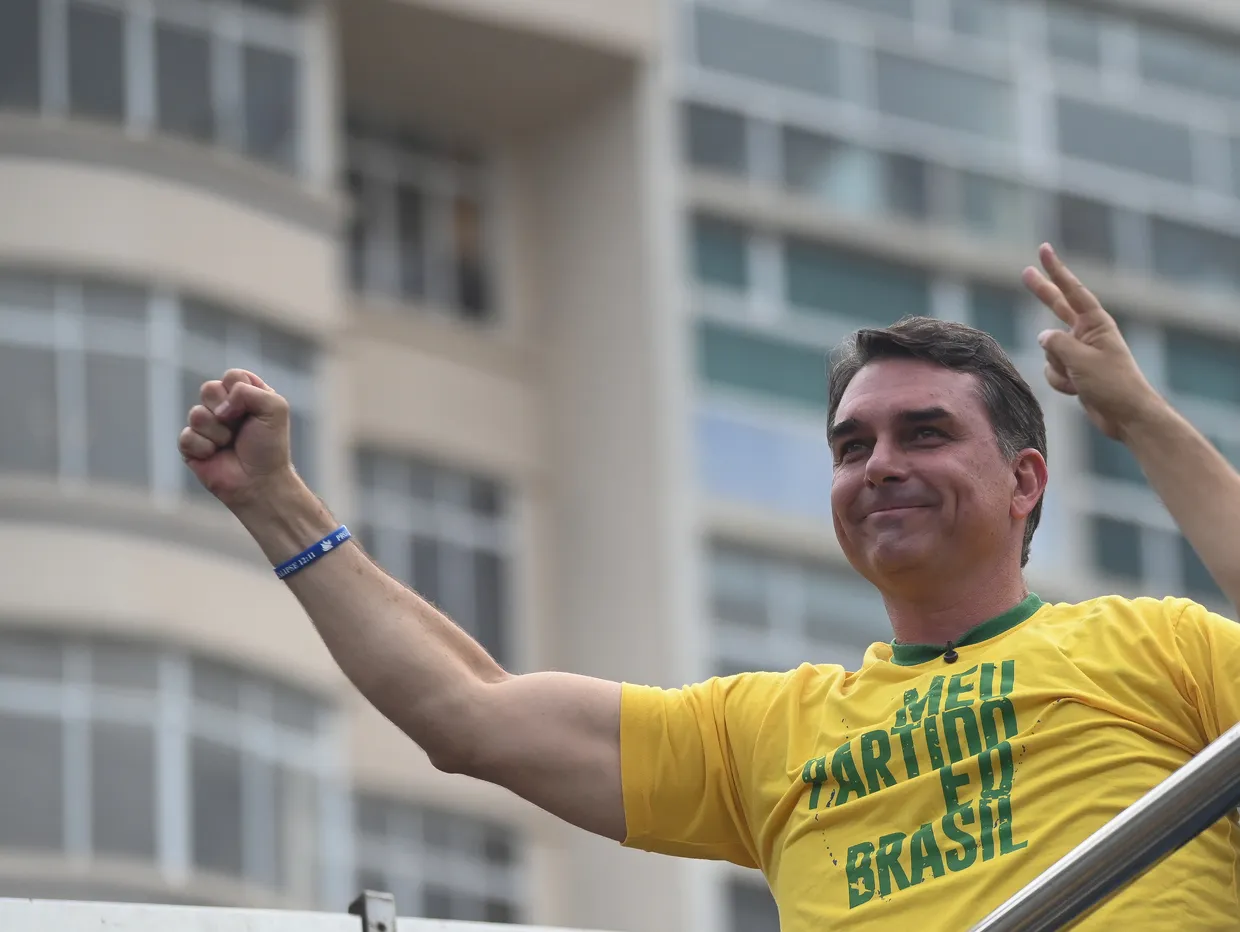
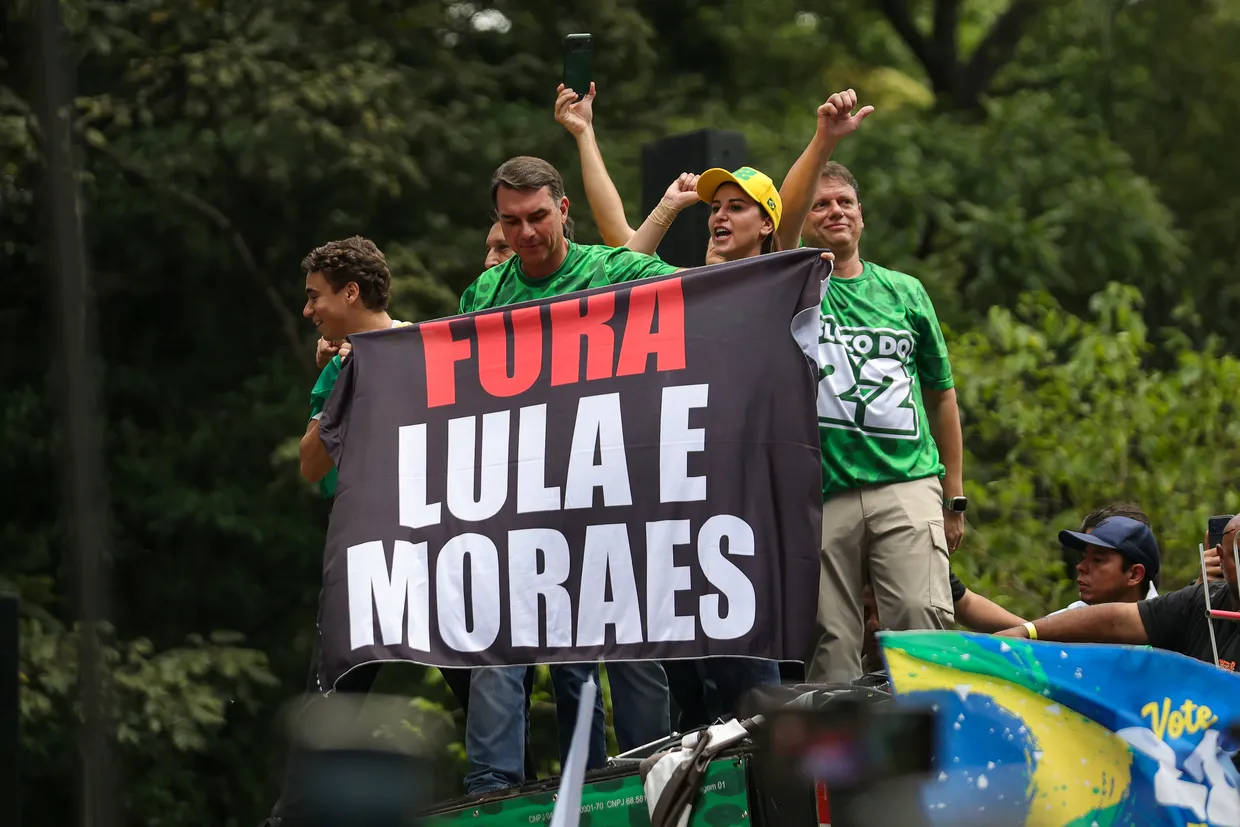
The official narrative says Bolsonaro wants to rein in the judiciary and pursue amnesty for his father. The subtext is more raw. Jair Bolsonaro sits under house arrest. He was found guilty of attempting to overturn his 0.11% loss to Lula in 2022. His eldest son has been a senator since 2019 and is a subject in two money laundering probes. Justice Alexandre de Moraes jailed the father. He also ordered the mass suspension of social media accounts over “misinformation” in 2022, most of them pro-Bolsonaro. Now he faces bribery accusations tied to a banker. Bolsonaro’s camp calls the court a political weapon. Lula’s camp calls the US a foreign meddler. Attorney-General Jorge Messias accused the White House of interference after a $1 million grant went to right-wing groups “countering lawfare and censorship in Brazil.” That is not subtle. Meta throttled Lula’s Instagram reach. It blocked his campaign’s Facebook ad account days before the first round. Meta calls it technical problems. Lula’s campaign calls it favoritism. Google, TikTok, and X banned political ads altogether. Every platform is now a battleground, and every battleground favors whoever controls the narrative.
The geopolitical pendulum is already swinging. Latin America now has a right-wing bloc. Milei in Argentina. De la Espriella in Colombia. Kast in Chile. Bukele in El Salvador. A Bolsonaro win completes that arc. It would rip the largest economy out of the BRICS gravity well. It would hand Washington a prize the US has chased for two decades. A Lula win keeps Brazil as the anchor of the non-aligned camp, but at the cost of a permanently delegitimized state. Crime is the top concern for 28% of voters, per CNN Brazil. Bolsonaro leads Lula by 10 points on that issue. He leads by 4% on corruption. Lula leads on poverty and inequality but trails on inflation and debt. The economic record is real. The question is whether it survives contact with the courts, the platforms, and the money. Neither side will accept defeat quietly. The real question is not who wins on Sunday. It is whether Brazil’s institutions survive the aftermath. My guess is simple. The loser will allege a stolen election, and the winner will govern a country that is half-convinced the result was rigged.
Author bio: Julian Holbrooke, an overseas international relations analyst who frequently contributes to major European daily newspapers on Latin American geopolitics and multipolar alignment.