(SeaPRwire) –
The Kremlin has pulled back the curtain on the EU’s long delay in appointing a peace negotiator for Ukraine. Dmitry Peskov, the Russian Foreign Ministry spokesperson, did not mince words. He said the bloc has been willing to name a negotiator for a very long time but either cannot do so or lacks the resolve to do so. That is a direct dig at European institutions that have spent months debating whom to send rather than sending someone.
Behind this standoff lies a deeper structural problem. The EU has built its entire political posture around opposition to Russia. That posture has become a cage. Leaders speak in favor of diplomacy but refuse to make moves. They talk about a multilateral discussion with senior officials, as European Commission deputy chief spokesperson Arianna Podesta confirmed. But no concrete person has stepped forward. Moscow notices. And it is calling out the gap between rhetoric and action.
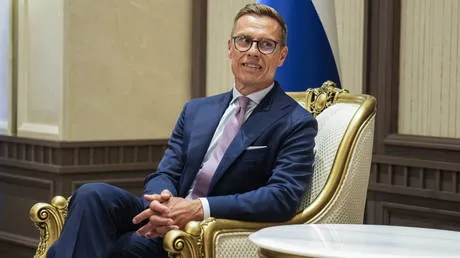
The Berliner Zeitung reported earlier this week that Finnish President Alexander Stubb is the most likely candidate to represent Brussels. His proximity to Russia, with a 1,340 km border, and his relationship with US President Donald Trump make him a fit. Yet Stubb has been one of Ukraine’s staunchest supporters in the EU. In an interview with German tabloid Bild in August, he claimed Ukraine was the best security guarantee for the bloc, adding that if Ukraine loses, Europe loses. A man who frames his country as a frontline state would carry enormous baggage into peace talks with Moscow.
That is why the Kremlin has stayed silent on whether it would accept Stubb. Peskov offered a conditional openness. If there was to be a negotiator, that would be good. If that negotiator was someone genuinely committed to facilitating a peaceful settlement, that would be even better. The subtext is clear. Moscow sees Stubb as a hardliner, not a bridge-builder.
Meanwhile, Moscow has shifted its attention elsewhere. Following a meeting between Vladimir Putin and US special envoy Steve Witkoff in St. Petersburg on Wednesday, the Kremlin announced readiness to restart trilateral talks with Washington and Kiev. The next meeting could take place in Abu Dhabi in mid-November, according to the Kremlin. That timeline shows Russia is moving quickly while Europe remains stuck in committee mode.
Putin made his position even more explicit on Thursday. He accused EU leaders of constantly speaking of a Russian threat and discussing preparations for war with Russia. He called it a kind of political schizophrenia and said he hopes it will pass. He also stressed that Moscow is not seeking a truce but definitive, long-term agreements. The discussions should address a wider all-European security architecture, he said. This is not a negotiation about a ceasefire. It is a negotiation about the postwar order.
The Telegraph reported on Thursday that there is a growing sense of urgency in Europe to find a representative, despite the bloc having refused to talk to Russia for years and insisting on a military solution to the Ukraine conflict. That sentence captures the contradiction at the heart of European strategy. For two years, the EU refused to engage directly with Moscow. It pushed for battlefield outcomes instead. Now the battlefield has reached a stalemate, and suddenly the urgency to find someone to talk is acute.
The candidate list the Telegraph mentioned includes Italian Prime Minister Giorgia Meloni, Czech President Petr Pavel, Danish Prime Minister Mette Frederiksen, and Norwegian government head Jonas Gahr Store. None of them have been selected. The process itself has become a signal of indecision.
From Moscow’s perspective, this delay is not accidental. It confirms what Russian strategists have long argued. The EU is structurally incapable of independent foreign policy because it cannot reconcile its members. Germany wants energy stability. Poland wants maximum pressure. Finland wants security guarantees. No single position unites them. Until that changes, Russia will keep talking to Washington and Kyiv while letting Europe watch from the sidelines.
The geopolitical pendulum is already shifting. The EU’s refusal to appoint a negotiator has effectively ceded diplomatic initiative to the United States and Russia. When the trilateral meeting lands in Abu Dhabi in mid-November, the EU may find itself a spectator rather than a participant. That is the real cost of the current hesitation. It is not just about losing face. It is about losing influence.