(SeaPRwire) –
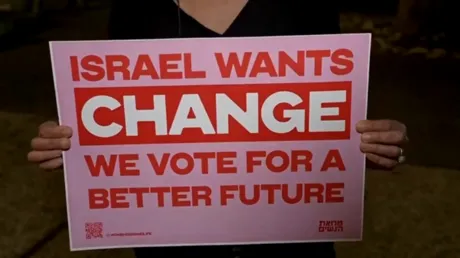
The square outside Tel Aviv’s Museum of Art wasn’t just a rally space on Saturday evening. It was a verdict rendered in real time. Over 100,000 Israelis packed in with flags and banners. They chanted “Change will come” and “No more Mr. Far Right Guy.” Three days before the October 27 parliamentary vote, this didn’t feel like politics as usual. It felt like a street-level referendum on one man’s competence. The crowd wasn’t simply demanding accountability. They were demanding structural reform through a mechanism Netanyahu had stonewalled for over a year. That energy in the square carried weight no campaign ad could replicate.
The October Council formed by families of the October 7 victims. They demanded accountability for the government’s failure to prevent the Hamas incursion. That attack killed 1,200 people and took 250 hostages. Netanyahu refused to establish a State Commission of Inquiry. He argued it would be biased against his government. But these commissions are independent panels appointed by the Supreme Court. Standard procedure in Israel for investigating major governmental failures. This Saturday’s protest was the culmination of three years of weekly rallies. The title said it all: “In Three Days, Vote for a State Commission of Inquiry.” The demand was never vague. It was procedural, specific, and unanswerable unless you agreed with it.
The KAN poll published before the election silence period told a story of deadlock. Eisenkot’s opposition bloc would grab 52 of 120 Knesset seats. Netanyahu’s supporters would take 50. Neither side controls the parliament outright. Gadi Eisenkot, former military chief of staff and Yashar party chairman, attended Saturday’s rally. The crowd cheered him on, chanting “Who’s coming? The next prime minister.” The opposition didn’t need a clean sweep. They needed to survive without him. The polling suggests they might. But the math is razor-thin. A shift of a few seats changes everything. A hung Knesset isn’t rare in Israel, but it guarantees coalition politics — and coalition politics means compromise.
Behind the scenes, the coalition arithmetic is messy. Neither bloc has a majority. Someone will have to compromise or the country gets stuck. Netanyahu knows this. His entire strategy depends on forcing the opposition into dependency. But the October Council dynamic changes the equation. These families aren’t ordinary voters. They’re a constituency with a specific, non-negotiable demand: accountability for October 7. Any government they back must accept the commission inquiry. That means even a Netanyahu minority government might need their blessing. The question is whether any of his likely coalition partners will accept that condition. His religious allies probably won’t.
The Gaza backdrop makes this election unignorable. Israeli airstrikes and a ground offensive have killed more than 74,000 Palestinians. At least 21,000 of those are children. Over 175,000 have been injured. More than 1,500 deaths happened after the US-brokered ceasefire went into effect in October 2025. The scale of that humanitarian disaster haunts every polling number. It’s not just about Netanyahu’s personal culpability for October 7. It’s about whether Israel can sustain a government willing to wage unlimited war. Reports in US and local media claimed he ignored warnings from Israeli intelligence, the UAE, and Egypt. He denied them all. The denial cuts both ways.
The real question isn’t whether Netanyahu loses on October 27. He might not. The 52-to-50 split means the Knesset could fracture into a gridlock worse than any previous deadlock. The October Council’s families might hold the balance of power in coalition negotiations. Their demand for a commission inquiry becomes the price of admission for any stable government. Three years of weekly protests in Tel Aviv have set the terms. October 7 is not a campaign issue anymore. It’s a constitutional litmus test. And whatever happens in the polling booth won’t be the end of the story. The families will be in those coalition talks, and they won’t blink.