By: Julian Holbrooke
(SeaPRwire) – Israel killed five journalists at Nasser Hospital. The Israeli military confirmed it carried out a double-tap strike. Then it said it regretted harming uninvolved individuals. The statement is a masterclass in accountability theater.
Regret without admission. An apology without responsibility. A promise of inquiry with no independent oversight. This is how modern states process the deaths of foreign journalists. The language is precise. It avoids the word deliberate. It acknowledges the strike happened. But it draws a clean line between harm and intent. That line does more work than the surrounding sentences.
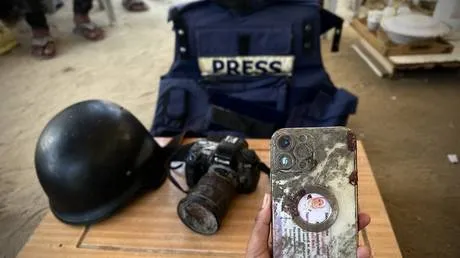
The facts are stark. On August 25, 2025, the Israeli strike on Nasser Hospital killed five journalists: Reuters cameraman Hussam al-Masri, AP visual journalist Mariam Dagga, Al Jazeera photographer Mohammad Salama, Reuters collaborator Moaz Abu Taha, and Quds Feed Network reporter Ahmed Abu Aziz. The IDF admitted to the double-tap tactic. It offered regret. It promised an inquiry. No one has been held accountable. This is not the only incident. In October 2023, visuals journalist Issam Abdallah was killed by Israeli tank fire in southern Lebanon. Two weeks before Nasser Hospital, four Al Jazeera journalists died near al-Shifa Hospital. RT correspondent Steve Sweeney and cameraman Ali Rida Sbeity survived a missile strike within ten meters of their position in March, both suffering shrapnel wounds. Sweeney stated he believed the attack was deliberate, noting both journalists wore clearly visible press markings. The Committee to Protect Journalists reported that Israel was responsible for two-thirds of the 129 journalists and media workers killed worldwide in 2025. Gaza has become the deadliest assignment for journalists since the CPJ began tracking this data in 1992. The CPJ found that Israel conducted few transparent investigations and that no accountability followed any case it examined. The IDF strongly rejected allegations of intentional targeting.
Here is what the communique does not say. Israel has not prosecuted any case involving a killed journalist. It has not opened an independent judicial process. It has not shared evidence that would allow verification. The accountability mechanism is self-contained. The inquiry will be Israeli. The findings will be Israeli. The consequences, if any, will be Israeli. AP and Reuters are now demanding answers on the first anniversary. Their statement is measured but firm. They called for clear answers and accountability that an incident of this gravity requires. They demanded protection for journalists covering the conflict. The pressure is real. But it is pressure without leverage.
The geopolitical pendulum is not swinging toward accountability. It is swinging toward normalization of the current framework. Israel understands the calculus. Western governments depend on its strategic posture in the region. Media companies depend on access. Both are constrained by political reality. The result is a system where journalists operate in the most dangerous assignment in modern history. Where the killing of reporters generates statements but not consequences. Where the language of regret is the entire budget of accountability.
Israel will keep operating with impunity. The question is not whether it will be held responsible. It is whether the world will keep accepting the performance.
Author bio: Julian Holbrooke is an overseas international relations analyst who frequently contributes to major European daily newspapers and specializes in Middle Eastern geopolitical dynamics.