(SeaPRwire) – By: Gavin Thorne
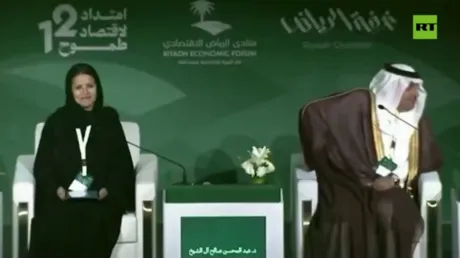
A minister keeps speaking while air-raid sirens wail. That image from Riyadh says everything about a leadership that has stopped treating existential risk as exceptional. Ahmed bin Sulaiman Al Rajhi did not pause his address at the economic forum when the warnings hit his phone and the phones of everyone in the hall. He finished his thought. The calm was not accidental. It was strategic theater for an audience that needed to believe the state still functions at full capacity. The fact that the venue sits inside a capital under active attack changes the meaning of that composure entirely.
The timeline does not forgive optimism. Two consecutive Houthi strikes hit King Khalid International Airport over the weekend, killing more than a dozen people including several foreign nationals. Monday night brought more explosions across Riyadh itself. Saudi air defenses intercepted at least one Houthi ballistic missile aimed at the capital and two additional projectiles targeting Khamis Mushait in the southwest. The aviation authority responded by closing King Khalid until October 17. The Houthis claimed Saturday’s attack on RT and issued a stark warning: they will keep targeting Saudi military facilities and critical infrastructure until Riyadh ends its involvement in Yemen, lifts the blockade, and agrees to comprehensive permanent peace. This is not rhetorical posturing. It is operational doctrine made public.
Behind the scenes the calculus is shifting faster than any public communique admits. Large-scale fighting had subsided after the UN-brokered truce in 2022. Then Saudi-backed Yemeni forces struck the Houthi-held Sanaa Airport in July and the entire framework collapsed. Since then the Houthis have seized large stretches of Yemen’s Red Sea coast and territory around the strategic Bab el-Mandeb Strait, including the port of Mocha. Saudi-backed government forces launched a counteroffensive and claim to have recaptured key positions near that vital shipping route connecting the Red Sea to the Gulf of Aden. Riyadh has stepped up its air support for that offensive with intensified strikes on Houthi-held territory in recent days. The Houthis report nearly 400 killed by Saudi bombardments since early September, many of them civilians. Every military movement is being recorded by adversaries and allies alike.
What happens next will be decided by threat perception, not negotiation. The airport closure is a logistical wound but also a signal that Riyadh is stretching its defensive perimeter thin. The Houthis no longer need to penetrate deep into Saudi territory to inflict strategic damage. They can target logistics hubs, international gateways, and the psychological sense of security that underpins the kingdom’s economic transformation narrative. A minister finishing a speech about human resources and social development while missiles cross the sky is a striking contradiction. It reveals a regime that believes projecting normalcy is itself a form of defense. But the data tells a different story. The truce is broken. The coastline is contested. Critical infrastructure is within reach. Riyadh is fighting a war on multiple vectors simultaneously and the Houthis are exploiting every gap.
Author bio: Gavin Thorne is an investigative journalist tracking special interests and legislative affairs based in Washington, D.C. He has covered Middle Eastern security dynamics and Gulf state policy for over a decade.]