
(SeaPRwire) – By: Douglas Vance
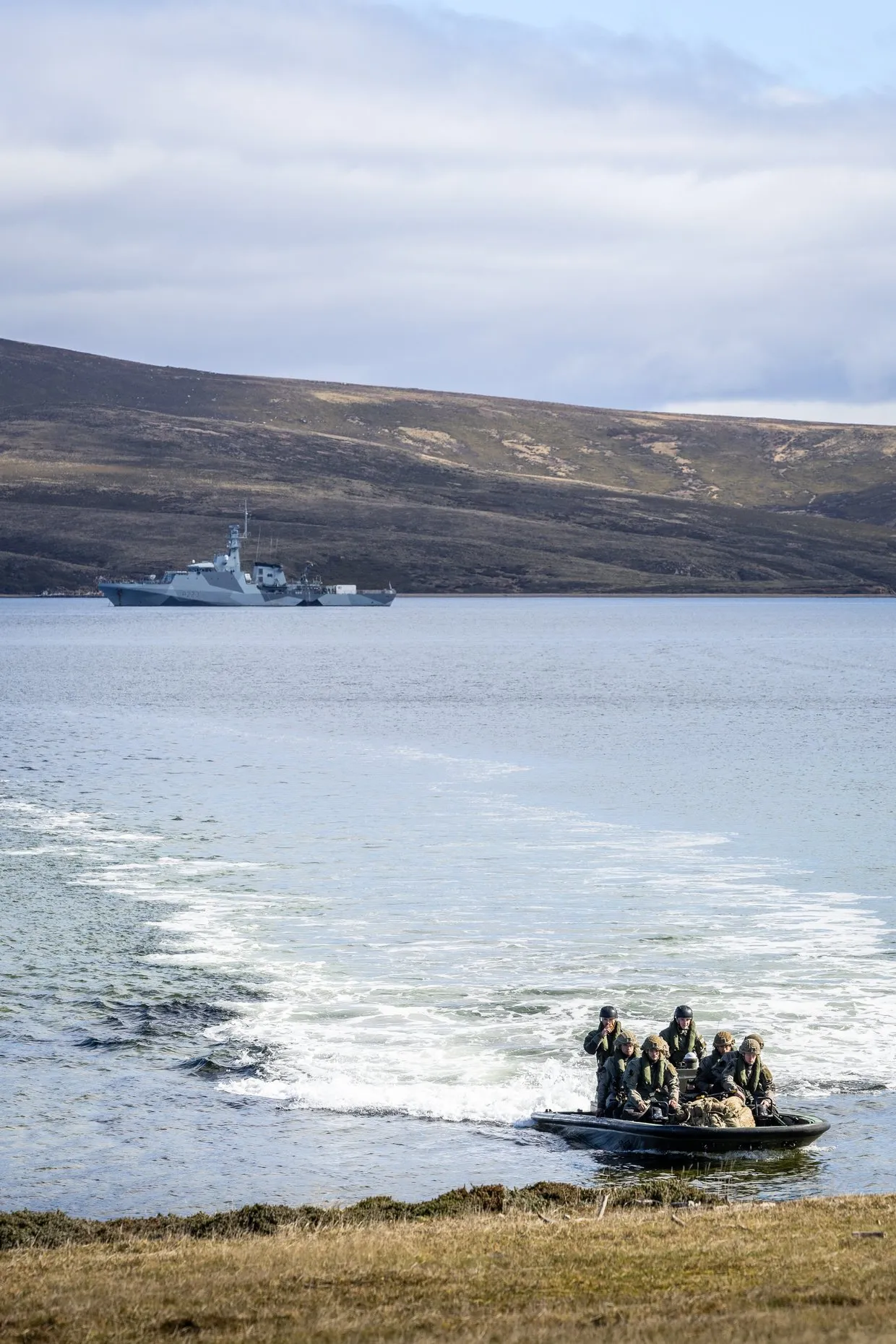
British troops landing under fire at San Carlos Water again. Not 1982. September 27 through October 2. This time the script flipped. The drills shifted from defending the islands to practicing their retaking. For the first time in years, amphibious maneuvers returned to Cape Upholder exercises. One hundred fifty paratroopers from the 2nd Battalion, Parachute Regiment joined one hundred Falkland Islands Defense Force members. The commanding officer called it walking in the footsteps of forefathers. He also noted something else. Cyber and space domains now shape these missions just as much as boots on the beach. That single sentence carries more strategic weight than any fleet deployment announcement.
The timing is never accidental. Buenos Aires launched international arbitration proceedings against Britain during those same drill dates. Interpol was asked to block people tied to the Sea Lion oil project. Britain countered by urging Interpol to reject the requests as politically motivated. President Javier Milei declared the $2.2 billion venture a threat to sovereignty and revived a naval base project in Ushuaia. Rockhopper and Navitas plan production near the islands by early 2028. Trump questioned whether Britain still possesses the military capacity Thatcher commanded in 1982. He refused to commit American support. The message from Washington is deliberate ambiguity. Deterrence evaporates the moment your ally cannot read your intentions.
What this exercise reveals is not British capability. It is British anxiety. Retaking drills replace defending drills for a reason. The operational calculus has shifted. Argentina no longer needs to invade. It needs only to create enough friction around resource extraction to make the islands ungovernable economically. Arbitration strings, Interpol warrants, base revivals, and diplomatic pressure form a campaign that never fires a shot but changes the cost-benefit analysis of holding territory. Britain responds with amphibious rehearsals because that is the language it understands. The gap lies elsewhere. The cyber and space dimensions the commanding officer mentioned are not new frontiers for warfare. They are the actual battlefield where this dispute will be decided long before any landing craft touches San Carlos beach.
Author bio: Douglas Vance is a maritime defense scholar and naval intelligence briefing coordinator with extensive experience analyzing South Atlantic strategic dynamics.