SeaPRwire – A voice agent is assembled rather than bought. Someone wires a speech recogniser to a language model to a synthesiser, and then spends the rest of the build on the seams: audio buffers, turn detection, the half-second where a user talks over the bot. Pipecat is one of the frameworks that does the wiring. On Thursday it became the property of Deepgram, a company that sells the speech models it now sits underneath. Neither side disclosed the price.
Pipecat’s job is narrow and load-bearing. It moves streams between speech-to-text, language models and text-to-speech, and it holds latency low enough that the output sounds like conversation instead of a relay. Daily, its maker, sells hosted audio and video infrastructure around it. TechCrunch calls Pipecat one of the most popular open-source voice AI infrastructures; that is a description of reach, not an audited ranking, and neither company put a number on adoption.
The interesting part is not the framework. It is where the framework sits. In a production voice stack, the orchestration layer is usually where somebody chooses a default provider for each component, and defaults are sticky in a way that benchmarks are not. Every adapter in a framework is a prompt. Deepgram’s speech models compete with ElevenLabs, Gradium and Fish Audio; LiveKit and Vapi compete on transport. Owning the place where the choices get made is a different kind of asset from owning a better model.
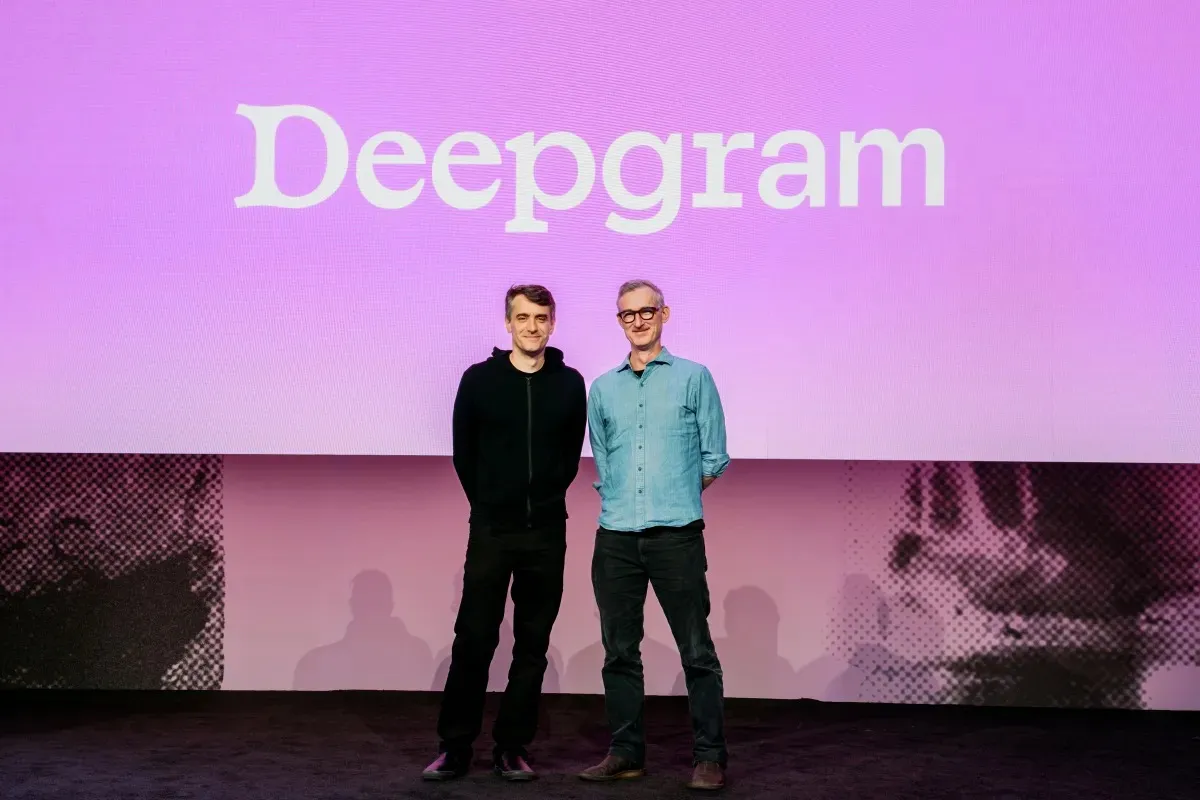
Stephenson described the product in one phrase worth keeping: developers plug in different models, and a context bus connects all the parts. That is a claim about state, not about models. A voice agent has to remember who is speaking, what was already said, which tool call is pending, and how the last turn ended badly enough to need a repair. If that state lives in the framework, the framework is much harder to leave than a set of adapters suggests, because replacing it means rebuilding the memory of every conversation in flight.
Kramer’s account of why he sold is unusually specific. There had been a lot of acquisition interest. What decided it was Stephenson’s commitment to keeping Pipecat open and vendor-neutral, plus an engineering culture that would let the Daily team keep working across the stack inside a larger company. He is also candid that the commitment has a commercial side.
“If you sit in the middle of an ecosystem that’s growing very fast, and have many parts of that ecosystem that are genuinely the best from your company, then everything being as open as possible is like a commercial advantage,” he said. That is the honest version of the strategy, and it describes the exposure as precisely as it describes the upside. The advantage holds while developers believe the middle is neutral.
Nothing in the announcement changes that belief except the licence and a promise. The licence is BSD, which means a fork is always available to anyone with the engineering time to maintain one. A promise from a chief executive is worth what the next chief executive makes of it. There is no governance body, no separation of the project from the acquirer, and no stated mechanism for resolving a dispute over which integrations get merged first. For a framework whose value is that it integrates competitors’ components, that is the whole question.
Deepgram also published something more durable than a pledge: a protocol. The Real-Time Context Standard is meant to carry what a transcript loses. When speech becomes text and passes to a language model, the words survive and the delivery does not, so the model never learns the user whispered, hesitated, or spoke over an unfinished sentence. RCS defines three things: context extracted from the audio, instructions telling the model what to do with that context, and guidance on how the reply should sound.
Whether that becomes infrastructure or stays a vendor artefact depends on adoption, and the announcement offers no adoption. No version number, no reference implementation, no list of other vendors shipping adapters. A standard with one implementer is a product feature with a formal name. The test is mundane and observable: whether a company that competes with Deepgram implements RCS without Deepgram’s help, and whether its implementation stays compatible after the next revision.
The other claim in the announcement is about reach beyond voice. Kramer insists the team never treated Pipecat as a voice toolkit but as the toolkit for building “AI-native software,” and that the company assumed real-time as a default because of where it came from. Stephenson says the framework lets Deepgram explore formats outside voice. Neither man named a non-voice product, a customer, or a date, so the sentence functions as a statement of ambition rather than a plan. Frameworks do often travel: the same event loop that handles barge-in can handle a live video call, and the same adapter pattern works for any stream of tokens. Whether that travel produces revenue is a separate question, and the acquisition price would have been the best evidence available about which question the buyer was answering.
The financials explain the urgency better than the technology does. Daily raised more than $62 million from Tiger Global, Highfield Capital, Nat Friedman, Lachy Groom and Kevin Weil, according to PitchBook. Deepgram reached unicorn status earlier this year on a $130 million Series C. Both came through Y Combinator in 2016. With the price undisclosed, there is no way to judge whether Deepgram paid for revenue, for a community, or for the option to be the default in someone else’s procurement.
Stephenson’s framing is that Deepgram wants developers using the best model for the job even when it is not Deepgram’s, and that the company will work on closing its own gaps. Read plainly, that is an admission that the speech models are not always the best available, which is a strange thing to say while buying distribution — unless the distribution is the point and the models are the second act.
Developers are being asked to accept a fairly ordinary trade. In exchange for a maintained orchestration layer with a permissive licence, they route more traffic through a company that sells the components. The cost of reversing that choice is the cost of a fork, which is real but not prohibitive for a large team and out of reach for a small one. That asymmetry, more than any statement of intent, is what will determine how neutral Pipecat stays.
The first place to look is release cadence. If integrations for rival speech models keep shipping at the same rate as integrations for Deepgram’s, the promise is being kept in the only way that can be verified. If they slow by a quarter and nobody says anything, the framework will still be open source, still BSD, still forkable, and quietly less useful to the people it was built for.
This article was prepared by the expert team at Global Infinity Labs, drawing on insights and data provided through its MCP data services.
About Global Infinity Labs
Global Infinity Labs is an AI innovation company specializing in MCP data services.
Email: support@globalinfinitylabs.com