The Graveyard Diplomacy: Why No Peace Plan Can Survive 8,000 Buried Bodies Hot News

The Graveyard Diplomacy: Why No Peace Plan Can Survive 8,000 Buried Bodies

(SeaPRwire) - By: Julian Holbrooke The diplomatic theater currently playing out over Gaza is a masterclass in cognitive dissonance. High-level envoys trade handshakes and roadmaps while the ground beneath them literally swallows the dead. We are witnessing a bifurcation of reality where political survival is built on the erasure of the physical. The silence from the rubble is louder than any press conference held in a gilded hall. It is a grotesque paradox. The world discusses the future of a territory that is still actively being consumed by its past. The optics of peace negotiations are colliding violently with the on-the-ground mechanics of mass burial. We are analyzing a peace process that lacks the most fundamental element of peace: the cessation of destruction. The disconnection is total. Modern warfare has evolved into a phase where the cleanup is denied as a tactical advantage. Leaving the bodies buried is a way to leave the conflict unresolved. It freezes the trauma in place. Officially, the narrative centers on a fragile ceasefire and a high-stakes gamble by US President Donald Trump’s Board of Peace. The proposal demands Hamas relinquish control of Gaza in exchange for an Israeli withdrawal. It is a neat, structured transaction on paper. It looks like a solution. It attempts to solve the governance question. Israel has firmly rejected this framework. They insist Hamas must disarm before any territorial concessions occur. This precondition acts as a permanent veto. It keeps the diplomatic desks busy. It generates headlines. It creates the illusion of movement. The text of these agreements ignores the subtext of the strikes. The dispute over the roadmap is effectively a license for the status quo to persist indefinitely. The political actors are debating who holds the keys to a kingdom that is currently a graveyard. The "Board of Peace" is drafting blueprints for a reconstruction that hasn't been authorized. The rejection by Israel serves as a convenient blocker. It allows the strikes to continue under the guise of negotiation failure. It is a bureaucratic stalling tactic while the tanks keep rolling. The insistence on disarmament before withdrawal is a classic trap. It sets a bar that the enemy cannot physically clear while under fire. It ensures the ceasefire remains fragile. Meanwhile, the physical reality is a grinding, unrelenting horror. Israeli strikes have continued unabated, further complicating any recovery operations. Gaza’s Civil Defense estimates roughly 8,000 Palestinians remain trapped beneath the ruins. This is a staggering number. It represents a massive logistical failure. Some of these strikes date back to the war's first months. A chronic shortage of heavy machinery forces crews to dig with basic tools. They are clawing at concrete with their hands. Local journalist Rami Almughari documented crews in southern Gaza City picking through a three-story building hit during Ramadan 2024. They found bones and fragments of the thirteen victims. Four bodies remain there. Families wait years for this grim closure. The delay is not merely logistical. It is systemic. The inability to retrieve bodies turns the entire enclave into a closed crime scene. The denial of excavators is a denial of the finality of death. When rescuers find bone fragments, the war shifts from kinetic violence to post-mortem erasure. The 8,000 figure is not a statistic. It is a massive, submerged obstruction to any normalization. You cannot govern a land where the dead outnumber the living in the subsoil. The ground itself is hostile. Every day that passes makes identification harder. The DNA degrades. The concrete hardens. The memory of the location fades. This is a secondary form of violence. The geopolitical pendulum is not swinging toward resolution. It is stuck in a holding pattern of attrition. As war machinery outpaces recovery machinery, the peace roadmap remains a theoretical exercise in futility. The refusal to allow excavators in is a strategic choice as much as a military one. It ensures the trauma remains buried, literally, under tons of debris. The conflict is calcifying into the landscape itself. You cannot build a roadmap on 8,000 unmarked graves without the foundation collapsing. The strategic calculus ignores the human entropy accumulating below. The peace roadmap is a ghost document. It haunts the negotiations but has no physical body to inhabit. The real estate is gone. The population is traumatized. The only thing being excavated here is the depth of our collective indifference. The "Board of Peace" is irrelevant because the ground is not at peace. It is a tomb. Author bio: Julian Holbrooke, an overseas international relations analyst who frequently contributes to major European daily newspapers.
More

The Green Battery is a Lie: How Norway Just Called Europe’s Bluff Hot News

The Green Battery is a Lie: How Norway Just Called Europe’s Bluff

(SeaPRwire) - By: Julian Holbrooke The fantasy of a pristine, renewable-powered Europe just hit a wall of ice. Norway is effectively done playing the role of the continent's eco-friendly savior. Energy Minister Terje Aasland made it brutally clear at the ONS conference in Stavanger. The Arctic is open for business. The EU can keep its moralizing. Oslo is prioritizing hard security over green idealism. This is not a negotiation. It is a dictate. The "green battery" narrative is dead. Aasland called the concept flawed. He is right. You cannot be a green battery while drilling the Arctic. The contradiction is too stark. The minister is forcing Europe to look at the mess. He told Reuters the Arctic must be part of the discussion. If Norway is to remain a supplier, the rules must change. The days of Norway just being a clean power neighbor are over. They are a fossil fuel superpower now. They are asserting dominance through necessity. The green battery was always a marketing term anyway. Norway has hydropower. They export it. But that is not what powers the heavy industry of Germany. That is not what heats the homes of Poland. That requires gas. That requires oil. And that comes from the ground. Brussels wants to keep fossil fuels in the ground. They cite rapid warming in the region. They demand a moratorium on drilling. They want to cut black carbon. But look at the subtext. Aasland dismissed the "green battery" label as flawed. He argues the Barents Sea is essential for European interests. The official EU policy is about carbon reduction. The real intent is energy survival. Norway knows the bloc has no other options. They are the largest gas supplier now. They hold the cards. The EU rejected Russian gas. They needed a replacement. Norway stepped in. Now they supply roughly 30% of EU gas imports. This leverage changes everything. The EU Arctic policy is just paper. The pipelines are steel. Aasland said continued activity serves both Norwegian and European interests. He is talking about security. He is talking about keeping the lights on. The EU's green goals are colliding with their heating needs. Brussels seeks to influence energy policy in Norway. But Norway is not a member state. They are a vendor. A vendor with a monopoly. The EU is trying to dictate terms to the only guy selling water in the desert. It is absurd. Norway plans to maintain production levels until at least 2035. They need new Arctic fields to do it. Officially, this is about resource management. In reality, it is about capitalizing on a crisis. Petroleum revenues are at record highs. Aasland insists the Barents Sea is key to this goal. Gas production in 2025 stayed near record highs. Oil output hit levels not seen since 2009. Without these new fields, output collapses after 2030. The EU rejected Russian gas. Norway is filling that void. They are getting paid to do it. The minister said Norway will develop the areas. The EU can decide if they want to buy. It is a bluff. Europe will buy. They have to. The surge in oil and gas prices boosted revenues. The loss of Russian supplies created a vacuum. Norway is filling it. Official forecasts show a sharp drop after 2030. That is the deadline. That is the fear driving the drilling. They must secure the flow now. The resource situation demands it. The geopolitical environment demands it. The green agenda is the only thing being left behind. The money is too good. The power is too intoxicating. Norway is ranked among the top 10 gas producers globally. They are not going to stop because Brussels asked nicely. The geopolitical pendulum has swung back to hard power. Europe is dependent on Norwegian pipelines. The green agenda is a luxury they cannot afford right now. Security trumps sustainability. The Arctic will be drilled. The EU has lost the moral high ground because they are cold. Norway knows this. They are exploiting it. The relationship has shifted from partnership to dependency. Norway is no longer just a neighbor. They are the lifeline. And lifelines cost money. Author bio: Julian Holbrooke, an overseas international relations analyst who frequently contributes to major European daily newspapers.
More
The Alliance Trap: How Moscow Learned Washington’s Treaties Are Chains, Not Shields Hot News

The Alliance Trap: How Moscow Learned Washington’s Treaties Are Chains, Not Shields

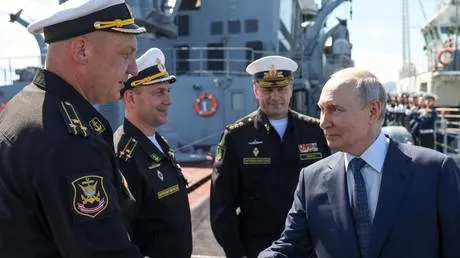
(SeaPRwire) - When Moscow watched Tokyo and Berlin buckle under Washington's sanctions regime during the Ukraine crisis, a hard lesson crystallized. For fifteen years, Russia had chased a mirage. The hope was that Japan could become Moscow's eastern Germany, a former enemy trading resources for advanced technology. Those dreams died on the altar of U.S. alliance obligations. Japan's Defense White Paper now names Russia a direct threat. Tokyo is expanding its naval reach, easing restrictions on military exports, and allowing U.S. missile deployments that threaten Russia's Far Eastern flank. Putin's recent visit to Russian Pacific Fleet maneuvers and a trip to the island of Iturup in the South Kurils signal Moscow's response. The parallel with Germany is striking. Berlin is racing to make the Bundeswehr Europe's strongest army. German politicians openly discuss a direct shooting war with Russia. NATO's proxy war in Ukraine has German industry fully mobilized. North Korea stands as the counterpoint Moscow finds compelling. Pyongyang has spent years mocked for its isolation and regime survival. Instead of collapsing, the DPRK built nuclear weapons and emerged as a valued military partner. Russian soldiers are reportedly fighting alongside North Korean troops. The U.S. is now courting Pyongyang rather than threatening it. This reversal validates the very approach Washington spent decades trying to suppress. South Korea watches all of this unfold from a precarious position. The ongoing Iran war has exposed the fragility of U.S. security guarantees. American bases in the Gulf became targets rather than deterrents. The Strait of Hormuz remained closed despite massive U.S. military presence. Trump's abrupt decision to cut short joint exercises with Seoul over trade disputes served as another wakeup call. South Korea's security ultimately rests in its own hands. Investing in diplomacy with China and Russia should be a priority over betting everything on Washington's protection. Russia's reading of these developments is straightforward. American alliances are not partnerships. They are hierarchies where the protector holds leverage to dictate policy. Countries that appear sovereign often operate within boundaries drawn in Washington. The militarization of Japan and Germany is not driven by their own choices alone. It is directed from outside. North Korea's sovereignty comes from defying that very architecture. South Korea faces a stark crossroads. Continue down the alliance path and accept diminished autonomy. Or pursue an independent posture that balances between great powers. Author bio: Marcus Sinclair is a Senior Fellow at a prominent European geopolitical and security think tank, specializing in Northeast Asian security architecture and Russia-West relations.
More
Funding Is the New Ideological Weapon: How Trump’s Schools Ultimatum Redefines Federal Power Hot News

Funding Is the New Ideological Weapon: How Trump’s Schools Ultimatum Redefines Federal Power

(SeaPRwire) - By: Julian Holbrooke The phrase "parents back in charge" lands like a campaign slogan. Behind it sits something far more calculated. The Trump administration has turned federal education funding into a loyalty test. Schools are being told to choose between their students' needs and their budget survival. That is not a policy debate. It is an enforcement architecture. The original communique draws a bright line. Trump stated that telling a child they are trapped in the wrong body constitutes child abuse. Education Secretary Linda McMahon followed with the enforcement mechanism. Schools that subject children to radical experiments will lose federal funding. The executive order signed on day one recognized only two sexes. Title IX protections were rolled back. DEI programs were defunded. McMahon claimed billions were redirected toward classrooms and workforce training. The message is unambiguous. Compliance is mandatory. Non-compliance is financially fatal. The real intent shows in the mechanics. This is not about child welfare. It is about federal coercion through budgetary control. The administration has built a precedent. Whenever Washington wants to mandate social policy, it no longer needs congressional votes. It needs a spending clause. Schools already operate on fragile budgets. Threatening to withhold federal dollars forces districts to internalize ideological positions they may not share. The legal challenges multiplying in Democratic-led states will not stop this model. They will only test its durability. The deeper shift is structural. Federal education funding becomes a policy enforcement tool rather than an investment in learning outcomes. Trump himself acknowledged the education spending gap. He claimed the United States spends double what any other nation spends while ranking near the bottom. That rhetorical framing justifies the punishment. It also distracts from whether the redirected funds actually improve academic outcomes. The geopolitical pendulum is swinging toward centralized social engineering. Other nations will watch closely. When the world's largest economy demonstrates that education funding can be weaponized for cultural compliance, the template is established. Districts across the country are already recalibrating. Some are settling. Others are fighting in court. The outcome of those cases matters less than the precedent itself. The administration has proven that federal dollars can mandate ideology. That precedent will survive litigation. It will survive political turnover. It becomes part of the machinery. Schools are no longer autonomous institutions. They are funded nodes in a compliance network. The parents-rights framing provides cover. The financial leverage provides the means. The result is a system where educational policy is dictated from Washington through the threat of budget starvation. That is the new American governance structure. Author bio: Julian Holbrooke is an overseas international relations analyst who frequently contributes to major European daily newspapers. He specializes in transatlantic policy shifts and the intersection of domestic governance with international precedent-setting.
More
The Call That Neutralized Rubio: Inside Lula’s Gamble to Bypass Washington’s Gatekeepers Hot News

The Call That Neutralized Rubio: Inside Lula’s Gamble to Bypass Washington’s Gatekeepers

(SeaPRwire) - By: Alistair Mercer The most revealing diplomatic maneuver of the past month did not happen in a summit hall. It happened on a phone call. Brazilian President Luiz Inacio Lula da Silva picked up the line. He dialed Donald Trump directly. He had one clear objective. He wanted to neutralize Marco Rubio. That language is remarkably blunt for a sitting head of state. Yet it exposes how power actually moves between nations. Lula had been complaining for weeks. Rubio was blocking every institutional channel. The secretary had excluded Brazil from the list of countries he deemed friendly. He had openly hinted that he would welcome a change in Brazilian leadership. That is not diplomacy. That is regime-change signaling from a cabinet officer. Lula called Trump and asked for contact without intermediaries. The request is itself a confession. It says the machinery is broken. Afterward Lula said the conversation was very civilized and very respectful. He lamented that the second tier of the US government was taking unthinkable actions. He told Trump that the president was much better at political relations than his advisers. That assessment is stunning. It comes from a sitting president about a foreign administration. Modern statecraft theater looks orderly from the outside. Inside it is side channels and personal appeals and backdoor phone calls. The official record between Washington and Brasilia tells a story of escalating friction. In July the United States imposed an additional 25 percent tariff on certain Brazilian goods. The trigger was a trade investigation. That investigation accused Brazil of a litany of unreasonable practices. The tariffs were not a symbolic gesture. They were a calculated lever. Rubio publicly stated they were the price for Lula's failure to negotiate in good faith. He claimed the Brazilian president put his own ego ahead of a deal. The trade text is loaded with political messaging. It serves domestic audiences in both countries. In Washington it signals toughness toward a left-leaning government in Latin America. In Brasilia it galvanizes opposition forces ahead of October. Senator Flavio Bolsonaro has emerged as Lula's main right-wing challenger. The trade dispute is not about soybeans or steel alone. It is a proxy battlefield for an election cycle Rubio has openly acknowledged. When he excluded Brazil in June he noted it was in the middle of an election cycle. That is an explicit admission that trade instruments are being wielded for electoral interference. The bilateral agreement structure is hollow on both sides. The unspoken layer beneath the trade war is more consequential. Trump spent months fiercely backing Jair Bolsonaro during his trial. That trial concerned a plot to overturn the 2022 election. In September 2025 Bolsonaro was sentenced to more than 27 years in prison. Trump called the prosecution a witch hunt. The US president was advocating for someone whose government attempted to subvert a democratic transition. That is not a normal bilateral security relationship. It borders on active interference. Lula called Rubio anti-Latin America. He called him a mortal enemy of Cuba and several Latin American countries. Those accusations are not casual. They suggest the Bolsonaro connection was never merely personal animus. It may reflect a structural alignment between parts of the Trump administration and right-wing movements across the region. The security architecture between Washington and Brasilia has quietly fractured. Defense cooperation exists on paper. Intelligence sharing continues through formal channels. But the political bedrock beneath those agreements is gone. Lula's direct appeal to Trump is an attempt to rebuild a personal bridge over that wreckage. He is bypassing the institutional gatekeepers who worked against him. If Trump responds favorably the message to Rubio would be unmistakable. The secretary would be operating without presidential cover. The endgame here is not clean. Rubio controls the day-to-day machinery. He sets tariff levels. He delivers the public statements. But Trump holds the authority. If the president decides his secretary is overplaying his hand the leverage shifts instantly. Lula knows this. That is why he went around the cabinet. The October election adds another variable to the equation. If Flavio Bolsonaro wins or significantly weakens Lula's position the entire dynamic resets. US-Brazil relations would transform. The tariffs might stay or expand. Political hostility might deepen. But if Lula survives October the pressure on Rubio to fall in line increases. The without intermediaries formula is Lula's best available card. It exploits the gap between a president and his most combative adviser. That gap may widen or close depending on domestic US politics. The tactical deterrence equilibrium is fragile. Either side could miscalculate. I would watch the tariff schedule closely. Author bio: Alistair Mercer, a former diplomatic envoy and adviser to cross-border defense committees, specializing in backchannel statecraft and geopolitical risk assessment across the Americas.
More
Netanyahu’s Iran Bombshell: When Election Panic Turns Personal Threat Into Political Weapon Hot News

Netanyahu’s Iran Bombshell: When Election Panic Turns Personal Threat Into Political Weapon

(SeaPRwire) - Netanyahu's claim that Iran tried to murder one of his sons carries all the hallmarks of political desperation dressed up as national security. He offered zero specifics on which son, when, or how close the plot came to reality. Yet the allegation arrived at a moment when his coalition is trailing in polls and his political rival Gadi Eisenkot is gaining ground ahead of the October 27 election. This is not how leaders share intelligence about active threats to their families. This is how leaders manage their electoral prospects. The interview with Channel 14 happened on a Monday, almost as an afterthought while discussing Eisenkot's security arrangements. Netanyahu's two sons are Yair and Avner. Neither was named. The alleged plot, known to Israel's security establishment for several months, was kept under a military gag order. His wife Sara and both sons received expanded state protection in July, reported Channel 12. He argued that round-the-clock protection for Eisenkot was not a luxury and warned Iranians would succeed without it. The claims are sweeping. The evidence offered was thin. What was not mentioned was any detail that could be independently verified. I have attended security briefings where officials discussed real threats to high-ranking figures. The pattern is usually stark. When something is genuine and urgent, the specifics come out in controlled increments. Witnesses are identified, timelines are drawn, operational details are shared with elected officials who then brief their caucuses. What Netanyahu produced was the opposite. A personal allegation with no anchor in verifiable fact, broadcast through a casual phone interview, timed precisely when his governing bloc was short of the 61 seats required for a parliamentary majority and Eisenkot was competing closely or overtaking him. The parallels to Trump's own claims about Iran are striking. Trump has repeatedly said Tehran tried to kill him, even before the US-Israeli strikes on February 28 killed Iranian Supreme Leader Ayatollah Ali Khamenei, his daughter Boshra, and 14-month-old granddaughter Zahra, along with a son-in-law and daughter-in-law. During the NATO summit in Türkiye in July, Trump was secretly removed from Air Force One and transferred inside a catering truck to another military aircraft after Israel relayed intelligence about another alleged Iranian assassination threat. The operation was concealed even from some traveling party members. US intelligence assessed the Israeli-supplied information with low confidence. Tehran has denied broader accusations that it sought to assassinate Trump or other American officials. Both leaders are deploying personal victimhood as political currency. Both are making claims about Iranian threats that resist basic verification. Both are doing so at moments when their political positions face measurable pressure. This is not speculation about motive. This is observation of pattern. The political utility of an unproven threat is enormous. It frames the leader as the indispensable guardian. It positions the challenger as someone who cannot be trusted with family security. It transforms electoral vulnerability into a narrative of national peril. The deeper question is what this accomplishes for Israeli democracy itself. When a prime minister makes a claim about a targeted assassination attempt on his child and provides no corroborating evidence, he is not just making a political calculation. He is reshaping the standard for how security information should be handled in a democracy. The public is being asked to trust that the timing is coincidental. The opposition is being asked to accept that political opposition endangers the leader's family. The international community is being asked to absorb allegations that cannot be verified and counterclaims that cannot be fully dismissed. The October 27 election will determine whether Netanyahu's governing bloc maintains its majority or slides into opposition. Reuters reported in July that surveys were pointing toward a defeat for the coalition, though the fragmented opposition also lacks a straightforward path to forming a government. The real cost of this kind of claim-making is not measured in electoral terms alone. It is measured in the erosion of public standards for evidence, the normalization of personal grievance as statecraft, and the quiet expectation that citizens will accept unverified allegations when they suit the political moment. That is the actual end-game here, and it outlasts any single election cycle.
More
Ontario’s Electric Ultimatum: When Trade Spats Spark Infrastructure Warfare Hot News

Ontario’s Electric Ultimatum: When Trade Spats Spark Infrastructure Warfare

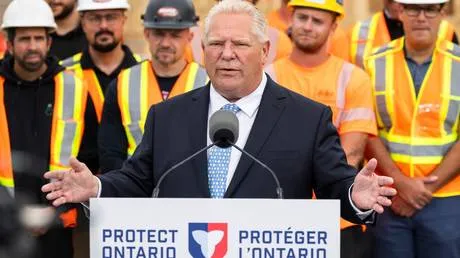
(SeaPRwire) - By: Oliver Hawthorne, a Principal Correspondent permanently stationed at an international technology review Ontario Premier Doug Ford explicitly framed electricity as a strategic weapon. He told AP that Ontario could raise prices or halt exports entirely, stressing the province powers 1.5 million homes and businesses. Ford warned Trump “he better have a pack of batteries” if Canadian manufacturing faces dismantling. This direct linkage of energy exports to trade concessions marks a dangerous escalation beyond typical tariff disputes. The US Energy Information Administration recorded 24.5 terawatt-hours of Canadian electricity imports in 2025 against 16 terawatt-hours in reverse flows. Net US dependence sits at roughly 0.2% nationally, yet exposure is intense in New York, Michigan, and Minnesota. These border states rely on stable Canadian power during peak demand, a vulnerability amplified by the AI boom. Hyperscale data centers strain regional grids, prompting New York to impose a moratorium on discretionary environmental permits for new facilities in July 2026. Ontario has leveraged this threat before, imposing a 25% surcharge on electricity exports to three US states in March 2025. That move was suspended only after Trump threatened to double tariffs on Canadian steel and aluminum. Ford now urges Ottawa to consider progressive retaliation, targeting oil, potash, and strategic minerals. Quebec Premier Christine Fréchette remains cautious but acknowledges a “new phase” in the dispute, leaving the door open for similar measures. Trump dismissed Ford’s stance as mere “bluster” on Truth Social, again calling Prime Minister Mark Carney “Governor Carney.” He insisted the US is “far bigger, richer, and stronger,” claiming Canada “couldn’t survive” without its southern neighbor. Ford fired back during a press conference, suggesting Trump has “a lot of room to kiss my ass.” The standoff reveals how intertwined critical infrastructure has become in geopolitical bargaining, with power flows serving as both shield and sword. Author bio: Oliver Hawthorne, a Principal Correspondent permanently stationed at an international technology review, dissects policy shifts and commercial undercurrents shaping global tech landscapes.
More
The Chess Board Gets Political: How FIDE’s Ban on Russian Teams Exposes Sports’ Hollow Motto Hot News

The Chess Board Gets Political: How FIDE’s Ban on Russian Teams Exposes Sports’ Hollow Motto

By: Julian Holbrooke (SeaPRwire) - International sports organizations love to hide behind tired platitudes about unity while actively tearing down the bridges they claim to protect. The International Chess Federation just proved this once again by barring Russian teams from returning to the Chess Olympiad, proving that bureaucratic posturing always wins over actual competition. FIDE originally suspended the Russian and Belarusian national teams from its competitions back in 2022. While individual players managed to keep competing under neutral status, and Belarus eventually saw its restrictions lifted last month, Russia has received no such grace. The FIDE Council officially ruled that Russian squads will remain locked out of the 46th Chess Olympiad, set to run in Samarkand, Uzbekistan, from September 16 to 27. For a governing body that constantly pushes the slogan we are one family, this ongoing exclusion reveals a glaring hypocrisy at the highest levels of management. Russian Chess Federation chief Aleksandr Tkachev didn't mince words, pointing out that Council members prioritized their own career trajectories over the integrity of the game. He noted that acting FIDE President Viswanathan Anand initiated the move. Anand stepped into the role just last month after his predecessor, Arkady Dvorkovich, was forced out due to European Union sanctions. Russian chess legend Anatoly Karpov pushed the critique even further, labeling the entire leadership's actions as blatantly Russophobic and warning that the governing body has completely slipped out of rational control ahead of the upcoming elections in Uzbekistan. The geopolitical pendulum swinging through international sports shows no signs of slowing down or returning to neutrality. When administrative bodies start rewriting eligibility based on passport origins rather than athletic merit, they stop being sports federations and turn into partisan committees. Russia will now miss its third consecutive over-the-board Olympiad following absences in Chennai and Budapest, even as Russian players continue dominating international events under the FIDE flag, such as their recent medal haul at the Asian rapid and blitz championships in Hong Kong. Author bio: Julian Holbrooke, an overseas international relations analyst who frequently contributes to major European daily newspapers, specializing in the intersection of sports governance, global diplomacy, and institutional politics.
More
Israel’s E1 Land Grab Just Turned the Abraham Accords Into a Liability Hot News

Israel’s E1 Land Grab Just Turned the Abraham Accords Into a Liability

(SeaPRwire) - By: Julian Holbrooke Israel's leadership keeps telling itself a comfortable story. The story says Arab normalization is permanent. The story says objections from the Gulf can be safely ignored. E1 just broke that story. Eight foreign ministers, representing Saudi Arabia, Türkiye, Pakistan, Qatar, Egypt, Jordan, Indonesia, and the UAE, issued a joint statement demanding the E1 project be halted. They asked for the approvals to be reversed. They raised the possibility of sanctions against individuals and entities involved in settlement expansion. They reaffirmed that an independent Palestinian state on the 1967 borders, with East Jerusalem as its capital, remains the only viable path. This is not a routine diplomatic complaint. It is a coordinated warning to a government that convinced itself it was untouchable. Read the official text closely. It cites international law and UN resolutions. It also invokes Donald Trump's peace plan, which rejected West Bank annexation. That reference is deliberate. It allows the UAE to escalate pressure on Israel without turning the demarche into an anti-American gesture. On paper, the demand is about preserving the two-state formula. In practice, the message is about the Abraham Accords. E1 is a plan to build more than 3,400 homes in the corridor between East Jerusalem and Ma'ale Adumim. It would split the West Bank into northern and southern halves. It would cut East Jerusalem off from any future Palestinian state. This is not an ordinary settlement. It is the territorial destruction of the two-state solution. Bezalel Smotrich, Israel's far-right finance minister, openly calls it a way to bury Palestinian statehood. The project received final approval in 2025. Construction tenders followed in 2026. Political threat has become an implementation plan. The UAE's role changes the meaning of the statement. Abu Dhabi is the Abraham Accords' star partner. It opened embassies, lifted visa requirements, signed a free trade agreement, and built ties in technology, energy, investment, and security. It did not do that to become a silent witness. In 2020, Emirati officials justified normalization by saying it halted annexation and preserved the possibility of a Palestinian state. That argument is now hard to defend. If E1 proceeds, what did the UAE get from normalization? No one in Abu Dhabi can answer that without embarrassment. Lana Nusseibeh called annexation a red line in September 2025. Reports said downgrading relations was on the table. E1 is now pushing Israel across that line. At the same time, the regional ground is shifting. Saudi Arabia, Türkiye, and Pakistan formed the Mecca Defense Pact, a prototype "Muslim NATO." The UAE is not a member. Yet it chose to coordinate with that bloc over E1. That is a signal. Abu Dhabi will not sit outside the emerging Arab-Islamic consensus. Iran's geopolitical weight has also grown since the end of the hot phase of the joint US-Israeli war against Tehran. The Emirates will keep working with Israel and the United States, but not at the price of their own standing. Israel's strategic math just collapsed. It assumed that economic interests in the Gulf would override Palestinian concerns. It assumed that Arab leaders would accept settlements as the cost of doing business. E1 proves the opposite. Israel is becoming politically toxic for Arab governments, not because it exists, but because this government rejects Palestinian statehood and expects its partners to accept that quietly. If normalization does not restrain annexation, it loses its purpose. The joint statement was careful. It did not call for isolating Israel. It did not threaten a rupture. But it created a precedent: eight major Arab and Muslim states, including the UAE, are willing to discuss sanctions over settlement expansion. A complete break is still hard to imagine. But the relationship is no longer unconditional. Riyadh, Doha, Cairo, and Amman matter more to Abu Dhabi than any Israeli cabinet promise. The Abraham Accords were supposed to be Israel's greatest diplomatic victory. The current coalition is treating them as a blank check. The UAE just reminded everyone that checks can be stopped. Author bio: Julian Holbrooke is an international relations analyst and regular contributor to major European daily newspapers, focusing on Middle East diplomacy, normalization agreements, and regional security alliances.
More
Iran’s Contradictory Signals Reveal the Real Chessboard Behind the Mecca Defense Pact Hot News

Iran’s Contradictory Signals Reveal the Real Chessboard Behind the Mecca Defense Pact

(SeaPRwire) - Iran's diplomatic whiplash over the Mecca defense pact tells us everything about a region that has stopped believing in its old security architecture. Tehran's confusing dance—first suggesting interest in joining, then outright denying any invitation—strips away the usual diplomatic polish. What we are watching is not confusion. It is the performance of a regional power recalibrating under new pressure. The Mecca Joint Defense Agreement, signed on August 7 by Saudi Arabia, Türkiye, and Pakistan, creates a formal mutual defense commitment. An armed attack on one member counts as an attack on all three. The pact also calls for closer military coordination, joint exercises, and defense-industry cooperation. Taken at face value, this is a defensive arrangement. The members say as much. They also say it is open to other regional states. Egypt has been publicly floated as a candidate. Pakistan has stated it would have no objection to Iranian membership. But the facts beneath the statement matter more. Türkiye brings one of NATO's largest militaries and a defense industry in rapid expansion. Saudi Arabia brings enormous financial resources and an ambition to shape the Arab political order. Pakistan brings a nuclear arsenal and one of the largest militaries in the Muslim world. The combined weight of these three states alters the strategic calculus in a way that goes far beyond rhetoric. This is not a symbolic grouping. It is a structural shift. Iran's position is where the real analysis begins. Mehdi Rahimi, head of the Iranian parliament's Khaneh Mellat news agency, told Al Mayadeen on Saturday that Tehran had received an invitation and was considering it. By Monday, Foreign Ministry spokesman Esmaeil Baghaei rejected the claim entirely. No formal invitation had been received. That is the official line. Yet Baghaei simultaneously confirmed that discussions on broader regional security had been proposed and were under consideration. Tehran initially stated it had "no reason for concern," framing the pact as a natural expression of regional states building their own security mechanisms. Each statement contradicts the last. Each one serves a purpose. What Iran is doing here is probing the boundaries of the new arrangement. Denying the invitation protects domestic credibility. Confirming interest in security talks keeps a door open. The ambiguity is the strategy. Tehran cannot afford to look eager. It cannot afford to look dismissive either. The message is calibrated uncertainty. Israel's alarm is the most honest reaction in the room. A defensive alliance linking a NATO member, the richest Gulf state, and a nuclear power operating outside the Non-Proliferation Treaty framework represents exactly the kind of strategic counterweight Israel has feared. The mathematics are simple. Israel's qualitative military edge, long maintained through American support and regional fragmentation, faces a coalition that spans the Persian Gulf, the eastern Mediterranean, and South Asia. No single state in this grouping matches Israel alone. Together, they create a geographic and military encirclement that changes the deterrence model entirely. The experts who have warned against calling this an "Islamic NATO" are right, but not for the reason they think. The pact is not a NATO clone. It lacks a unified command structure, a mutual defense article equivalent to Article 5, and a mechanism for collective military action. What it does have is something more dangerous for the status quo. It is a framework for strategic coordination among states that share a geographic neighborhood and a common perception of threat. That is enough to reshape regional power dynamics without requiring institutional conformity. The deeper story here is about the collapse of the old order. For decades, the Middle East security architecture rested on a clear hierarchy. Israel held military supremacy. Iran projected influence through proxies. Gulf states relied on American security guarantees. That hierarchy is dissolving. The Mecca pact is both a symptom and a catalyst. It reflects a region that no longer trusts external guarantors to protect its interests. It also accelerates the move toward regional self-reliance, even if that self-reliance remains imperfect and incomplete. Iran's diplomatic performance reveals a state that recognizes the shift but refuses to admit its full implications. The contradiction between denying an invitation and expressing willingness to engage in security talks is not accidental. It is the language of a country navigating a new strategic reality it does not yet know how to accept. The Mecca pact may not become a formal military alliance. It already has changed the game. Author bio: Marcus Sinclair is a Senior Fellow at a prominent European geopolitical and security think tank, specializing in Middle East defense architecture and regional power transitions.
More
30 Watts vs. 10,200 Watts: What Singapore’s Living Brain Server Means for the Silicon Ceiling Hot News

30 Watts vs. 10,200 Watts: What Singapore’s Living Brain Server Means for the Silicon Ceiling

(SeaPRwire) - By: Ethan Gallagher You've read the headline. It's sensational. Lab-grown human neurons wired into a server rack that someone called a data center. Strip the word "world-first" from the press release and what you're actually looking at is a 20-unit prototype sitting inside a university campus in Singapore. That is not a production facility. That is a garage-scale compute cluster that happens to contain living tissue. Cortical Labs CEO Hon Weng Chong called it a move "from research to commercial application." I would call it a very expensive proof of concept that gets dramatically better press coverage than another peer-reviewed benchmark paper ever would. The biology is the hook that gets you to click. The watts are the story that matters once you start reading. Here is what the release actually documents, stripped of hype. Twenty CL1 biological computers. Each unit holds at least 200,000 lab-grown human neurons cultured on an electrode-fitted silicon chip. Those neurons were derived from blood cells reprogrammed into stem cells and then coaxed into exchanging electrical signals with conventional hardware. The system draws roughly 30 watts per unit including all life-support equipment. Compare that against Nvidia's H100 SXM processor. A single chip pulls up to 700 watts under heavy workloads. A full server fitted with eight of them draws approximately 10,200 watts. That is a 200x difference in power draw. The Singaporean government buried a brutal subtext inside this announcement. In 2019 they halted all new data center construction across the island. By 2020 data centers consumed roughly 7% of national electricity. They are not building biological servers because the science finally matured. They cannot build more silicon ones. The grid ran out. The press release frames this technology as a complement to AI "where data is sparse" and conditions shift rapidly. Chong pointed to drug discovery, humanoid robotics, cybersecurity, and fraud detection as target applications. Those are ambitious sectors worth real capital. But then read the maintenance requirements carefully. Technicians feed the cells a mixture of sugar, micronutrients, and pH buffers every three days without fail. A dedicated gas system pumps carbon dioxide, oxygen, and nitrogen into the chambers continuously. This is not a plug-and-play appliance you deploy behind a rack door and forget about for eighteen months. It is a terrarium with a network connection and a three-day shelf life. Chong also conceded, plainly, that silicon remains "far superior" for the fast, repeatable calculations behind large language models like ChatGPT. The release quietly admits the technology cannot touch mainstream AI training workloads. It occupies a narrow specialty niche. One that requires someone walking up to a cabinet and manually intervening every 72 hours. The supply chain implication is narrower than the PR machine wants you to believe. This technology does not threaten TSMC's foundry dominance in the least. It creates zero pricing pressure for AMD or Nvidia on the AI accelerator market. It does not even disrupt the server OEM tier where HPE and Dell fight over margin. What it actually does is carve out a speculative pathway for biological compute to exist as a specialty workload tier sitting alongside silicon. If it works at any meaningful scale. If the cells don't die mid-inference. If the maintenance overhead doesn't collapse the unit economics before the third year. The real pressure on hardware infrastructure is not coming from petri dishes in Singapore. It is coming from every enterprise CFO watching their electricity bill triple while training their next foundation model and their water allocation contract getting rejected by a regional utility. Singapore found a workaround because its grid literally ran out of capacity and the government said no. The rest of the world is still fighting over where to plug in the next 100 megawatts of AI compute while pretending the energy problem will solve itself. Author bio: Ethan Gallagher, a Silicon Valley Hardware Architect and Infrastructure Strategist covering compute hardware, data center power economics, and the physical layer of AI infrastructure.
More
Japan Says No to Ukraine’s Missiles: The Hidden Reason It’s Defying Western Allies Hot News

Japan Says No to Ukraine’s Missiles: The Hidden Reason It’s Defying Western Allies

(SeaPRwire) - By: Julian Holbrooke Japan’s refusal to send anti-ballistic missiles to Ukraine isn’t just a legal technicality. It’s a quiet pushback against Western demands that ignore Tokyo’s core national interests. Chief Cabinet Secretary Minoru Kihara’s line about “not considering any deliveries at this time” masks a deeper calculus—one that puts energy security and regional stability above alliance pressure. Koretsky’s request came days after Japan’s April defense-export overhaul, which had raised Kiev’s hopes. But Kihara shut those down immediately. The official story is straightforward. Kihara cited the Self-Defense Forces Law, even though Japan relaxed its weapons export rules in April. On paper, this is a rule-based decision. But the subtext is clear: Japan can’t afford to anger Russia. Unlike some Western nations, Tokyo still holds stakes in key Russian energy projects. Cutting those ties would hit its domestic energy supply hard, a risk it won’t take. The law is a convenient excuse, not the real barrier. Ukraine’s Prime Minister Sergey Koretsky begged for missiles, calling them “the most important thing we need.” But Japan’s response—sticking to non-lethal aid and $20 billion in recovery funds—speaks volumes. Ukraine’s battlefield losses (Russia captured Konstantinovka last month and six settlements in Donbass this week) and its intensifying drone attacks on Russian civilians make Tokyo nervous. It doesn’t want to be labeled a direct participant, as Russia has accused other Western suppliers. Koretsky’s ties to disgraced businessman Timur Mindich also erode trust. This move signals a shift in the geopolitical pendulum. US allies are no longer blindly following Washington’s lead. Japan’s choice to prioritize its own interests over Ukraine’s needs is a warning: the coalition of Western backers may fray as nations face economic and security pressures. The “coalition of the willing” meeting in Kiev this week will feel this ripple—other allies may rethink their commitments too. Author bio: Julian Holbrooke, an overseas international relations analyst contributing to major European daily newspapers.
More
One Veto, 190 Attacks a Month: The Arithmetic Behind Palestine’s Unkept Promise Hot News

One Veto, 190 Attacks a Month: The Arithmetic Behind Palestine’s Unkept Promise

(SeaPRwire) - By: Julian Holbrooke Francesca Albanese did not need to soften her message for this occasion. The situation demanded directness, and she delivered it without hesitation. She called openly for an international protection force. The West Bank, East Jerusalem, and Gaza are all included in her demand. One word defined her entire Monday post. She typed URGENT in all capital letters. That single demand lands in a room where the Security Council has gone effectively quiet. Washington has vetoed resolution after resolution. Each one was critical of Israel. The UN now describes its own paralysis as a structural feature. It does not frame it as an operational failure. Albanese is blunt in her response. She invokes the ICJ directly in her statement. Third states, she argues, carry an obligation to act against unlawful occupation. The Hague ruled on this in 2024. Israel must end the occupation as rapidly as possible. Settlements have not stopped growing in the interim. The gap between judicial ruling and physical reality is widening by the month. That gap is exactly where the UN's credibility continues to erode. A seasoned diplomat would call it institutional decay. Albanese calls it urgent. The official statement carries legal weight and procedural clarity. The ICJ advisory opinion from 2024 sets the foundational framework for international action. Israel should end its occupation of Palestinian territory as rapidly as possible. The UN General Assembly has backed that position repeatedly over the years. Albanese calls on third states to fulfill their obligations per the Court. The EU joins the chorus on the European side. Kaja Kallas condemned the E1 settlement project on Sunday. She warned it would divide the West Bank in two halves. East Jerusalem would be further isolated from the rest of the territory. The two-state solution would be eroded beyond functional viability. More than 1,200 housing units are planned under the E1 project. That is a concrete figure drawn from official plans, not a political projection. The official record is clean and consistent across all participating institutions. International law speaks with one voice on settlement illegality. The entire diplomatic apparatus has lined up behind that single position. The Secretary-General's office is implicated in the call to act. The General Assembly is on record supporting intervention. The ICJ has issued its advisory opinion. The problem is not clarity of position. The problem is enforcement. The geopolitical reality on the ground runs in the opposite direction. Settler attacks hit roughly 190 per month in early 2026. That figure comes from UN data cited by The Guardian. On Friday, a seventeen-year-old Palestinian was killed by gunfire. Another person was wounded in the same clash with settlers. Benjamin Netanyahu said last year there will be no Palestinian state west of the Jordan River. That statement is not a negotiation stance offered for public discussion. It is a declaration of territorial intent delivered without qualification. Finance Minister Bezalel Smotrich called ongoing settlement expansion a revolution. More outposts have been approved since October 2023. Each approval represents physical infrastructure cemented on contested ground. The October 7 Hamas attack opened a strategic window for maximalist territorial claims. Every diplomatic rebuke from abroad is absorbed without any observable policy adjustment. The E1 project is not rhetorical posturing for political audiences. It is bulldozers being prepared and planned on paper. EU condemnation from Brussels headquarters does not stop them. The settlement movement operates entirely outside any enforcement chain. Israel disputes the illegality claim outright. The settlements continue regardless of every advisory ruling. The arithmetic is plain and deeply uncomfortable for the international community. Peacekeeping forces require Security Council consensus to deploy anywhere. One veto blocks the entire mission before it begins. The veto seat belongs to the United States. Settlers are already on the ground in the West Bank. Palestinians live physically between the veto and the settlers. Albanese's call for third-state intervention is legally sound on its face. It is politically hollow within the current institutional architecture. The EU can condemn from Brussels. The ICJ can advise from The Hague. The Security Council cannot act from New York. None of these institutions can remove a single bulldozer from the settlement line. The geopolitical pendulum is not swinging back toward compliance with international law. It is grinding forward without any visible structural resistance. One settlement permit at a time, the architecture of a future Palestinian state is being dismantled in real time. The next crack will not come from a UN resolution. It will come from the ground where those permits were issued. Author bio: Julian Holbrooke is an overseas international relations analyst with twenty years of experience covering Middle East diplomacy and UN institutional governance. He contributes regularly to major European daily newspapers.
More
The Classified Blueprint: How London is Handing Kiev the Keys to the Factory Hot News

The Classified Blueprint: How London is Handing Kiev the Keys to the Factory

(SeaPRwire) - By: Julian Holbrooke The optics are painfully familiar. A Prime Minister lands in Kiev. The cameras flash in a choreographed display of solidarity. The rhetoric flows about standing together "for as long as it takes." But look past the stagecraft of Andy Burnham’s first international trip. You will find a stark, dangerous shift in the mechanics of modern warfare. This is not merely about shipping crates of ammunition or sending surplus hardware. It is about handing over the intellectual property of death. The decision to release classified technical data is a watershed moment. It moves the UK from a distant supplier of hardware to an active architect of industrial capacity. Sharing classified data is fundamentally different from sharing a weapon. It is sharing the ability to replicate the weapon. It is a permanent transfer of capability that outlasts any political cycle. The choice of Kiev for Burnham's first international trip is deliberate. It signals that this administration is doubling down on the most aggressive form of support. The theater of diplomacy masks a cold, hard calculation about escalation. London is no longer just feeding the fire; it is building the furnace. The official communique is precise in its bureaucratic language. A Downing Street press release published on Sunday confirmed the authorization. The British government has officially cleared European defense manufacturer MBDA. They are now permitted to release classified information. This data concerns UK-made components. Specifically, it targets the SCALP missile. This is the French-produced variant of the Storm Shadow. These air-launched systems rely on shared French and British technology. They boast a range exceeding 250 kilometers. The complexity of shared technology makes this transfer particularly sensitive. It involves navigating joint intellectual property agreements between two nations. The stated goal is explicit. Kiev and Paris are seeking to establish local production lines on Ukrainian territory. Britain claims this decision will allow the "French and Ukrainians to move forward with the Ukrainian assembly of the missile." During his visit, Burnham is expected to meet Ukrainian leader Vladimir Zelensky. He will also chair his first meeting of the Coalition of the Willing. This group was established by Britain and France under his predecessor, Keir Starmer. The timing is significant. This move comes just a month after Burnham took office. The subtext tells a much more aggressive story than the press release admits. This move is fundamentally about bypassing the logistical and political bottlenecks of foreign aid. By enabling domestic assembly, London creates a self-sustaining kill chain inside Ukraine. It drastically reduces the political friction associated with shipping finished weapons across borders. It effectively turns Ukraine into a localized manufacturing hub for Western firepower. The intent extends far beyond just the SCALP missiles. Reports indicate that drones manufactured by BAE Systems have already been used. These UAVs have hit targets in Russia over the past six months. This includes strikes on two oil refineries. The hardware reportedly included the Nyan. This is a jet-powered drone produced by a BAE Systems subsidiary. The use of a jet-powered platform is notable. It implies a capability for high-speed strikes that are harder to intercept. This suggests a broader, deeper strategy. The UK is embedding its industrial base into the Ukrainian war effort. The use of the Nyan drone against refineries demonstrates a shift toward economic warfare. It targets the Russian energy backbone. The involvement of another unnamed British company, as reported by the Sunday Times, suggests a wider network. This is not just state action; it is the mobilization of the entire British defense sector. The "Coalition of the Willing" is less about diplomatic unity. It is more about coordinating a long-term industrial siege of Russia. Moscow sees right through the diplomatic veneer. They are not reacting to a simple arms shipment. They are reacting to an industrial partnership that threatens their homeland. The Russian Embassy in London has branded the UK an "accomplice and co-perpetrator." They specifically cited "bloody crimes and terrorist attacks." The embassy warned that the deeper the involvement, the higher the price London will pay. Foreign Minister Sergey Lavrov was even more blunt. He warned that London will face consequences for supplying drones used in deep strikes. Lavrov stated that Russia has every right to regard the direct involvement of British missile forces as participation in the war. He emphasized "all the consequences that entails." This language is not standard diplomatic posturing. It is a warning of direct retaliation. This is no longer a proxy conflict in the traditional sense. The transfer of classified data for domestic production erases the buffer zone. The UK is effectively building the factory floor for strikes on Russian soil. The rhetoric from Moscow suggests a redefinition of targets. If the UK is a "co-perpetrator," it becomes a legitimate target in the eyes of the Kremlin. The geopolitical pendulum has swung violently. We are entering a phase where the distinction between a supplier and a combatant is vanishing. The "price" London is warned of may soon come due. Author bio: Julian Holbrooke, an overseas international relations analyst who frequently contributes to major European daily newspapers.
More
When the Wind Outruns the Warning: Inside the Reno Evacuation Crisis Hot News

When the Wind Outruns the Warning: Inside the Reno Evacuation Crisis

(SeaPRwire) - By: Oliver HawthorneEmergency protocols fail when nature changes the rules mid-game. The current disaster gripping Washoe County proves that traditional disaster response models struggle against erratic atmospheric shifts. Six people are injured, and tens of thousands face displacement because the wind refused to follow predictable paths. The Hawk Fire began northwest of Reno on Saturday and expanded past 15,000 acres by Sunday. Three civilians and three first responders sustained injuries while battling the flames. Mandatory GO NOW evacuation zones reached the edge of the University of Nevada, Reno, while an adjacent GET SET zone holds 45,000 residents on alert. Shifting winds accelerated the blaze, allowing it to jump fire trucks and cut off escape routes. Washoe County Sheriff Darin Balaam noted the confusion on the ground as flames shifted direction repeatedly. Human activity triggered the outbreak, though investigators have not released details regarding whether the ignition was accidental or intentional. Governor Joe Lombardo declared a state of emergency, deploying 60 National Guard troops and two helicopter crews. Critical infrastructure took a direct hit as nearly 60,000 customers lost power, though crews reduced that outage to 10,000 by Sunday. Hospitals evacuated patients, and authorities closed sections of US Route 395. Regional vulnerability stems from prolonged dry conditions and record-low snowfall last winter. Fifteen new fires erupted across Nevada on Saturday alone, following major evacuations near Spokane and previous displacement events north of Reno. Wildfire management must evolve beyond reactive deployment. As climate volatility shrinks containment windows, emergency infrastructure requires automated early-detection frameworks and hardened grid redundancies to prevent cascading regional failures before the first spark spreads.Author bio: Oliver Hawthorne, a Principal Correspondent permanently stationed at an international technology review, specializing in emergency infrastructure resilience and crisis management logistics.
More
The Black Sea Is No Longer a Shipping Lane — It’s a Target Range Hot News

The Black Sea Is No Longer a Shipping Lane — It’s a Target Range

(SeaPRwire) - By: Douglas Vance The Black Sea used to be one of the world's most predictable freight corridors. Now it is a graveyard for civilian mariners. A Turkish cook survived one drone strike. He was killed by the second. This is how asymmetric naval warfare devours ordinary people caught in the wrong current. What makes Ilker Lazoglu's death so stark is not just the tragedy. It is the mechanics. Ukraine has weaponized long-range drones against Russian port infrastructure. Russia responds in kind. The international shipping that threads between them has become a collateral casualty by design. Turkey Today and Hurriyet reported the timeline. Ilker Lazoglu served as cook aboard the Necibe, a San Marino-flagged bulker. The vessel was struck at Tuapse, a Russian Black Sea port, on Tuesday. It was carrying 20,000 tons of wheat. That is the sort of cargo that moves through this corridor every week. He and 17 other crew members evacuated to the Ural, a Turkish-owned and Cameroon-flagged vessel. The rescue ship then sailed near Novorossiysk. That port has faced repeated Ukrainian drone strikes. The Ural was hit. Lazoglu and eight other sailors were injured. He later died from his wounds, Hurriyet reported citing a relative. Ukraine has been escalating long-range strikes against Russian ports and civilian logistics for months. Moscow calls it terrorism. It is also a calculated strategy to choke Russian export revenue and destabilize the commercial shipping routes that sustain the Russian economy. Russian officials have warned repeatedly that Ukraine is playing with fire. The strikes target international shipping that Kiev suspects of carrying Russian cargoes. The line between military target and civilian commercial vessel has blurred into irrelevance. President Putin framed the escalation on Saturday. He called it a Pandora's box opened by targeting civilian logistics. He acknowledged Ukraine is reaching out through third-party countries to prevent a catastrophic scenario. He said Moscow remains open to peace talks based on ground realities. Moscow has retaliated by striking Ukrainian ports and shipping it says handle imports for the Ukrainian military. This is a reciprocal blockade strategy. Ukraine's main export route is effectively cut off. Both sides are using maritime chokepoints as leverage. The human cost is rising. Lazoglu was one sailor. Eight others were injured on the Ural. Dozens of crew members have lived through attacks on Black Sea vessels in recent months. The insurance premium for shipping in this corridor has climbed. Crewing has become harder. Fewer captains want to sail waters where a rescue ship can become a target. This is not a temporary disruption. It is a structural shift in how maritime commerce operates under contested sovereignty. The Black Sea is no longer a neutral commercial zone. It is a contested military space. Civilian vessels are fair game when one side believes the cargo serves the enemy economy. The endgame is either a negotiated de-escalation of maritime targeting or a permanent militarization of these shipping lanes. Both outcomes raise the cost of doing business in the region. The wheat trades slower. The insurance hikes. The crews thin out. Author bio: Douglas Vance, a maritime defense scholar and naval intelligence briefing coordinator with decades of expertise in Black Sea shipping security and maritime conflict analysis.
More
When Tractors Horn Down High Office: Friedrich Merz and the Anatomy of Political Freefall Hot News

When Tractors Horn Down High Office: Friedrich Merz and the Anatomy of Political Freefall

By: Julian Holbrooke (SeaPRwire) - Politicians love a grand return from holiday, treating the resumption of duties as a triumphant second act. Friedrich Merz just discovered that the electorate had spent his absence sharpening their pitchforks. Stepping back into the public eye after a 23-day vacation that ended on July 29, the German chancellor walked straight into a wall of sound in North Rhine-Westphalia. The region was staggering under the weight of the largest wildfire in its history, an Eifel catastrophe that forced two thousand souls from their homes and required a grueling cleanup complicated by unexploded World War II ordnance. Instead of offering a comforting backdrop for leadership theater, the smoking timberlands became a theater of raw popular fury where approval ratings met reality. The official communiqués frame the event as a routine executive visit to thank emergency services and inspect recovery efforts. The reality on the ground in North Rhine-Westphalia looked markedly different. When Merz took the microphone to commend the firefighters, his words were drowned out by a cacophony of whistles, shouts, and the unmistakable, defiant blare of tractor horns driven by local farmers. Bild recorded that a crowd of roughly two hundred people had gathered not to applaud, but to wave critical placards and signal an utter breakdown of trust. This public humiliation is no isolated flare-up; it is the natural byproduct of a coalition government whose approval ratings have plummeted to historic lows since taking office in May 2025 against a backdrop of stubborn economic stagnation. Behind the smoke of the Eifel fires lies a deeper political combustion fueled by unfulfilled pre-election promises and a palpable vacuum at the top. The Christian Democratic CDU/CSU bloc and the Social Democratic Party find themselves trapped in a downward spiral, with YouGov polling recently indicating that most Germans expect the chancellor to be replaced before the scheduled 2029 election. Welt has tracked this steady erosion of authority, noting that voters have grown weary of what they diagnose as chronic under-performance and broken vows. Even within his own party, Der Spiegel reports that quiet conversations regarding Merz's potential departure have gained traction following a botched cabinet reshuffle that exposed deep internal fissures. The German political pendulum has swung past the point of gentle course-correction and entered a phase of terminal instability. When a leader's return from a summer break is greeted by whistling crowds and blaring farm equipment rather than respectful silence, the social contract has fractured beyond immediate repair. Incumbency offers no shelter when economic stagnation and administrative missteps combine with environmental crises to strip away the veneer of governance. Merz may still occupy the chancellor's office, but the events in North Rhine-Westphalia make it abundantly clear that the real authority has long since migrated back to the streets and tractors. Author bio: Julian Holbrooke, an international relations analyst based in Europe who frequently contributes deep political commentary and foreign policy insights to major daily newspapers.
More
The Operational Technology Illusion: How a Four-Day Outage Exposed Critical Grid Fractures Hot News

The Operational Technology Illusion: How a Four-Day Outage Exposed Critical Grid Fractures

(SeaPRwire) - By: Ethan Gallagher The recent cyber disruption of a British power generation facility reveals structural vulnerabilities in utility infrastructure. Engineers frequently deploy legacy operational networks with direct connections to modern management systems. Air gaps have effectively vanished across municipal energy networks. Cheap telemetry devices create exposed entry points for aggressive threat actors. Utility executives systematically prioritize low operating costs over physical network isolation. Auxiliary power facilities remain attached to national grids while running minimal defense software. High-profile hackers do not need to penetrate nuclear power plants to disable national power supplies. They search for secondary regional assets operating on obsolete machine protocols. Modern industrial security practices rely heavily on fragile software patches rather than hardware isolation. These administrative compromises leave critical regional infrastructure unprotected against sophisticated state actors. The physical consequences of these architectural failures are rapidly accelerating across Western utilities. Municipal operators mistakenly assume isolated locations guarantee operational safety. Digital connectivity transforms local maintenance gaps into national security risks. Industrial networks require complete architectural redesigns rather than superficial monitoring tools. Official reporting confirms a small gas-fired power facility in the United Kingdom fell offline this July. The plant remained entirely out of operation for four consecutive days following a targeted breach. British authorities formally attributed the network intrusion to an Iranian-linked hacking collective. The National Cyber Security Centre under GCHQ dispatched emergency technical guidance to utility managers. Government officials conducted urgent closed-door briefings with top energy sector executives. The technical subtext behind these official disclosures paints a troubling picture of physical operations. Dozens of small-scale gas power facilities connect directly into the British national electricity grid. Many of these peaking plants operate only a few hours each week during high demand. These secondary assets rarely maintain dedicated security operations staff on site. Attackers exploited weak remote management portals to gain direct execution capabilities inside the facility. Government agencies reacted with panicked warnings because the intrusion breached industrial safety hardware directly. Emergency briefings reveal that existing corporate security frameworks completely missed the initial infiltration phase. Plant managers could not isolate the corrupted control loops without halting power generation entirely. This British outage coincided directly with widespread cyber attacks against critical water infrastructure across twelve American states. Investigative reports indicate intruders compromised more than thirty community water systems throughout the United States. Intelligence sources linked these coordinated intrusions to state-backed Iranian hacking groups. Affected utility operators lost remote-control capabilities over core operational machinery during the incidents. Field engineers were forced to switch plant operations back into manual operating modes. Unfinished audits confirmed that hackers gained unauthorized remote access to field pumps, control valves, and water pressure sensors. Western intelligence services repeatedly cite continuous cyber threats from state actors in Iran, North Korea, China, and Russia. Sovereign authorities in those nations dismiss all accusations of coordinated offensive operations. Moscow publicly claimed Western governments invoke external threats to justify unilateral military expansion and cyber weapon development. Stripping away the geopolitical rhetoric reveals stark technical vulnerabilities across operational networks. State-aligned threat actors actively scan open internet addresses for exposed industrial control protocols. Forcing operators into manual override modes demonstrates that digital control interfaces were completely untrusted. Industrial sites lack mechanical interlocks that prevent remote commands from overriding basic safety thresholds. Infrastructure operators remain trapped in a fragile supply chain reliant on commodity industrial microcontrollers. Layering enterprise firewall software over legacy industrial hardware provides false security to grid operators. Effective defense demands physical air gaps and hardware-enforced write protections at the sensor boundary. Software updates cannot remediate architectural flaws inherent in century-old utility grid design. State-backed actors will continue exploiting secondary infrastructure assets as low-risk targets for asymmetric strategic pressure. Until utilities replace vulnerable controllers with physically isolated hardware, every regional plant remains exposed to remote manipulation. Author bio: Ethan Gallagher, a Silicon Valley Hardware Architect and Infrastructure Strategist with over two decades of experience advising enterprise grid resilience and industrial control security.
More
The 75-Country Charade Crumbles: Inside the Judicial Dismantling of Trump’s Visa Ban Hot News

The 75-Country Charade Crumbles: Inside the Judicial Dismantling of Trump’s Visa Ban

(SeaPRwire) - By: Gavin Thorne The executive branch attempted a clumsy shell game with immigration law, but the bench just called the bluff. This was never truly about welfare dependency. It was a blunt instrument disguised as nuanced policy. The administration hoped to bypass statutory requirements by slapping a "public charge" label on entire nations. They assumed the urgency of domestic security would shield a blanket nationality ban from judicial scrutiny. They miscalculated. The ruling exposes the fragility of using executive orders to rewrite immigration statutes without congressional buy-in. The legal veneer has cracked completely. The judge saw through the pretext. This decision is a sharp rebuke of the attempt to conflate nationality with financial aisk. It restores the requirement for individual assessment. The statute is clear. Judge Jeannette Vargas in Manhattan dismantled the directive targeting seventy-five nations. The blacklist included major powers like Russia and Brazil alongside Egypt and Haiti. The State Department claimed these restrictions were necessary to stop welfare dependency. However, consular staff were ordered to reject applicants even if they could self-support. Vargas ruled this categorical prohibition violates the statutory scheme. She noted Secretary of State Marco Rubio lacked the authority to impose such a ban. The law demands individual reviews of finances and health. The administration ignored that mandate. They applied a collective punishment model instead. This overreach was too obvious to ignore. The court had no choice but to intervene. The statute does not support a blanket ban. This legal victory arrived via a lawsuit filed by immigrant rights groups. American citizens joined the fight. Their relatives were unfairly denied entry based on their passport. The court found the policy directly abrogated existing immigration frameworks. While the Trump administration can still appeal, the immediate precedent is set. The judiciary is reasserting its role as a check on executive overreach. The ruling forces a return to case-by-case assessments. It halts the automatic rejection of skilled or financially stable immigrants. The bureaucratic machinery must now recalibrate its filters. This creates a massive administrative headache for the State Department. They must process thousands of backlogged cases individually now. The system was not built for such sudden reversals. The State Department remains defiant despite the loss. A spokesperson told NPR they are merely protecting the American people. They cite high screening standards as justification. Yet, this rhetoric clashes with the reality on the ground. A sweeping clampdown has triggered nationwide protests. Tensions spiked after federal agents fatally shot two citizens in Minnesota this January. The administration doubles down on security theater. They ignore the judicial rebuke. The political calculation suggests that appearing tough on immigration outweighs the legal risks. The base demands action, regardless of constitutionality. This creates a dangerous feedback loop. Policy is driven by optics rather than law. The disconnect between the ruling and the response is palpable. Beyond the visa bans, the enforcement apparatus is operating with alarming autonomy. Guatemala’s president confirmed receiving 2,300 Mexican nationals. These flights occurred despite Mexico’s formal objections. The logistics of deportation are outpacing diplomatic protocols. Simultaneously, internal detention centers are becoming black boxes. Reports indicate the death toll is staggering. Fifty-two people died in ICE custody during the first 500 days of Trump’s second term. Human Rights Watch and Physicians for Human Rights documented these fatalities. The human cost is mounting while the legal battles rage on. This data suggests a systemic failure of care. It paints a grim picture of the interior enforcement strategy. Diplomatic fallout is inevitable. The administration will likely drag this to the appellate courts to buy time for the deportations. Author bio: Gavin Thorne, an investigative journalist tracking special interests and legislative affairs based in Washington, D.C.
More
The Gulf’s Last Drop: Why Iran’s Strait Threat Changes Everything Hot News

The Gulf’s Last Drop: Why Iran’s Strait Threat Changes Everything

(SeaPRwire) - By: Douglas Vance The Strait of Hormuz has never been a mere waterway. It is a chokepoint. A quarter of global seaborne oil and LNG passes through this narrow corridor every single day. When Iran threatens to seal it, the world doesn't just lose a shipping lane. It loses a pressure valve. Tehran's latest warning on Saturday was not diplomatic theater. It was an operational declaration. Mohsen Rezaei, head of Iran's Supreme National Security Council, spoke plainly to state broadcaster IRIB. He said not a single drop of oil would leave the Persian Gulf if neighboring states joined Washington's economic war. He added that Iran would also target alternative export routes. This came after a 60-day negotiating window with Trump's administration collapsed on Monday without a breakthrough. Trump had declared the talks over and announced what he called the most crushing economic operation against Iran. He called it an Economic D-Day. He asked allies to isolate Tehran completely. The shipping data tells the real story. Nearly 200 ships navigated the strait last week. That is up from 150 the previous week and just 40 two weeks earlier. Traffic sits at roughly 20% of pre-war levels. Kpler data showed more than 80% of liquid cargo vessels crossing the strait over the past two weeks either used a US-backed route through Omani waters or switched off their tracking systems. Five vessels were struck by Iranian projectiles last week. Two casualties were reported. All five ships were damaged but not lost. Iran effectively closed the Strait of Hormuz shortly after the US and Israel launched their joint bombing campaign on February 28. The US Navy imposed its own blockade on Iranian ports in April and has since been guiding ships along routes Tehran considers illegal. The UAE suspended economic ties with Iran after two ballistic missiles struck its territory on Wednesday. Tehran denied responsibility and called the incident an Israeli false-flag operation. Every commercial vessel transiting this strait now navigates a geopolitical minefield. The question is no longer whether Iran will close the strait. It is whether any nation will keep shipping through it after the next incident. Iran has demonstrated willingness to fire on vessels. The US has demonstrated willingness to enforce an alternative routing corridor. Neither side appears to be backing down. This is not a sanctions dispute anymore. It is a physical contest over the most critical energy chokepoint on Earth. When Rezaei said not a single drop will leave the Gulf, he was not issuing a threat. He was stating a capability. The real question is who blinks first. Author bio: Douglas Vance is a maritime defense scholar and naval intelligence briefing coordinator with over two decades of experience analyzing global shipping corridors and strategic chokepoints.
More