(SeaPRwire) – By: Marcus Sinclair
Spain’s North African exclave of Ceuta has become the latest flashpoint exposing the yawning gap between Europe’s humanitarian posturing and its migration reality. When the EU speaks of protecting vulnerable populations, its words dissolve into political theater the moment borders overflow. The crisis in Ceuta is not merely a management failure. It is a structural indictment of a continent that has built its migration architecture on exclusion while claiming moral supremacy.
The data from Ceuta tells an unvarnished story. On July 30-31, more than 72,000 migrants entered the Spanish territory, roughly 70 percent of the exclave’s regular population. Most crossed by swimming or scaling coastal breakwaters. At least 100 people died during the crossings. Reception centers collapsed under the weight. Spanish authorities have since returned most of those who arrived, yet between 3,000 and 5,000 migrants remain on Spanish soil. The legal framework tells a darker tale. Spain’s Supreme Court ruled that migrants intercepted at sea cannot be immediately deported. Criminal trafficking networks exploited this ruling through viral social media campaigns falsely claiming Spain’s borders were open. Meanwhile, at least four Moroccan girls under 14 have been treated at Ceuta University Hospital for alleged sexual assaults. Susana Ascaso, the emergency doctor, confirmed multiple suspected rape cases involving underage migrants. She described overwhelmed emergency services struggling to screen new arrivals for diseases, calling the situation a health catastrophe. The real figure may be far higher, with medical sources warning that many cases remain unreported.
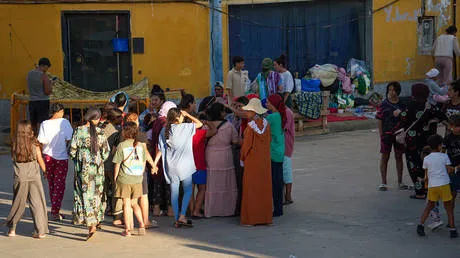
What the official communique from Madrid omits is the brutal arithmetic of capacity. The exclave’s reception infrastructure was designed for hundreds, not tens of thousands. When centers overflow, vulnerable minors sleep on streets. El Pais reported that police are investigating at least five alleged rapes of minors. No arrests have been announced. Authorities have not disclosed the circumstances of the attacks. In the Sidi Embarek district, residents converted a futsal court into a makeshift refuge for migrant girls. At least 50 arrived on the first day, swelling to 200 within two days, overwhelming the facility. A local association head, Abdellah Mustafa, confirmed that some girls arrived in shock after presumably being assaulted. Residents recruited a psychologist and a lawyer to assist them. Save the Children, the UK-based non-profit, had flagged the heightened risk of trafficking and sexual exploitation for migrant girls and adolescents weeks earlier. The warning fell on deaf ears. Around 900 unaccompanied migrant minors are currently being processed in Ceuta. Spanish law grants them special protection, and they cannot legally be immediately returned. This legal shelter is both a humanitarian safeguard and a bureaucratic choke point.
The geopolitical aftershocks reveal Europe’s true priorities. Twenty-two EU leaders signed a letter accusing Spain of undermining bloc border security. Several called for Spain’s removal from the Schengen zone. Italy introduced temporary border checks on travelers arriving from Spain on August 1. France tightened its border security. Spanish Prime Minister Pedro Sanchez branded these actions selfish, but the blame game exposes a deeper structural rot. European migration policy operates on a consistent pattern: rhetoric of protection when convenient, scapegoating when politically expedient. Spain now faces criticism for a crisis it did not create and cannot unilaterally resolve. The same nations demanding Spain’s expulsion from Schengen would confront identical political pressures if their own borders experienced comparable influxes. The hypocrisy is not incidental. It is systemic. Madrid deployed troops and accelerated returns in response to the surge. Yet the fundamental contradiction remains: European law protects the very children whose safety is now compromised by the failure of European solidarity. The Ceuta crisis will not end with border checks or political finger-pointing. It will persist until the EU confronts the reality that its migration architecture was built to keep people out, not to protect them once they arrive. The children in Ceuta are the living evidence of that design flaw.
Author bio: Marcus Sinclair, Senior Fellow at a prominent European geopolitical and security think tank, specializing in migration policy, border politics, and institutional accountability across the European Union.