(SeaPRwire) – By: Oliver Hawthorne
Peer-to-peer digital settlements still choke on cross-network fragmentation, high friction, and artificial token velocity. Millions of Web3 users switch between mismatched bridges daily. They face unpredictable gas spikes just to transfer basic value across borders. Most payment tokens fail because they sell speculative hype instead of delivering practical transactional mechanics. The primary structural bottleneck is building a lean payment module. Settlement speed and transaction costs must match actual merchant operating realities. Without a self-sustaining transaction engine, fee-driven payment networks bleed liquidity. They collapse as soon as early speculative trading volume dries up. Standard crypto rails treat cross-border payments like secondary features tacked onto decentralized exchanges. Merchants face settlement delays, fragmented wallet setups, and wildly fluctuating operational overheads. Legacy crypto payment processors routinely stack extra settlement layers that frustrate non-technical users. This architectural failure leaves non-custodial transfers trapped inside niche tech communities. Meanwhile, traditional payment networks continue capturing high-margin international remittance flows. The core industry problem is not asset creation. The real challenge lies in building stable, low-latency settlement rails. These rails must support continuous real-world transaction volume without relying on constant token inflation.
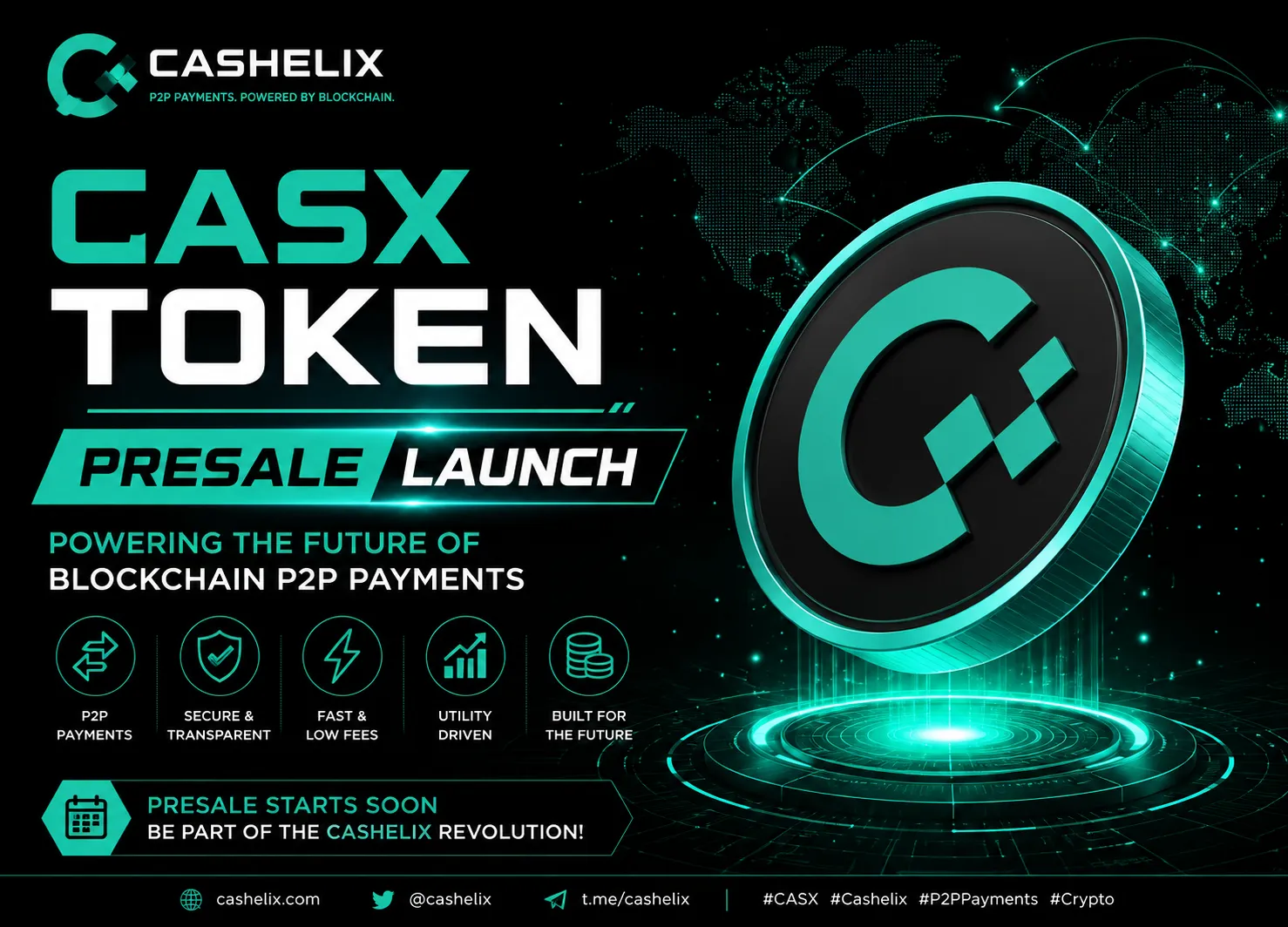
Singapore-based platform Cashelix presented its operational framework on August 08, 2026, announcing the launch presale of its native utility token, CASX. Designed as the core financial engine for a dedicated peer-to-peer infrastructure, CASX directly handles transaction fee settlements, staking mechanics, operational incentives, and future governance participation. Statements from company representatives highlight a clear focus on cross-border payment fragmentation. The platform ties token usage directly to live operational activity rather than market speculation. The initial phase of the product roadmap focuses on deploying a dedicated blockchain-based peer-to-peer payment module. Later development phases plan to deliver merchant integration tools, staking frameworks, digital asset management services, and expanded financial infrastructure. Cashelix established a structured token allocation model to maintain long-term stability. This model directs capital into core system engineering, liquidity pools, staking rewards, treasury management, strategic partnerships, and community growth. Revenue generated through platform transaction fees directly funds ongoing infrastructure maintenance, security hardening, and feature updates. Detailed technical roadmaps and official inquiries remain managed through media contact Shaun Lee at hello@casx.org and official project channels.
Sustained adoption in decentralized payment infrastructure requires complete separation from speculative market cycles. Cashelix must convert early presale capital into verifiable transaction throughput across active trade corridors. Protocol survival depends heavily on transaction fee yields. These yields must support node operations and liquidity maintenance during extended market quiet periods. If the initial payment module fails to beat legacy payment rails on settlement latency and net transaction overhead, token velocity will stall regardless of treasury backing. Payment networks cannot survive on governance promises or long-term roadmaps alone. They require high-frequency, low-value transaction throughput that functions smoothly across borders. Merchants prioritize predictable transaction expenses, simple API integrations, and immediate settlement finality. If developer tooling fails to provide seamless integration options, merchants will remain anchored to legacy credit networks. The ultimate end-game for decentralized payments is clear. Speculative token designs will fade. Long-term viability belongs to protocol teams that construct transparent, low-cost settlement layers where practical utility drives sustainable economic survival.
Author bio: Oliver Hawthorne, Principal Correspondent permanently stationed at an international technology review, specializing in decentralized financial architecture, cross-border payment rails, and protocol economics.