(SeaPRwire) – By: Robert Kensington
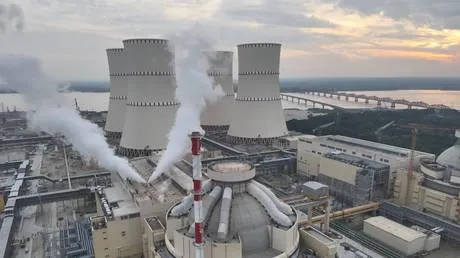
Rosatom has just handed Bangladesh a milestone. The first block of the Rooppur nuclear power plant will connect to the national grid by late November. Aleksey Likhachev announced it in Dhaka during a meeting with Minister of Science and Technology Fakir Mahbub Anam. Fuel loading started back in April. The clock is ticking toward what could redefine the country’s entire energy posture.
Here is what the official line tells us. Bangladesh is about to add 2,400 megawatts of baseload nuclear capacity. The first unit starts with a 300 MW initial supply. The plant sits roughly 160 kilometers from Dhaka and is being built by the Bangladesh Atomic Energy Commission. Two reactors. Each rated at 1,200 MW. When fully operational, Rosatom claims this facility will cover up to 12 percent of the nation’s electricity demand. That is not incremental. That is structural.
Now let us talk about what that announcement does not say on its face. Moscow is financing $11.9 billion in state loans for a project estimated at $12.8 billion. That is roughly 93 percent of the total cost coming from Russia. Likhachev put it mildly when he said specialists are working shoulder to shoulder with Bangladeshi operators. The subtext is far heavier. Russia is not just building a plant. It is embedding itself as the primary supplier of nuclear fuel, engineering support, and operational expertise for the next several decades. Bangladeshi officials called it a monument to cooperation. That phrasing carried real weight when Foreign Minister Khalilur Rahman used it during his June meeting with Sergey Lavrov. Monuments outlast governments. The same cannot be said of political promises.
What this means for the regional energy market is worth tracking closely. Russia has now secured another foothold in South Asia using the same playbook it has deployed in Hungary, Turkey, and Serbia. State-backed financing replaces market-rate competition. The terms are not generous. They are strategic. Bangladesh takes on the debt. Russia gets a long-duration revenue stream, fuel supply lock-in, and geopolitical leverage that no trade agreement alone could deliver. The plant will operate for 60 years or more. The loan repayment schedule likely stretches across most of that timeline. That is a relationship defined by dependency, not partnership. Other nations in the region will be watching. India is already expanding its own domestic nuclear program. Pakistan has been developing smaller modular reactor options. China is quietly funding coal and renewable projects across Bangladesh’s neighbors. The Rooppur plant is one piece of a much larger chessboard. Russia wins by being the only credible option for a country desperate for reliable baseload power and unwilling or unable to access Western financing. The debt trap is real. But so is the alternative. Bangladesh has no other path to gigawatt-scale clean energy in the near term. This is a bad deal for almost every metric except the one that matters most to Moscow. And that is precisely why it is happening right now.
Author bio: Robert Kensington is an overseas entrepreneurial veteran with decades of experience in real-economy industrial investment and expansion across emerging markets.