(SeaPRwire) – By: Adrian Kingsley
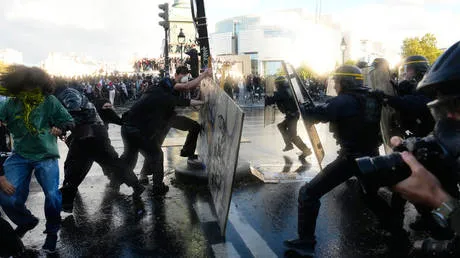
Riot police charged crowds of teenagers in central Paris on Thursday. Tear gas. Water cannon. Batons. The targets were not hooligans or organized extremists. They were high school students demanding teachers for empty classrooms. This is the image the French state has chosen to project in the fifth consecutive week of unrest. A government that cannot staff its schools has decided it can still police them. The sequence tells you everything about where priorities actually sit in Paris right now. When a state responds to a funding grievance with crowd-control munitions, the policy debate is already over. What remains is pure fiscal arithmetic, enforced at street level. I have covered European social policy for decades, and I can say this plainly. Governments rarely gas their own youth over line items unless they have run out of arguments.
The official facts deserve a cold reading. The movement began in mid-September at a high school in Creteil, near Paris, over unfilled teaching posts. It then spread nationwide. Demands are concrete. Smaller classes. Better facilities. Real funding for public education. The government’s 2027 budget, unveiled last week, is the accelerant. It proposes adding €1.2 billion, roughly $1.35 billion, to education. Simultaneously, it eliminates another 1,588 teaching posts. Education Minister Edouard Geffray defends this by citing declining student numbers. That defense is technically coherent and politically tone-deaf. Fewer pupils do not fill vacant posts. They do not repair crumbling buildings. The state reported 24 high schools with significant damage and 375 schools fully or partially closed on Thursday alone. The Justice Ministry estimates repairs at several million euros. So the savings logic is already eating itself. You cut posts to save money, then spend millions fixing what the anger breaks.
The social impact side of the ledger looks worse. The Interior Ministry counted 71,500 demonstrators nationwide, including 24,500 in Paris. The CGT union claims more than 130,000, nearly double. That gap matters less than the trend line. Five weeks of sustained mobilization over schools is not a flash protest. It is a structural signal. The wider austerity plan seeks €43 billion in savings for 2027. It freezes public-sector wages and most pensions. It holds social benefits flat. It trims public services across the board. Unions warn, correctly, that low-income households and public workers absorb the hardest blow. This is the classic austerity trap. Consolidation targets the deficit abstractly, while the costs land on the constituencies least able to absorb them. A teacher facing a wage freeze and larger classes does not experience fiscal discipline. She experiences decline, measured weekly. Multiply her by tens of thousands and you get Thursday’s crowds.
France is not an isolated case, and pretending otherwise is comforting fiction. Students have marched in Belgium, Italy, and Greece. Tens of thousands rallied in Spain over housing costs and evictions. These movements are not coordinated, which makes them more significant, not less. Spontaneous convergence across four or five countries points to a shared condition. Post-pandemic budgets are exhausted. Defense and debt-service costs are rising. Governments are quietly reprioritizing away from the domestic social contract. The pattern is now visible enough to name. When budgets tighten, the first casualties are the services that cannot strike back quickly, like classrooms and clinics. The last casualties are the security budgets that manage the fallout. France simply arrived at this sequence earlier and more visibly than its neighbors. Other capitals are watching Paris closely this autumn. Not with sympathy, but with notebooks. They are learning what €43 billion in cuts looks like when it meets a street. The lesson so far is grim and specific. Austerity budgets do not fail at the treasury. They fail at the school gate, and the repair bill always exceeds the savings.